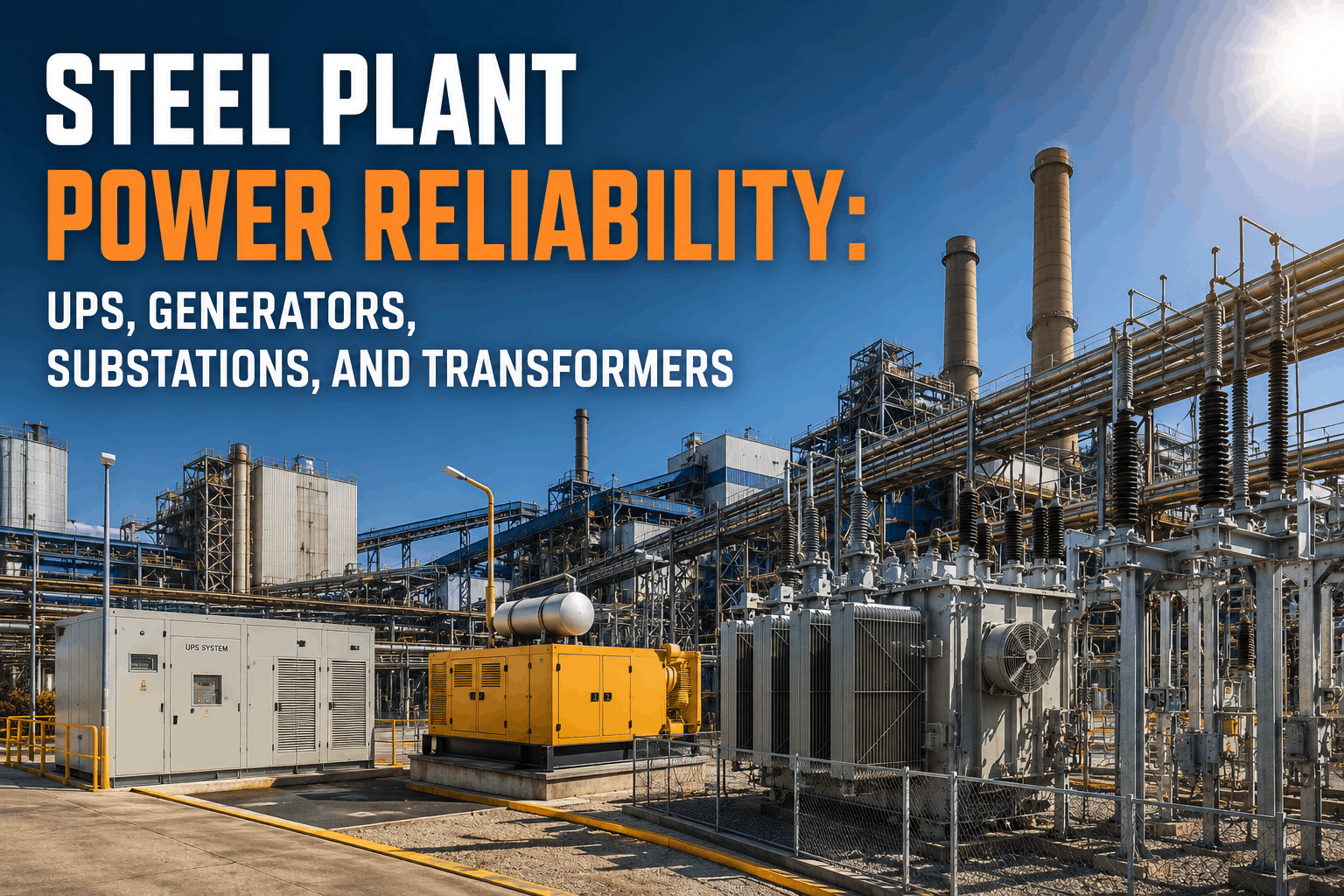
A captive power plant failure in a steel mill is not an inconvenience — it is a cascade event. When the steam turbine trips, the blast furnace loses process air injection, the BOF loses oxygen lance supply, and the continuous caster loses electromagnetic stirring — simultaneously. Every minute of unplanned power interruption costs an integrated steel mill between $12,000 and $40,000 depending on which process stage is affected. Yet captive power and utility systems — boiler, steam turbine, electrical distribution, oxygen plant, nitrogen plant, and compressed air — are routinely maintained as isolated systems with no shared maintenance intelligence. This guide covers all six utility systems, their critical failure modes, and how a unified CMMS approach prevents the cascade that reactive management cannot. Book a demo to see how Oxmaint manages steel plant utilities as one integrated maintenance program.
Specific Equipment
Utilities PM + Energy Management
Captive Power
The Cascade Risk — What Happens When Utility Systems Fail
01
Boiler drum level low alarm — feedwater pump trips
→
02
Steam turbine load drops — captive power output falls by 40%
→
03
BF blowers throttle — hot metal production rate falls
→
04
$12,000–$40,000 per minute in lost steel production
Utility System Overview
Six Critical Utility Systems — Maintenance Requirements at a Glance
Boiler Maintenance
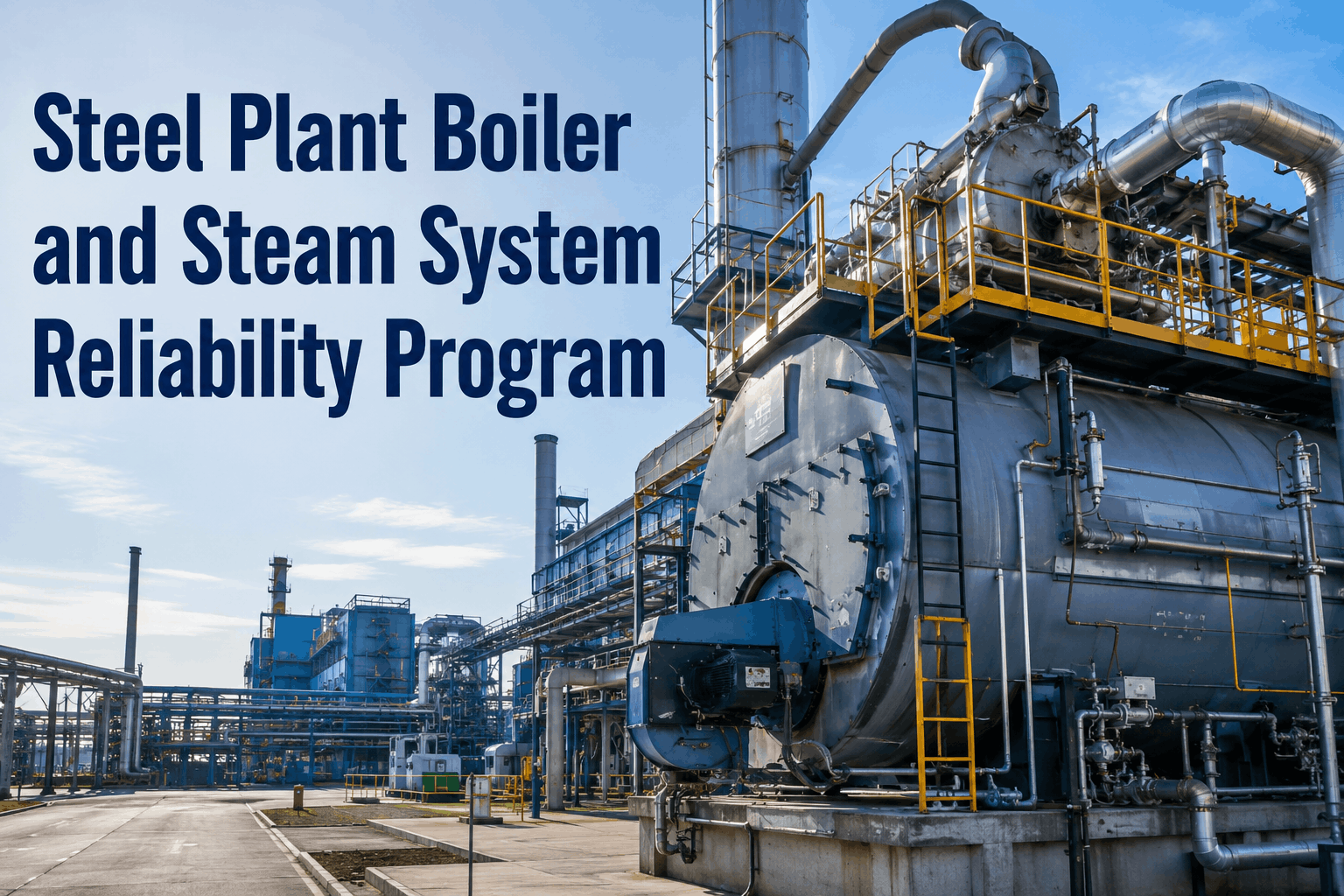
01 — Boiler System: The Thermal Foundation of the Captive Plant
Drum level, steam pressure, and flue gas temperature monitoring
Boiler feedwater quality check — pH, dissolved oxygen, TDS
Safety valve operation test (weekly); blowdown valve verification
Flame scanner and burner management system check
Soot blower operation cycle verification
Boiler tube UT thickness measurement at high-stress zones
Refractory inspection — furnace walls, burner tiles, observation ports
Heat exchanger and economizer performance (ΔT trending)
Draught fan bearing temperature and vibration analysis
Relief valve set pressure verification; pressure gauge calibration
IBR hydraulic pressure test — 1.5× working pressure
Internal inspection by certified boiler inspector — tube condition, drum welds
Safety valve re-certification and set pressure test
Complete water chemistry program review and dosing adjustment
Boiler efficiency test — combustion analysis, stack loss measurement
Steam Turbine Maintenance
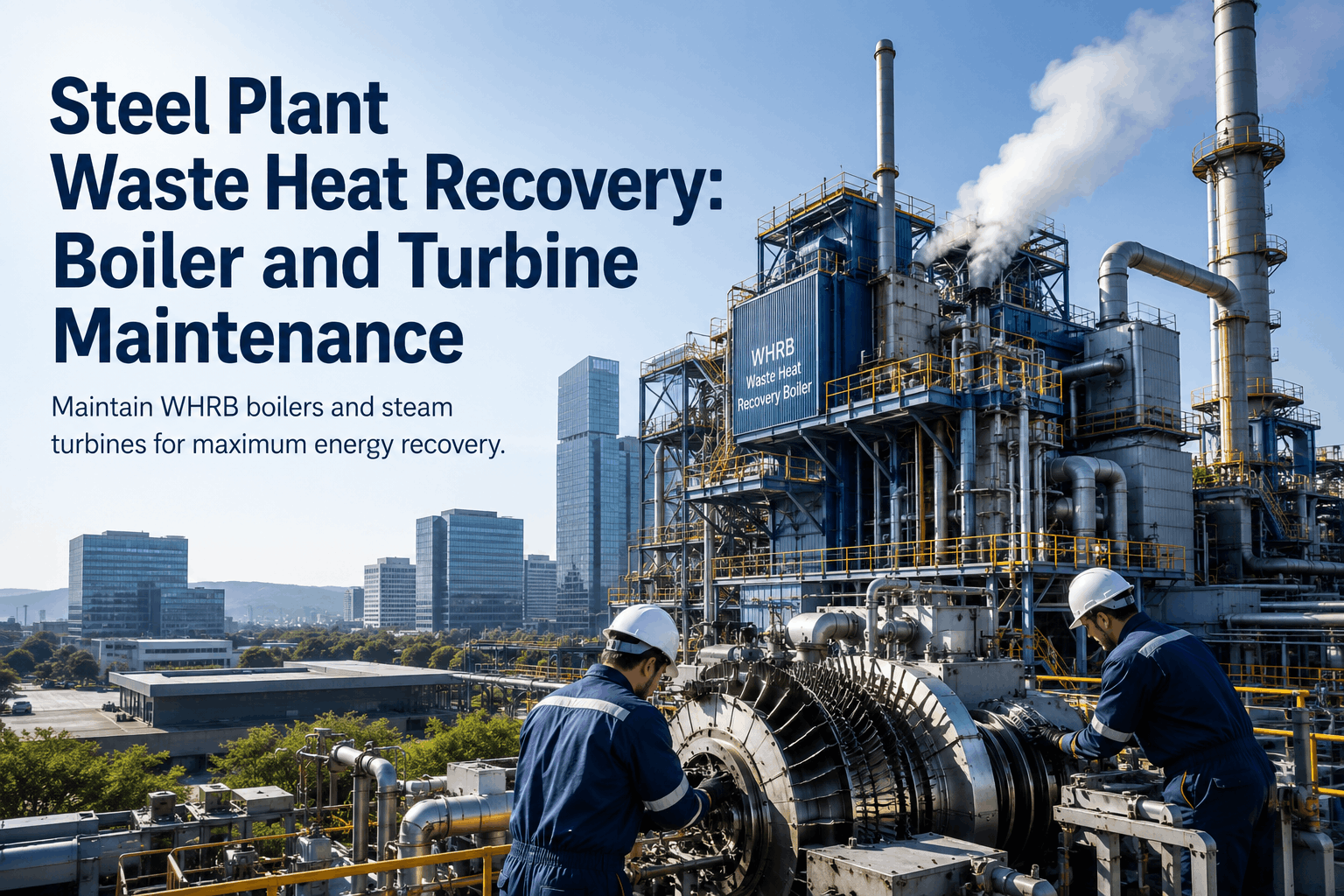
02 — Steam Turbine: The Highest-Consequence Asset in the Utility Block
The three highest-frequency steam turbine failures worldwide are: loss of lube oil (leading to bearing failure), overspeed events (leading to catastrophic blade and casing damage), and LP blade failures from stress corrosion cracking and erosion. Each of these failure modes has a predictable degradation pathway that continuous condition monitoring can intercept — if the monitoring is connected to a maintenance workflow that acts on the data.
Highest Failure Frequency
Lube Oil System
Daily oil pressure and temperature check; monthly oil analysis for viscosity, water content, and metal particles; bearing temperature trending; oil filter differential pressure monitoring
Daily monitoring + monthly oil analysis
Highest Failure Severity
Overspeed Protection
Governor and trip valve functional test; overspeed trip test at reduced load during planned window; speed sensor calibration; emergency stop valve full-travel test
Monthly test + annual full-trip test
LP Blade Condition
Borescope inspection at each planned outage; vibration frequency monitoring for resonance indicators; steam chemistry control to limit SCC risk (pH, chloride, sodium)
Outage inspection + continuous vibration
Bearing Condition
Continuous temperature monitoring on all journal and thrust bearings; vibration trend analysis — axial and radial; bearing clearance measurement at each overhaul
Continuous monitoring
Seal Systems
Labyrinth seal clearance measurement at overhaul; gland steam pressure and temperature monitoring; hydrogen seal oil system check (where applicable)
Continuous pressure + outage measurement
Steam Quality
Steam purity monitoring — sodium, silica, chloride; desuperheater performance; steam trap survey to minimize water carryover to turbine stages
Monthly chemistry + continuous monitoring
Connect Utility System Monitoring to Automatic Work Order Dispatch
Oxmaint links boiler, turbine, electrical, and gas plant monitoring data to automated PM schedules and condition-based work orders — so every utility anomaly becomes a documented corrective action, not a cascade event.
Electrical Distribution, Gas Plants & Compressed Air
03–06 — Remaining Utility Systems: PM Priorities by System
Expert Review
What Steel Plant Utility Engineers Say
"The steam turbine is where steel plant maintenance managers often make a false economy. Deferring an overhaul saves $800,000 this year and risks $15 million in unplanned outage costs next year. The lube oil system deserves daily attention — not weekly rounds. Three of every five turbine unplanned outages begin with a lube oil anomaly that was visible in the data for 3–7 days before the failure. CMMS with continuous monitoring integration is the only way to close that window consistently."
Chief Mechanical Engineer — Utility Block
Integrated Steel Plant — 4.5 MTPA, India
"Oxygen plant maintenance is underestimated in most steel mill PM programs because it sits outside the core ironmaking and steelmaking asset register. But a BOF with no oxygen supply is not a BOF — it is a very expensive vessel. Molecular sieve lifecycle management and compressor condition monitoring need the same rigor as your blast furnace equipment. Purity trending in CMMS with automatic alert generation is the standard we now hold all oxygen plant assets to."
Utility Systems Manager
Electric Arc Furnace Steel Plant — Eastern Europe
Frequently Asked Questions
Steel Plant Utilities Maintenance — Common Questions
How often should a captive power plant boiler undergo statutory inspection in a steel mill?
Under IBR (Indian Boiler Regulations) and equivalent international codes, boilers require annual external inspection and a full internal inspection every two years minimum, with hydraulic pressure testing at 1.5× working pressure. Safety valve re-certification is required annually. CMMS should track all statutory inspection dates with advance alerts 60 and 90 days before expiry to allow permit procurement and inspector scheduling.
Start a free trial to configure statutory inspection tracking for all boiler and pressure vessel assets.
What are the most critical monitoring parameters for a steam turbine in a steel plant captive power setup?
The three non-negotiable continuous monitoring parameters are: lube oil pressure and temperature (bearing failure precursor), shaft vibration at all bearing locations (rotor unbalance, rub, and blade condition indicator), and bearing metal temperature at journal and thrust bearings. Overspeed trip system testing monthly and governor response verification are equally critical. All of these should trigger automatic CMMS work orders on deviation — not just logged alarms.
Book a demo to see how Oxmaint integrates turbine monitoring data with work order generation.
How does CMMS help manage the maintenance of multiple utility systems without siloed records?
A unified CMMS gives maintenance managers visibility across all six utility systems from a single asset register — with shared maintenance history, cross-system work order tracking, and a common KPI dashboard. When a boiler tube UT reading triggers a work order, the CMMS links it to the turbine load history for the same period, helping correlate maintenance decisions across interdependent systems. All statutory inspection records, certification expiries, and PM completion rates are visible in one place.
Start a free trial to see the utility asset register structure in Oxmaint.
What is the recommended overhaul interval for a steel plant captive steam turbine?
Manufacturer and insurance standards define three overhaul tiers: minor inspection every 12–18 months (borescope, oil system, governor test), major inspection every 3–4 years (blade inspection, seal replacement, bearing clearance measurement), and full overhaul every 5–8 years (rotor removal, complete reassembly). Actual intervals should be condition-driven — vibration trends, steam chemistry history, and oil analysis results all inform whether the scheduled interval is appropriate or needs adjustment.
Book a demo to see how Oxmaint manages condition-driven overhaul scheduling for turbine assets.
Manage All Six Utility Systems in One Integrated Maintenance Platform
Oxmaint tracks boiler statutory inspections, turbine condition monitoring alerts, transformer IR records, oxygen plant purity trends, and compressed air PM schedules — in a single asset register. No siloed records. No missed compliance dates. No cascade surprises.


-programs.png)