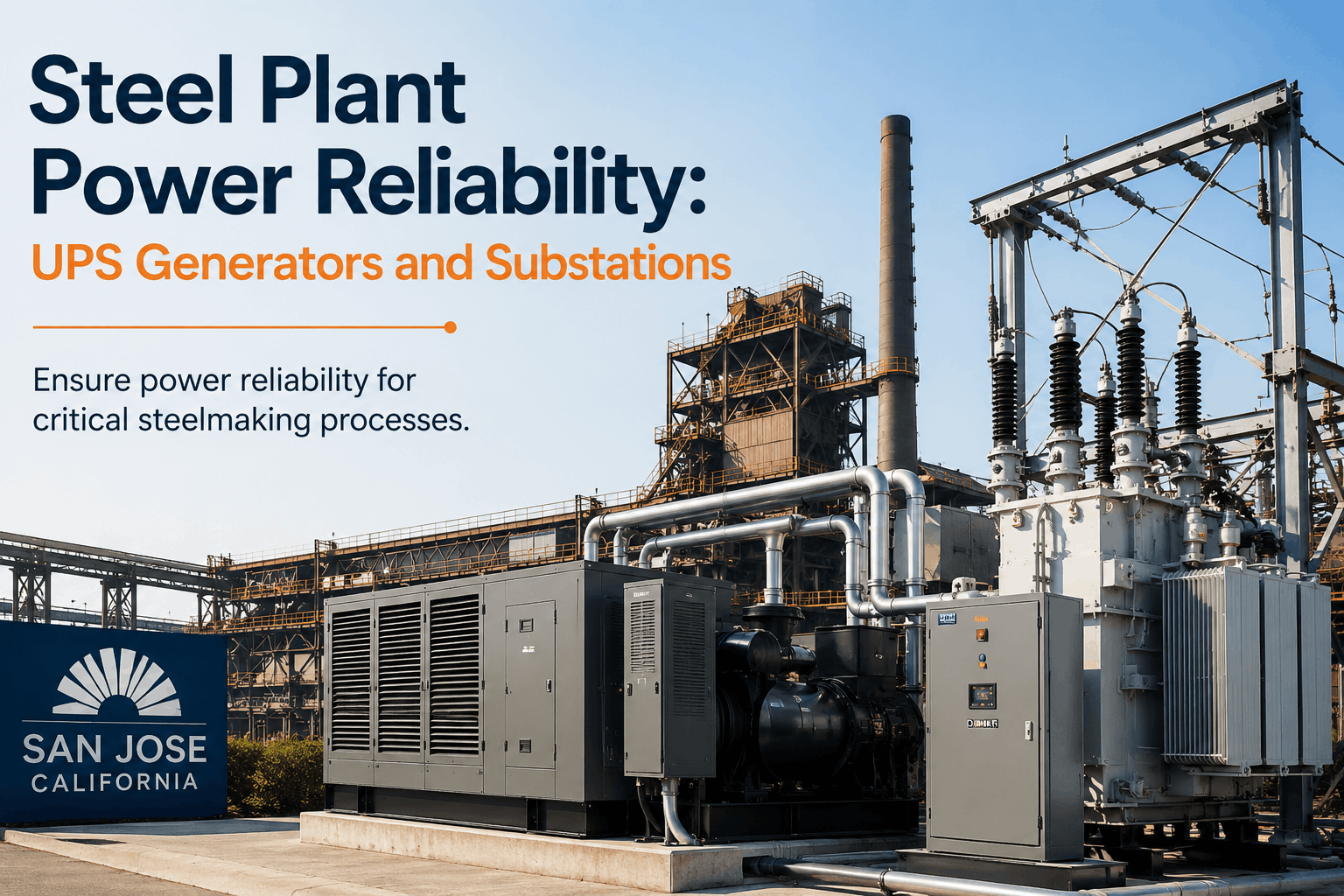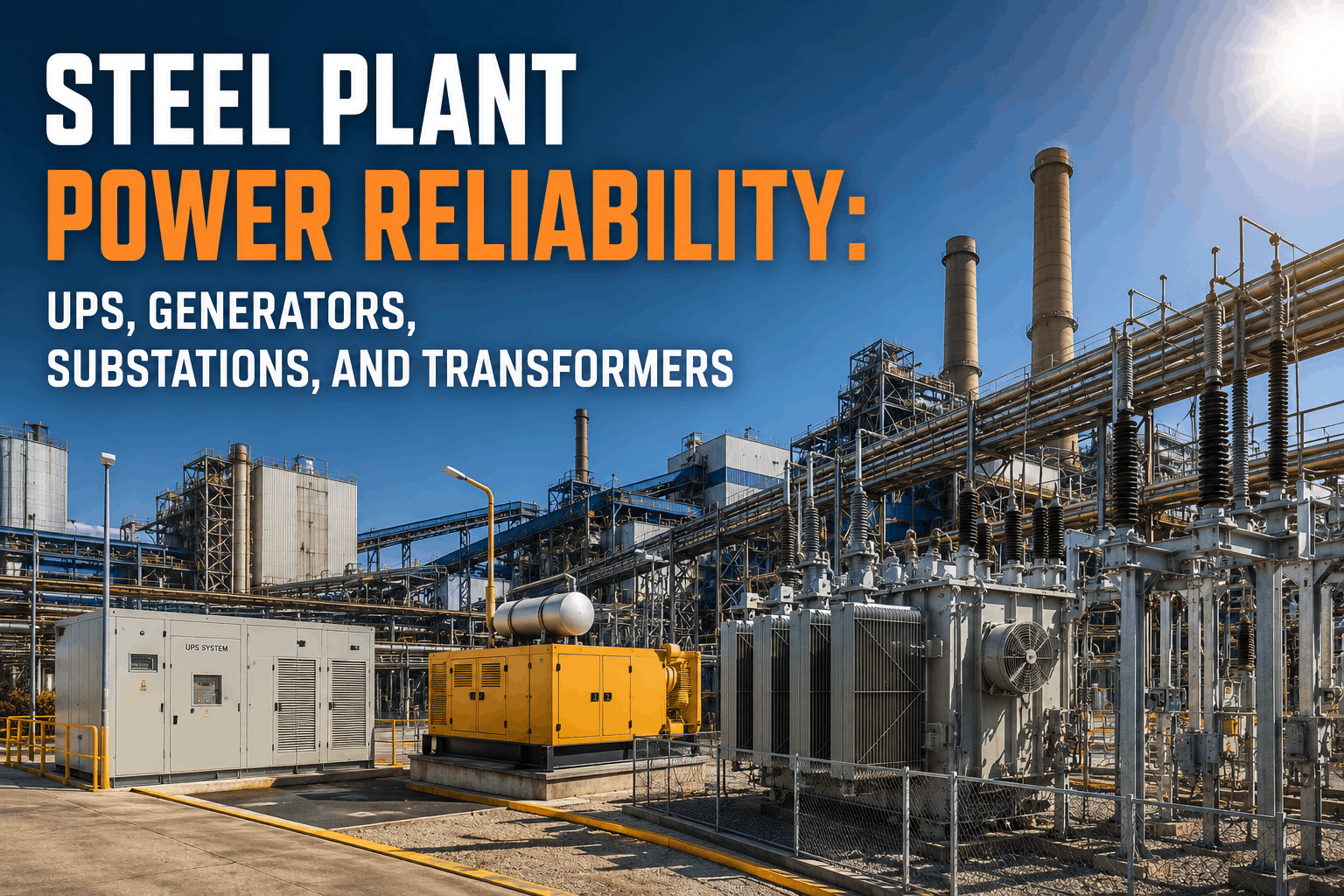
Steel plant power outages cost $500,000–$2 million per hour depending on facility size and equipment criticality — yet 64% of North American mills operate without documented UPS backup systems, NFPA 110-compliant generators, or substation monitoring programs. A single unplanned electrical event cascading through blast furnace cooling, continuous casting mold control, or hot rolling mill drives can trigger multi-week production restarts and equipment damage costing tens of millions. Your power reliability infrastructure must protect critical loads continuously: uninterruptible power supplies (UPS) for control systems and safety equipment, NFPA 110 diesel generators for facility-wide backup, real-time substation monitoring, and transformer diagnostics using dissolved gas analysis (DGA) to detect equipment degradation before catastrophic failure. OxMaint's power reliability management solution integrates UPS battery health tracking, generator load testing schedules, substation circuit breaker maintenance, and transformer condition monitoring into a unified CMMS program — providing maintenance teams with audit-ready documentation and predictive maintenance triggers that prevent power-related equipment failures. Explore this comprehensive guide to steel plant power reliability, covering UPS deployment strategies, generator compliance frameworks, substation equipment management, and transformer diagnostics that keep your facility operational when grid power fails.
Steel Plant Power Reliability Built on Data, Not Guesswork
OxMaint tracks UPS battery health, NFPA 110 generator compliance, substation equipment maintenance, and transformer DGA diagnostics — integrating power reliability into your unified CMMS program with automated alerts and compliance documentation.
Steel Plant Power Reliability: Critical Infrastructure That Enables Production
Integrated steel mills consume 50–150 megawatts of continuous electrical power, making power reliability a production enabler comparable to fuel supply or raw materials availability. A typical blast furnace requires constant cooling water circulation powered by large motors; interruption of cooling for 30 minutes can damage refractory linings and force 4–8 week cold restart sequences at costs exceeding $100 million. Continuous casting mold oscillation systems operate at millisecond precision to control steel surface quality; power fluctuations trigger defects instantly. Hot rolling mill drive systems coordinate strip movement through multiple stands; power instability causes thickness variation and product rejection. Despite this criticality, many mills rely entirely on grid power with minimal backup infrastructure. When regional grid outages occur — or when local transformer failures cascade through substation infrastructure — these facilities lose production immediately with no backup power source. Advanced mills supplement grid power with UPS systems for critical control loads, NFPA 110-compliant diesel generators for essential facility loads, and real-time substation monitoring that detects equipment degradation before failure cascades. This power reliability infrastructure costs $10–$50 million to install but prevents outage costs that exceed capex within a single incident. Your steel plant power reliability program must address three interdependent systems: power generation and supply (grid + backup), electrical distribution (substations + switchgear + circuit protection), and equipment protection (UPS + surge suppression + power factor correction).
Uninterruptible Power Supplies protect control systems, DCS platforms, safety interlocks, and emergency lighting during grid power loss. Battery replacement intervals (5–10 years) and load testing schedules must be tracked in your CMMS. OxMaint monitors UPS battery health, runtime capability, and maintenance compliance — alerting when units approach end-of-life.
Emergency generators must comply with NFPA 110 standards: weekly no-load testing, monthly load bank testing (minimum 25% rated capacity), annual full-load testing, and fuel quality assurance. OxMaint schedules these mandatory tests, tracks load test duration/capacity/temperature, and documents maintenance compliance required for insurance and regulatory audits.
Medium-voltage switchgear, distribution transformers, and circuit breakers are failure-prone under continuous duty cycles. OxMaint tracks maintenance intervals: circuit breaker contacts inspection, switchgear insulation testing, and control power supply health. Real-time temperature and vibration monitoring detects equipment stress before failure cascades.
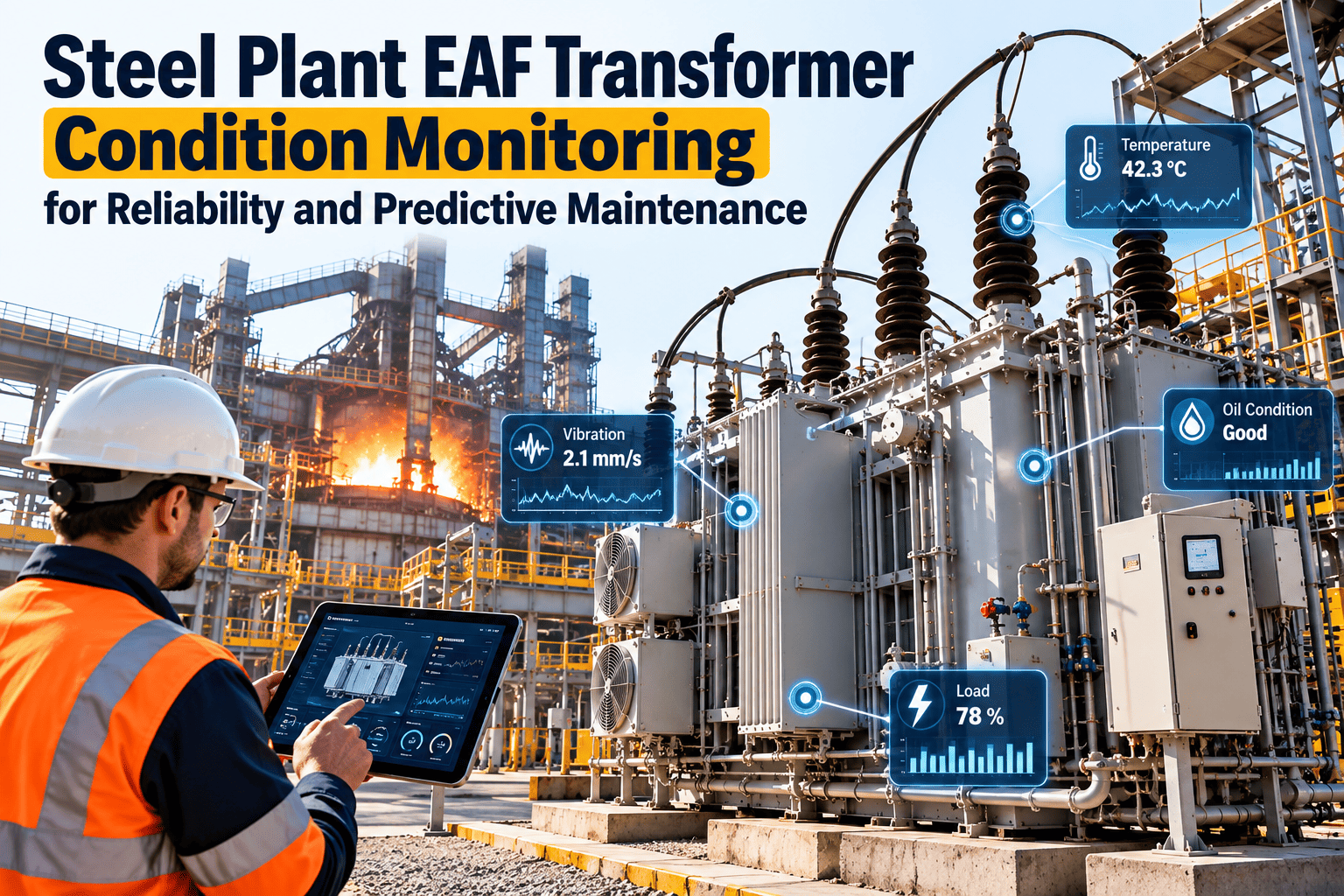
Power transformers degrade through thermal, electrical, and mechanical stress. Dissolved gas analysis (DGA) measures hydrogen, methane, acetylene, ethylene, and ethane concentrations in transformer oil — early signals of internal insulation breakdown. OxMaint tracks DGA trends and recommends actionable maintenance based on IEEE and Doble protocols.
Poor power factor increases electrical costs (reactive demand charges) and reduces equipment lifespan through overheating. Capacitor banks for power factor correction require maintenance schedules similar to other electrical equipment. OxMaint tracks capacitor replacement intervals and monitors power factor trends.
Insurance, regulatory audits, and customer contracts require documented power reliability programs: UPS maintenance records, generator load test reports, transformer DGA trending, and switchgear maintenance compliance. OxMaint generates audit-ready documentation, eliminating manual record compilation.
Critical Power Infrastructure Components and Maintenance Requirements for Steel Mills
Steel plant power systems consist of four integrated layers: generation (grid + backup generators), transmission (medium-voltage switchgear), distribution (transformers + circuit protection), and utilization (UPS systems + motor protection). Each layer requires specific maintenance discipline. Generators must perform regularly to maintain readiness; transformers require thermal and insulation monitoring; switchgear contacts require cleaning and tension verification; UPS systems require battery replacement and load testing. Without systematic CMMS tracking, maintenance intervals slip and critical power equipment approaches failure without warning.
| Power System Component | Maintenance Task | Frequency (NFPA / IEEE Standard) | Typical Cost per Event | Consequence of Neglect |
|---|---|---|---|---|
| Diesel Generator (NFPA 110) | No-load weekly test + monthly load bank (25% min) | Weekly + Monthly + Annual full-load | $500–$2,000 per test | Generator failure-to-start during actual emergency; facility loses all backup power |
| UPS Battery Bank | Float voltage monitoring, load testing, runtime verification | Monthly monitoring + Annual load test + 5-10 year replacement | $100–$500 annual + $50K–$200K replacement | Insufficient backup time during outage; critical control systems drop out |
| Power Transformer (Medium Voltage) | Dissolved gas analysis (DGA), thermal imaging, insulation resistance testing | Annual DGA + Biennial full testing (or per condition) | $1,000–$5,000 per DGA + $3K–$8K full test | Undetected internal insulation breakdown; catastrophic transformer failure + week+ outage |
| Medium-Voltage Switchgear | Contact cleaning, insulation testing, control power supply verification | Annual visual + Every 3-5 years detailed maintenance | $2,000–$8,000 per maintenance event | Contact contamination causes arcing; equipment failure or facility outage |
| Circuit Breakers (Distribution) | Contact erosion measurement, trip coil verification, mechanical operation | Every 5-10 years depending on duty cycle and age | $500–$3,000 per breaker refurbishment | Failure to trip during fault; equipment damage or fire risk increases significantly |
| Power Factor Correction Capacitors | Electrical testing, thermal imaging, dielectric strength verification | Annual testing + 10-15 year replacement cycle | $1,000–$5,000 replacement per bank | Capacitor swelling/leakage; explosion risk + reactive demand charges escalate |
UPS System Architecture and Battery Management for Steel Plant Control Systems
UPS Sizing and Runtime Requirement Analysis
Calculate UPS capacity (VA/kVA) based on critical control system loads: DCS servers, I/O modules, emergency lighting, safety interlocks. Define required runtime: minimum 15–30 minutes for controlled shutdown procedures; 1–4 hours for generator startup and load stabilization. OxMaint tracks UPS specifications and runtime assumptions — enabling verification of adequacy during load tests.
Battery Bank Health Monitoring and Replacement Scheduling
UPS battery health degrades continuously: lead-acid batteries typically have 5–10 year life; lithium-ion extends to 10–15 years. OxMaint tracks battery float voltage, internal resistance, and load test runtime to predict end-of-life. Schedule replacement 3–6 months before projected failure — preventing surprise battery failure during actual outage.
Annual UPS Load Testing and Bypass System Verification
At least annually, perform full-load test: verify UPS switches to battery, sustains load for rated duration, and returns to normal mode without control system disturbance. Test static bypass system activation (UPS failure → direct grid power transfer). OxMaint schedules tests and documents results — proving system readiness to insurers and auditors.
UPS Firmware Updates and Manufacturer Recall Management
UPS manufacturers issue firmware updates for software bugs and security vulnerabilities. OxMaint tracks manufacturer advisories and schedules firmware updates during planned maintenance windows. Prevents undetected UPS failure modes that could surprise facilities during actual power events.
Monitoring System Integration and Early Warning Alerts
Modern UPS systems communicate battery health, load percentage, and fault status via SNMP or Modbus. OxMaint integrates UPS monitoring data, triggering alerts when battery health decays, load approaches capacity, or hardware faults occur. Proactive alerts prevent surprise UPS failures.
Control System Load Prioritization and Graceful Shutdown Sequences
Define critical vs. non-critical loads. Program UPS shutdown logic: essential systems stay powered through battery runtime; non-essential systems power down automatically after 10–15 minutes. OxMaint documents load priority lists and shutdown sequences — ensuring controlled transitions during extended outages.
NFPA 110 Diesel Generator Compliance and Emergency Power Readiness
Transformer Dissolved Gas Analysis (DGA) and Predictive Condition Monitoring
Steel Plant Power Reliability in OxMaint: Integrated Maintenance Management
OxMaint maintains centralized inventory: all UPS systems, generators, transformers, switchgear, and circuit breakers with specifications, maintenance schedules, and compliance requirements. All power equipment tracked in single system prevents maintenance gaps and regulatory non-compliance.
OxMaint auto-schedules weekly no-load tests, monthly load bank tests (25–50% capacity), and annual full-load verification. Tracks fuel quality, silencer condition, ATS operation, and maintenance documentation. Generates compliance reports for insurance audits and regulatory submissions.
OxMaint stores transformer DGA results (hydrogen, methane, acetylene, ethylene, ethane concentrations) and auto-trends values against IEEE/Doble standards. Alerts when gas concentrations rise toward critical thresholds — enabling planned maintenance before catastrophic transformer failure.
OxMaint tracks UPS battery float voltage, internal resistance, load test runtimes, and age — predicting end-of-life 3–6 months in advance. Schedules annual load tests and integrates UPS monitoring data for real-time health visibility.
OxMaint generates audit-ready documentation: generator load test reports, UPS maintenance records, transformer DGA trending, switchgear maintenance compliance. Eliminates manual record compilation and provides proof of systematic power reliability program for insurance and regulatory audits.
Customer Success: How Steel Mills Prevented Power-Related Outages Through Disciplined Maintenance
"DGA Trending Detected Transformer Failure 18 Months Before Catastrophic Event"
"We implemented OxMaint's power reliability program tracking DGA results for all facility transformers. Hydrogen concentrations on one main transformer were rising steadily (40 ppm → 120 ppm → 280 ppm over 18 months) while other transformers stayed stable. Our DCS advisor warned of imminent insulation breakdown. We scheduled transformer replacement before the situation became critical. Six months after our replacement, a competitor's identical transformer failed catastrophically, shutting down their facility for 4 weeks and costing $18 million in production losses. Our early intervention via DGA trending saved our facility from similar catastrophe. CMMS-driven DGA discipline is now core to our reliability strategy." — Plant Electrical Engineer, Integrated North American Steel Mill
Steel Plant Power Reliability: FAQ for Facility Engineers and Maintenance Managers
What is Dissolved Gas Analysis (DGA) and why is it critical for power transformer condition monitoring in steel mills?
DGA measures hydrogen, methane, ethylene, acetylene, and ethane gases released from transformer insulation breakdown under thermal and electrical stress. Rising DGA concentrations predict insulation degradation 6–18 months in advance, enabling planned replacement before catastrophic failure — preventing unplanned facility outages.
How often must NFPA 110 diesel generators perform load testing to remain compliant in steel mills?
NFPA 110 mandates: weekly no-load operation (30+ minutes), monthly load bank testing (minimum 25% rated capacity), and annual full-load operation. Skipped testing risks generator failure-to-start during actual power emergencies — rendering backup power useless when most needed.
What UPS runtime is required for critical steel mill control systems during grid power loss?
Minimum 15–30 minutes enables controlled shutdown of non-essential systems and stabilization of critical processes. Extended runtime (1–4 hours) supports generator startup and load stabilization. OxMaint tracks UPS capacity and runtime capability — verifying adequacy during annual load tests.
How does power factor correction impact steel mill electrical costs and equipment lifespan?
Poor power factor (below 0.95) increases reactive demand charges (often $0.50–$3 per kVAr per month) and accelerates motor/transformer heating. Capacitor banks improve power factor, reducing electrical bills 5–15% and extending equipment life 10–20%. OxMaint tracks capacitor replacement intervals and power factor trends.
What are the consequences of neglecting UPS battery replacement in steel mills with 24/7 production?
Aged batteries (beyond 10 years) fail to provide full runtime during outages — control systems drop out mid-campaign, disrupting production and risking equipment damage. Catastrophic battery failure can occur without warning during actual power events, leaving no backup at critical moment.
How should transformer maintenance schedules adapt if DGA concentrations remain stable below IEEE limit thresholds?
Stable low DGA trends support extended service intervals (every 2–3 years instead of annually), optimizing maintenance costs. Rising trends even below limits warrant increased testing frequency. OxMaint auto-adjusts test schedules based on DGA trajectories — enabling condition-based rather than calendar-based maintenance.
What automatic transfer switch (ATS) testing is required to ensure grid-to-generator switchover reliability?
Quarterly mechanical exercising (if practical) or annual comprehensive testing ensures ATS operates reliably. Simulate power loss conditions and verify generator assumes load smoothly without control system disturbance. OxMaint schedules ATS testing and documents successful switchover demonstrations required for insurance compliance.
How does stale fuel impact diesel generator startup reliability and what preventive measures should steel mills implement?
Fuel degrades over 6–12 months (gum formation, water absorption, microbial contamination), preventing reliable ignition during emergencies. Annual fuel polishing and water removal maintain startup capability. OxMaint tracks fuel quality testing and replacement schedules — preventing fuel-related generator failures.
Power Reliability: Continuous Operations Infrastructure for Mission-Critical Steel Mills
Power reliability isn't an optional capex project — it's existential infrastructure that directly enables production continuity. Steel mills face binary outcomes: when power fails, either backup systems activate flawlessly (demonstrating years of disciplined maintenance), or cascading failures halt production for days or weeks (demonstrating neglect). The financial impact of unpreparedness is catastrophic. Yet power reliability maintenance remains fragmented: UPS systems tracked by controls teams, generators maintained by electricians, transformers monitored (if at all) by consultants, and compliance documentation scattered across multiple departments. OxMaint consolidates power reliability into unified CMMS discipline: all equipment tracked, all maintenance schedules automated, all compliance documentation generated automatically. Your facility becomes prepared for power emergencies through continuous operational discipline rather than crisis response.
Transform Power Reliability From Crisis Response Into Continuous Discipline
OxMaint consolidates UPS, generator, substation, and transformer maintenance into unified program — enabling predictive monitoring that prevents power-related facility outages before they cascade into production losses and equipment damage.