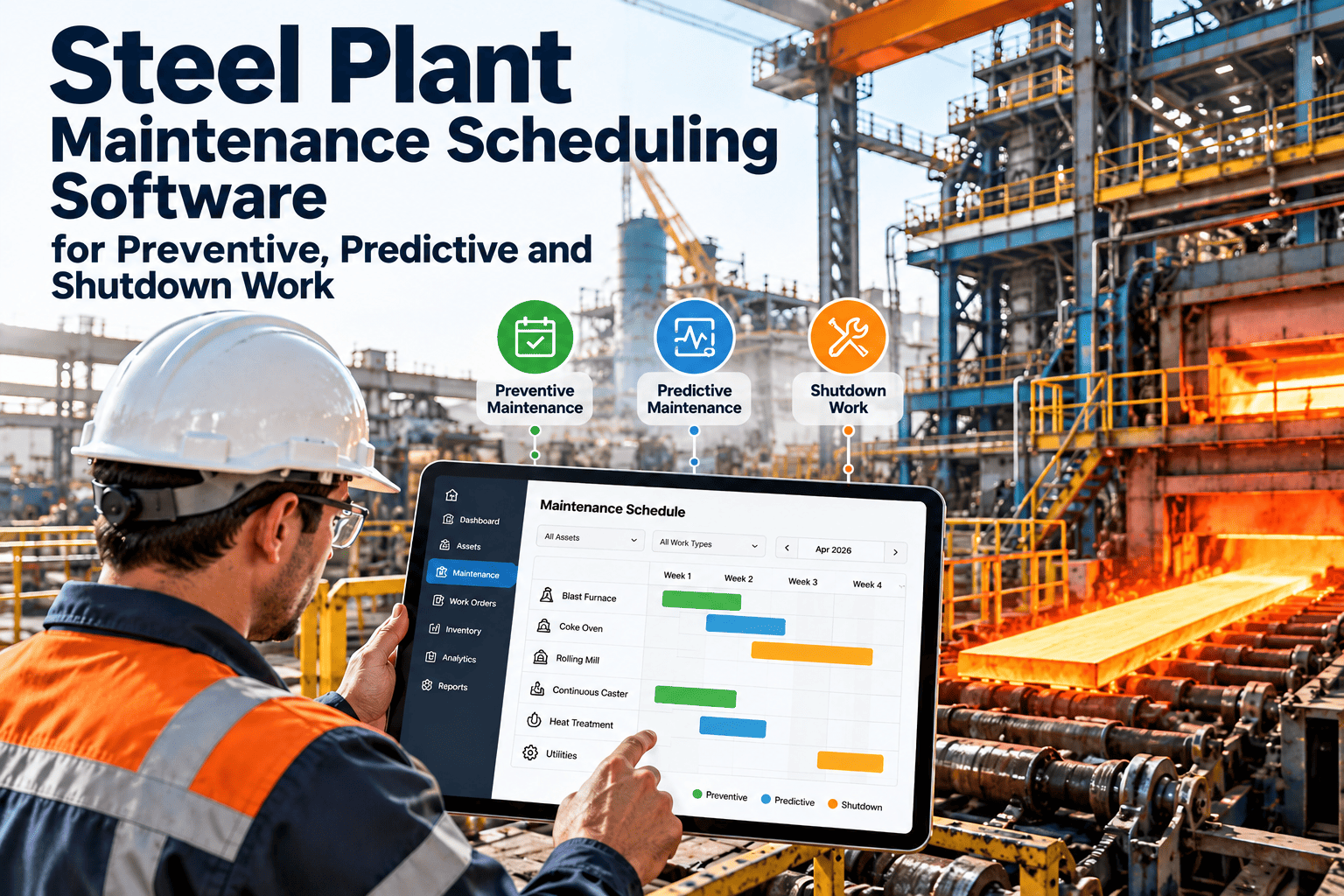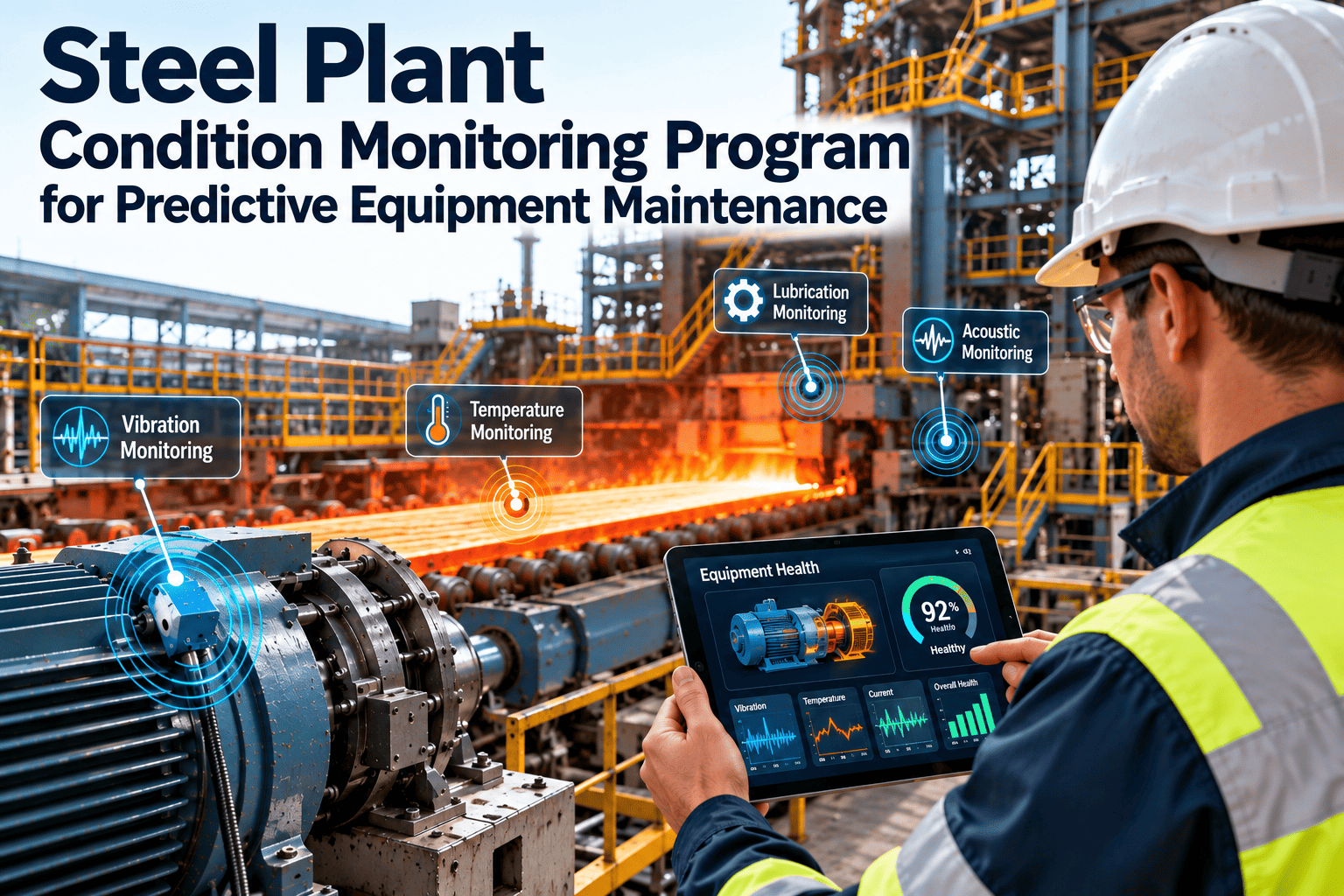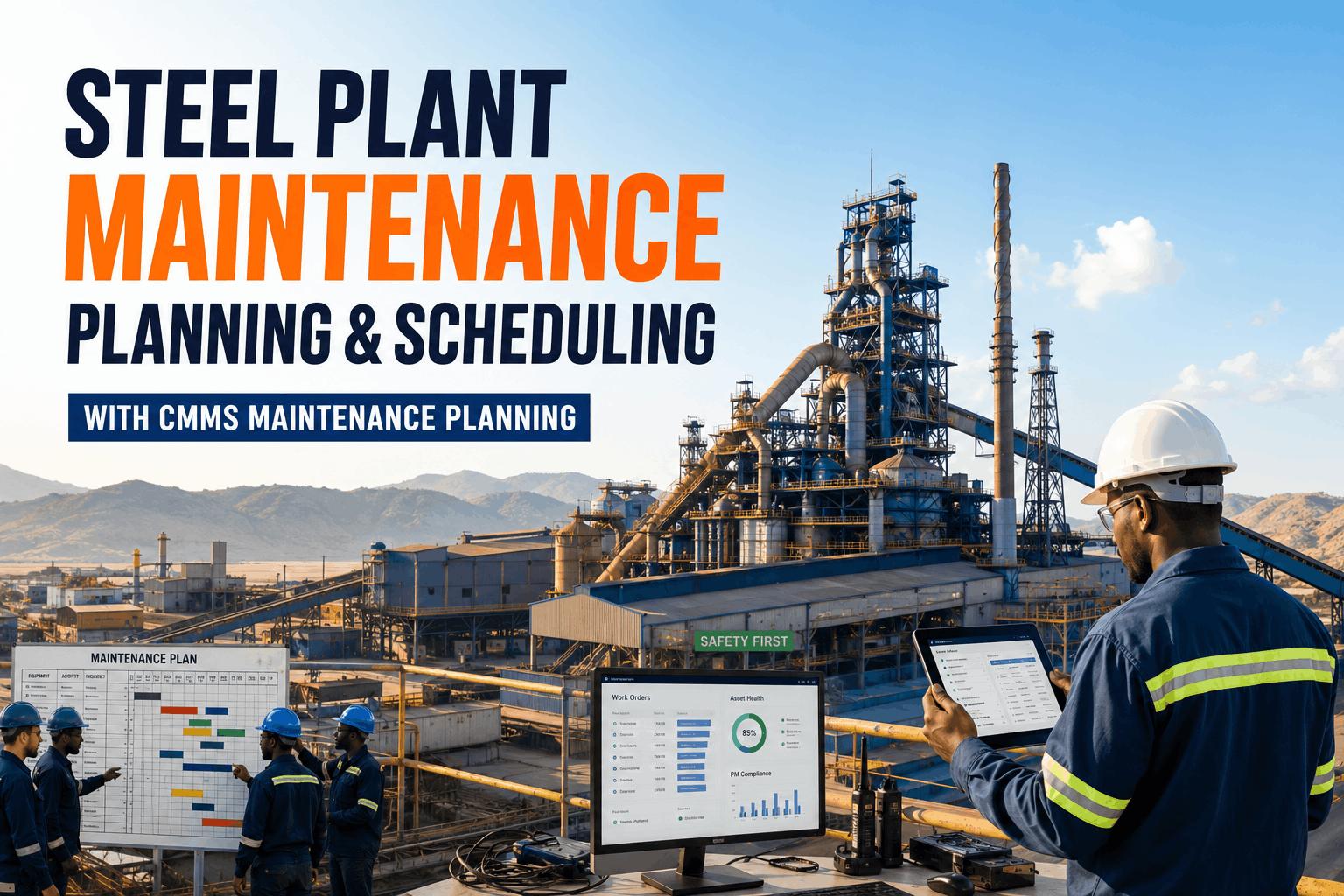
Steel plants run on a rhythm that no calendar can predict — a ladle refractory that lasts 90 heats one week and 60 the next, a continuous caster mold that wears with tonnage rather than time, a work roll that degrades with every pass regardless of the date on the wall. Time-based preventive maintenance, built for equipment that wears at a steady rate, breaks down against furnaces, casters, and rolling stands where degradation tracks heat count, tonnage, and campaign hours instead. This page lays out how to build a preventive maintenance program around the meters that actually govern wear in a steel mill, how to tier equipment by criticality so PM effort goes where failure cost is highest, and how a CMMS built for meter-based triggers turns those rules into work orders that fire automatically rather than PMs that get logged after the fact.
Steel Plant Preventive Maintenance Program for Reliable Equipment and Production
A PM program built on heat count, tonnage, campaign hours, operating hours, and equipment criticality — not a fixed calendar — for melt shops, casters, rolling mills, and material handling equipment that wear on production, not on time.
Why a Calendar-Based PM Program Fails in a Steel Plant
A refractory inspection scheduled for the first Monday of the month arrives after 40 heats in a low-production week and after 140 heats in a high-production week — the same PM interval covering wildly different amounts of actual wear.
A refractory inspection triggered at heat 80 fires at the same point in the wear curve every time, whether that heat count is reached in four days or eleven, matching maintenance effort to actual equipment condition.
The Five Meters That Should Drive Your PM Triggers
Most steel mill equipment wears against one of five measurable counters rather than the passage of time. Identifying which meter governs each asset is the first design decision in the program, before a single PM task is written.
Matching PM Rigor to Equipment Criticality
A steel plant cannot run every asset on the same PM intensity — the melt shop and caster are production bottlenecks where an hour of downtime stops the whole line, while auxiliary and redundant equipment can tolerate a slower response. Criticality tiers translate that reality into differentiated PM rules.
A PM program only works if the meters are actually tracked against every asset — heat counts logged per furnace, tonnage accumulated per roll, operating hours running against every motor. OxMaint tracks all five meter types against your asset register and fires PM work orders automatically the moment a threshold is crossed, tiered by the criticality you assign.
Building the Program: From Asset Register to Automatic Work Orders
A meter-based PM program is built in a defined sequence — skipping steps produces a PM schedule that looks complete but never actually fires triggers correctly against real production data.
Meter-Based PM Checklist by Plant Area
The checklist below groups representative PM triggers by plant area, each tagged with its governing meter, to illustrate how the five-meter framework applies across a typical steel mill layout.
Metrics That Show the PM Program Is Working
| Metric | How to Measure | Direction |
|---|---|---|
| PM Compliance Rate | Triggered PMs completed within the defined escalation window / Total triggered PMs | Increasing toward 100% |
| Unplanned Downtime Hours | Hours lost to failures on assets with an active meter-based PM trigger | Decreasing |
| Campaign Life vs. Rated Life | Actual heats or tonnage achieved per campaign / Rated campaign life | Trending toward rated life, not exceeding safe limits |
| PM Backlog by Tier | Open triggered PMs past their escalation window, split by Tier A/B/C | Tier A backlog near zero |
| Threshold Accuracy | Failures occurring before the assigned meter threshold / Total failures on that asset class | Decreasing as thresholds are recalibrated |
Frequently Asked Questions
Why doesn't calendar-based PM work well for steel plant equipment?
Wear on furnaces, casters, and rolling mills tracks production activity — heats, tonnage, campaign hours — rather than elapsed time, so a fixed monthly or quarterly PM interval either arrives too early in a slow week or too late in a high-production week.
How do I decide which meter governs a given asset?
Match the meter to the known wear mechanism: refractory and consumables tied to the melt process use heat count, roll and mold wear tied to material volume uses tonnage, vessel linings run as a continuous campaign use campaign hours, and rotating mechanical equipment uses operating hours.
What is the role of equipment criticality if the meter threshold is already set?
Criticality does not change the wear threshold itself, but it changes how urgently a triggered PM must be actioned — a Tier A bottleneck asset needs same-shift response to a threshold crossing, while a Tier C redundant asset can be batched into the next scheduled maintenance window. OxMaint applies this escalation logic automatically based on the criticality tag on each asset.
How often should meter thresholds be recalibrated?
Review thresholds whenever inspection or failure data shows a consistent pattern of assets failing before or well after the assigned trigger point, and adjust the threshold to reflect the actual wear curve rather than the original manufacturer estimate.
Can heat count and tonnage data be tracked without manual logging?
Where production systems record heat counts and tonnage per unit automatically, that data can feed directly into a CMMS meter; where it does not, shift-level manual entry into the same meter field keeps the PM triggers current. See how OxMaint handles both automatic and manual meter entry in a live walkthrough.
Every Furnace, Caster, and Mill Stand Tracked by the Meter That Actually Governs Its Wear
OxMaint tracks heat count, tonnage, campaign hours, and operating hours against every asset in your register, tiers escalation by criticality, and fires pre-populated work orders the moment a threshold is crossed — so your PM program runs on production data, not a calendar.