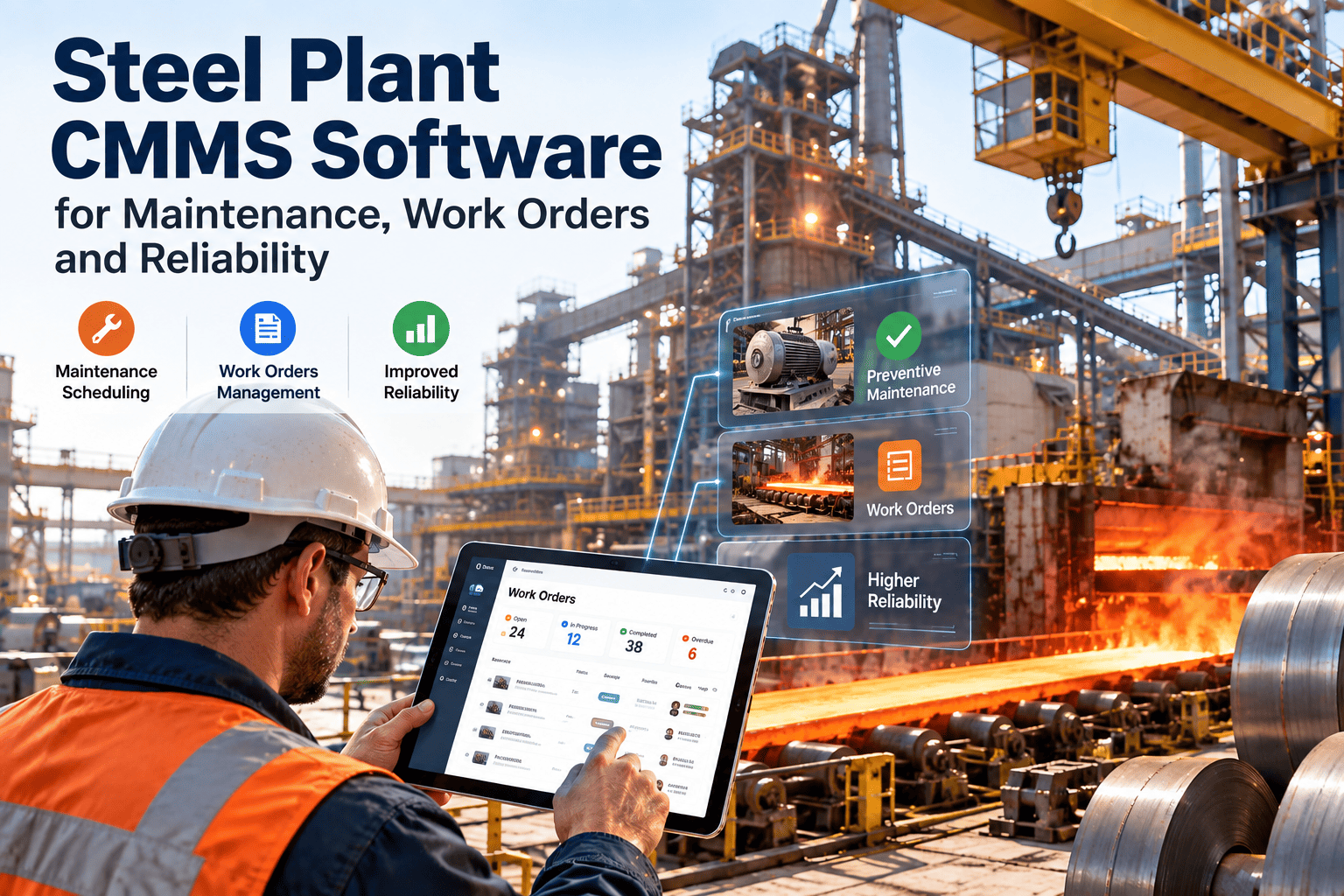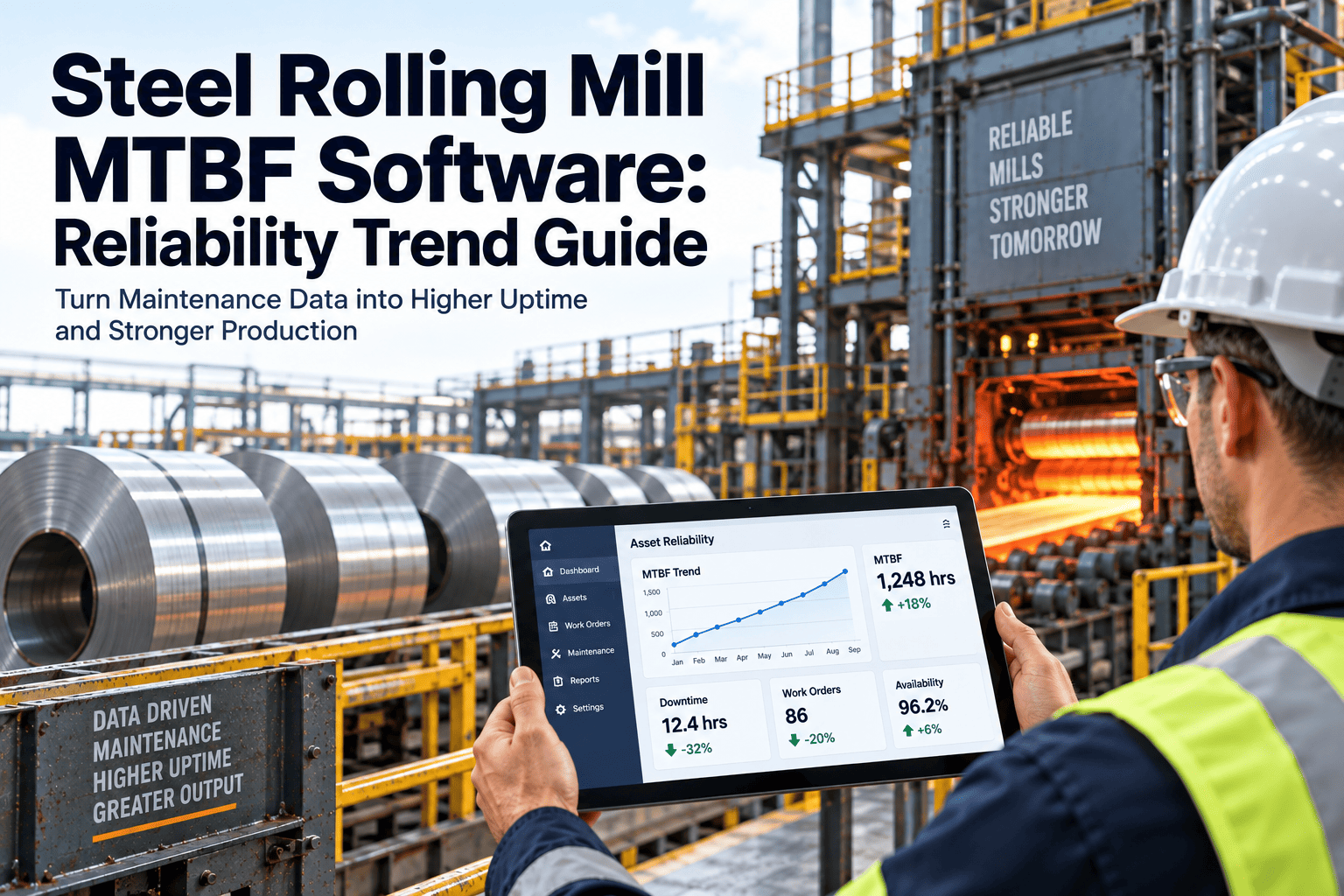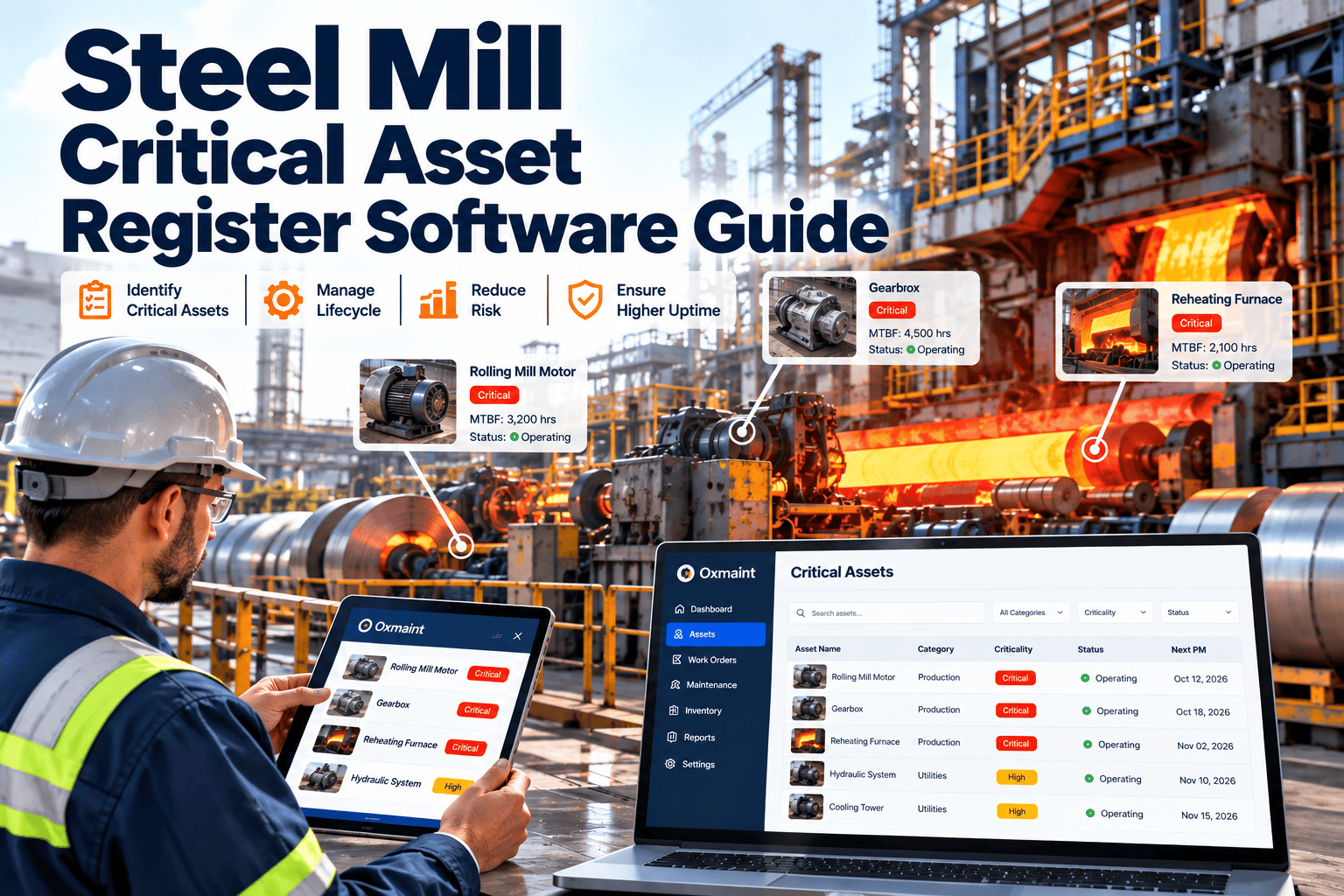
Steel mills run on a small number of extraordinarily expensive, highly specialized assets — furnaces, continuous casters, rolling stands, overhead cranes, conveyor systems — and losing even one of them mid-shift can ripple through an entire production schedule. Managing these assets well means knowing exactly where each machine sits in its lifecycle, what its failure history is telling you, and which units deserve capital planning attention rather than another patch repair. Most plants still reconstruct this picture from paper logs, spreadsheets and institutional memory instead of a connected system of record, which is exactly the gap that Oxmaint's asset management tools are built to close.
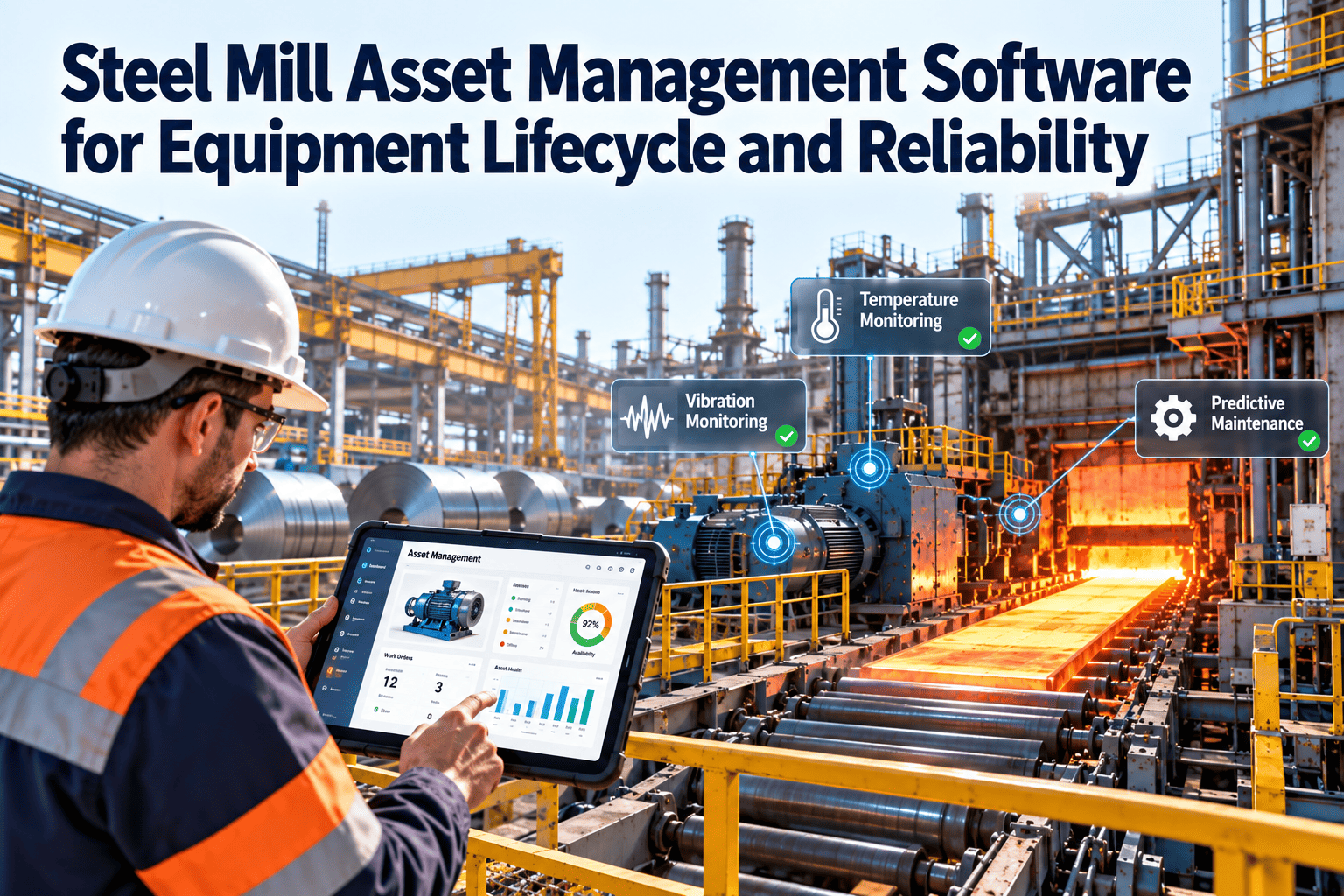
Steel Mill Asset Management Software for Equipment Lifecycle and Reliability
Track furnaces, casters, rolls, cranes and conveyors across their full lifecycle — commissioning, operation, degradation and replacement — with asset history and criticality built into every decision.
Why Steel Mill Assets Are Different From Ordinary Plant Equipment
A steel mill is not a facility with hundreds of interchangeable pumps and motors. It is a facility built around a handful of massive, custom-engineered production units, each one carrying six or seven figures of replacement value and each one uniquely difficult to take offline.
A blast furnace campaign can run for over a decade between major reline events, but the refractory lining, tuyeres, cooling staves and charging equipment all degrade on different timelines within that campaign, which means a single "furnace condition" rating rarely tells the full story. A continuous caster has mold, segment and roll components that wear at very different rates depending on grade mix and casting speed. An electric arc furnace shell, roof and electrode system each carry their own failure patterns tied to scrap chemistry and tap-to-tap cycle time.
Treating all of these assets the same way — one PM schedule, one criticality level, one work order priority — is how mills end up either over-maintaining low-risk equipment or under-maintaining the units that actually determine whether the plant makes tonnage this week. A criticality tier is not a static label either; an aging crane or a caster segment approaching end of campaign can move up a tier well before it fails, provided the history is there to show the trend.
The Five Stages of a Steel Mill Asset Lifecycle
Every major asset moves through the same broad lifecycle, but the signals that mark the transition from one stage to the next are different for a furnace than they are for a crane. Reading those signals early is what separates planned capital work from emergency outages.
See Your Asset History in One Place
Oxmaint brings furnace, caster, roll and crane records together so lifecycle stage and criticality are visible at a glance, not buried in separate logs.
Critical Equipment and the Lifecycle Risks Behind Each One
The table below maps common steel mill asset classes to the lifecycle risks that most often drive unplanned downtime, and the record-keeping that helps catch them earlier.
| Asset Class | Primary Wear Mechanism | Lifecycle Risk | Tracking Priority |
|---|---|---|---|
| Furnace shell & refractory | Thermal cycling, chemical erosion | Unplanned reline, burn-through | Thermal imaging, lining thickness logs |
| Continuous caster segments | Roll wear, bearing fatigue | Breakout, surface defects | Roll change history, alignment checks |
| Rolling mill rolls | Surface wear, spalling | Gauge deviation, strip defects | Roll grinding cycles, usage hours |
| Overhead cranes | Wire rope fatigue, brake wear | Safety exposure, ladle handling delay | Load test records, inspection compliance |
| Conveyor systems | Belt wear, idler bearing failure | Material handling bottleneck | Belt tension logs, idler replacement rate |
Where Equipment History Actually Changes Decisions
A single work order rarely tells you much. A pattern across twenty work orders on the same caster segment tells you whether you are looking at normal wear or the early signs of a bigger problem.
- Repeat failures on the same component flag a design, lubrication or operating condition issue rather than random chance.
- Rising repair cost per unit of production time signals that the asset is moving from stable operation toward accelerated wear.
- Comparing actual maintenance hours against OEM-recommended intervals shows whether a PM schedule is too loose or unnecessarily conservative.
- Cross-referencing inspection findings with subsequent breakdowns validates whether current inspection checklists are actually catching the right issues.
This is the core value of centralizing equipment history: decisions about rebuilds, reline timing and capital replacement stop being judgment calls made under outage pressure and start being supported by a documented trend, which also makes it far easier to defend a capital request when budget is tight.
Reactive Asset Tracking vs. Lifecycle-Based Asset Management
- Maintenance history split across logbooks, spreadsheets and memory
- Criticality decided informally, often after a failure
- Capital requests built from anecdote rather than trend data
- Inspection findings rarely linked back to the assets that failed
- Every asset carries a full work order and inspection history
- Criticality tiers set in advance and applied consistently
- Capital and reline planning backed by documented degradation trends
- Inspection checklists refined using actual failure data
Building an Asset Register That Reflects Reality
Before software can help, the underlying asset register needs to reflect how the plant actually operates. A few checks are worth running before rolling out a new system.
- Confirm every Tier 1 and Tier 2 asset has a unique record, not a shared line-level entry
- Attach OEM manuals, spare parts lists and warranty terms to each asset
- Set criticality tiers based on production impact, not just replacement cost
- Migrate at least twelve months of work order history where available
- Define PM intervals separately for each major component, not the machine as a whole
- Assign inspection checklists that map to known failure modes for that asset class
Predictive and Condition-Based Maintenance in Steel Manufacturing
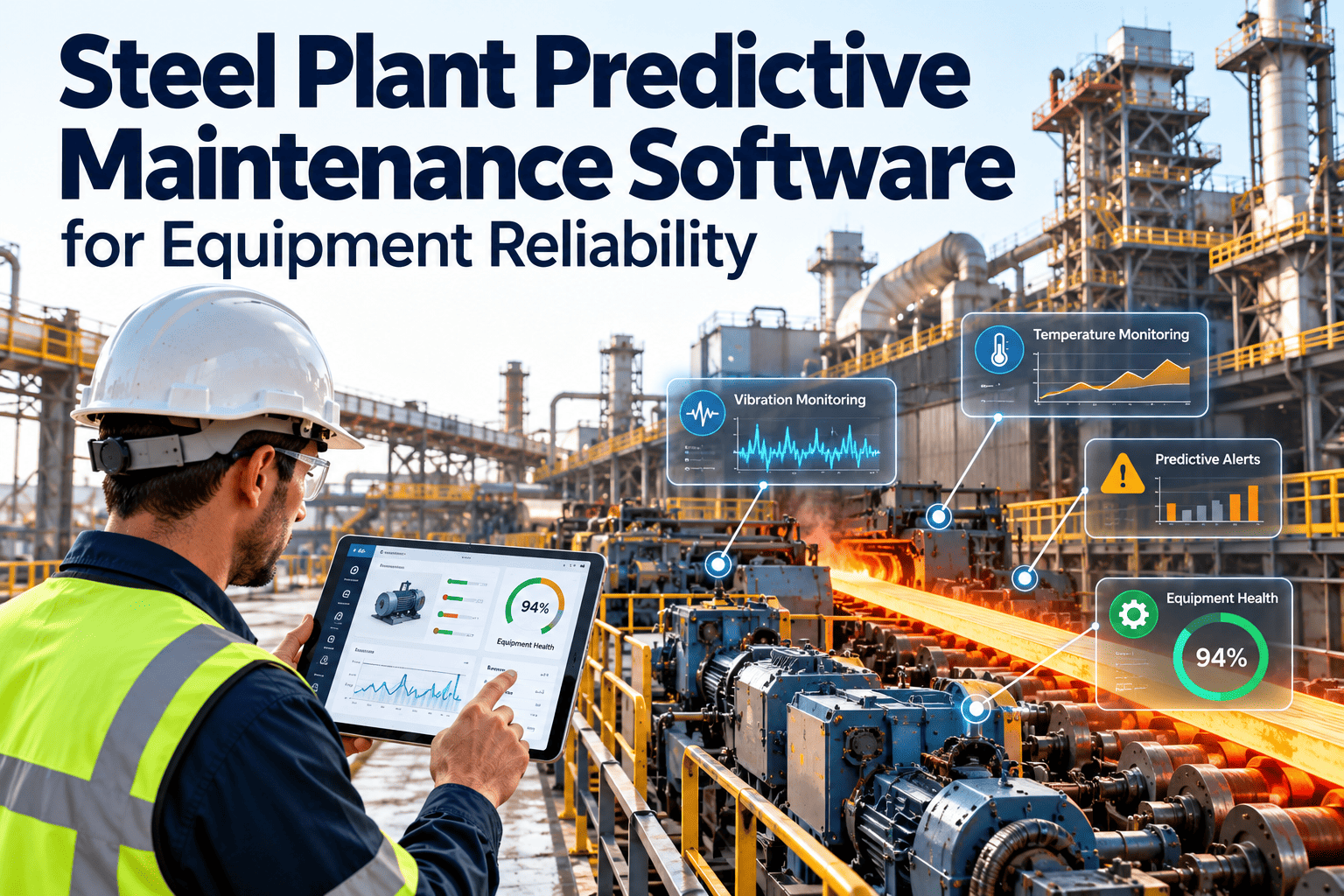
Steel mills were early adopters of condition monitoring on rotating equipment, but the practice has expanded well beyond bearings and gearboxes in recent years. Vibration analysis on drive motors, thermal imaging on furnace shells and refractory, and oil analysis on hydraulic and gear systems now generate a steady stream of condition data across most major asset classes.
The challenge is rarely a lack of sensors or inspection data. It is connecting that data back to the asset record so a rising vibration trend or a thermal hot spot automatically becomes part of the same history as the work orders and inspections already logged against that machine. Without that connection, condition monitoring produces reports that live separately from maintenance planning instead of feeding into it.
- Attach condition readings directly to the asset record, not a separate monitoring report
- Flag threshold breaches automatically instead of relying on someone to review a chart
A condition-based approach does not replace preventive maintenance on steel mill assets — it sharpens the timing. Roll changes, bearing replacements and refractory inspections can shift from a fixed calendar interval to a schedule informed by actual wear trends, which tends to reduce both unnecessary maintenance on healthy assets and surprise failures on assets that were wearing faster than the calendar assumed.
Compliance and Safety Record-Keeping for Steel Mill Assets
Steel plants carry a heavier regulatory and safety documentation load than most manufacturing environments, largely because of the equipment involved. Overhead cranes require periodic load testing and inspection under OSHA and ASME B30 guidelines. Pressure vessels and boilers tied to furnace and casting operations fall under jurisdictional boiler and pressure vessel codes. Lockout-tagout procedures around furnaces, casters and rolling stands need documented verification, not just a policy on paper.
Keeping this documentation attached to the specific asset record, rather than in a separate compliance binder, matters for two reasons. First, it means an auditor or inspector can see inspection history, corrective actions and sign-offs for a single crane or vessel without cross-referencing multiple systems. Second, it means maintenance planners see compliance due dates alongside routine PM and condition data, so a crane load test does not get scheduled in isolation from the rest of that asset's maintenance calendar.
- Overhead crane load tests and wire rope inspections tracked with due dates and certificates attached
- Pressure vessel and boiler inspection records tied to the specific unit, not a general facility file
- Lockout-tagout verification logged per asset for furnaces, casters and rolling stands
- Refractory and structural inspection findings retained across the full reline cycle for trend analysis
What Oxmaint Adds to Steel Mill Asset Management
Oxmaint is built to be the record that maintenance, reliability and operations teams all work from, rather than a system that sits alongside three other spreadsheets.
Getting Started Without Disrupting Production
Rolling out asset management software in an operating steel mill does not require a shutdown or a wholesale replacement of existing processes on day one. The most workable approach usually starts narrow and expands once the record proves itself.
- Begin with Tier 1 and Tier 2 assets only, since these carry the most downtime risk and the clearest payoff from better history
- Migrate the most recent twelve to twenty-four months of work order history rather than attempting a full historical import on day one
- Run mobile inspections on one or two asset classes first, such as cranes or rolling stands, before expanding plant-wide
- Set criticality tiers and PM intervals with input from both maintenance and operations, since each group sees different failure signals
- Review the first quarter of data to refine inspection checklists before locking them in as standard practice
This staged approach also gives reliability teams an early, credible data set to bring into capital planning conversations, rather than waiting a full year for the system to reach maturity before it produces anything useful.
Before we centralized asset records, every reline conversation started with someone digging through old logs to remember when the last one happened. Now the history is attached to the asset itself, and the capital planning conversation starts from data instead of memory.
Frequently Asked Questions
Bring Every Asset's History Into One System
From furnace to caster to crane, Oxmaint gives steel mill teams a single, criticality-aware record to plan maintenance, relines and capital replacement around.