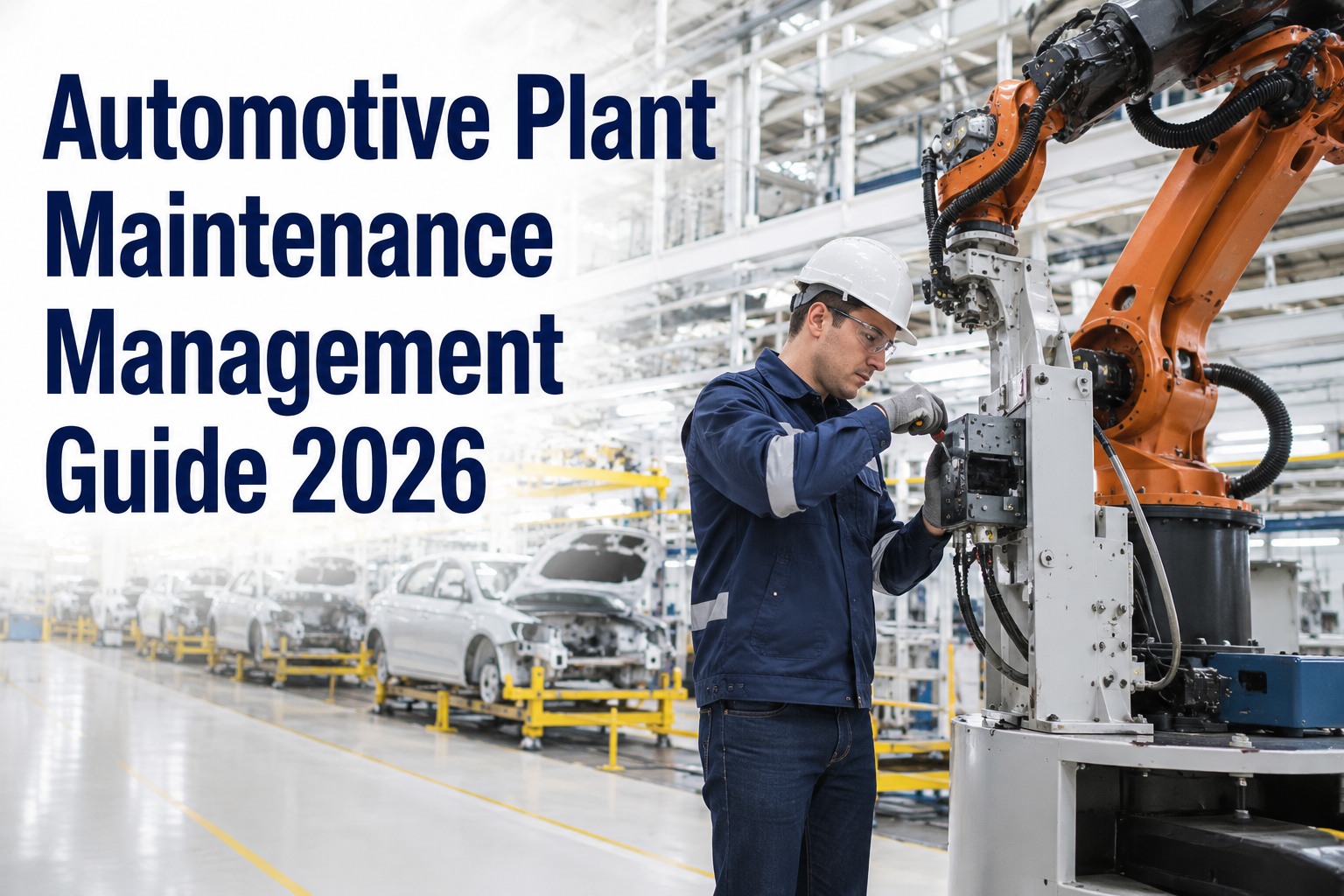
Automotive plant maintenance management in 2026 demands synchronization of robotic welding cells, stamping presses, paint booths, and body-in-white assembly lines at production volumes that leave no room for unplanned downtime. An automotive CMMS coordinates preventive maintenance schedules with JIT production takt times, ensuring that robotic cell PM, paint booth filter changes, and press shop reliability checks happen during planned changeover windows rather than during critical run cycles. OxMaint provides the AI-powered maintenance management software that automotive manufacturing teams use to structure work orders, track asset health, and sustain the 85%+ OEE standards this sector requires. You can explore the platform with a Start Free Trial or schedule a guided walkthrough tailored to your plant's maintenance operations.
Can your plant sustain 85%+ OEE when a single stamping press failure stops the entire line?
At automotive assembly volumes, one hour of unplanned downtime can cost $200K–$500K in lost production. OxMaint aligns preventive and predictive maintenance with JIT takt times — so robotic welding cells, paint booths, and press shops stay running without reactive firefighting.
What a modern automotive plant maintenance schedule covers
A high-volume automotive production maintenance program coordinates four critical zones — body shop robotics, press shop, paint shop, and final assembly — each with asset-specific PM intervals that must align with JIT production windows. The table below maps the core PM domains, their typical failure modes, and the business impact when maintenance is delayed.
| Plant Zone | Critical Assets | Primary PM Focus | Failure Impact |
|---|---|---|---|
| Body Shop | Robotic welding cells, spot guns, sealers | Weld tip dress & change, torch calibration, cable harness inspection | Weld quality defects, BIW rework, line stoppage |
| Press Shop | Stamping presses, coil feeders, die sets | Hydraulic fluid sampling, slide gib clearance, die lubrication system checks | Die damage, panel scrap, catastrophic press failure |
| Paint Shop | Booths, ovens, electrocoat tanks, robots | Filter replacement, atomizer bell cleaning, oven burner inspection | Paint defects, rework, VOC compliance violations |
| Final Assembly | Conveyors, AGVs, torque tools, lifts | Torque tool calibration, conveyor chain tension, battery fleet rotation | Torque defects, throughput bottleneck, safety incidents |
The cost of spreadsheet-based maintenance at a mid-size assembly plant
A 180-asset automotive assembly plant relying on Excel spreadsheets and paper work orders typically spends $42K–$65K annually on unnecessary reactive repairs and expedited spare parts. When a robotic welding controller fails mid-shift because a PM was missed on a 90-day interval, the cost compounds rapidly across the JIT chain.
The same plant deploying OxMaint reduced unplanned downtime by 38% in the first 90 days by auto-triggering PM work orders on robotic welding cells based on weld count thresholds rather than calendar intervals alone. The CMMS investment paid for itself within the first prevented press shop event.
How OxMaint powers automotive plant reliability
OxMaint is built for the intensity of automotive manufacturing — where robotic cells, presses, and paint systems must run at 85%+ OEE and every minute of unplanned stoppage cascades through the JIT supply chain. These are the capabilities that translate directly into measurable plant-floor outcomes.
Robot PM libraries with usage-based triggers
Build PM templates for weld tip dressing, torch calibration, and cable inspection that auto-trigger on weld count, arc hours, or cycle counts — not just calendar dates. Keeps robotic welding cells in spec without over-maintaining.
Predictive analytics for press & conveyor health
OxMaint AI analyzes vibration, hydraulic pressure, and temperature trends on stamping presses and conveyor motors — flagging bearing wear and hydraulic degradation before they become catastrophic failures that damage dies.
JIT-aligned work order scheduling
Schedule PM work orders during planned changeovers, model changeovers, or weekend windows — not mid-shift. OxMaint integrates with production takt time so maintenance never conflicts with JIT delivery commitments.
Spare parts inventory with min-max automation
Track critical spares — weld tips, hydraulic valves, paint atomizer bells, die lubricants — with automated reorder points. Link parts directly to asset PM templates so technicians never wait for parts mid-job.
Robotic welding maintenance and stamping press PM: where breakdowns start
Two asset categories cause the majority of catastrophic automotive line stoppages: robotic welding cells in the body shop and stamping presses in the press shop. Understanding their failure signatures — and the PM intervals that prevent them — is the foundation of any automotive assembly CMMS strategy.
Robotic Welding Cell PM
- Weld tip dress every 250–500 weld spots; full tip change at defined wear limit
- Torch TCP (tool center point) calibration check weekly or after collision
- Welding cable harness & water-cooling line inspection every 30 days
- Controller fault log review and contactor resistance check quarterly
- Servo motor encoder backup and grease replenishment per OEM cycle
Stamping Press Maintenance
- Hydraulic fluid ISO viscosity sampling every 500 operating hours
- Slide gib clearance measurement & adjustment monthly
- Die lubricant concentration and flow sensor verification weekly
- Crank bearing vibration trend analysis — baseline + monthly readings
- Counterbalance pressure setting verification and cushion seal inspection
Paint Booth & Oven PM
- Booth intake & exhaust filter replacement per pressure-delta threshold
- Atomizer bell cleaning and swirl air channel inspection every shift change
- Oven burner combustion analysis and heat exchanger inspection quarterly
- Electrocoat tank anode resistance & rectifier ripple check monthly
- VOC monitoring system calibration per environmental compliance cycle
Switching from spreadsheets to automotive CMMS: month-by-month
Most automotive plants can transition from spreadsheet-and-paper maintenance to a fully operational OxMaint CMMS in 4–6 weeks. Here is what the rollout looks like across the first 90 days — and the reliability gains at each milestone.
Asset hierarchy & PM import
Import 150–500+ assets into OxMaint with parent-child hierarchy (plant → shop → line → cell → asset). Migrate existing PM intervals, OEM manuals, and spare parts lists from Excel into structured asset records.
Work order automation live
Auto-generated PM work orders begin flowing to technicians via mobile. Reactive work orders are logged with downtime coding, root-cause fields, and failure photos. Paper work orders eliminated plant-wide.
Predictive alerts & KPI dashboards
OxMaint AI begins flagging anomaly trends on press vibration, hydraulic pressure, and weld controller data. MTBF, MTTR, and OEE dashboards go live for plant management — replacing end-of-month Excel reporting.
See OxMaint on your assets — book a 30-minute plant demo
We will map your robotic welding cells, stamping presses, and paint booth PM schedules live in the platform and show you exactly where downtime is hiding.
Automotive plant maintenance management: frequently asked questions
What is automotive plant maintenance management?
Automotive plant maintenance management is the structured coordination of preventive, predictive, and corrective maintenance across body shop robotics, stamping presses, paint booths, and final assembly — aligned with JIT production takt times. An automotive CMMS like OxMaint automates PM scheduling, work order dispatch, spare parts tracking, and compliance reporting so plants sustain 85%+ OEE without reactive firefighting.
How does a CMMS improve automotive assembly maintenance?
A CMMS eliminates spreadsheet blind spots by auto-triggering PM work orders based on equipment usage (weld counts, press cycles, run-hours) rather than calendar dates alone. This typically cuts unplanned downtime 30–50%, reduces expedited spare parts spend by 50–60%, and gives plant managers real-time MTBF and MTTR dashboards. You can see this in action — Book a Demo and we will map it to your lines.
How often should robotic welding cells receive preventive maintenance?
Robotic welding cell PM intervals vary by component: weld tips require dressing every 250–500 weld spots and replacement at a defined wear limit, torch TCP calibration should be checked weekly or after any collision, and cable harness plus cooling line inspections should occur every 30 days. OxMaint automates these intervals based on actual weld count data, ensuring PM happens exactly when needed — not too early, never too late.
What are the biggest maintenance challenges in automotive manufacturing?
The top challenges are aligning PM with JIT production windows (so maintenance never stops a running line), managing spare parts for hundreds of unique robotic and press assets, tracking compliance across ISO 55000 and environmental standards, and shifting from reactive to predictive maintenance. OxMaint addresses all four with usage-based PM triggers, automated min-max inventory, audit-ready maintenance logs, and AI-driven failure prediction.
How long does it take to implement an automotive CMMS?
Most automotive plants go live with OxMaint in 4–6 weeks: week 1–2 for asset hierarchy and PM import, week 3 for work order automation and mobile rollout, and week 4–6 for predictive analytics and KPI dashboards. The platform is designed for rapid migration from Excel or legacy systems — Start Free Trial to import your first assets today.
Stop losing $22K+ per hour to unplanned line downtime
Join automotive plants using OxMaint to align PM with production, predict failures before they happen, and sustain world-class OEE.
Free 14-day trial · No credit card