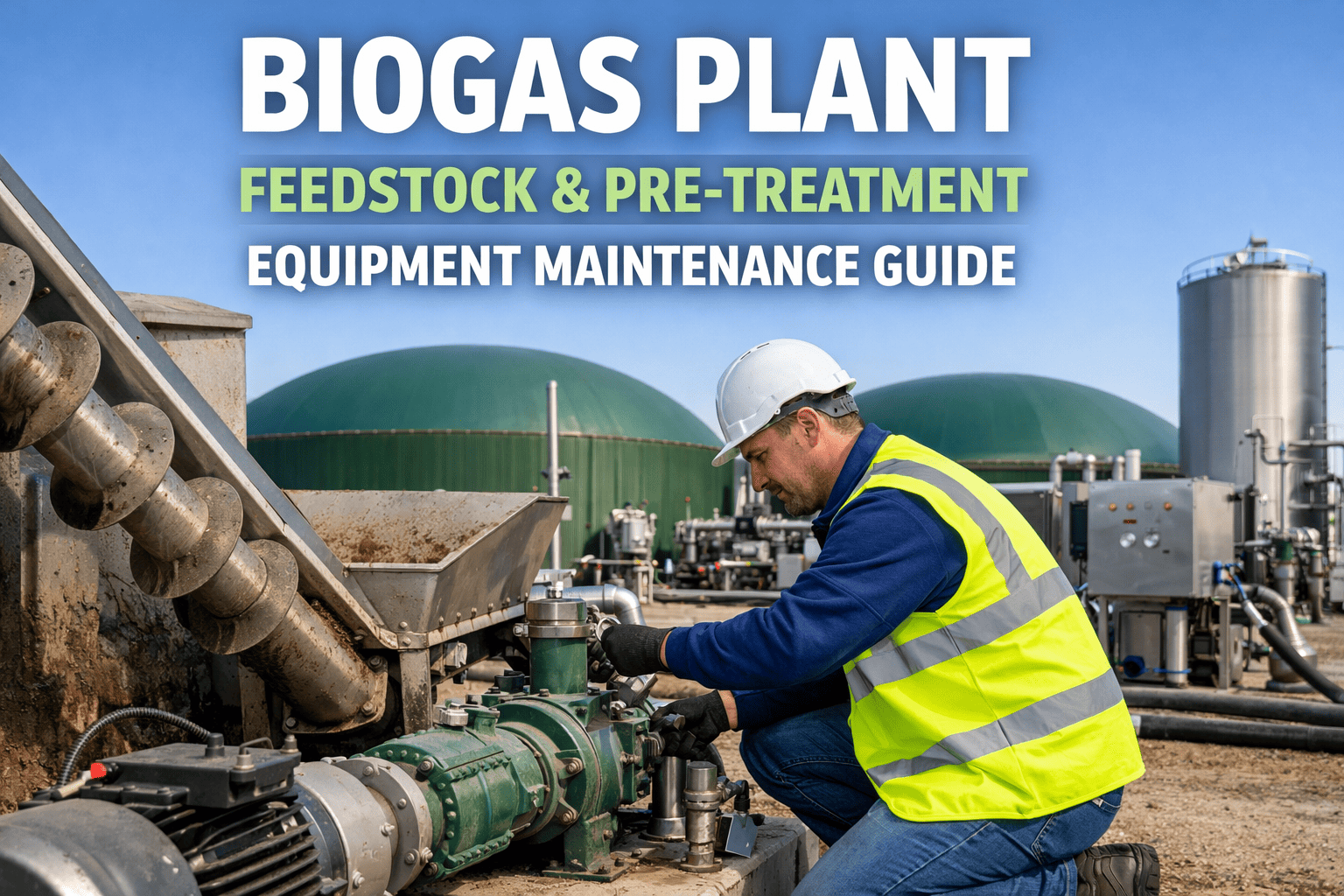
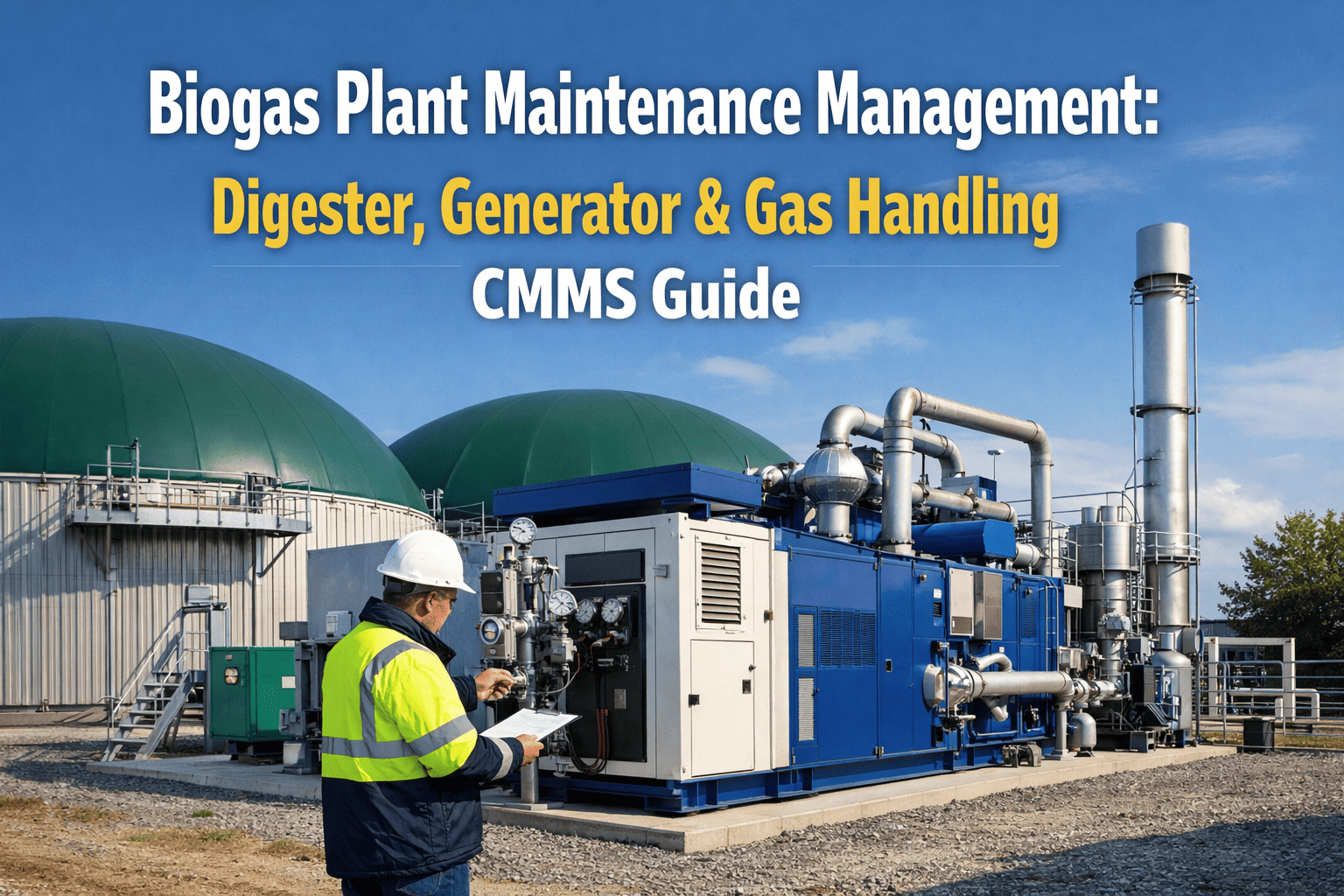
A food waste biogas plant in the Netherlands ran its de-packaging unit for 11 months without a scheduled screen inspection — because nobody had written it into the PM programme. When the unit seized, the resulting contamination of the feedstock stream caused five days of digester operational disruption, a $95,000 emergency repair, and two weeks of sub-optimal gas yield while the biological population recovered. Pre-treatment equipment failures are not expensive because of the repair cost — they are expensive because of what happens to the feedstock stream, and subsequently to the digester biology, when contamination or underprocessed substrate enters the system. OxMaint's pre-treatment PM programme ensures every receiving hopper, shredder, pasteuriser, mixing tank, and conveyor system is maintained on a structured schedule — before feedstock quality degrades and the biological process feels it.
Receiving Hoppers. Shredders. Pasteurisers. Mixing Tanks. Conveyors. All Maintained — Before Feedstock Quality Fails.
Pre-treatment PM · Shredder blade inspection · Pasteuriser temperature compliance · Mixing tank agitator PM · Conveyor belt maintenance — all connected through OxMaint.
Average emergency de-packaging unit repair including digester disruption costs — preventable with quarterly PM
38%
Biogas yield reduction from contaminated feedstock reaching the digester — caused by failed pre-treatment screens
72 hrs
Average pasteuriser temperature log gap before corrective action — caught in hours with OxMaint monitoring
2.9x
Cost difference between planned shredder blade replacement vs emergency breakdown replacement and downtime
Six Pre-Treatment Maintenance Domains OxMaint Manages
Feedstock and pre-treatment equipment maintenance spans six critical domains — each with its own failure mode, feedstock quality impact, and regulatory compliance requirement. Configure your pre-treatment PM programme in OxMaint.
RCV
Receiving Hoppers & Tipping Areas
Environment permit · Health & Safety
Receiving hopper structural inspection, hydraulic tipping system PM, and drainage channel maintenance. Hopper liner wear and seal condition checked quarterly. Odour control system — biofilter and scrubber — maintained on separate PM schedule to meet planning consent emission limits.
Hopper liner wear and structural inspection quarterly
Hydraulic tipping system — seal and cylinder PM
Odour control biofilter media condition and moisture
Hopper inspection records · Odour control PM log
SHR
Shredders & De-packaging Units
OEM PM schedule · Contamination control
Shredder blade wear tracked by throughput tonnes — replacement triggered at wear threshold, not calendar date. Screen and reject system inspection detects packaging contamination build-up before it reaches the feedstock pump. Bearing vibration and drive current trended per unit.
Blade wear — tonnes processed vs replacement threshold
Screen and reject grid inspection — contamination buildup
Drive current and bearing vibration per shredder
Blade replacement records · Throughput-based PM log
PST
Pasteuriser Systems
Animal By-Products Reg 1069/2009 · ABPRs
Pasteuriser temperature compliance is a legal requirement under ABP regulations — feedstock must reach 70°C for 60 minutes before entering the digester. OxMaint logs temperature records automatically from SCADA and generates a corrective work order if any batch fails the time-temperature standard.
Temperature log — 70°C for 60 min per batch (ABP compliance)
Heat exchanger fouling assessment — quarterly
Agitator and seal condition inspection per vessel
ABP temperature compliance log · Batch records per vessel
MXT
Mixing Tanks & Buffer Storage
OEM schedule · Slurry consistency targets
Buffer tank agitator PM — seal, shaft, bearing, and impeller condition checked quarterly. Tank level sensors and flow meters calibrated annually. Slurry consistency and total solids content tracked per loading event to ensure substrate is within digester acceptance range before pump dispatch.
Agitator seal and bearing inspection per tank
Level sensor and flow meter calibration annually
Slurry TS content log per loading event
Agitator PM records · Slurry quality log per batch
CNV
Conveyors & Transfer Systems
OEM PM · Belt tension standards
Belt conveyor inspection — tension, tracking, splice condition, and drive pulley alignment — at two-weekly intervals for high-duty food waste applications. Screw conveyors tracked by torque current trending. Skirt board wear and seal condition prevents spillage that creates slip and contamination hazards.
Belt tension and tracking — fortnightly inspection
Screw conveyor torque current trending
Skirt board and spillage containment condition
Conveyor PM records · Tension and tracking log
PMP
Feedstock Pumps & Pipework
OEM schedule · Anti-blockage protocol
Progressive cavity and centrifugal pump PM — stator wear, seal inspection, and pressure performance trending. Pipework inspection for blockage indicators — pump current increase and discharge pressure drop. Blockage clearing protocol documented and linked to equipment record.
Pump current and pressure performance trending
Stator and seal wear — replacement at threshold
Blockage event log — frequency trend per pump
Pump PM records · Blockage frequency trend log
Pre-Treatment Failure Impact on Biogas Yield — What Goes Untracked
Eight maintenance and compliance obligations define pre-treatment operations for ABP-regulated and permitted biogas facilities. Configure all eight in OxMaint.
Maintenance Activity
Equipment
Interval / Basis
Documentation Required
OxMaint Status
Shredder Blade Wear Tracking
All shredders — tonnes-based
Per throughput threshold
Blade condition, throughput log, replacement record
AI cameras on conveyor belt scan for contamination — plastic, glass, and metal items flagged before entering the shredder, reducing blade wear and screen blockage frequency by up to 40%.
Predictive Wear Models
Tonnes-based
Digital twin models shredder blade wear against throughput tonnes and feedstock composition — predicting optimal replacement timing before performance degrades, not after breakdown.
SCADA / PLC Integration
Auto-triggers
SCADA pasteuriser temperature alarms and pump blockage fault codes auto-generate work orders in OxMaint — ABP compliance events logged automatically without manual data entry.
IoT Vibration & Current
24/7
Vibration and current sensors on shredder drives and conveyor motors feed OxMaint dashboards continuously — bearing wear and overload conditions detected weeks before mechanical failure.
SAP / ERP Integration
Auto-order
Shredder blade replacement and screen consumable orders generated automatically from OxMaint work scope — parts ordered before the planned maintenance window, not after the breakdown.
2.9x
Cost of reactive shredder breakdown vs planned blade replacement — same throughput, same substrate
100%
ABP pasteuriser batch compliance with OxMaint auto-logging vs 68% on manual paper records
40%
Reduction in screen blockage frequency from AI camera-assisted contamination detection at intake
"Our Ofgem GGSS audit asked for 12 months of pasteuriser temperature records and feedstock quality logs. We generated the complete package from OxMaint in 14 minutes. The auditor noted we were the only plant in their caseload with 100% batch compliance records for the whole year. That was the direct result of auto-logging from SCADA."
Q1How does OxMaint manage shredder blade replacement on a throughput basis rather than calendar?▼
OxMaint tracks cumulative throughput tonnes per shredder unit — either from a manual operator log or automatically from a weighbridge or SCADA integration. When throughput reaches the configured blade replacement threshold, a PM work order is generated automatically — regardless of calendar date.
Q2Can OxMaint auto-log pasteuriser temperature records for ABP compliance?▼
Yes — OxMaint integrates with SCADA to receive temperature data per pasteuriser vessel. Each batch is automatically assessed against the 70°C for 60-minute ABP standard. Batches that fail trigger an immediate corrective work order and are flagged in the compliance log for regulator review.
Q3What documentation does OxMaint generate for GGSS or Environment Agency permit audits?▼
OxMaint generates a complete pre-treatment compliance package — pasteuriser batch records, feedstock quality logs, maintenance records, and odour control PM history — formatted for Ofgem GGSS, Environment Agency, and permit compliance review in under 15 minutes.
Q4How does OxMaint track feedstock quality to protect digester biological process?▼
OxMaint logs TS, VS, COD, and contaminant levels per incoming substrate stream. When a feedstock quality parameter falls outside the configured digester acceptance range, a corrective work order is generated — preventing out-of-specification substrate from being dispatched to the digester without review.
Q5Does OxMaint support multi-stream feedstock plants with different pre-treatment routes?▼
Yes — OxMaint configures separate PM templates for each feedstock stream and pre-treatment route. Food waste streams with ABP pasteuriser requirements run on different compliance schedules from crop-based or slurry inputs. Each stream has its own quality log, PM schedule, and compliance documentation trail.
Every Screen Inspected. Every Batch Logged. Every Compliance Record Ready.
Pre-treatment PM + feedstock quality tracking — active in 7 days.