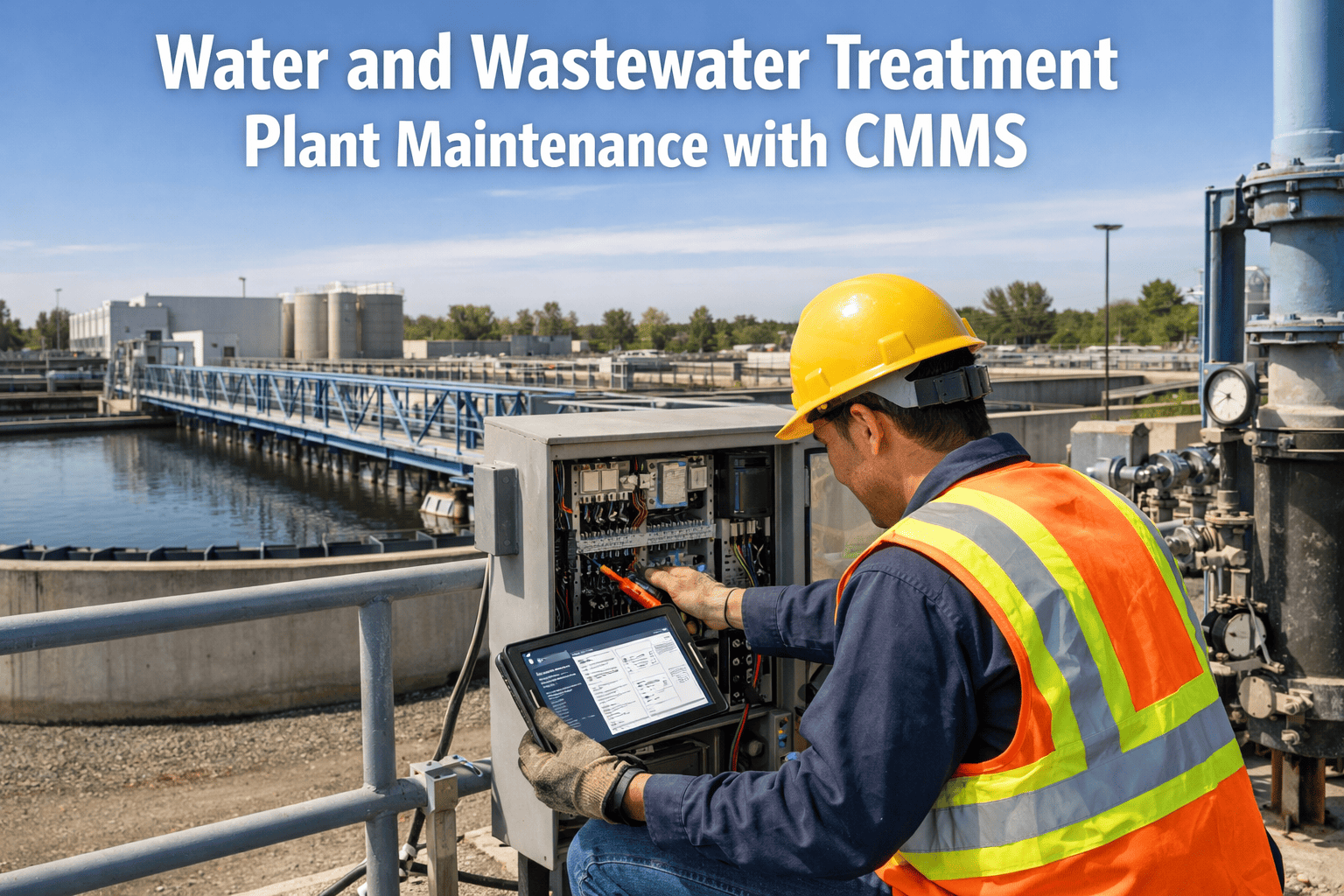
The EPA estimates that 15,000 of America's 16,000 publicly owned treatment works require significant maintenance investment — yet most still operate with paper logbooks, whiteboard schedules, and institutional knowledge that retires with experienced operators. A single aeration blower failure drops dissolved oxygen below treatment thresholds within hours, triggering ammonia permit exceedances and regulatory action within 24 hours. A failed pump seal at a lift station during heavy rainfall causes a sanitary sewer overflow that makes local news and invites enforcement orders. These are not edge cases — they are the predictable consequences of reactive maintenance in an environment that demands absolute reliability. The global wastewater treatment maintenance services market is valued at $15 billion in 2025 and growing at 7% CAGR, driven by aging infrastructure, tightening regulations, and the reality that communities depend on these facilities every hour of every day. Oxmaint's CMMS platform gives water and wastewater treatment plants the digital maintenance backbone they need — automated PM scheduling, real-time asset tracking, mobile work orders, and compliance documentation that satisfies regulators without burying your team in paperwork.
The Treatment Process Train: Where Maintenance Matters Most
Wastewater treatment relies on interdependent process trains where each equipment failure cascades through downstream treatment. A CMMS must model these relationships accurately because maintaining the headworks screening system is not an isolated task — it protects every downstream process from debris damage that compounds repair costs exponentially. Below is the complete treatment process with critical maintenance touchpoints at each stage.
Headworks & Screening
Primary Treatment
Secondary (Biological) Treatment
Tertiary Treatment & Disinfection
Solids Handling & Discharge
Each stage depends on the one before it. CMMS-driven maintenance ensures that no single point of failure cascades into a plant-wide upset or permit violation. Book a demo to see how Oxmaint models treatment process dependencies and prioritizes maintenance by consequence of failure — not just equipment age.
Why Reactive Maintenance Fails in Water Treatment
Treatment plants running reactive maintenance spend 3–5x more per repair, suffer permit violations, and replace equipment years before necessary. The shift from reactive to proactive CMMS-driven maintenance is not a technology preference — it is an operational necessity driven by public health obligations, regulatory requirements, and fiscal responsibility. Start your free Oxmaint trial and make the shift from reactive chaos to planned reliability.
Critical Equipment Maintenance Guide
Water and wastewater plants contain hundreds of assets operating in corrosive, wet, and chemically aggressive environments. Equipment deterioration is accelerated compared to typical industrial settings, making predictive and preventive maintenance even more critical. Below are the highest-consequence equipment categories with specific CMMS-tracked maintenance requirements.
Pumps (Lift Stations, RAS/WAS, Chemical Feed)
Pumps are the single largest equipment category in water/wastewater. Seal failures, impeller wear, and bearing degradation are accelerated by abrasive grit and corrosive chemicals. CMMS tracks run-hours to trigger seal replacement at manufacturer intervals (typically 18,000–24,000 hours), schedules monthly vibration analysis, and logs quarterly impeller inspections for wear and rag accumulation.
Aeration Systems (Blowers, Diffusers, DO Controls)
Aeration is the heart of biological treatment. A single blower failure drops dissolved oxygen below levels sustaining nitrification, causing ammonia permit exceedances within 12–24 hours. CMMS enables continuous vibration monitoring with automated alerts at 60-day, 30-day, and critical thresholds. Diffuser membrane replacement is scheduled by run-hours and efficiency degradation tracking.
Clarifiers (Primary & Secondary)
Clarifier drives, chains and flights, and sludge collection mechanisms operate submerged in corrosive environments. Torque monitoring through CMMS-connected sensors detects early signs of mechanical binding or chain stretch before catastrophic failure causes solids bypass into effluent. Weir leveling is tracked quarterly to maintain uniform overflow.
Disinfection Systems (UV, Chlorination)
UV lamp degradation follows predictable curves — CMMS tracks operating hours against manufacturer intensity specifications to schedule replacements before output drops below pathogen inactivation thresholds. Chlorine analyzer calibration is tracked on fixed schedules with automatic work order generation and deviation logging for compliance records.
Digesters & Biosolids Handling
Anaerobic digesters involve confined space entry, explosive gas environments, and complex mechanical systems. CMMS manages safety permit workflows (gas testing, confined space entry, hot work permits), tracks digester mixing equipment vibration, and schedules gas safety system inspections. Belt press and centrifuge maintenance is triggered by run-hours and polymer consumption trends.
Instrumentation & SCADA
Flow meters, level sensors, pH probes, DO analyzers, and turbidity sensors provide the data that drives process control decisions. When instruments drift out of calibration, operators make decisions based on bad data — leading to chemical overdosing, process upsets, or undetected permit exceedances. CMMS tracks calibration schedules, logs verification results, and flags overdue instruments automatically.
Every piece of equipment listed above operates in conditions that accelerate wear beyond typical industrial rates. Run-hour-based and condition-based PM triggers in your CMMS ensure maintenance happens at the right time — not too early (wasting budget) and not too late (risking failure). Sign up for Oxmaint and configure equipment-specific PM schedules based on actual operating data, not calendar guesswork.
Built for Treatment Plant Complexity
Oxmaint provides run-hour-based PM triggers, mobile work orders for wet/harsh environments, automated compliance documentation, and SCADA integration — designed for the realities of water and wastewater operations.
Permit Compliance: How CMMS Protects Your Discharge Permit
For water and wastewater plants, maintenance is not just about equipment uptime — it is about environmental protection and public health. Every piece of treatment equipment is a link in the chain between raw sewage and clean water discharged to receiving streams. CMMS-driven maintenance programs create the documented evidence trail that proves your facility is meeting its obligations.
NPDES Permit
National Pollutant Discharge Elimination System permits define effluent limits for BOD, TSS, ammonia, phosphorus, and pathogen indicators. CMMS documents every maintenance action on treatment equipment with timestamps, creating the evidence trail that proves permit exceedances were not caused by maintenance negligence.
EPA Clean Water Act
Federal requirements for wastewater treatment and discharge quality. CMMS automates inspection schedules for all treatment process equipment, tracks calibration verification for compliance monitoring instruments, and generates audit-ready maintenance history reports on demand.
OSHA Safety Standards
Confined space entry, lockout/tagout, fall protection, and chemical handling requirements are inherent to treatment plant maintenance. CMMS digitizes safety permits, automates LOTO procedures, tracks confined space entry logs, and ensures safety equipment inspection records are always current and accessible.
State Regulatory Requirements
State environmental agencies impose additional requirements beyond federal standards — including operator certification tracking, annual facility assessments, and enhanced monitoring triggered by any violation. CMMS tracks operator certifications and renewal dates, schedules state-required inspections, and maintains complete maintenance history for state audit requests.
SCADA and IoT Integration: Connecting Sensors to Work Orders
The most valuable CMMS integration for water and wastewater plants is the bidirectional connection to SCADA systems. When a pump trips due to high vibration or a blower motor exceeds temperature limits, the SCADA alarm should immediately create a CMMS work order with the relevant sensor data attached — shortening the time between detection and response from hours to minutes.
When SCADA pushes equipment runtimes directly to your CMMS, preventive maintenance events trigger automatically based on actual usage — not arbitrary calendar dates. This is the foundation of condition-based maintenance that extends equipment life by 25–40% while maintaining continuous permit compliance. Book a demo to see how Oxmaint connects to your existing SCADA infrastructure.
Implementation: From Paper Logbooks to Digital Maintenance
Transitioning a treatment plant from paper-based maintenance to a CMMS does not require shutting down operations. The implementation follows a structured approach that layers digital tools onto existing workflows — delivering value at each phase while the plant continues operating 24/7.
Asset Inventory & Hierarchy
Walk the plant and document every asset — pumps, blowers, clarifier drives, UV systems, chemical feed equipment, instrumentation. Build the CMMS asset hierarchy mirroring your process train: Headworks → Primary → Secondary → Tertiary → Solids. Assign criticality ratings based on consequence of failure to treatment process, not replacement cost.
PM Program Activation
Configure preventive maintenance schedules for all critical equipment — run-hour-based triggers for pumps and blowers, calendar-based schedules for inspections and calibrations, condition-based triggers where sensors are available. Deploy mobile CMMS to operators and maintenance staff. Start digital work order creation for all maintenance activities.
Integration & Compliance
Connect CMMS to SCADA for automated work order generation from alarms and run-hour counters. Enable inventory management for spare parts (pump seals, bearings, UV lamps, filter media). Activate compliance dashboards tracking PM completion rates, instrument calibration status, and safety inspection schedules. Begin generating audit-ready reports.
Optimization & Predictive Evolution
Analyze maintenance data to refine PM frequencies — are you maintaining too often (wasting budget) or not often enough (risking failures)? Build failure trend reports that identify chronic equipment problems. Evolve from time-based to condition-based maintenance using vibration, temperature, and performance data to trigger work orders at the optimal moment.
Protect Your Discharge Permit and Cut Maintenance Costs
Treatment plants using Oxmaint achieve 95%+ PM compliance, continuous permit compliance, and 40–60% reductions in emergency repairs. See the treatment plant templates built for your process equipment.
Key Performance Indicators for Treatment Plant Maintenance
These metrics distinguish well-maintained treatment facilities from those one equipment failure away from a permit violation. Track them automatically through your CMMS to maintain continuous visibility into maintenance program health.