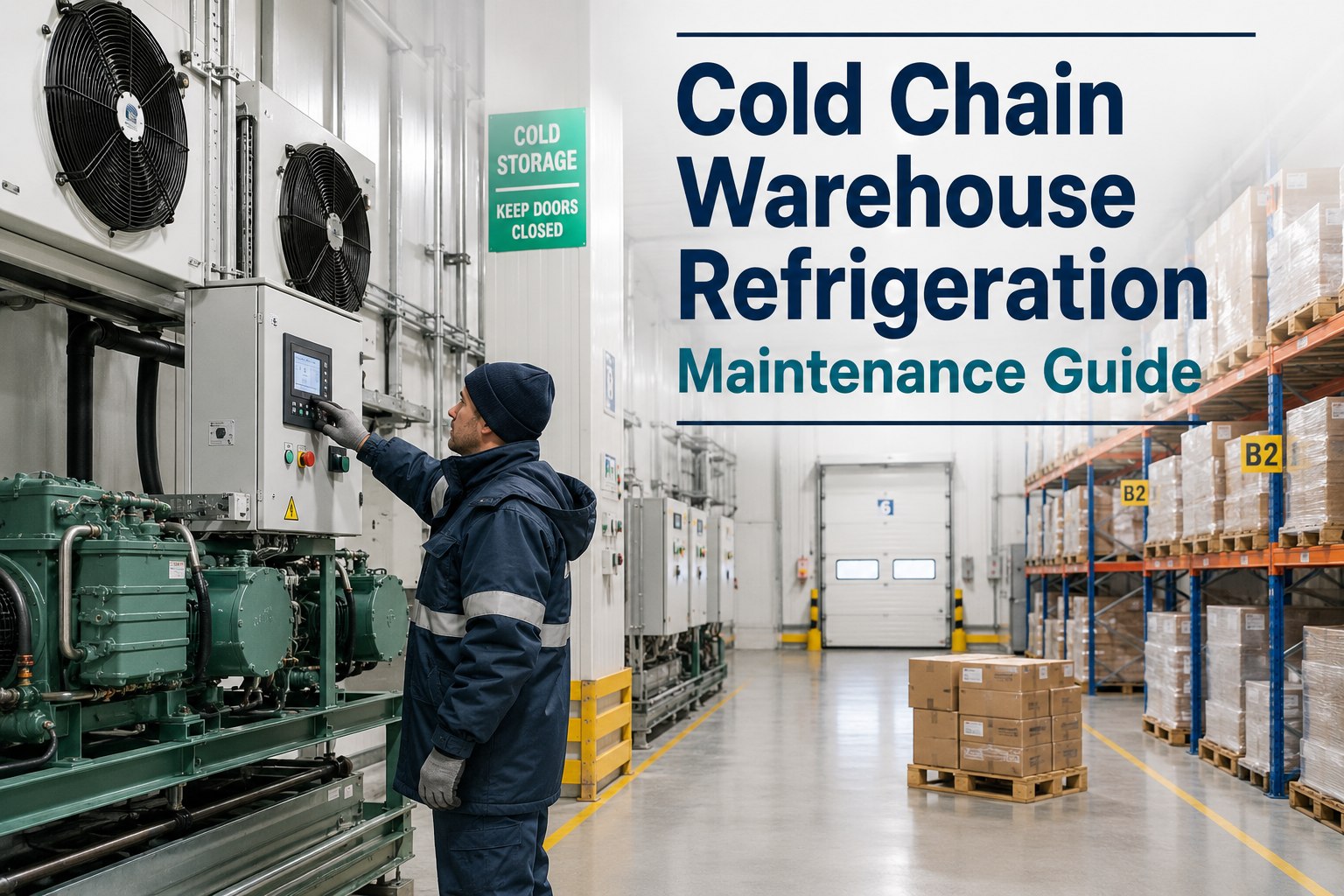
Cold chain warehouse refrigeration maintenance is the disciplined practice of keeping ammonia and HFC refrigeration systems, blast freezers, cold dock doors and temperature-monitoring infrastructure in compliant, reliable working order — and it sits at the intersection of EPA Section 608, OSHA Process Safety Management and cold chain integrity. A single undetected refrigerant leak, evaporator failure or dock-door seal gap can trigger a temperature excursion that destroys tens of thousands of dollars of frozen inventory in hours. OxMaint gives cold storage operations teams the refrigeration PM library, refrigerant compliance workflow, temperature-monitoring integration and audit-ready work-order history needed to prevent those failures — you can Start Free Trial or book a personalized demo to see it on your assets today.
Can your cold storage warehouse survive a 4-hour refrigeration outage without losing a pallet?
A single blast-freezer evaporator failure at −30 °C can push product temperatures above the HACCP critical limit in under 90 minutes. OxMaint's refrigerated warehouse CMMS schedules preventive maintenance, tracks refrigerant compliance under EPA Section 608, and integrates real-time temperature data so your team acts before an excursion becomes a write-off.
Why cold chain warehouse maintenance is non-negotiable
Refrigeration accounts for 50–70% of a cold storage facility's total energy spend, and unplanned compressor or evaporator failures can double that figure in a single quarter through emergency call-outs, expedited parts and product loss. For a 500,000 ft² refrigerated warehouse running ammonia or HFC systems, a single 4-hour outage during peak season can destroy $200K–$500K of frozen inventory — before regulatory fines, customer chargebacks and reputation damage are tallied.
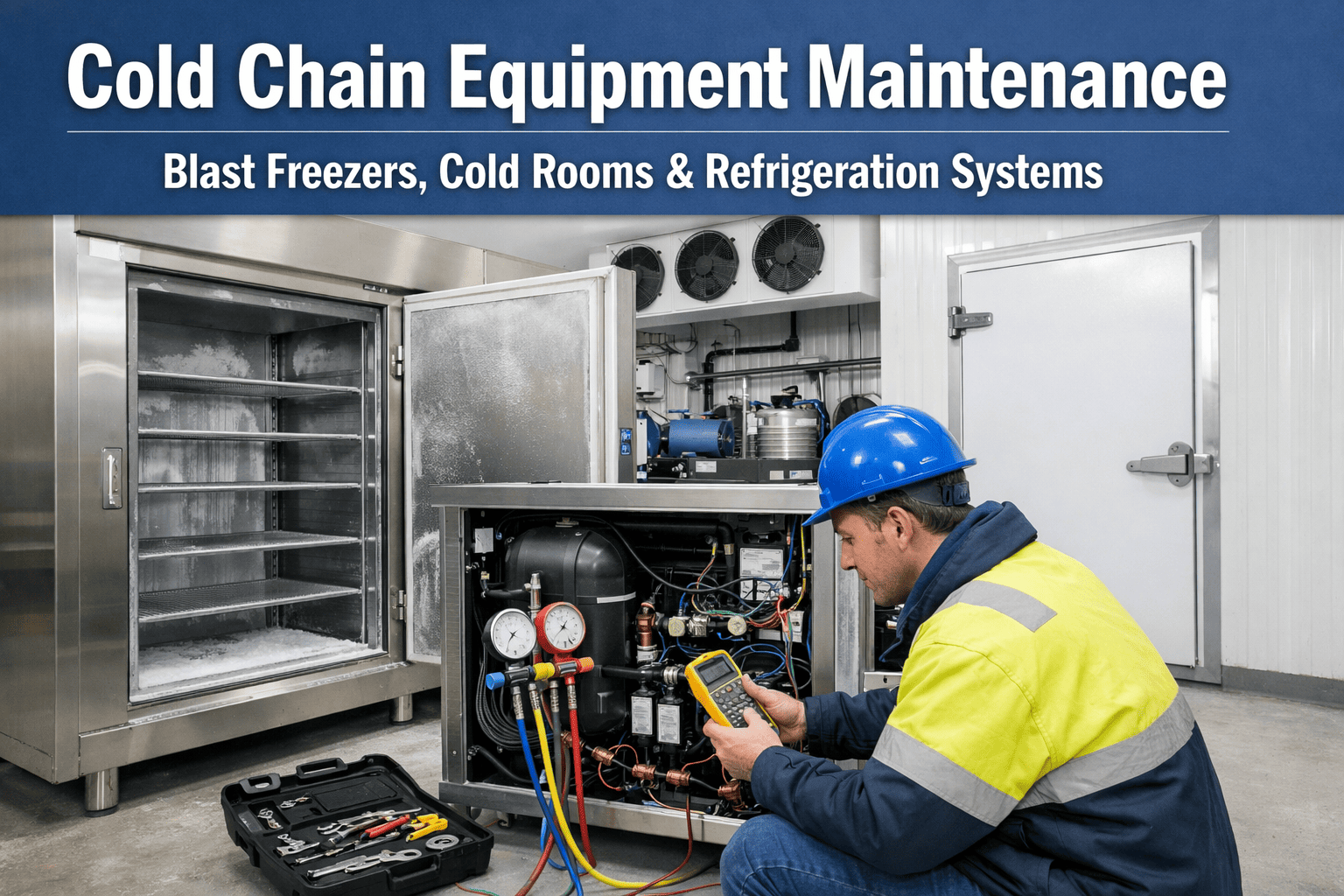
Cold storage refrigeration maintenance checklist by system type
Effective cold chain facility maintenance requires system-specific PM schedules. Below is a tiered breakdown covering ammonia refrigeration, HFC systems, blast freezers and cold dock infrastructure — the four asset categories most responsible for temperature excursions and compliance failures.
Ammonia refrigeration warehouse PM
- Daily oil level & compressor vibration log on all screw and reciprocating units
- Weekly leak inspection of valves, flanges and relief vent piping (PSM-required)
- Monthly condenser water-treatment review and tube-cleanliness check
- Quarterly ammonia detector calibration and alarm-setpoint verification
- Annual PSM compliance audit: PHA review, MI documentation, training records
HFC refrigeration system maintenance
- Monthly refrigerant leak detection (EPA Section 608 — 30-day interval for ≥50 lb charge)
- Quarterly superheat and subcooling test on TXV and EEV circuits
- Semi-annual condenser coil cleaning and fan-bearing lubrication
- Annual refrigerant inventory reconciliation and 608 technician certification log
- Bi-annual compressor oil sample and analysis for metal wear particles
Blast freezer PM schedule
- Weekly evaporator coil defrost-cycle verification and drain-pan heater check
- Bi-weekly fan-blade and motor inspection for ice buildup and imbalance
- Monthly door-curtain and seal inspection — replace torn strip curtains immediately
- Quarterly refrigerant charge verification and suction-line insulation audit
- Semi-annual pull-down time test: target −30 °C core in ≤4 hours from +5 °C
Cold dock door & seal maintenance
- Weekly dock-shelter and seal inspection — gaps exceeding ¼ inch drive condensation
- Bi-weekly door-panel track and roller lubrication with low-temp grease
- Monthly dock-leveler hydraulic check and lip-operation cycle test
- Quarterly interlock system test: door must not operate without trailer locked
- Annual air-curtain velocity test at dock threshold (target ≥8 m/s)
Refrigerated warehouse PM frequency table
A structured warehouse refrigeration PM program aligns task intervals with failure-mode criticality. The table below maps the most common cold chain asset categories to their recommended inspection frequency, the primary failure mode each task mitigates, and the compliance standard it satisfies.
| Asset / System | PM Task | Frequency | Failure Mode Mitigated | Compliance Driver |
|---|---|---|---|---|
| Ammonia compressor (screw) | Vibration analysis & oil sample | Monthly | Bearing failure, oil migration | OSHA PSM (29 CFR 1910.119) |
| HFC rack system | Refrigerant leak detection | 30 days | Refrigerant loss, system undercharge | EPA Section 608 |
| Evaporator coil (blast freezer) | Defrost cycle & drain inspection | Weekly | Ice bridging, reduced heat transfer | HACCP / FSMA |
| Condenser (evaporative) | Water treatment & tube clean | Monthly | Scale buildup, condensing pressure rise | Energy efficiency (ASHRAE 90.1) |
| Cold dock door seal | Shelter & gasket inspection | Weekly | Heat infiltration, condensation | Cold chain integrity |
| Temperature sensor (RTD) | Calibration verification | Quarterly | False readings, silent excursions | HACCP / FSMA Preventive Controls |
| Ammonia leak detector | Sensor calibration & bump test | Quarterly | Undetected NH₃ release | OSHA PSM / IIAR-2 |
How OxMaint's cold chain CMMS prevents excursions and compliance failures
A spreadsheet or legacy CMMS cannot keep pace with the regulatory load and asset diversity of a modern cold storage operation. OxMaint was built for maintenance and reliability teams managing ammonia and HFC systems, blast freezers and dozens of dock doors under strict temperature and compliance constraints. Here is how four core capabilities map directly to the challenges above.
Refrigeration PM library & auto-scheduling
Pre-built PM templates for ammonia compressors, HFC racks, blast freezers and dock doors generate work orders automatically at the correct interval — daily, weekly, monthly or quarterly — based on asset runtime, calendar triggers or condition data. No more missed 30-day leak inspections or lapsed PSM audits.
EPA Section 608 & PSM compliance workflow
OxMaint tracks refrigerant inventory by asset, logs every leak repair with technician certification number, and auto-generates the documentation needed for EPA 608 reporting and OSHA PSM mechanical-integrity audits. Every work order is timestamped, signed and searchable for inspectors.
Temperature monitoring integration
OxMaint integrates with your existing IoT temperature sensors and PLC controllers. When a zone drifts past its HACCP threshold, the platform auto-creates a high-priority work order and notifies the on-call technician — closing the gap between detection and response from hours to minutes.
Predictive analytics for refrigeration assets
AI-driven models analyze compressor vibration trends, oil-analysis results, superheat deviation and energy consumption patterns to flag developing failures weeks before they trigger an alarm — letting you schedule repairs during planned downtime instead of at 2 AM on a Saturday.
A 180-asset cold storage facility cut downtime 42% in six months
The baseline: A 320,000 ft² refrigerated warehouse in the Pacific Northwest operated 180 refrigeration-related assets — two ammonia screw compressors, four HFC rack systems, twelve blast freezers and thirty-eight cold dock doors. Maintenance was managed on spreadsheets and whiteboards. The team averaged 14 unplanned refrigeration breakdowns per quarter, $87K in emergency parts and labor, and two minor temperature excursions that triggered customer chargebacks of $23K.
The OxMaint deployment: Within 30 days the facility imported all assets, uploaded manufacturer PM schedules, configured EPA 608 refrigerant tracking, and integrated existing RTD temperature sensors. Automated PM work orders replaced manual scheduling. Predictive alerts flagged two compressor bearings and one TXV valve before failure.
The result at six months: Unplanned refrigeration downtime dropped 42%, emergency repair spend fell to $38K per quarter, zero customer chargebacks from temperature excursions, and the facility passed its OSHA PSM audit with zero findings — the first clean audit in five years.
See OxMaint on your cold chain assets — book a 30-minute demo
Walk through refrigeration PM scheduling, EPA 608 compliance tracking and temperature-monitoring integration on a live environment configured for cold storage operations.
Frequently asked questions about cold chain warehouse refrigeration maintenance
How often should cold storage refrigeration systems be inspected?
Cold storage refrigeration systems require layered inspection intervals: daily visual checks of compressor oil levels and ammonia detectors, weekly evaporator and dock-door inspections, monthly condenser and leak-detection rounds, and quarterly sensor calibrations. HFC systems with a charge of 50 lb or more require EPA Section 608 leak inspections every 30 days. A cold chain CMMS like OxMaint automates these intervals so nothing is missed — you can Start Free Trial and import your PM schedule in under an hour.
What EPA regulations apply to cold chain warehouse refrigeration maintenance?
EPA Section 608 governs refrigerant management for both HFC and ammonia systems, mandating leak inspection frequency, repair timelines, refrigerant inventory tracking and technician certification logging. Facilities using ammonia above the 10,000 lb threshold are also subject to OSHA Process Safety Management (29 CFR 1910.119), which requires a formal mechanical-integrity program, PHA documentation and training records. OxMaint's compliance workflow captures all of this in audit-ready work orders.
What is the difference between preventive and predictive maintenance in cold storage?
Preventive maintenance (PM) in cold storage follows a fixed schedule — cleaning condenser coils monthly, calibrating sensors quarterly — regardless of asset condition. Predictive maintenance (PdM) uses real-time sensor data such as compressor vibration, oil analysis and superheat trends to identify developing failures before they occur, letting you repair on your schedule rather than reacting to a breakdown. OxMaint supports both, and its AI models convert PdM alerts into prioritized work orders automatically.
How does a CMMS improve cold chain compliance and audit readiness?
A CMMS centralizes every maintenance record — work orders, refrigerant logs, technician certifications, calibration certificates and inspection photos — in a searchable, timestamped database. When an EPA, OSHA or HACCP auditor requests documentation, you generate a complete report in minutes instead of digging through paper files. OxMaint goes further by auto-linking each work order to the compliance standard it satisfies, so you always know which records map to which regulation.
Can OxMaint integrate with existing temperature monitoring and IoT sensors?
Yes. OxMaint integrates with most industrial IoT temperature sensors, PLC controllers and building-automation systems via API and standard industrial protocols. When a monitored zone exceeds its HACCP temperature threshold, OxMaint automatically creates a priority work order and dispatches it to the on-call technician with the sensor reading, asset location and relevant maintenance history attached — closing the detection-to-response loop. To see this workflow live, Book a Demo with our cold chain team.
Stop reacting to refrigeration failures. Start preventing them.
Join cold storage operations teams using OxMaint to cut unplanned downtime, pass compliance audits and protect millions in frozen inventory — all from one AI-powered CMMS platform.
Free 14-day trial · No credit card