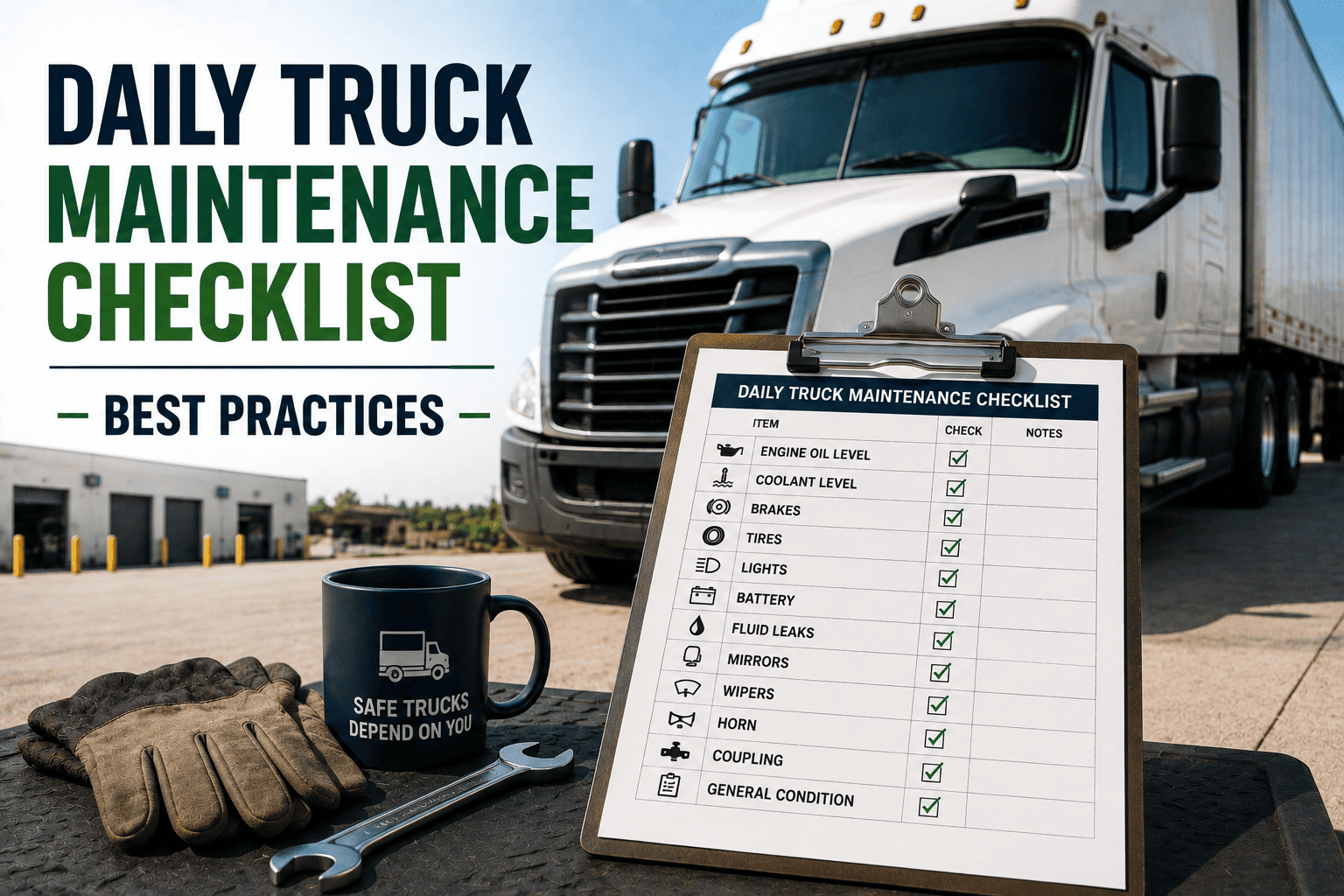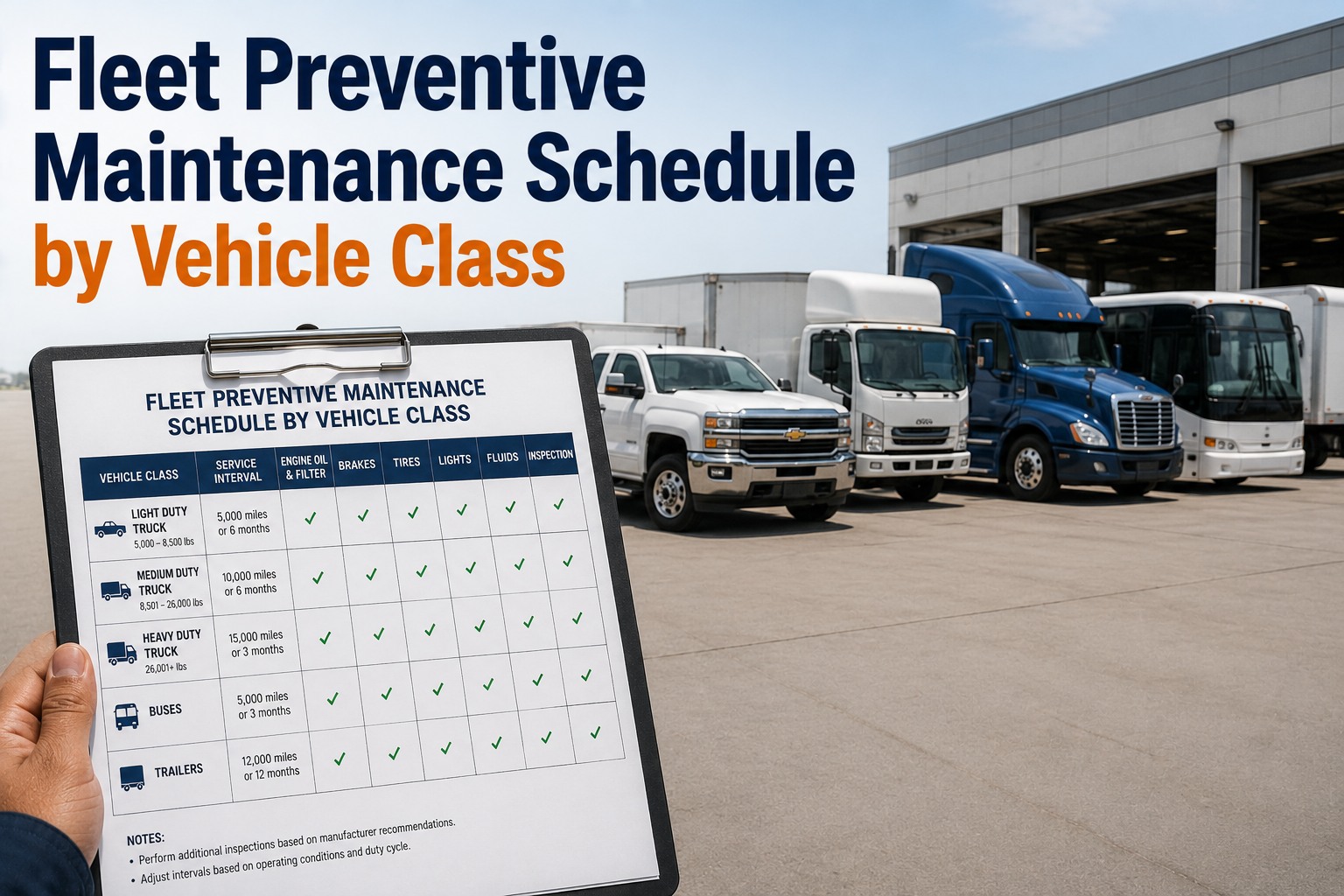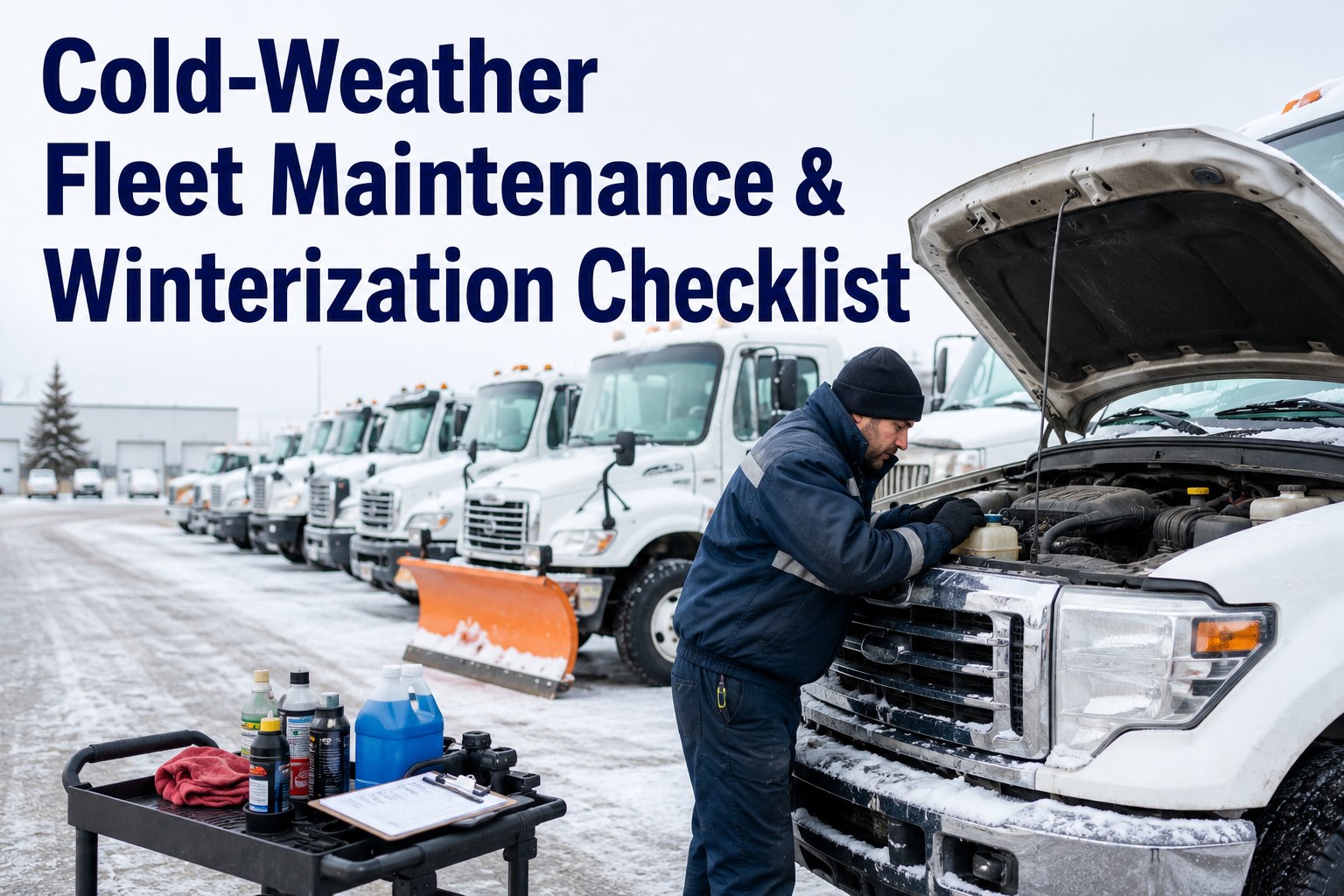
Cold-weather fleet maintenance and a rigorous winterization checklist are what separate fleets that run reliably through December, January and February from those that bleed thousands of dollars per cold-start failure. Batteries lose up to 35 percent of their cranking power at 0 °F, diesel fuel gels around 10–20 °F without proper additive treatment, and tire pressure drops roughly one PSI for every 10 °F decline in ambient temperature — all compounding into unplanned downtime, roadside service calls and missed delivery windows. A structured fleet winter prep process, executed inside a CMMS like OxMaint, ensures every tractor, trailer, reefer unit and support vehicle receives its cold-weather PM triggers, coolant and battery service tracking, and air-system inspections before the first hard freeze. Stop gambling with winter breakdowns and Start Free Trial to build your defensible winterization workflow today.
Is your fleet ready for sub-zero starts — or are you budgeting for December breakdowns?
A single no-start event costs $350–$1,200 in road service, tow and lost revenue. Multiply that across a 50-truck fleet hitting two cold snaps a month, and you are staring at $30K–$60K of preventable winter bleed. OxMaint's cold-weather PM workflow turns a scattered spreadsheet into a tracked, defensible winterization plan.
Why cold weather truck maintenance can't wait until the first frost
Fleet managers who delay winter fleet care until November already have vehicles operating outside their designed temperature envelope. The cost of procrastination shows up in road-service invoices, CSA violations and insurance claims — all traceable back to a missing winterization checklist.
Worked example: A 180-asset regional fleet spending $42,000 per winter on cold-weather road service implemented OxMaint's cold-weather PM triggers in October. By load-testing batteries early, treating fuel proactively and replacing 14 marginal units before December, they cut winter roadside calls by 61 percent and saved $25,600 in a single season — paying for the CMMS transition in under four months.
Fleet battery winter service & electrical system checks
Batteries are the number-one cause of winter no-starts. Every unit in your fleet should receive a conductance or load test before sustained temperatures drop below 32 °F, with replacements queued for any battery reading below 80 percent state-of-health or 12.4V open-circuit.
Battery Load Testing
- Load-test every starting battery; replace below 80% capacity
- Clean & tighten terminals; coat with dielectric grease
- Verify alternator output 13.8–14.7V under load
- Check battery age; auto-flag units older than 36 months
Starter & Charging
- Inspect starter draw; replace if exceeding spec amperage
- Test alternator belt tension & condition
- Verify voltage regulator performance in cold soak
- Inspect all battery cables for corrosion & chafing
Block Heaters & Plugs
- Test block heater continuity & amperage draw
- Inspect shore-power cords & receptacles for damage
- Verify timer operation on programmable outlets
- Ensure adequate plug-in capacity at winter parking
Diesel cold weather prep: fuel, coolant & lubrication
Diesel cold weather failures are almost entirely preventable. Switch to winter-blend fuel ahead of the cloud-point drop, treat with cold-flow improver, and verify coolant freeze protection to at least −34 °F using a refractometer — not a floating-ball tester.
Fuel System Winterization
- Treat tanks with cold-flow improver before cloud point drops
- Drain water separators; replace fuel filters proactively
- Fill tanks to 90%+ to reduce condensation & water ingress
- Stock spare fuel filters for roadside driver self-rescue
Coolant & Antifreeze
- Test freeze point with refractometer; target −34 °F minimum
- Check SCA (supplemental coolant additive) levels
- Inspect hoses, clamps & water pump for seepage
- Flush systems overdue by mileage or time interval
Engine Oils & Lubricants
- Confirm viscosity matches OEM cold-temperature spec (e.g. 5W-40)
- Lubricate fifth wheel, driveline & door hinges with low-temp grease
- Check transmission & diff fluid levels & condition
- Service DEF systems; warm-weather DEF can crystallize
Tire pressure, air systems & driver winter kit compliance
For every 10 °F drop in temperature, tire pressure falls one PSI. Under-inflated tires wear faster, reduce fuel economy and increase blowout risk. Meanwhile, moisture in air systems freezes in lines, gladhands and valves — stranding units at the worst possible moment.
| System / Component | Winter Action | Target Spec / Threshold | Frequency |
|---|---|---|---|
| Tire Pressure | Check & inflate cold; verify TPMS operation | Within 5 PSI of steer/drive OEM spec | Pre-trip / weekly |
| Tire Tread Depth | Measure depth; flag for replacement | Minimum 6/32" steer, 4/32" drive | Monthly |
| Air Dryer Cartridge | Replace cartridge; purge system | New cartridge before Nov 1 | Seasonally |
| Gladhands & Hoses | Inspect seals; apply low-temp grease | No audible leaks at 90 PSI | Monthly |
| Brake System | Check slack adjusters; test ABS | Stroke within adjustment spec | Monthly |
| Driver Winter Kit | Verify kit contents in every cab | Blanket, scraper, chains, flashlight, flares | Pre-winter audit |
| Wipers & Washers | Replace blades; fill with winter fluid | Fluid rated to −20 °F or lower | Seasonally |
How OxMaint's CMMS powers your winter fleet checklist
Spreadsheets don't trigger themselves. OxMaint turns your winterization checklist into automated work orders tied to temperature thresholds, calendar dates and mileage — so nothing falls through the cracks when the forecast turns.
Automated Cold-Weather PM Triggers
Generate winterization work orders automatically when forecast data crosses your defined temperature threshold or a calendar date arrives. Every battery test, fuel treatment and coolant check is scheduled, assigned and tracked to completion.
Outcome: 100% checklist compliance, zero missed unitsBattery & Coolant Service Tracking
Log every load test, voltage reading and refractometer result against the specific asset. OxMaint flags batteries under 80% health and coolant above −34 °F freeze point, auto-generating replacement work orders before the unit fails in the field.
Outcome: 60% reduction in winter no-start eventsSpare Parts & Filter Inventory
Winter demands spike for fuel filters, air dryer cartridges and batteries. OxMaint's inventory module tracks stock levels in real time, auto-reorders at minimum thresholds, and ensures your parts room is stocked before the first cold snap — not after.
Outcome: Eliminate parts stockouts during peak demandFMCSA-Ready Audit Trail
Every winter PM, roadside repair and driver-kit inspection is timestamped, geo-tagged and stored in a defensible digital record. When DOT or your insurer asks for proof of winterization, OxMaint exports the complete maintenance history in one click.
Outcome: Pass compliance audits with zero frictionStop reacting to winter breakdowns — start preventing them
See how OxMaint automates your entire cold-weather fleet maintenance checklist, from battery load tests to fuel treatment tracking, in one AI-powered CMMS platform.
Cold-weather fleet maintenance & winterization FAQ
When should I start winterizing my fleet?
Begin fleet winter prep in September or October — well before the first hard freeze. Coolant testing, battery load testing and fuel-filter replacement should be completed by November 1 in most northern climates. Starting early lets you identify and replace marginal batteries and treat fuel tanks before cold weather drives up parts demand and road-service call volume. You can set automatic October 1 triggers in OxMaint or Book a Demo to see how cold-weather PM scheduling works.
At what temperature do diesel trucks have starting problems?
Diesel fuel begins to cloud and gel between 10 °F and 20 °F without cold-weather additive treatment, while starting difficulty increases sharply below 32 °F as battery cranking power drops and engine oil thickens. Block heaters should be plugged in below 20 °F, and winter-blend fuel with cold-flow improver should be in tanks before the cloud point reaches your region's average overnight low.
How often should I check tire pressure in winter?
Check tire pressure at least weekly during winter months and during every pre-trip inspection, because pressure drops roughly one PSI for every 10 °F decrease in ambient temperature. A tire properly inflated at 100 PSI on a 70 °F day will read around 94 PSI at 20 °F — enough to trigger uneven wear, reduce fuel economy and increase blowout risk if left uncorrected.
What should be on a winterization checklist for trucks?
A complete winterization checklist covers battery load testing and replacement, coolant freeze-point verification to −34 °F, diesel fuel treatment and water-separator draining, air dryer cartridge replacement, tire pressure and tread-depth inspection, block heater testing, wiper and washer-fluid replacement, and driver winter-survival kit verification. OxMaint's CMMS templates come pre-loaded with these items and auto-generate work orders — Start Free Trial to deploy them instantly.
How much does winter fleet maintenance cost versus winter breakdowns?
Proactive winter fleet maintenance typically costs $150–$300 per unit for battery testing, coolant service, fuel treatment and filter replacement. A single winter no-start event averages $350–$1,200 in road service, towing and lost revenue — meaning preventing just one breakdown per truck pays for the entire winterization program, and a 50-truck fleet can avoid $30K–$60K in seasonal roadside costs through disciplined cold-weather PM execution.
Winterize your fleet with confidence — not spreadsheets
OxMaint's AI-powered CMMS automates your cold-weather maintenance checklist, tracks every battery and coolant service, and keeps your fleet rolling through the hardest months. See it on your assets in 30 minutes.
Free 14-day trial · No credit card