
Running a fleet without centralised maintenance software means managing dozens or hundreds of vehicles through a combination of spreadsheets, paper service records, and manual calendar reminders — a system that works until it doesn't. The first major breakdown you miss, the first DOT inspection you fail, or the first time parts are unavailable because nobody tracked inventory is the moment the cost of not having structured fleet maintenance software becomes visible. This article covers what a CMMS purpose-built for fleet management actually delivers and why Oxmaint.ai's fleet maintenance platform gives fleet operators of any size the operational control that manual systems cannot provide. Book a demo to see the platform in action for your fleet.
Fleet Maintenance Software: CMMS for Vehicle Management, PM Scheduling & DOT Compliance
For fleet managers, operations directors, and maintenance supervisors running commercial vehicle fleets — centralised maintenance software replaces the spreadsheet-and-paper-ticket system with structured work orders, automated PM scheduling, real-time parts inventory, and the compliance records that DOT inspections require.
The Six Problems Fleet Maintenance Software Solves
Every fleet operation running on spreadsheets and manual processes experiences the same set of preventable problems. Each one has a direct, measurable cost.
Missed PM Intervals
Without automated scheduling, preventive maintenance is driven by whoever remembers to check the odometer log. High-mileage months overwhelm the system; vehicles exceed their service intervals; breakdowns follow.
DOT Compliance Gaps
DOT inspections require documentation of driver vehicle inspection reports, preventive maintenance records, and hours-of-service compliance. Paper-based systems produce incomplete records that fail at the inspection point.
Parts Stockout Delays
A vehicle ready for a scheduled service sits idle in the bay because the required parts are not in stock — and nobody knew they needed to be ordered because there was no system tracking inventory against upcoming PM demand.
Invisible Maintenance Costs
Without a CMMS tracking parts, labour, and contractor costs against each vehicle, fleet managers cannot identify which vehicles are consuming disproportionate maintenance budget — and cannot make evidence-based replacement decisions.
Technician Handover Gaps
When maintenance work is passed between technicians verbally or through informal notes, critical information about vehicle defects, incomplete repairs, and deferred work is routinely lost — leading to repeat failures and unresolved safety issues.
No Performance Benchmarks
Without data on breakdown frequency, cost per mile, mean time between failures, and PM compliance rate per vehicle, fleet leadership makes operational and procurement decisions without the performance evidence that would justify or contradict them.
Three Core Capabilities That Define Fleet CMMS Value
Oxmaint.ai's fleet maintenance platform delivers structured operational control across three domains that determine fleet maintenance performance.
Automated PM Scheduling
Configure preventive maintenance schedules for every vehicle type in the fleet — based on odometer intervals, engine hours, calendar dates, or any combination. Work orders are generated automatically when a vehicle approaches its service threshold and assigned to the designated maintenance bay or technician, with parts requirements identified in advance from the maintenance task template.
For fleets with vehicles operating across different duty profiles, Oxmaint.ai's scheduling engine adjusts service intervals based on actual utilisation intensity rather than applying flat calendar intervals that under-serve high-utilisation vehicles and over-service low-utilisation ones.
DOT Compliance & Safety Record Management
Fleet maintenance compliance under FMCSA regulations — DOT 49 CFR Part 396 — requires systematic records of all vehicle inspections, repairs, and maintenance performed. Every work order closed in Oxmaint.ai creates a timestamped, technician-attributed maintenance record that satisfies Part 396.3 record retention requirements and is exportable for roadside inspections or DOT safety audits.
Driver Vehicle Inspection Reports (DVIRs) submitted by drivers through the Oxmaint.ai mobile app are automatically routed to the maintenance queue as defect work orders when defects are reported — creating the closed-loop inspection process that FMCSA requires and that paper-based DVIR systems systematically fail to deliver.
Parts Inventory & Cost Tracking
Oxmaint.ai's parts inventory module tracks stock levels for every part in the maintenance operation, sets reorder points based on consumption history and lead times, and links part usage to specific work orders — so the true cost of each maintenance event is captured against the vehicle asset record, not lost in a generalised parts account.
When a PM work order is created, the platform checks parts availability against the task's parts requirement and flags any stockouts in advance — giving the parts manager a 7–14 day window to order before the service is due, rather than discovering the gap when the vehicle is already in the bay. Book a demo to see parts inventory management in Oxmaint.ai.
Fleet Maintenance Software for Every Fleet Type
Oxmaint.ai is configured for the specific maintenance requirements of each fleet category — not a generic work order system adapted for vehicle use.
Heavy Truck & HGV Fleet Maintenance
Heavy goods vehicles operate under FMCSA Part 396 maintenance requirements in the USA and Operator Licence conditions in the UK, with mandatory inspection intervals, defect reporting obligations, and annual plating requirements that must be documented systematically. Oxmaint.ai manages all statutory compliance records alongside the engine, transmission, and brake system PM schedules that keep HGVs productive between regulatory inspections.
For fleets with telematics installed, fault code data from the vehicle ECU feeds directly into the Oxmaint.ai work order queue — each fault code generates an alert that the maintenance team can investigate, defer, or escalate to a work order based on the fault severity classification configured for that fault code class. Start a free trial to configure HGV maintenance templates.
Van & Light Commercial Vehicle Fleet Maintenance
LCV fleets operating as delivery, service, or utility vehicles require maintenance programmes that balance high-frequency, short-interval PM (oil changes every 10,000–15,000 km) with tyre management, bodywork and equipment inspection, and the lease return condition requirements that affect fleet residual values. Oxmaint.ai's mobile app allows drivers to submit pre-trip inspection reports from their phones — routing defects immediately to the workshop queue without requiring drivers to return to base.
For multi-depot LCV operations, Oxmaint.ai's multi-site configuration assigns vehicles to their home depot workshop while maintaining centrally visible fleet-wide compliance and cost data. Fleet managers see the whole picture; depot maintenance coordinators manage their local queue.
Mixed Fleet Maintenance Management
Mixed fleets — combining HGVs, vans, plant equipment, and specialist vehicles — present a particular maintenance management challenge because each asset class has different service intervals, different compliance requirements, and different parts profiles. A single CMMS configured to manage all asset classes within a unified system eliminates the parallel tracking systems that most mixed fleet operations run, reducing the administration burden and the compliance gaps that multiple disconnected systems create.
Oxmaint.ai's asset hierarchy configuration supports any combination of vehicle and equipment types within a single fleet register — each with its own PM schedule, compliance tracking requirements, and cost centre assignment. Book a demo to see mixed fleet configuration.
Municipal & Public Sector Fleet Maintenance
Municipal fleet operations — waste collection, road maintenance, emergency services, and public transport — carry public accountability requirements that commercial fleets do not. Every maintenance decision is potentially subject to freedom of information requests, public audit, and procurement scrutiny. Oxmaint.ai's complete, timestamped maintenance records provide the audit trail that public sector fleet operations require across all vehicle categories, with reporting capabilities designed for council, authority, and government procurement review.
For emergency service fleets, the platform's priority work order classification ensures that safety-critical defects on operational vehicles are flagged immediately to the workshop supervisor and escalated if not actioned within the configured response time. Start a free trial for your municipal fleet operation.
Full Capability Set: Oxmaint.ai Fleet Maintenance Platform
Every feature your fleet maintenance operation needs — built into a single mobile-accessible platform without add-on modules or integration complexity.
One Platform. Every Vehicle. Complete Maintenance Control.
Oxmaint.ai gives your fleet maintenance operation the PM scheduling, compliance tracking, parts management, and analytics capability that spreadsheets and paper tickets cannot provide — accessible from the workshop, the depot office, and the cab.
Spreadsheets & Paper vs. Oxmaint.ai Fleet CMMS
The operational gap between manual fleet maintenance management and a structured CMMS platform is measurable in every dimension that matters to fleet performance.
| Capability | Spreadsheets & Paper | Oxmaint.ai |
|---|---|---|
| PM Scheduling | Manual calendar reminders — missed when someone is absent or the spreadsheet is not updated | Automatic work order generation at configured intervals with escalation if overdue |
| DOT Compliance Records | Paper records in filing cabinets — incomplete, not searchable, often missing for specific vehicles | Complete digital maintenance history per vehicle with one-click DOT audit report export |
| Parts Availability | Parts shortages discovered when vehicle is already in the bay — service delayed waiting for delivery | Upcoming PM demand checked against stock 7–14 days in advance with automatic reorder alerts |
| Maintenance Cost Visibility | Costs pooled in departmental accounts — impossible to track true cost per vehicle | Per-vehicle cost tracking with parts, labour, and contractor costs linked to each work order |
| Driver Defect Reporting | Paper DVIRs — frequently not returned to workshop or actioned before next trip | Mobile DVIR submission routes defects directly to workshop work order queue |
Scroll horizontally to compare on mobile
We switched from a spreadsheet-based system to Oxmaint.ai across our 180-vehicle distribution fleet and the first thing that changed was the DOT audit. We had our last CSA audit before the switch and we had a deficiency in maintenance records for 11 vehicles. Our first audit after implementing Oxmaint.ai, we had zero deficiencies. The inspector commented that our records were among the most complete he had seen in a roadside review. The maintenance cost reduction came later — but the compliance improvement was immediate and it was the one that mattered most.— Fleet Director, Regional Distribution Operation, Midwest USA
Frequently Asked Questions
How quickly can a fleet of 50–300 vehicles be onboarded onto Oxmaint.ai?
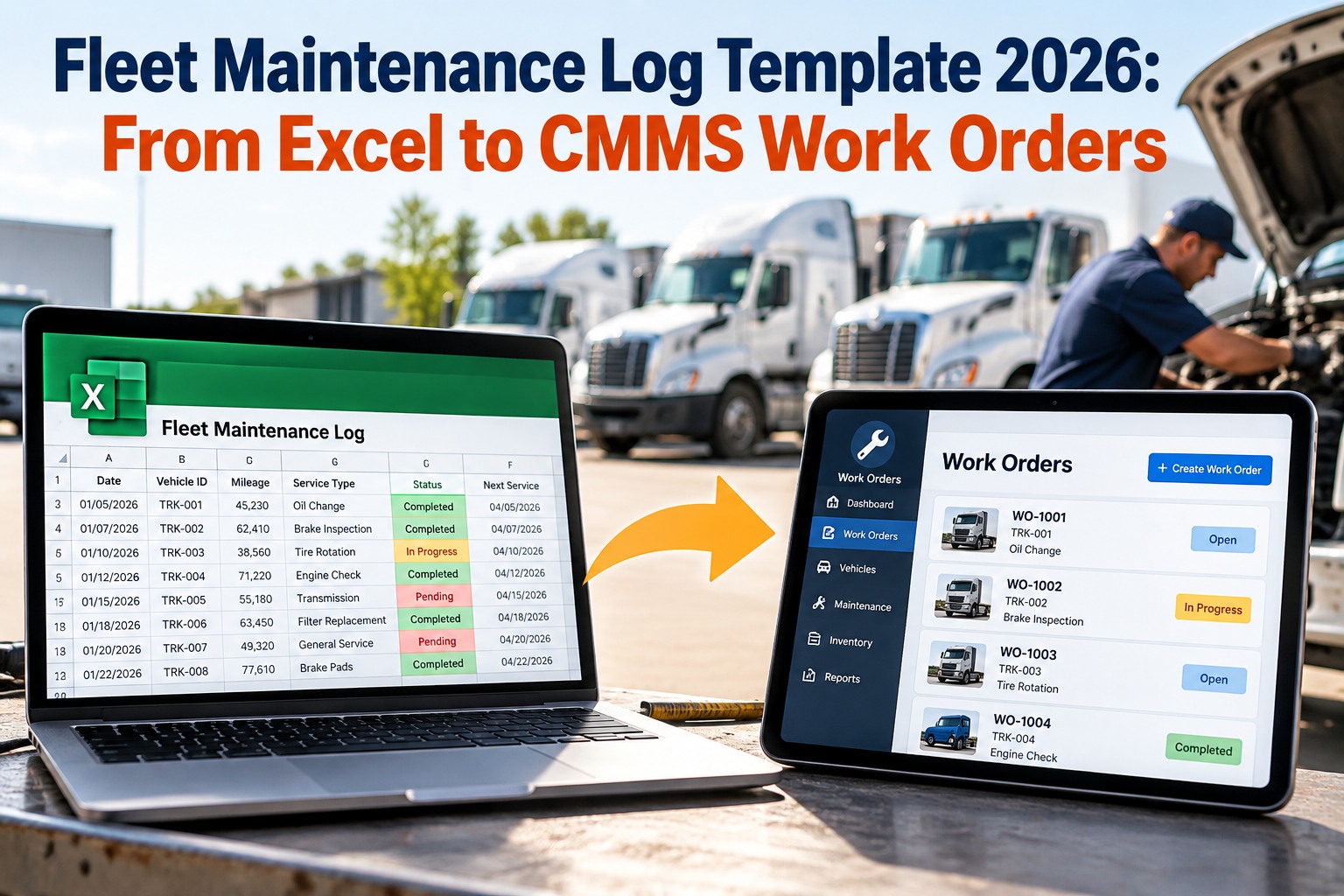
A fleet of 50–300 vehicles can be fully operational on Oxmaint.ai within 2–3 weeks of starting a free trial. Vehicle registration, PM schedule configuration, parts inventory setup, and mobile app deployment for drivers and technicians are all included in the onboarding process. Existing maintenance records can be imported from spreadsheets during onboarding. Most fleet managers are generating their first automated PM work orders by the end of the first week. Start a free trial to begin onboarding your fleet.
Does Oxmaint.ai support FMCSA Part 396 maintenance record requirements for DOT-regulated carriers?
Yes. Oxmaint.ai's compliance module is configured for FMCSA 49 CFR Part 396 record retention requirements — including the systematic maintenance programme documentation required under Part 396.3, driver vehicle inspection report records under Part 396.11, and the periodic inspection records under Part 396.17. Every maintenance record is retained with the timestamped, technician-attributed format required by the regulations, and a vehicle's complete maintenance history is exportable for roadside inspections or DOT safety audits in minutes. Book a demo to see the DOT compliance module.
Can Oxmaint.ai integrate with our existing telematics system for automatic fault code routing?
Yes. Oxmaint.ai integrates with major telematics platforms including Samsara, Geotab, Verizon Connect, Trimble, and Teletrac Navman via API. When a vehicle ECU generates a fault code that is transmitted through the telematics platform, Oxmaint.ai can be configured to automatically create a work order for the affected vehicle — with the fault code, vehicle ID, and location populated automatically. Fault code severity classification determines whether an immediate alert is generated or the fault is queued for the next service. Start a free trial to test telematics integration with your fleet.
Does the platform support multiple depots with separate maintenance queues but centrally visible reporting?
Yes. Oxmaint.ai supports multi-depot configurations where each depot operates its own maintenance work queue with locally assigned technicians, while fleet managers at the head office level have visibility of compliance status, breakdown rates, and cost metrics across all depots from a single dashboard. Vehicles that travel between depots can be serviced at any location with the maintenance record automatically updated against the vehicle's central asset record regardless of the servicing location. Book a demo to see multi-depot fleet management.
Your Fleet Deserves Better Than Spreadsheets
PM scheduling that runs itself. DOT compliance records that are always complete. Parts inventory that never leaves you short. Fleet analytics that drive real decisions. Oxmaint.ai gives you all of it — for fleets of any size, deployable in days, not months.


.png)