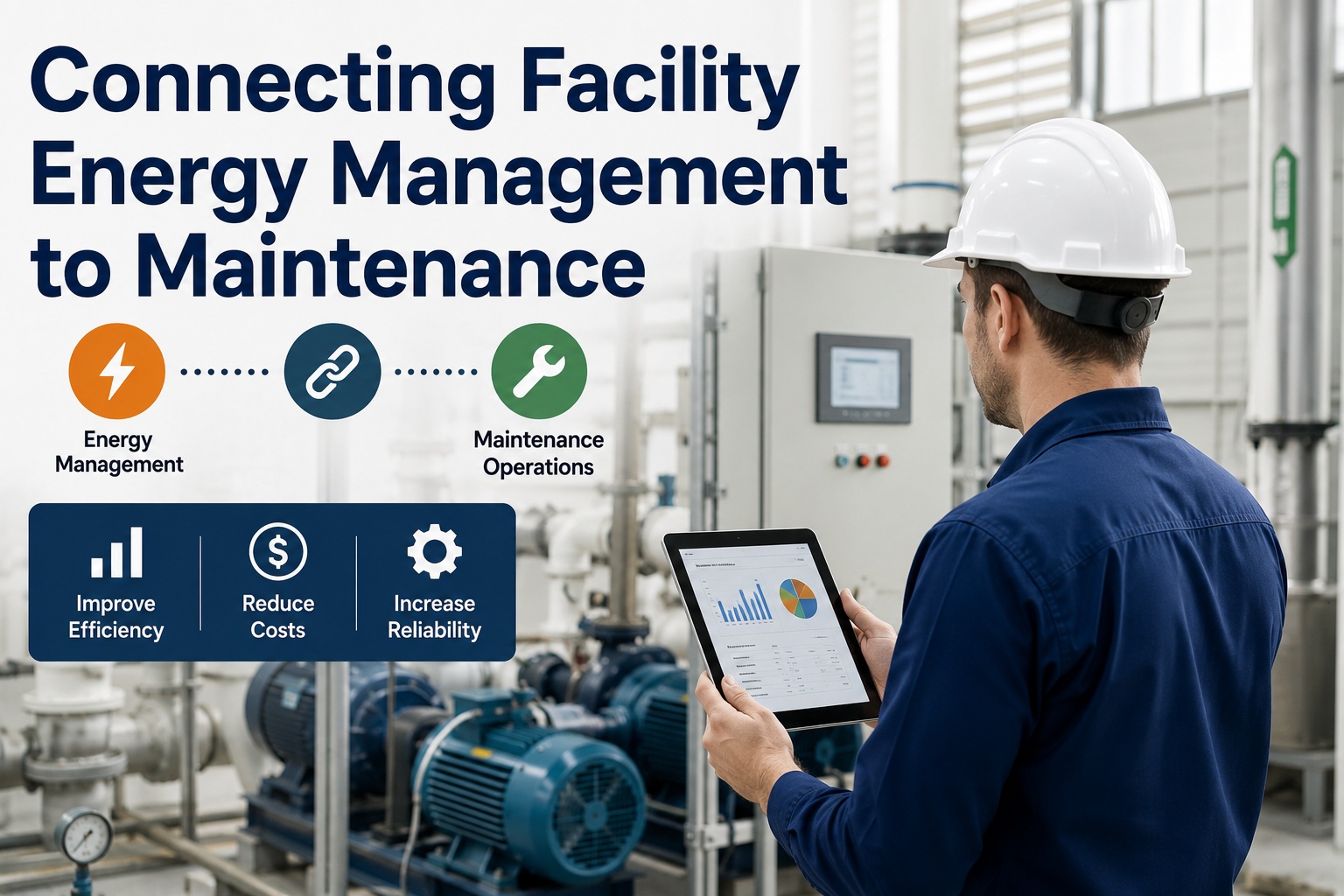
Connecting facility energy management to maintenance is where theoretical energy savings become measurable reductions on your utility bill. Equipment that drifts out of tune — a fouled chiller, a clogged filter, a mis-calibrated VFD — silently inflates facility energy cost by 10–30% long before it ever fails. By linking sub-metering data to your CMMS, maintenance teams can catch degradation early, schedule energy-critical PMs automatically, and turn building energy maintenance into a compounding source of facility energy savings. Ready to stop wasting energy on underperforming assets? Start Free Trial with OxMaint today.
Your utility bill is a maintenance report card — are you reading it?
A 15% drift in HVAC efficiency across a 200,000 sq ft portfolio can quietly add $60,000+ in annual facility energy cost. OxMaint connects sub-metering signals to work orders so every anomaly triggers action — not just an alert.
Why Facility Energy Management Fails Without Maintenance Integration
Most facilities invest in energy monitoring — sub-meters, BMS dashboards, interval data — but stop short of closing the loop. The result: teams can see the waste but can't act on it at scale.
The Formula For Facility Energy Savings Through Maintenance
When building energy maintenance is treated as an energy strategy — not just a reliability strategy — the math becomes predictable. Here's the framework OxMaint helps you operationalize.
Example: A 150-ton chiller running 4,200 hrs/yr at $0.12/kWh with a 12% efficiency drift wastes roughly $8,460/year — more than the cost of the tube cleaning that fixes it.
A $2,200 coil-cleaning and calibration PM that recovers $9,800 in avoided energy cost delivers a 4.5x payback in Year 1 — before counting avoided downtime.
Facilities hitting 92%+ PM compliance on energy-critical assets see 8–14% portfolio utility reduction within 12 months of linking sub-metering to maintenance.
5 Steps To Connect Building Energy Efficiency To Maintenance
Translating energy monitoring facility data into maintenance action requires a structured loop. Here's the proven sequence OxMaint customers follow.
Tag Energy-Critical Assets In The CMMS
Identify the 20% of equipment consuming 80% of energy — chillers, AHUs, compressed air, process heat. Flag them as energy-critical in OxMaint with rated vs. actual kW benchmarks.
Link Sub-Metering To Asset Records
Map each sub-meter to its parent asset in OxMaint. When energy consumption deviates beyond a set threshold — say 8% above rolling baseline — the system logs a degradation flag.
Auto-Generate Energy-Critical Work Orders
A degradation flag shouldn't sit in a dashboard. OxMaint converts it into a prioritized WO — coil cleaning, filter swap, VFD recalibration — assigned to the right tech with the energy dollar impact noted.
Close The Loop With Post-PM Metering
After the WO closes, OxMaint tracks the sub-meter reading for 7–14 days to confirm energy recovery. If consumption doesn't return to baseline, the WO reopens automatically.
Tune PM Frequency To Real Degradation Curves
Use accumulated energy-recovery data to right-size PM intervals. Assets degrading fast get shorter cycles; stable assets get extended intervals — cutting unnecessary PM cost while protecting efficiency.
OxMaint: The CMMS Built For Facility Energy Optimization
OxMaint doesn't just manage work orders — it treats energy as a maintenance KPI. These are the four capabilities that turn building efficiency maintenance into measured utility savings.
Energy-Critical PM Tracking
Tag any asset as energy-critical and OxMaint tracks PM compliance, degradation trends and energy-recovery outcomes separately from standard reliability PMs. Facilities average 11% energy cost reduction in Year 1.
Degradation Monitoring
Ingest sub-meter and sensor data to detect efficiency drift the moment it starts — not at the next quarterly audit. OxMaint flags assets trending outside baseline and auto-creates corrective work orders.
Retrofit Coordination
Turn audit findings and capital retrofit projects into tracked work orders with energy-savings targets, milestones and post-installation verification — closing the gap between recommendation and measured kWh recovery.
CMMS-Integrated Energy Analytics
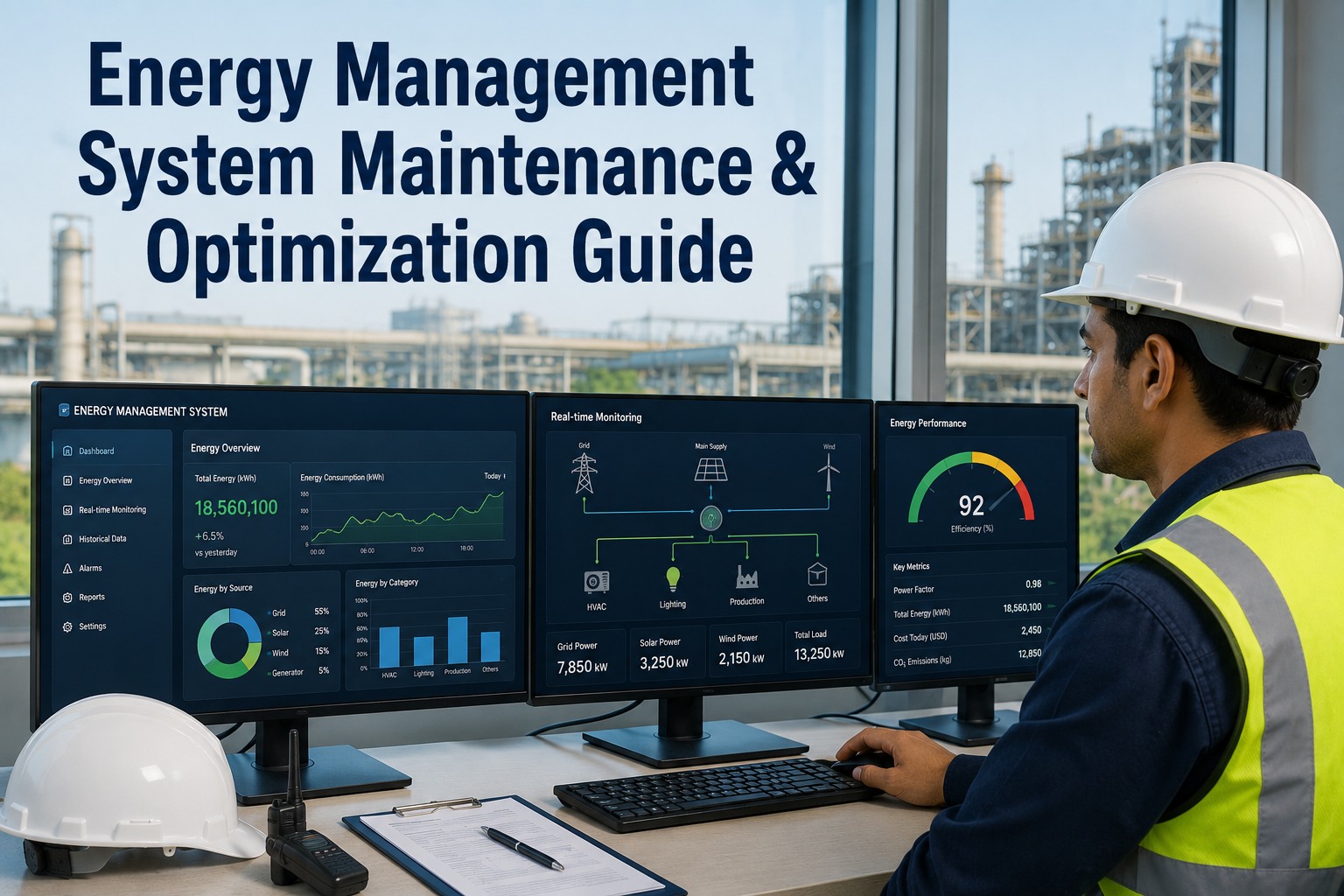
Dashboards that correlate PM completion, asset health and utility consumption in one view. Report facility energy savings by building, system or asset class — and prove ROI to finance and sustainability stakeholders.
A 180-Asset Facility Cut Utility Cost By $52,000 In 9 Months
A multi-building manufacturing campus spending $612,000/year on electricity deployed OxMaint to connect their existing sub-metering to maintenance. Here's what changed.
- 180 energy-critical assets across 4 buildings, 230,000 sq ft
- Sub-meters installed but data only reviewed in monthly energy reports
- 72% PM compliance — 28% of PMs missed or delayed each quarter
- Average chiller efficiency 0.78 kW/ton vs. rated 0.62 kW/ton
- No systematic link between energy anomalies and work orders
- 94% PM compliance on energy-critical assets — auto-triggered WOs replaced manual rounds
- Chiller efficiency recovered to 0.65 kW/ton via scheduled tube cleaning + calibration PMs
- 142 energy-linked work orders closed with verified sub-meter recovery
- $52,400 in documented facility energy savings — verified against utility bills
- Payback on OxMaint deployment: under 4 months
"We had the meter data for years but no way to turn it into action. OxMaint made every kWh spike a work order — and every work order a verified energy recovery. That's the loop we were missing."
— Facilities Director, Multi-Site Manufacturing Campus
See OxMaint On Your Energy-Critical Assets
Book a 30-minute demo and we'll map your sub-metering data to work orders — live on your asset hierarchy. You'll see exactly how much facility energy cost you can recover in Year 1.
Facility Energy Management And Maintenance — Answered
The most common questions maintenance and facility leaders ask when connecting energy monitoring to their CMMS.
How does connecting facility energy management to maintenance reduce utility costs?
When sub-metering data feeds directly into your CMMS, every efficiency drift becomes an actionable work order instead of a dashboard alert. Degraded equipment — fouled coils, clogged filters, drifting VFDs — typically wastes 10–30% more energy before it fails. Auto-triggering PMs at the first sign of drift prevents that waste, and most facilities see 8–14% portfolio utility reduction within 12 months. Start Free Trial to see how OxMaint automates this loop.
What assets should be tagged as energy-critical in a CMMS?
Focus on the equipment that consumes the most energy and is most sensitive to degradation: chillers, boilers, AHUs, cooling towers, compressed air systems, process heating, and large pumps/fans. Typically 15–25% of assets account for 70–80% of energy spend. Tag these in OxMaint with rated kW benchmarks and sub-meter mappings so degradation is detectable automatically.
Can OxMaint integrate with existing sub-meters and BMS data?
Yes. OxMaint ingests consumption data from sub-meters, BMS outputs and IoT sensors, then maps each data stream to the corresponding asset record. When consumption deviates beyond your defined threshold, the system auto-generates a prioritized work order — no manual dashboard checking required. Book a Demo to see the integration on your setup.
How quickly can a facility expect to see energy savings after implementing this?
Most facilities see measurable savings within 60–90 days of connecting sub-metering to maintenance. The fastest wins come from deferred PMs on high-consumption assets — a single chiller tube cleaning can recover $5,000–$10,000/year. Full portfolio impact of 8–14% utility reduction typically materializes within 9–12 months as PM compliance rises above 90%.
Is this approach different from standard preventive maintenance?
Yes. Standard PM is time-based or runtime-based — change filters every 90 days, inspect chiller every 6 months. Energy-linked maintenance is condition-based and outcome-measured: the PM triggers when efficiency drifts, and completion is verified by sub-meter recovery. This means you fix what's actually wasting energy, avoid unnecessary PMs on healthy assets, and quantify every intervention in dollars saved.
Stop Paying For Degraded Equipment Performance
Every month without an energy-linked CMMS is money wasted on inefficiency your meters can already see. Connect facility energy management to maintenance — and turn data into documented savings.
Free 14-day trial · No credit card


.png)