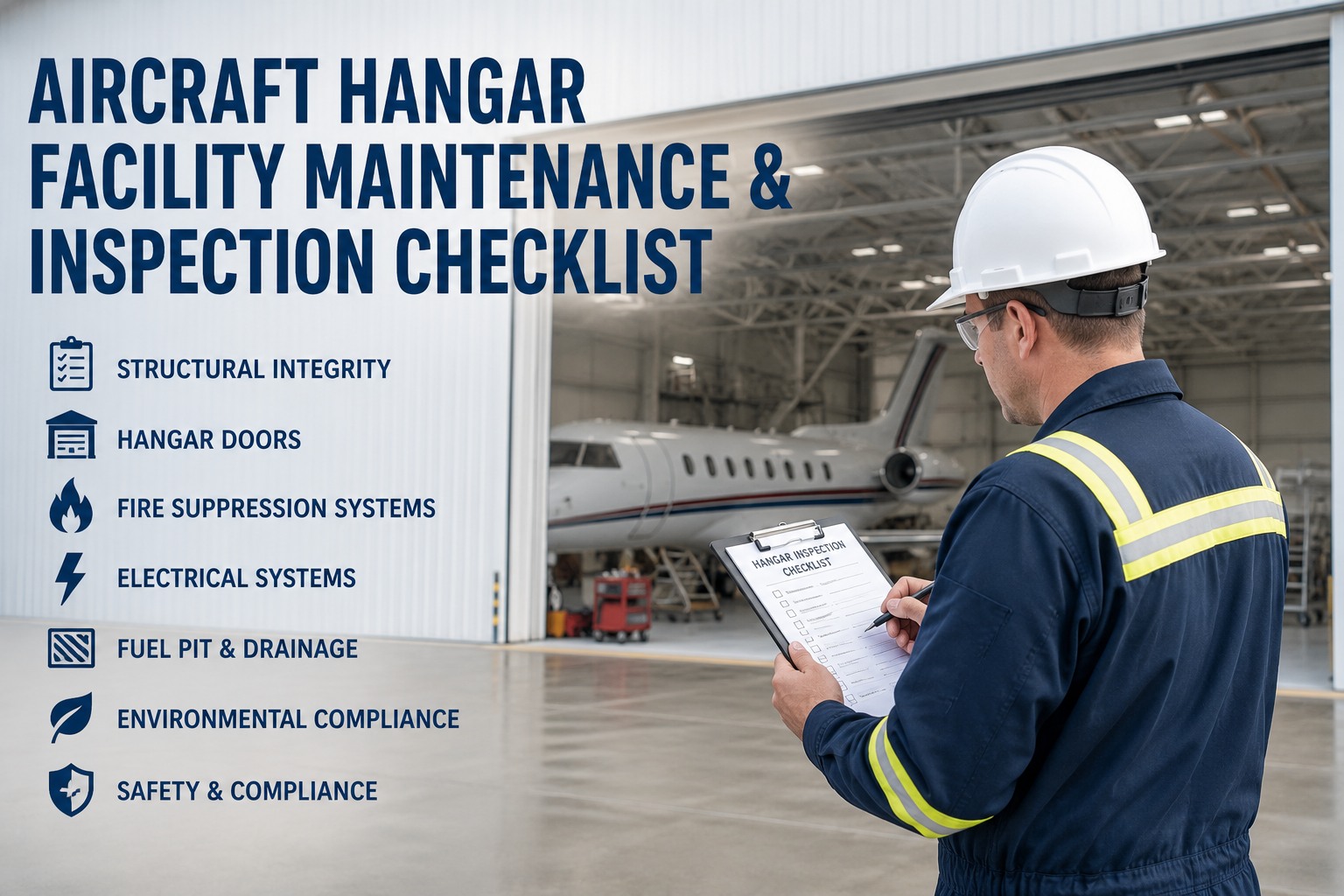
An aircraft hangar is unlike any other facility in industrial maintenance. It has doors weighing hundreds of tons that must open manually if the main power drops. It has a fire suppression system built to drown a burning jet fuel spill in high-expansion foam within minutes. It has a floor pitched, trenched, and drained specifically to move burning fuel out of the aircraft bay. Its electrical distribution has to sit behind a one-hour fire barrier because of NFPA 70 Article 513. Miss a quarterly foam concentrate check and the hangar is a compliance exposure the next time an FAA inspector walks through. Miss an annual deluge test and the local Authority Having Jurisdiction can pull the certificate. Oxmaint is the CMMS software built for aviation facilities — with pre-loaded PM templates for every hangar system, cadence scheduling aligned to NFPA 409 and NFPA 72, and audit-ready documentation for every inspection interval. Start a free Oxmaint trial to run hangar facility PMs on the maintenance software, or book a demo to see the hangar CMMS mapped to your facility's compliance obligations.
Aviation · Hangar Facilities · CMMS Software
Aircraft Hangar Facility Maintenance & Inspection Checklist — The 2026 Guide
Every system, every PM interval, every compliance code — for the aircraft hangar facility team running overhead doors, foam deluge, electrical, fuel pits, and environmental compliance on one CMMS.
-
Quarterly
NFPA 409 required interval for foam concentrate check on hangar suppression
-
Annual
full operational deluge discharge test — miss it and the AHJ can pull certification
-
1-Hour
fire barrier NFPA 409 requires between electrical distribution and aircraft bay
-
12 Mo
minimum inspection log FAA Part 139 audits request on every life-safety system
Why Hangars Are Different
Nothing About a Hangar PM Program Fits a Standard Facility Template
An aircraft hangar is one of the most regulated buildings in any industrial category. Every major system is governed by a specific NFPA or FAA code with fixed inspection intervals — and every one of those intervals is checked during a Part 139 audit. Generic building maintenance software cannot cover it. Understanding the four defining conditions is the starting point for building a real hangar PM program.
-
01
Extreme Fire Load
Jet fuel, aircraft, storage. NFPA 409 exists because a single hangar fire can destroy tens of millions in assets in minutes. Every fire-system PM is life-safety critical.
-
02
Massive Openings
Doors 200 to 300+ feet wide weighing hundreds of tons. Independent power supply required by code. Failure means an aircraft cannot leave or enter — an operational and safety event.
-
03
Fuel & Environmental Exposure
Fuel pits, hydrant systems, spill containment, stormwater. NFPA 407 and EPA rules run in parallel. A single spill without documentation is an environmental incident.
-
04
Continuous Audit Cycle
FAA Part 139, NFPA compliance audits, insurance renewals, AHJ inspections. The last 12 months of logs must always be accessible — not in a filing cabinet somewhere.
The Six Critical Systems
Every Hangar PM Program Is Built Around These Six Systems
Any well-run hangar facility PM program breaks the building into six discrete systems, each with its own inspection template, PM cadence, and compliance obligation. Get the system split right and the checklist writes itself. Oxmaint pre-loads all six as separate inspection modules for aviation facilities.
-
S1
Overhead Door Systems
Bi-fold, sliding, roll-up, or fabric doors — the largest moving equipment in any facility. Motors, counterweights, cable tension, safety limits, weather seals.
NFPA 409: 5.7
-
S2
Fire Suppression & Detection
Foam-water deluge, AFFF or fluorine-free concentrate, proportioners, deluge valves, flame detectors, fire alarm panel, sprinklers, pumps.
NFPA 409, 11, 25, 72
-
S3
Electrical & Lighting
Distribution rooms behind fire barriers, high-bay lighting, emergency egress illumination, ground power units, lightning protection.
NFPA 70, 780, OSHA 1910.303
-
S4
Fuel Pits & Fluid Systems
Underground fuel piping, hydrant pits, fuel-water separators, secondary containment berms, drip pans, oil-water separators for wash bays.
NFPA 407, EPA SPCC
-
S5
Environmental & Drainage
Floor trench drains, apron drainage, stormwater interceptors, spill kits, hazmat storage rooms, waste oil accumulation.
NFPA 409: 5.11, EPA CWA
-
S6
HVAC & Ventilation
High-volume make-up air units, radiant tube heaters (if permitted), exhaust for painting and fueling operations, dust collection.
NFPA 409, ASHRAE 62.1
The Working Checklist
Hangar PM Inspection Items by System
Below is the item-level PM checklist for each of the six systems — the actual field-usable list a facilities technician runs on the mobile Oxmaint app during a routine inspection walk. Every item logs a photo, generates a work order on a failed check, and attaches automatically to the correct system asset record.
S1 · Overhead Door Systems
- Verify independent power supply per NFPA 409: 5.7.2 — not tied to hangar main disconnect
- Test manual or auxiliary operation for all vertical counterbalanced and horizontal doors
- Inspect cables, sheaves, counterweights, and drum for wear, corrosion, and correct tension
- Test safety edge sensors, photo-eye interruption, and emergency stop switches
- Lubricate hinges, bearings, tracks and rollers per manufacturer schedule
- Inspect weather seals and bottom astragal for wear, tears, and water infiltration signs
S2 · Fire Suppression & Detection
- Foam concentrate tank level within minimum reserve per NFPA 409 and within shelf life
- Sample foam concentrate annually for expansion ratio and drain-time verification
- Test foam proportioner at design flow rate — injection percentage verified
- Visually inspect every overhead nozzle and floor monitor for blockage or corrosion
- All deluge valves and control valves in normal position, sealed or supervised
- Alarm panel status normal — no faults, no trouble indicators, connection to monitoring intact
- Flame and heat detectors tested with documented result inside the last 12 months
- Full annual operational discharge test scheduled and documented
S3 · Electrical & Lighting
- Distribution room fire barrier intact — one-hour rating per NFPA 409: 5.13
- Infrared thermography on main and sub-panels — no hotspots above threshold
- High-bay lighting operational, no fixtures out for more than one inspection cycle
- Emergency egress illumination tested — 90-minute battery discharge check
- Ground power unit output verified — voltage, frequency, phase rotation
- Lightning protection system continuity verified per NFPA 780
S4 · Fuel Pits & Fluid Systems
- Fuel hydrant pit visual — no standing fuel, no water in sump, cover integrity
- Emergency shutoff valve tested and operational within reach per NFPA 407
- Fuel-water separator drained, sampled, sent for lab analysis on schedule
- Secondary containment berms and drip pans dry, unobstructed, sealed
- Wash-bay oil-water separator serviced and sampled per state discharge permit
- Spill kits stocked, accessible, contents within expiry
S5 · Environmental & Drainage
- Floor trench drains clear per NFPA 409: 5.11 — no debris, unobstructed to interceptor
- Stormwater interceptor sampled and cleaned per NPDES permit conditions
- Apron slope confirmed to drain away from hangar per NFPA 409: 5.11.1
- Hazmat storage room ventilation operating, containers dated, quantities under limit
- Waste oil accumulation containers within capacity, secondary containment intact
- SPCC plan reviewed and posted, spill response drills documented
S6 · HVAC & Ventilation
- Make-up air units — filters changed, belts inspected, coil clean
- Radiant tube heaters — combustion analysis, tube inspection, CO monitor bump test
- Paint booth or fueling exhaust — flow verified, capture velocity measured
- Dust collectors — filter differential pressure, hopper and abort damper operation
- Ventilation rate verified against ASHRAE 62.1 for occupancy class
The PM Cadence Matrix
Which System Gets Inspected at Which Frequency
The checklist is only useful if it fires at the correct interval. Some tasks are daily walks. Some are quarterly against an NFPA schedule. Some are annual with an outside testing firm. Below is the working PM cadence matrix — the schedule Oxmaint runs against every system, without a coordinator managing a calendar.
| System | Daily | Weekly | Monthly | Quarterly | Annual |
|---|---|---|---|---|---|
| Overhead Doors | |||||
| Fire Suppression | |||||
| Electrical & Lighting | |||||
| Fuel Pits | |||||
| Environmental Drainage | |||||
| HVAC & Ventilation |
Amber = full annual test with outside contractor and audit-grade documentation. Navy = internal inspection cycle managed by hangar facility team.
The Compliance Reality
A Missed Annual Deluge Test Is a Documented Violation the Next Time an Inspector Walks In
FAA Part 139 audits routinely request the last 12 months of inspection logs for every life-safety system. A gap in the record is treated as non-compliance regardless of the physical condition. Oxmaint captures every interval on the calendar it belongs on, generates the audit-ready log automatically, and puts the compliance dashboard in front of the Facility Director every Monday.
The Compliance Framework
Every Code That Governs a Hangar PM Program
A hangar facility manager is running a compliance program as much as a maintenance program. Below are the regulations that carry inspection intervals and audit expectations for aircraft hangars — every one of them mapped to a PM template inside Oxmaint.
-
NFPA 409
Standard on Aircraft Hangars — construction classification (Group I–IV), fire suppression, floor drainage, electrical separation, door specifications
-
NFPA 407
Aircraft Fuel Servicing — fuel storage, hydrant pit standards, emergency shutoff, spill response
-
NFPA 11 / 25
Foam systems and water-based system inspection/testing — proportioner tests, concentrate sampling, deluge valve exercise
-
NFPA 72
Fire Alarm and Signaling Code — detector calibration, waterproof rating in aircraft bay, central-station monitoring
-
NFPA 70 Art. 513
Aircraft Hangars electrical — classified areas, distribution room separation, wiring methods
-
NFPA 780
Standard for Installation of Lightning Protection Systems — continuity, bonding, surge protection
-
FAA AC 150/5210-6
FAA Aircraft Rescue and Firefighting guidance — inspection intervals, documentation formats
-
EPA SPCC / CWA
Spill Prevention Control and Countermeasure, Clean Water Act — plan reviews, stormwater interceptors, spill drills
Consequences of Skipping
What Each System Costs When Maintenance Slips
-
Door Failure
Aircraft cannot be moved. Movements stack across the ramp. In a fire event, an inoperable door cuts off egress and emergency response.
-
Suppression Non-Compliance
AHJ pulls certification. Insurer rescinds hangar coverage. FAA Part 139 finding on file. A single hangar fire without working foam is a total loss.
-
Electrical Fault
Ignition source in a Class I Division 2 environment. Fire barrier breach compromises the electrical room. Lightning strike without continuity — insurance claim denied.
-
Fuel Spill
Environmental incident, state agency notification, fines, clean-up costs. Public reporting requirement under EPA SPCC. Reputational damage.
-
Stormwater Violation
NPDES permit exceedance. Consent-order pathway. Ongoing sampling obligations. Blocked trench drains push burning fuel back into the aircraft bay in a fire event.
-
Ventilation Loss
CO buildup during radiant heater operation. Occupancy limit violation during painting or fueling. OSHA reportable exposure incident.
Built for Aviation Facilities
How Oxmaint Software Runs a Hangar Facility PM Program
-
Six-System Templates
Pre-Loaded PM Templates for Every Hangar System
Doors, fire, electrical, fuel, environmental, HVAC — each ships as its own inspection module. Mobile-first, offline-capable, photo-tagged, work-order-generating.
-
Compliance Codes
Every PM Task Tied to Its NFPA or FAA Code
Every checklist item carries its compliance reference. Audit-day reports pull the code, the task, the technician, and the date in one export.
-
Cadence Engine
Daily to Annual Frequencies Fire Automatically
The full cadence matrix runs on the Oxmaint calendar. No coordinator schedules a foam concentrate sample manually. The system fires the work order at the right interval.
-
Contractor Sign-Off
Outside Test Firms Log Into the Same Software
Annual deluge test, foam concentrate sampling, lightning protection continuity — external contractors upload results and e-signatures inside Oxmaint. One source of truth.
-
Audit Package
12-Month Compliance Log Exportable on Demand
FAA Part 139, insurance renewal, AHJ inspection — one click exports the last 12 months of every life-safety system's inspection history.
-
Live Dashboard
Facility Director Sees Compliance Status Live
Every system, every interval, every open finding — on a single dashboard. Overdue tasks surface before they become audit exposures, not after.
Measured Outcomes
What Aviation Facility Teams Gain With Oxmaint on the Hangar
-
Zero
Missed Compliance Intervals
Cadence-driven PM firing eliminates the deferred annual test, the missed quarterly sample, the overdue detector calibration.
-
Minutes
Audit Prep Time
The last 12 months of every life-safety system export in one click. What used to take a week of scrambling now takes a coffee break.
-
100%
Task Traceability
Every inspection carries a technician ID, timestamp, photo, and compliance code. No handwritten log gets lost between clipboard and cabinet.
-
Live
Compliance Status
Facility Director dashboard shows every system's inspection status live. Red flags surface days before violations, not months after.
Frequently Asked
Hangar Facility Maintenance Questions
How often does NFPA 409 require foam suppression inspection?
Quarterly visual inspection of foam concentrate tanks, proportioners, and discharge devices. Annual foam concentrate sampling for expansion ratio and drain-time verification. Annual full operational discharge test on Group I and II hangar systems. Oxmaint auto-schedules every interval against NFPA 409. Sign up for Oxmaint to run NFPA 409 intervals automatically on your hangar systems.
What documentation does an FAA Part 139 audit expect?
Inspection logs for every life-safety system covering at minimum the previous 12 months — test dates, technician identity, pass/fail results, corrective actions. Systems without continuous documented inspection history are treated as non-compliant regardless of physical condition. Oxmaint exports the full package on demand.
Can external contractors upload their annual test results to the same CMMS?
Yes. Annual deluge testing, foam sampling, lightning protection continuity, and detector calibration are all typically performed by outside firms. Oxmaint provides contractor access with e-signature capture and evidence upload — the outside test report lands directly against the correct asset record. Book a demo to see contractor workflows inside Oxmaint.
Does the software handle Group I, II, III, and IV hangar classifications differently?
Yes. NFPA 409 sets different requirements for each Group based on door height, aircraft bay area, and construction type. Oxmaint applies the correct PM template and inspection interval based on hangar classification — Group I high-hazard buildings get the full deluge cadence, Group III small hangars get the appropriate reduced scope. Sign up for Oxmaint to configure PMs against your hangar's NFPA 409 Group.
Inspect · Document · Comply
Every Hangar Compliance Finding Was Preventable On the Calendar That Should Have Fired the PM
Foam concentrate expires. Deluge valves stick. Trench drains block. Doors fall out of counterbalance. Every one of these failures was on a schedule that a manual system did not enforce. Oxmaint is the maintenance management software that runs the schedule — one platform for every hangar system, every code, every audit interval.


.png)