Aviation Maintenance Management: MRO CMMS for Aircraft & Ground Support Equipment
An airworthiness directive non-compliance event at a regional carrier in 2023 grounded 14 aircraft for 72 hours during peak summer season — not because the AD work was not performed, but because it was performed and not documented in a format the authority would accept. Estimated revenue loss: $4.2M. The maintenance records existed across three separate systems, two paper logbooks, and one technician's personal spreadsheet. The aircraft were technically airworthy. The paperwork was not. Aviation maintenance management is not just about performing work — it is about proving work was performed, to the right standard, at the right interval, by a qualified person, with the correct parts, and with a closed compliance record that satisfies airworthiness authorities. OxMaint connects every maintenance event — AD compliance, component TBO tracking, GSE scheduling, and parts traceability — to a single auditable record. Start free and configure your MRO programme, or book a demo to see OxMaint on a live aviation operation.
Every AD. Every TBO. Every GSE interval. Every part number. Every technician sign-off. All in one auditable record — active from your first aircraft configuration in OxMaint.
Airworthiness directives · component time-on-wing tracking · GSE preventive maintenance · parts traceability · tech log digitisation · compliance documentation packages — all connected through OxMaint MRO CMMS.
estimated revenue loss from a single 72-hour grounding event caused by documentation non-compliance — not maintenance failure
68%
of MRO compliance findings in EASA and FAA audits cite documentation gaps rather than maintenance task failures
3.4×
higher AOG event cost when GSE failure is reactive vs planned — ground power units, tugs, and ground cooling unavailable at aircraft arrival
22 min
average time to generate a complete compliance documentation package per aircraft in OxMaint vs 4–6 hours manual preparation
71%
of aviation maintenance programme deficiencies identified in IOSA audits are traceable to fragmented record-keeping — paper tech logs, disconnected systems, and interval tracking that exists in planners' heads rather than in a CMMS. Operators with a unified MRO platform consistently pass audits faster and with fewer findings than those managing maintenance across multiple disconnected tools.
AD status. Component TBOs. GSE intervals. Parts traceability. Technician certifications.
All connected to auditable work orders and compliance records — active from your first aircraft configuration in OxMaint.
Aviation maintenance management spans six technical domains — each with its own regulatory basis, documentation standard, and compliance clock. OxMaint manages all six from a single platform, connecting condition data, interval tracking, and maintenance decisions across every domain. Sign in to OxMaint to configure your aviation maintenance programme.
A/D
Airworthiness Directives
FAA · EASA · CAAS · CASA · NAA
Every applicable AD tracked by registration and aircraft type — compliance status, method of compliance, recurring inspection intervals, and supporting documentation stored per directive. Upcoming AD due dates surface automatically with configurable lead-time alerts to prevent surprise groundings.
AD status per aircraft — open, complied, deferred
Recurring AD interval tracking with lead-time alerts
Method of compliance documentation per AD
AD compliance records · Authority audit packages
TBO
Component Life & TBO Tracking
OEM life limits · Operator MSG-3
Life-limited parts and time-between-overhaul components tracked by hours, cycles, and calendar time simultaneously. Engine, APU, landing gear, and rotables managed from a single component register with remaining life displayed per aircraft and per fleet across all three counters.
Hours / cycles / calendar tracking per component
Remaining life forecast per fleet and aircraft
Rotable movement history and traceability
Component life records · Overhaul history cards
GSE
Ground Support Equipment
OEM PM schedule · AOC GSE plan
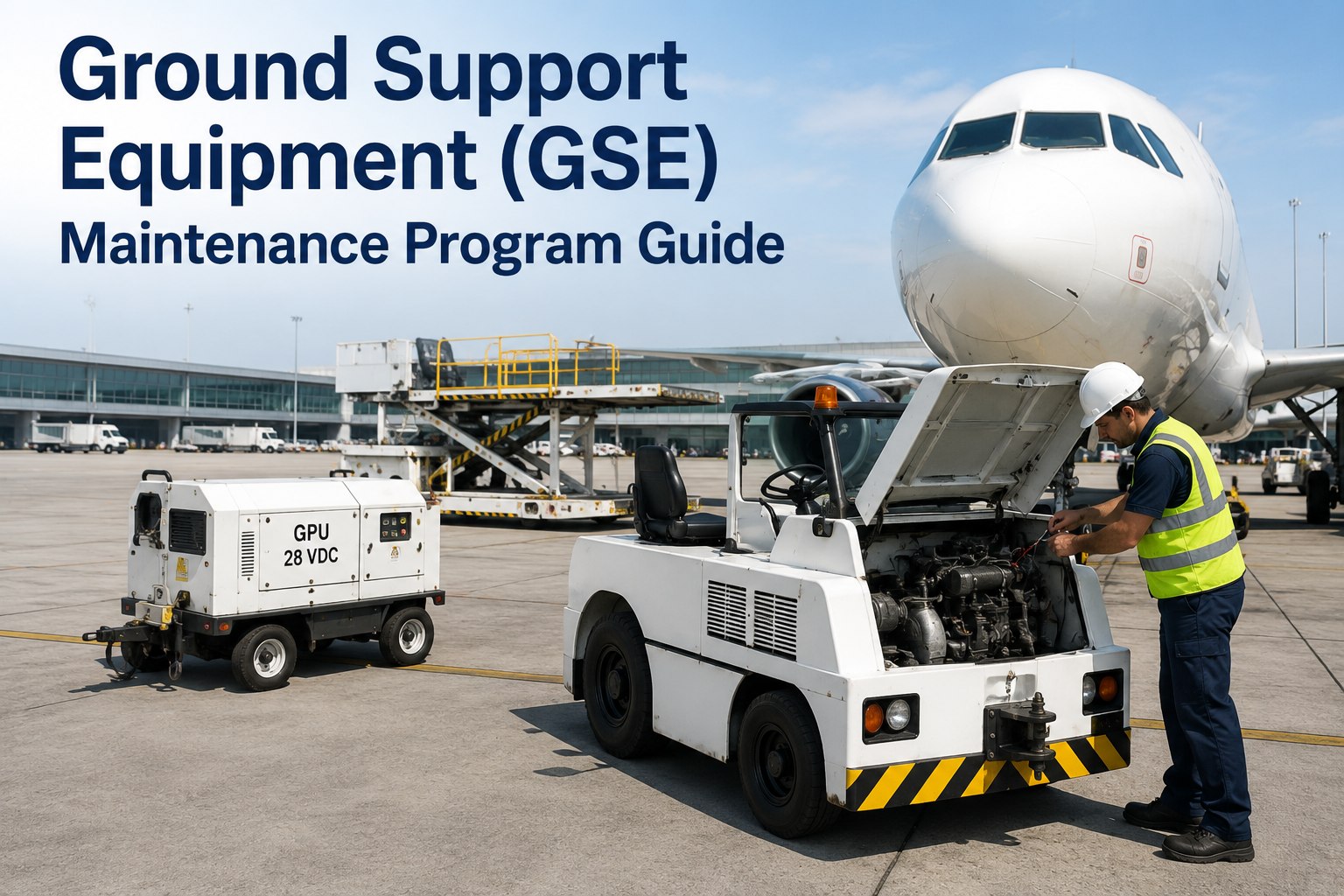
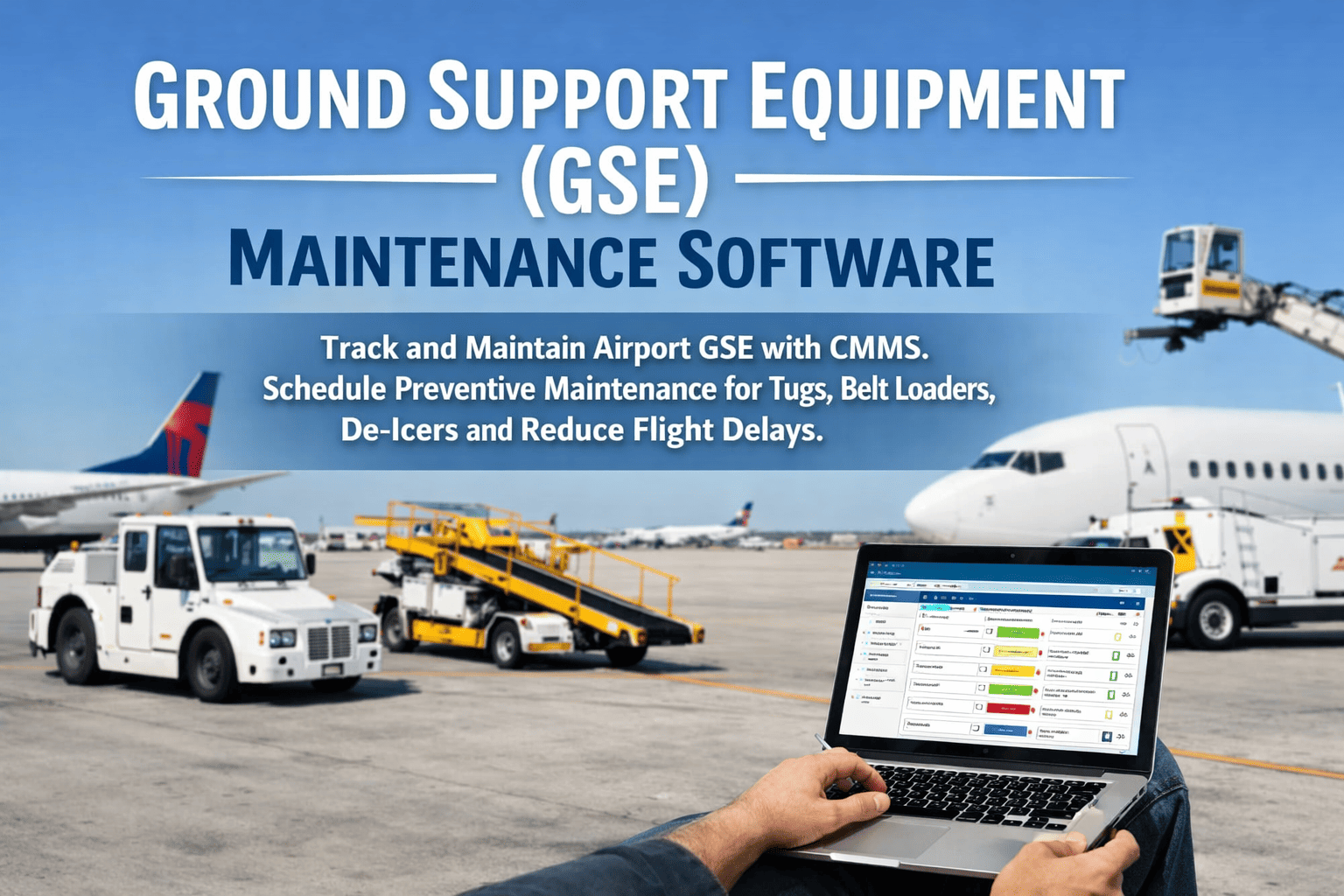
Individual PM per GSE unit — ground power units, aircraft tugs, passenger boarding bridges, ground cooling units, fuel hydrant systems, de-icing vehicles, and cargo loaders. GSE failure causing aircraft delay tracked as AOG-equivalent events with cost and delay quantification.
PM schedule per GSE unit — calendar and hour-based
AOG-equivalent delay events linked to GSE failures
GSE fleet readiness report per station
GSE PM compliance history · Fleet readiness records
PRT
Parts Traceability & Stores
EASA Part 145 · FAA AC 120-16
Full parts traceability from receipt to installation — release documents, batch numbers, shelf-life expiry, and installation records per aircraft tail and component position. Quarantine management for unserviceable and suspect unapproved parts. Calibrated tool control integrated with work order sign-off.
Release document capture at goods receipt
Shelf-life and storage condition tracking
Installation record per tail number and position
Parts traceability records · Quarantine log
TKL
Tech Log & Defect Management
ICAO Annex 6 · Operator MEL
Digital tech log replacing paper sector records — defect entry, category (A/B/C/D), MEL reference, rectification record, and deferred defect tracking. Carry-forward defects monitored against MEL interval limits with automated alerts before limit expiry. Duplicate defect analysis identifies recurring snags requiring engineering solutions.
Defect category, MEL reference, and interval tracking
Deferred defect expiry alerts per aircraft
Recurring defect pattern analysis per fleet type
Tech log records · MEL compliance register
QAS
Quality Assurance & Certifications
Part 145 · Part 66 · SMS
Technician licence and type rating currency tracked per individual — B1, B2, and C certifications with authorisation scope per aircraft type. CAME / MOE document control with revision tracking. Internal audit schedule and findings management with corrective action closure. Safety Management System event reporting linked to maintenance work orders.
Licence and type rating currency per technician
Internal audit findings and corrective action status
SMS event reports linked to maintenance events
Authorisation records · Audit finding history
Where Aviation Maintenance Failures Cost Most — and How OxMaint Prevents Them
Five failure categories account for over 90% of AOG events, regulatory findings, and unplanned maintenance costs in aviation operations. Documentation gaps and AD tracking failures together cause 55% of authority-cited non-conformances — and both are preventable through structured CMMS record management. OxMaint surfaces compliance risk before it becomes a grounding event.
AVIATION MRO FAILURE DISTRIBUTION · % OF AOG + REGULATORY EVENTS · IOSA / EASA ANALYSIS
Failure Category
Share of Events
Freq.
Severity
OxMaint Prevention
AD / Compliance Documentation Gap
34%
62% P1
AD status tracking per tail + compliance record auto-generated
Component TBO / Life Limit Exceedance
21%
58% P1
Tri-counter life tracking with 90/30/7-day lead alerts
GSE Failure Causing Aircraft Delay
18%
41% P1
GSE PM schedule + station readiness dashboard
Parts Traceability Non-Compliance
15%
54% P1
Release document capture at receipt + installation linking
Deferred Defect MEL Limit Exceedance
12%
38% P1
MEL interval tracking with automated expiry alerts
Operators investing $180K/yr in structured MRO CMMS avoid an average of $2.8M in AOG costs, regulatory penalties, and unplanned maintenance. OxMaint connects compliance data directly to the work orders that keep aircraft airworthy and on-schedule.
Event Severity Routing — How OxMaint Handles Every Aviation Maintenance Signal
An AD compliance overrun requires immediate grounding investigation. A TBO approaching in 90 days requires scheduled removal planning. A GPU due for quarterly PM requires a routine work order. Book a demo to see OxMaint's aviation event routing in action.
P1
Airworthiness Risk — Immediate Action
Confirmed compliance gap or defect posing risk to airworthiness or regulatory standing. Emergency work order auto-generated with chief engineer and accountable manager escalation within 2 hours.
Examples
AD compliance overrun · Life limit exceedance · MEL limit expired with aircraft in service · Unapproved parts installed · Deferred safety item beyond limit
Response2 hrs max
WO PriorityP1 Emergency
EscalationAccountable Mgr
P2
Compliance Approaching — Plan Before Limit
Interval or life limit approaching within operator-configured lead time. Planned intervention required — deferral creates an airworthiness risk costing 3.4x more to resolve in an unplanned AOG scenario.
Examples
AD recurring task due in 30 days · Component within 10% of TBO · MEL deferred defect approaching limit · GSE overdue for quarterly PM · Technician authorisation expiring in 60 days
Response72 hrs plan
WO PriorityP2 Planned
EscalationChief Engineer
P3
Optimisation Opportunity — Next Maintenance Visit
Early-stage maintenance requirement identified well within compliance window. Scheduled at next suitable maintenance visit — captures efficiency before P2 escalation and associated disruption cost.
Examples
Component at 80% of TBO · AD due in 90+ days · Minor defect cat D · GSE early service indicator · Parts stock approaching minimum for upcoming check
Eight compliance and performance obligations span aviation MRO operations — each with a distinct regulatory basis and documentation standard. OxMaint manages all eight from a single platform. Sign in to OxMaint to configure aviation compliance tracking.
Maintenance Activity
System / Component
Interval Basis
Documentation Required
OxMaint Status
Airworthiness Directive Tracking
All aircraft per registration
Per AD — one-time or recurring
AD reference, method of compliance, sign-off, supporting docs
AD compliance
Component Life Limit Management
LLPs, rotables, time-limited parts
Hours / cycles / calendar
Component life record, overhaul history, installation record
Life tracking
Engine / APU TBO Tracking
All engines and APUs per MSN
OEM TBO — hours and cycles
Hours/cycles log, shop visit records, on-wing time history
TBO schedule
GSE Preventive Maintenance
All GSE per unit / station
OEM — calendar + hours
PM task completion, service records, operator certification
PM scheduling
Tech Log Defect Management
All aircraft — sector records
Each sector / defect event
Defect entry, category, MEL reference, rectification record
Digital tech log
Parts Traceability
All parts — receipt to installation
Per transaction
Release document, batch, shelf-life, installation per tail/pos
Parts records
Technician Authorisation Currency
All Part 66 / Part 65 licence holders
Calendar — type rating cycles
Licence copy, type endorsements, authorisation scope record
Technology: How OxMaint Connects the Aviation MRO Data Stack
Aviation MRO management requires continuous data from flight operations, engineering systems, parts management, and regulatory sources. OxMaint integrates with the full aviation technology stack — creating a closed loop from compliance signal to work order to airworthiness record. Connect all MRO data layers through OxMaint.
AI Compliance Engine
Auto
AD applicability check on new directives
AI analyses newly issued ADs against your fleet type and registration data — flagging applicable directives for engineering review within hours of authority publication, not weeks.
Flight Ops Integration
Live
Hours and cycles updated every flight sector
Flight operations data feeds component hour and cycle counters in real time — TBO remaining life and AD recurring task intervals update automatically after every sector without manual flight log entry.
Digital Twin
Predict
Check package optimisation weeks before induction
Digital twin models fleet utilisation trajectories — predicting which components will reach TBO or AD limits within the next maintenance check window, enabling check package optimisation that reduces aircraft downtime by 15–25%.
ERP / Stores Integration
Planned
Parts order triggered by check package scope
Check package scope from OxMaint generates purchase orders in the stores system automatically — parts, consumables, and special tooling ordered before aircraft induction, not discovered missing on the hangar floor.
Authority API
22 min
Compliance package for authority review
OxMaint generates complete airworthiness compliance packages — AD records, component histories, and tech log extracts — formatted for authority review in 22 minutes vs 4–6 hours of manual document assembly.
Predictive Analytics
3.4x
Better ROI vs reactive MRO management
Component removal forecasts, GSE failure prediction, and deferred defect pattern analysis all trigger work orders at the optimum intervention point — preventing the 3.4x cost multiplier of reactive AOG maintenance.
Complete MRO compliance documentation packages generated in under 22 minutes.
AD compliance history, component life records, GSE PM logs, parts traceability records, and technician authorisation status — all from one platform, in the format authorities and insurance auditors require.
"We had been managing AD compliance across four different spreadsheets and two paper binders. When our first EASA Part 145 surveillance audit came, we spent six days assembling the documentation package and still had three open findings on missing compliance records. We loaded everything into OxMaint — 3 years of maintenance history, 47 aircraft ADs, and our full GSE fleet. The follow-up audit produced zero documentation findings. The package took 28 minutes to generate."
Q1How does OxMaint track airworthiness directives across multiple aircraft types and registrations?
OxMaint maintains an AD register per aircraft registration — each directive entered with its source authority reference, applicability determination, compliance method, compliance date, and recurring task interval if applicable. Recurring ADs are tracked against hours, cycles, or calendar time simultaneously, with configurable lead-time alerts at 90, 30, and 7 days before limit. When a new AD is issued, the AI applicability checker compares the directive scope against your fleet type and serial number data — flagging applicable aircraft for engineering review. Sign in to configure AD tracking.
Q2How does OxMaint handle the three-counter (hours / cycles / calendar) life tracking for LLPs?
Every life-limited part is configured in OxMaint with its three independent counters — flight hours, flight cycles, and calendar days — each with its own limit value and remaining-life display. The system always routes by whichever counter reaches its limit first, regardless of where the other counters stand. Flight hours and cycles are updated automatically when OxMaint receives sector data from the flight operations system — eliminating the manual counter update step. Calendar tracking runs automatically from the installation date. Forecasted removal dates are calculated for each LLP and displayed per aircraft and aggregated across the fleet.
Q3How does OxMaint manage GSE maintenance across multiple airport stations?
Each GSE unit is registered as an individual asset with its home station, asset type, OEM model, and in-service date. PM schedules are configured per unit — calendar-based (monthly, quarterly, annual) and hour-based intervals as per OEM requirements. Station managers receive a live GSE readiness dashboard showing the PM compliance status of every unit at their station. When a GSE unit fails and causes an aircraft delay, the event is logged as an AOG-equivalent occurrence in OxMaint — building the cost-of-failure data that justifies proactive GSE replacement before the next peak season.
Q4Can OxMaint generate a complete compliance package for an authority surveillance audit?
Yes — OxMaint generates structured compliance packages for any date range, any aircraft registration, and any regulatory scope. A typical EASA Part 145 audit package includes AD compliance history, component life records, tech log extracts, parts traceability records, technician authorisation status, and internal audit finding history — all formatted for auditor review. Package generation takes 22 minutes on average. The same package structure can be pre-configured for IOSA audits, insurance underwriter reviews, and aircraft sale technical evaluations. Book a demo to see package generation for your specific authority.
Q5How does OxMaint handle parts traceability for Part 145 compliance?
Parts enter OxMaint at goods receipt — release document (Form 1, 8130-3, or equivalent) captured by photo or upload, batch number, shelf-life expiry date (where applicable), and quarantine status recorded. When a part is installed, OxMaint records the installation work order number, installing technician authorisation reference, aircraft tail number, and component position. The complete traceability chain — from release document to installation record — is accessible per part number and per aircraft position at any time. Quarantine management handles unserviceable and suspect unapproved parts with mandatory workflow steps before release.
The AD was complied with. The TBO record existed. The GSE was serviceable. OxMaint connects those facts to the auditable work orders that keep aircraft flying and authorities satisfied — before the documentation gap becomes the grounding event.
AD compliance tracking · component TBO management · GSE preventive maintenance · parts traceability · digital tech log · technician authorisation · authority compliance packages — active from first aircraft configuration.