Every facility manager who has faced an Authority Having Jurisdiction inspection without complete fire safety records understands the specific anxiety that comes from knowing the records should exist but may not — or may exist somewhere in a filing cabinet that has not been opened since the last inspector left. NFPA 72, NFPA 25, NFPA 101, NFPA 80, and NFPA 10 collectively impose more than 40 distinct recurring inspection tasks on a typical commercial building, each at a different frequency, each requiring a documented result, each requiring a corrective action record if a deficiency was found. The volume alone defeats paper systems. The frequency complexity defeats spreadsheet calendar systems. And the consequence of failure — code violations, insurance coverage gaps, and liability exposure when a fire protection system fails to operate — makes this one of the few areas where systematic CMMS automation delivers direct risk reduction alongside compliance assurance. Sign up for Oxmaint to activate your NFPA inspection automation today.
Six Fire & Life Safety Systems — NFPA Requirements and CMMS Action for Each
Each system below is governed by a different NFPA standard with its own inspection frequency matrix. Oxmaint pre-loads the correct recurring work order schedule for each system type — ensuring no task is missed regardless of how complex the frequency stack becomes across a multi-building portfolio. Sign up for Oxmaint to activate all six system schedules.
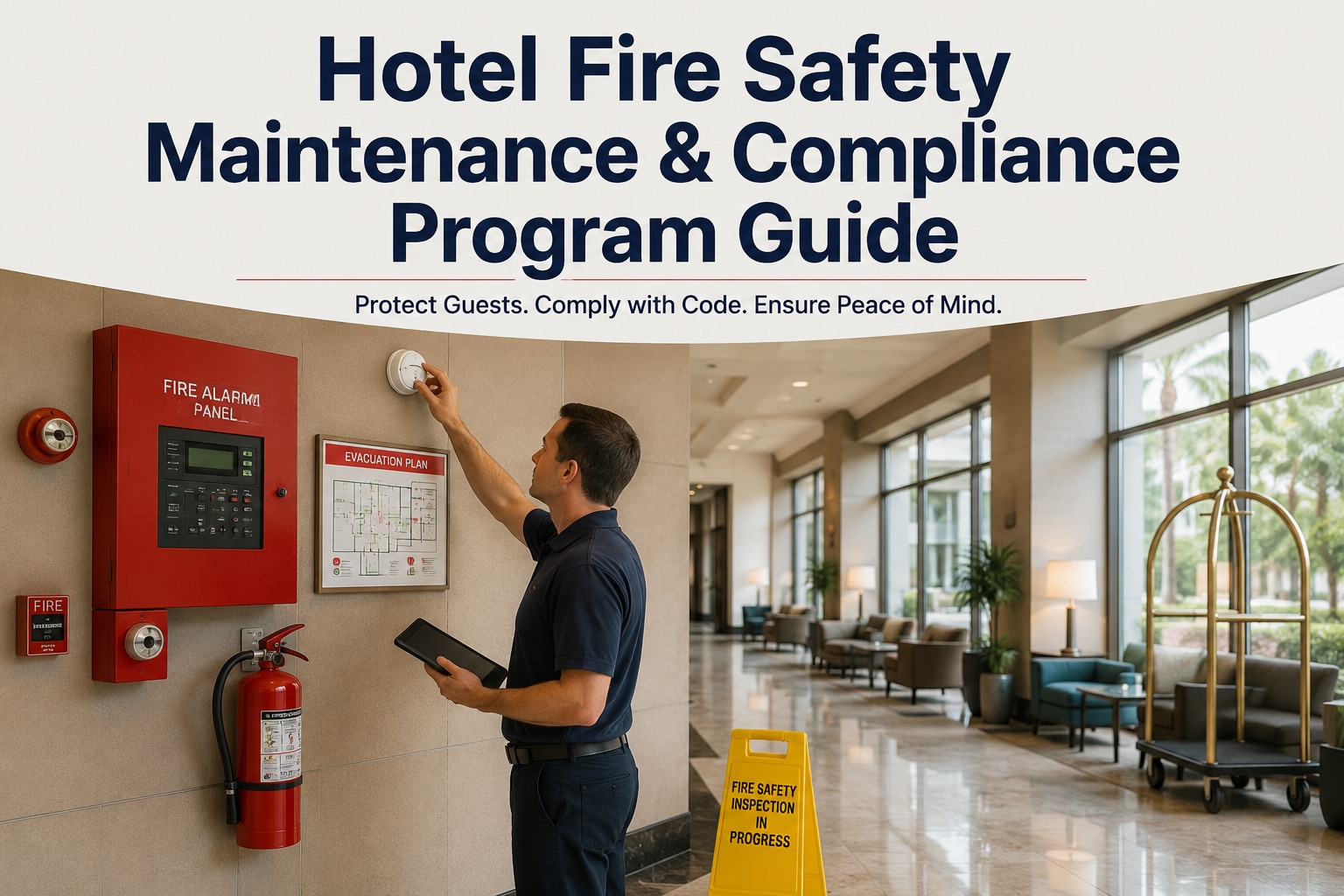
NFPA 72 Chapter 14 imposes the most layered inspection requirement of any life safety system — weekly panel visual checks, monthly signal transmission tests, quarterly supervisory device testing, and annual functional testing of every initiating and notification device. A mid-size commercial building may have 200–500 individual fire alarm devices, each requiring annual testing documentation. Oxmaint generates individual device work orders by zone, tracks test results per device, and auto-generates corrective action work orders for every device that fails its test.
NFPA 25 is the standard for water-based fire protection system inspection, testing, and maintenance. Its multi-frequency requirements span from weekly fire pump checks to 5-year internal pipe obstruction investigations. Fire pumps for Level 1 systems require weekly automatic start tests — a work order that must generate every week without exception. Sign up for Oxmaint to schedule all NFPA 25 tasks automatically.
NFPA 101 Life Safety Code requires monthly 30-second battery and bulb function tests for all emergency lighting units and visual inspection of all exit signs. The annual requirement extends to a full 90-minute battery discharge test on every emergency lighting unit — confirming the battery can sustain illumination for the full required duration during a power failure. Buildings with 50–200 emergency lighting units face a significant documentation burden for the annual test cycle. Book a demo for emergency lighting configuration.
Fire doors are among the most frequently non-compliant life safety components — propped open with wedges, damaged by freight carts, and fitted with non-compliant hardware. NFPA 80 requires every fire door to be inspected annually and high-use doors to be visually inspected monthly. Buildings with 100+ fire doors face a significant documentation challenge that paper-based inspection processes consistently underperform on. Sign up to configure fire door inspection work orders per door.
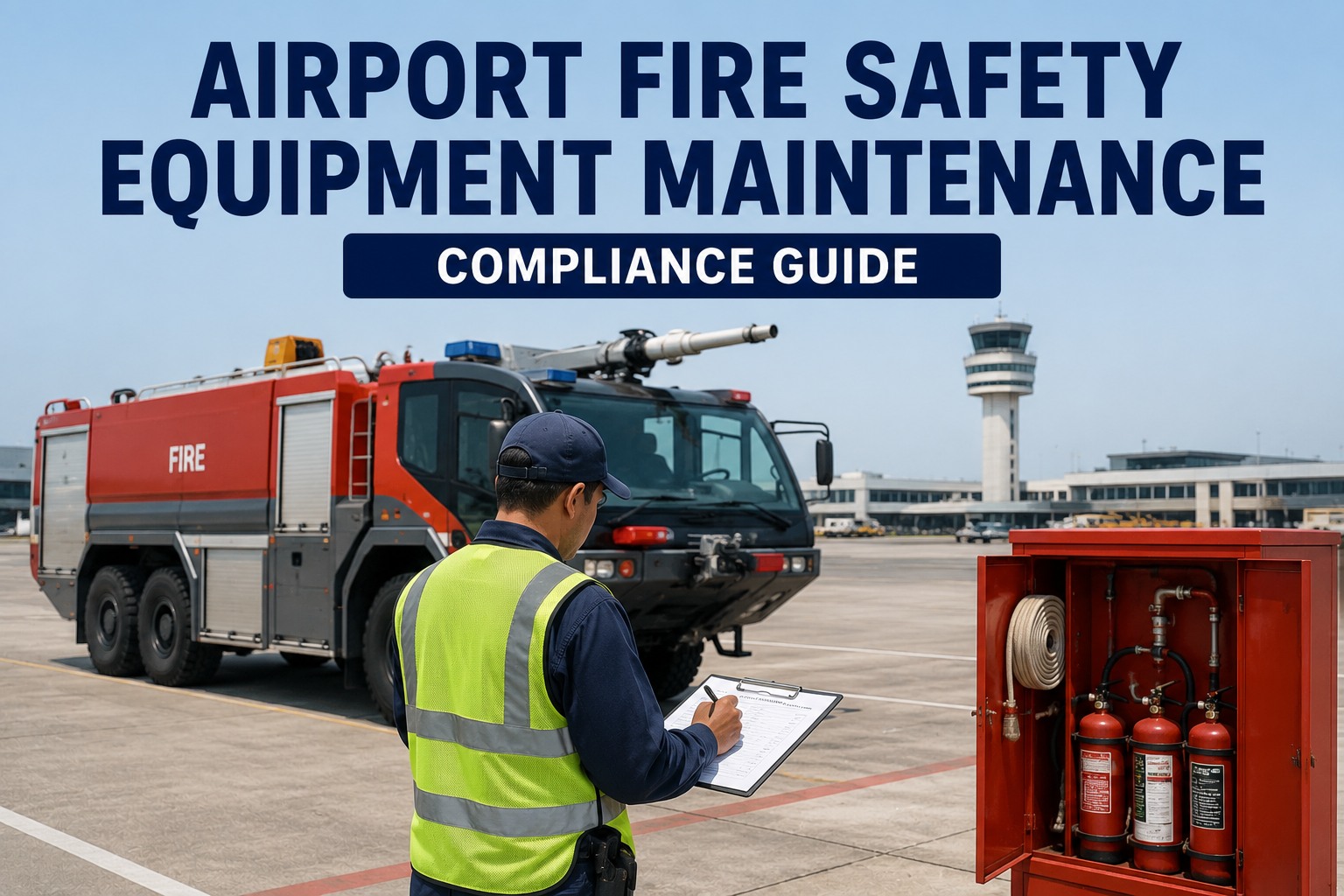
NFPA 10 imposes a maintenance programme that most organisations only partially comply with. Monthly visual inspections must confirm every extinguisher is in its designated location, the access path is unobstructed, the pressure gauge is in the green zone, and the tamper seal is intact. Oxmaint generates monthly inspection work orders by building zone with photo capture requirements for each unit. Book a demo to see extinguisher portfolio configuration.
NFPA 20 and NFPA 25 together require weekly automatic start tests, monthly no-flow churn runs, and annual full-flow performance tests with pressure-flow curves documented. Diesel-driven fire pumps add fuel level monitoring, battery charge verification, and cooling system inspection. A fire pump that fails to start when a sprinkler system demands flow can render the entire sprinkler system ineffective. Sign up to schedule fire pump tests automatically every week.
What Happens When a Fire Safety Inspection Finds a Deficiency — The NFPA-Required Response Workflow
Finding a deficiency during a fire safety inspection is not a compliance failure — failing to document it, track it, and resolve it is. NFPA standards require every deficiency to generate a formal corrective action with documented resolution. Oxmaint automates this entire workflow from detection to closure. Sign up for Oxmaint to configure your deficiency-to-resolution workflow.
Technician records failed test result in Oxmaint work order with photo and description. Result timestamped automatically.
Oxmaint auto-creates a linked corrective action work order flagged urgent for life safety deficiencies. References the original inspection finding with full context.
Work order assigned to technician. If system is out of service, Oxmaint generates impairment notification for AHJ and activates fire watch work orders per NFPA 25 §15.5.
Technician closes corrective action with completion notes, parts replaced, and photo evidence. Verification inspection work order generated to confirm NFPA acceptance criteria met.
Original finding, corrective action, repair, and verification all stored as linked records. AHJ reviews the complete deficiency-to-resolution timeline in seconds. Book a demo.
When an AHJ Inspector Arrives Unannounced, Your Fire Safety Records Are Either Ready or They Are Not
Oxmaint ensures every NFPA inspection happens on schedule, every deficiency is tracked to resolution, and the complete compliance record is accessible in seconds — not buried in filing cabinets or scattered across email threads.
What Happens When Fire Safety Records Are Finally Digitised
We manage fire and life safety compliance for 23 commercial buildings. Before Oxmaint, our fire extinguisher monthly checks were logged on clipboards at each building — which meant the clipboard was either there, partly filled in, or missing. When the AHJ inspected two of our buildings in the same quarter, we could not produce complete records for one of them. The remediation process took three weeks, cost a significant fine, and required an emergency third-party audit. After implementing Oxmaint with auto-generated monthly work orders for every extinguisher across all 23 buildings, we have had 100% completion every month for 14 consecutive months. Our last two AHJ inspections took under an hour each — the inspector viewed the records directly in the system without any paperwork retrieval on our part.
Fire & Life Safety CMMS — Common Questions
Each inspection task in Oxmaint carries its own independent recurrence schedule — a fire alarm control panel can simultaneously carry a weekly visual inspection work order, a monthly signal transmission test work order, and an annual full-system test work order, each generating independently at its configured interval from the last completion date. The weekly work order does not reset the monthly work order's clock. All four NFPA 72 frequency tiers run simultaneously without any manual coordination between them. Sign up for Oxmaint to activate multi-frequency fire alarm scheduling.
Yes — external contractors can be set up as contractor users in Oxmaint with access to their assigned inspection work orders. The contractor's inspector completes the work order on mobile at the device location, records test results, attaches their inspection certificate and photos, and signs off digitally. Their report becomes part of the facility's permanent compliance record without any paper transcription or email follow-up. Book a demo to see contractor inspection integration.
When a sprinkler system or zone is taken out of service in Oxmaint, the technician raises an impairment work order that automatically changes the system's status to "Impaired" and generates the required documentation for AHJ and insurance carrier notification. For significant impairments, NFPA 25 §15.5 requires an hourly fire watch patrol — Oxmaint activates recurring hourly fire watch work orders for the duration of the impairment automatically. When the system is restored, the technician closes the impairment work order with the restoration timestamp, and the complete impairment record is permanently stored in the asset history.
Multi-year intervals — the 5-year internal sprinkler pipe inspection, the 6-year dry chemical extinguisher maintenance, and the 12-year CO2 extinguisher hydrostatic test — are configured as long-interval recurring work orders in Oxmaint, generating from the last completion date rather than a fixed calendar date. Upcoming multi-year inspections appear in the compliance calendar with configurable advance notice periods (90 and 30 days are typical). The system never loses track of a multi-year cycle the way a spreadsheet does when the person maintaining it changes roles. Sign up to configure your multi-year inspection cycles.
Yes — multi-building management is central to how Oxmaint is designed. Each building is set up as a location in the asset register with its own inventory of fire protection components. The portfolio compliance dashboard shows aggregate status across all buildings — which buildings have overdue inspections, which have open deficiency corrective actions, and which have upcoming multi-year inspections approaching — all in a single view. This is particularly valuable for property managers responsible for multiple buildings who need consistent compliance performance across the portfolio rather than managing each building as an isolated compliance programme.
Fire Safety Compliance Is Built One Inspection at a Time. Oxmaint Makes Sure None of Them Are Missed.
The fire protection systems in your buildings were designed and installed to save lives. The only way they fulfill that design intent is if they are maintained to the standards that prove they will work when they are needed. Oxmaint automates the inspection scheduling, deficiency tracking, and documentation that transforms a compliant fire safety programme from an aspiration into a daily operational reality.