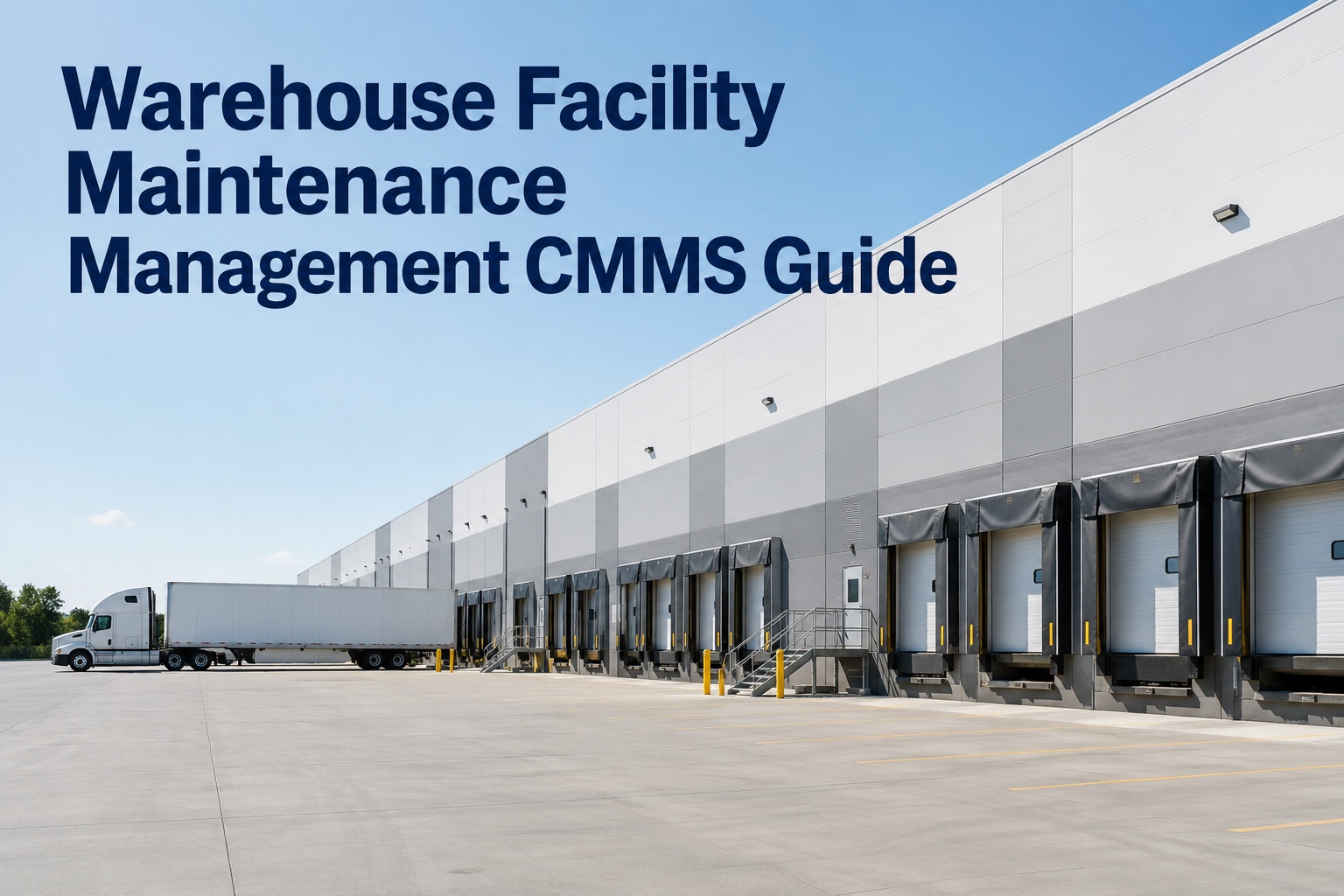
A modern distribution center is a facility whose economics collapse the moment its infrastructure stops moving. A single dock door out of service during peak inbound receiving costs $500 to $2,000 per hour in delayed unloading, driver detention, and downstream cross-docking impact. A stalled sortation belt during outbound wave-picking can bottleneck an entire shift, cascading through carrier cutoffs and same-day fulfillment commitments. A single damaged rack upright that fails a monthly inspection may take out an entire rack bay for a week while a structural engineer signs off on remediation. And every year the American e-commerce economy adds hundreds of millions of square feet of distribution capacity — 500,000 to 1 million square feet is now a common single-facility footprint — where the ratio of trained maintenance technicians to critical assets keeps getting thinner. Distribution center facility maintenance is a distinctive discipline: it is not the light-duty PM of an office building, not the safety-first stakes of a hospital, not the seasonal rhythm of a school. It is 24/7 industrial operation with immediate revenue-linked consequences for every hour of asset downtime, spread across a facility footprint too large to inspect manually and too dispersed to manage from a desktop CMMS. This guide walks through the operational zone map of a typical DC, the critical building systems and their PM cadence, the racking damage classification framework every warehouse must apply, the downtime cost profile that drives capital priority, and the peak season compression that turns Q4 into the highest-stakes operational window of the year. OxMaint gives DC leadership the mobile-first CMMS platform that operationalizes all of this discipline across every square foot of the facility. Book a free demo to see warehouse facility maintenance inside OxMaint.
Zone 1
Inbound Dock
Dock doors · levelers · seals · restraints · dock lights
HIGH intensity
Zone 2
Receiving & Staging
Floor · lighting · barriers · label printers
MEDIUM intensity
Zone 3
Bulk Storage
Racking · high-bay lighting · ESFR sprinklers · aisle floors
HIGH intensity
Zone 4
Sortation & Conveyor
Motors · gearboxes · belts · sensors · diverters · scan tunnels
CRITICAL
Zone 5
Pick Modules
Mezzanines · flow rack · pick-to-light · task workstations
MEDIUM intensity
Zone 6
Outbound Dock
Dock doors · levelers · shipping systems · packaging
HIGH intensity
Zone 7
Battery & Fleet
Charging stations · ventilation · wash bays · MHE fleet
MEDIUM intensity
Zone 8
Yard & Perimeter
Paving · drainage · fencing · exterior lighting · gates
LOW intensity
A 500,000 sq ft DC contains 3,000-5,000 tracked assets across these eight zones · mobile-first CMMS makes this manageable · desktop-only CMMS cannot
40-120
dock doors in a typical distribution center · each carrying $500-2,000/hour of downtime cost when out of service
10-15%
of storage racking carries some level of damage in a typical warehouse · systematic inspection is not optional
24 / 7
operational reality of modern DCs · maintenance windows must be engineered around continuous throughput commitments
Storage Rack Damage Classification — The RMI Framework
Storage rack damage is one of the most consequential and most poorly-managed safety exposures in warehouse operations. A single failed upright post can collapse an entire rack bay, injure workers, destroy inventory, and shut down operations for days. The Rack Manufacturers Institute (RMI) and ANSI MH16.1 provide the framework every DC facilities program must apply — a three-level severity classification where damage type, damage severity, and required action are all defined. The classification below reflects what a warehouse maintenance manager must instantly recognize during a walk-down, and what a mobile CMMS captures per specific rack location for structural engineer review.
Storage Rack Damage · Three-Level Classification per RMI & ANSI MH16.1
Level 1
Minor / Cosmetic
Surface scrapes, paint damage, minor bends within tolerance · no visible deformation of load path
Document · monitor · schedule touch-up · no operational impact
Level 2
Repairable Damage
Bent upright, damaged brace, missing safety pin, footplate impact · deformation but still functional
Reduce load · schedule repair within defined window · engineer review recommended
Level 3
Critical / Structural
Post kinked or severed, beam disconnected, foundation damage, buckled column · load path compromised
Unload immediately · barricade · structural engineer sign-off before return to service
Every finding logged in OxMaint against the specific rack position (bay-column-level) with photo evidence · the exact documentation OSHA and insurance carriers request after an incident
Downtime Cost by System — Where Failure Actually Hurts
The economic case for disciplined DC facility maintenance is not marginal. Every major system carries its own hourly downtime cost, and the multiplier between preventive maintenance investment and reactive-failure exposure is one of the sharpest in industrial operations. The comparison below reflects typical hourly downtime cost when a critical asset in each category goes out of service during operations — figures that make preventive maintenance economics transparent to any CFO who has ever asked the question. OxMaint tracks every asset against its downtime cost profile so PM prioritization reflects business impact, not just PM count.
Hourly Downtime Cost by System · Operational Impact Profile
Sortation Belt · Peak Wave
Entire outbound flow bottlenecked · carrier cutoff at risk · downstream fulfillment SLA impact
Conveyor Motor / Diverter
Zone throughput reduced · manual workarounds required · labor cost spike
Racking Bay Out of Service
Inventory relocation · pick path disruption · potential engineer wait time
Dock Door Out of Service
Driver detention · unloading delayed · yard congestion cascades
High-Bay Lighting Failure
Aisle safety compromise · pick accuracy drops · potential injury exposure
Warehouse HVAC / Ventilation
Employee comfort · CO buildup risk in enclosed forklift areas · productivity impact
Downtime cost drives PM criticality tier · every asset tagged with its downtime profile in OxMaint · preventive investment aligned to business impact
Building Systems & PM Cadence — Warehouse-Specific Discipline
A distribution center's major building systems each require their own preventive maintenance regime — with cadences that reflect the specific failure modes and industry standards applicable to warehouse operations. The reference matrix below covers the seven core system categories every DC facilities program manages, with the standard PM cadence tier per system. Mobile-first CMMS execution means every technician completes and documents the PM directly against the specific asset from the floor — not against a paper printout that gets re-entered at the end of the shift.
Core DC Building Systems · PM Cadence Framework
Dock Systems
Doors · levelers · seals · vehicle restraints · dock lights · communication
Monthly PM · quarterly full inspection · post-impact immediate
Racking
Uprights · beams · footplates · safety pins · row spacers · anchor bolts
Weekly walk · monthly documented · annual expert · post-impact immediate
Conveyor & Sortation
Motors · gearboxes · belts · bearings · photoeyes · diverters · scan tunnels
Daily quick-check · weekly lubrication · monthly vibration · quarterly overhaul
Fire Suppression
ESFR sprinklers · in-rack sprinklers · pumps · controls · alarm integration
NFPA 25 · monthly gauge · quarterly waterflow · annual full trip
High-Bay Lighting
LED fixtures · sensors · emergency egress · photocell controls
Monthly aisle walk · quarterly cleaning · annual sensor verify
Battery & Fleet Support
Charging stations · ventilation · wash bays · watering systems
Weekly ventilation check · monthly connector inspection · quarterly deep clean
HVAC · Comfort & Cold
RTUs · make-up air · exhaust · refrigeration if applicable
Quarterly PM · seasonal changeovers · annual full service
Mobile-First Execution for Every Square Foot
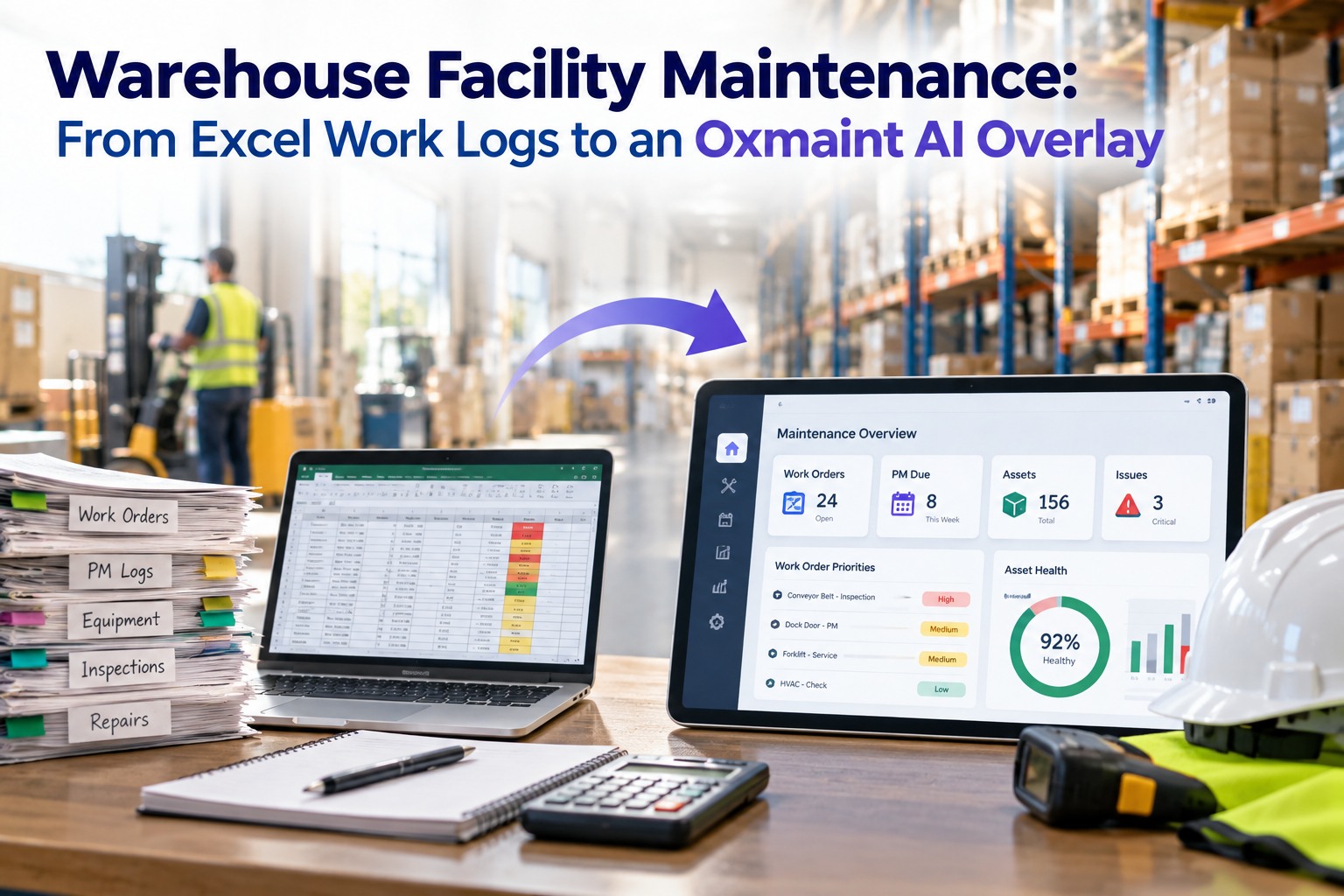
OxMaint's mobile CMMS captures every PM, every rack inspection, every dock door work order directly against the specific asset from the floor · with photo evidence, technician signature, and timestamped completion.
The Peak Season Compression — Q4 Changes Everything
For distribution centers serving retail and e-commerce, the fourth quarter is the operational period on which the entire year's economics turn. Throughput spikes 40-100% above baseline from mid-October through early January. Overtime hours compound. Temporary workforce doubles. And the maintenance windows that were routine during Q1-Q3 shrink to near-zero as every hour of asset availability drives revenue-linked commitments. The visualization below reflects the compression that mature DC facilities programs plan for months in advance — pushing major capital work into Q2 and Q3, executing peak-season PM with mobile-first surgical precision, and holding capacity in reserve for the incidents that will happen when the facility is running at 130% of baseline.
Q4 Capacity Compression · Maintenance Windows Shrink as Throughput Peaks
Throughput Volume
Jan
Feb
Mar
Apr
May
Jun
Jul
Aug
Sep
Oct
Nov
Dec
Maintenance Window Capacity
Jan
Feb
Mar
Apr
May
Jun
Jul
Aug
Sep
Oct
Nov
Dec
Every deferred PM entering Q4 becomes a Q4 emergency · mature DCs front-load capital work into Q2-Q3 and hold Q4 as reactive-response-only
Executive Perspective · Mobile-First is Non-Negotiable
A distribution center at 750,000 square feet is not a facility. It is roughly 14 football fields under one roof, with 3,000 to 5,000 tracked assets spread across zones that a technician cannot easily walk between in a single shift. The single most consequential decision any DC facilities leader makes is whether their CMMS operates on the floor or at a desk. Desktop-only CMMS platforms — even good ones — force technicians back to a workstation to look up PM procedures, log completions, upload photos, and close work orders. That round-trip time compounds across every asset in the facility, and it silently converts what should be preventive maintenance into reactive maintenance because there is never enough capacity for the PM backlog to catch up. Mobile-first CMMS is not a feature. It is an operating model choice that treats the floor as the workplace and the phone or tablet as the primary interface. When we moved onto OxMaint, our PM completion rate went from 62% to 94% in three quarters — not because we hired more technicians, but because every technician's shift generated 30-40% more executed work by eliminating the desktop round-trip. Peak season last year was the smoothest we have run in a decade. That is what a properly designed DC facilities platform delivers.
The Floor Is the Workplace
OxMaint runs entirely from mobile · every PM, work order, inspection, and photo captured against the asset from the floor.
Downtime Cost Drives Priority
Every asset tagged with its hourly downtime cost · PM cadence and technician assignment flow from business impact.
Q4 Ready in Q3
Front-loaded capital work · reserved Q4 capacity for reactive response · peak season stops being a crisis.
Run Your DC From the Floor, Not the Desk
If your facilities team still walks back to a desk to close work orders, look up PM procedures, and upload photos, you are burning hours of technician capacity every shift on avoidable round-trips. See what OxMaint — a mobile-first CMMS built for distribution center operations — looks like against your facility.
Frequently Asked Questions
How often should storage racking be inspected?
Per RMI and ANSI MH16.1: continuous informal observation by operators; weekly documented walk-through by warehouse staff; monthly formal inspection with photo documentation of any Level 2 or Level 3 damage; annual expert inspection by a qualified rack inspector; and immediate inspection after any known impact. Damage is classified into three severity levels: Level 1 (cosmetic — document and monitor); Level 2 (repairable — reduce load and schedule repair); Level 3 (critical — unload, barricade, structural engineer sign-off required before return to service).
What is the downtime cost of a dock door failure?
A single dock door out of service during operations typically costs $500-$2,000 per hour in driver detention charges, delayed unloading, downstream cross-docking disruption, and yard congestion effects. Sortation belt failures during peak wave-picking run $8,000-$25,000 per hour because the entire outbound flow bottlenecks. OxMaint tags every asset with its downtime cost profile so PM cadence and repair prioritization align with actual business impact rather than just PM count.
Why do distribution centers need mobile-first CMMS?
Because the facility footprint is too large for desktop-only workflows. A 500,000-1,000,000 sq ft DC contains 3,000-5,000 tracked assets spread across zones that a technician cannot easily walk between during a single shift. Desktop CMMS forces round-trips back to a workstation to look up procedures, log completions, and upload photos — silently converting preventive maintenance capacity into administrative overhead. Mobile-first CMMS captures every action against the asset from the floor, and typically increases executed PM throughput by 30-40% without adding technicians.
What building systems does a warehouse CMMS need to track?
The core system categories are: dock systems (doors, levelers, seals, restraints); storage racking (uprights, beams, footplates, anchors); conveyor and sortation (motors, gearboxes, belts, sensors, diverters); fire suppression (NFPA 25 sprinkler/ESFR compliance); high-bay lighting (LED fixtures, sensors, emergency egress); battery and fleet support (charging, ventilation, wash bays); and HVAC (RTUs, make-up air, refrigeration if applicable). Each has its own PM cadence and criticality tier.
How should DC facilities teams handle peak season?
Front-load capital and major project work into Q2-Q3. Compress non-critical PM into pre-Q4 windows. Hold Q4 capacity as reactive-response-only. Schedule technician overtime and contractor support against the peak-throughput calendar. Every deferred PM entering Q4 becomes a Q4 emergency that costs multiples of its Q1-Q3 execution cost. Mature DCs plan Q4 readiness starting in April, not October.
How does racking damage affect OSHA compliance?
OSHA 29 CFR 1910.176 requires safe storage of materials and prohibits unsafe stacking. Undocumented rack damage exposes the operator to citations under general duty clause (Section 5(a)(1)) when a knowable hazard is not addressed. Level 3 (critical) damage that has not been unloaded and barricaded is one of the most consequential findings possible during an OSHA inspection. Documented inspection cycles with photo evidence and remediation tracking are the operational evidence that satisfies inspector questions — captured continuously in OxMaint against every rack position.


.png)


