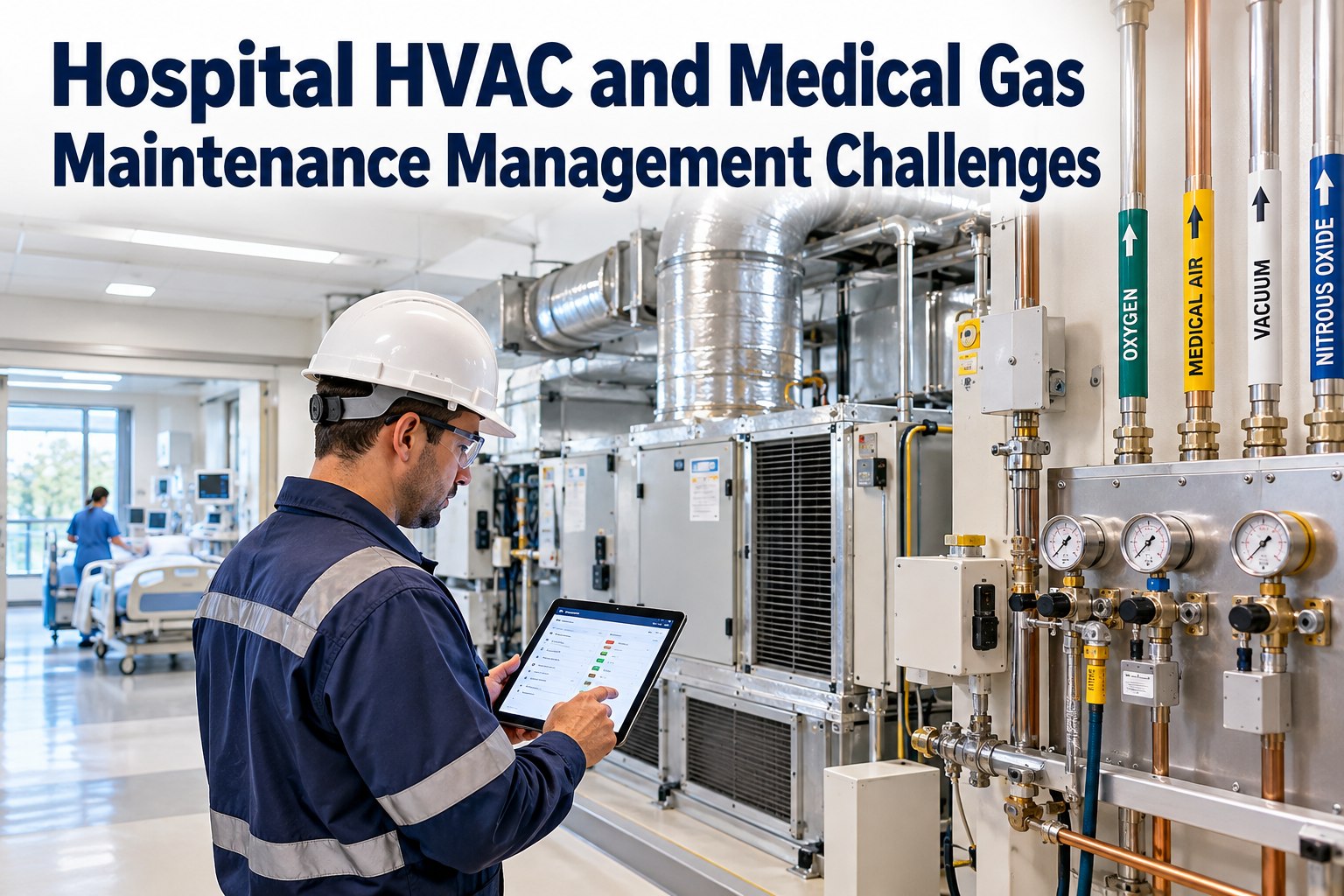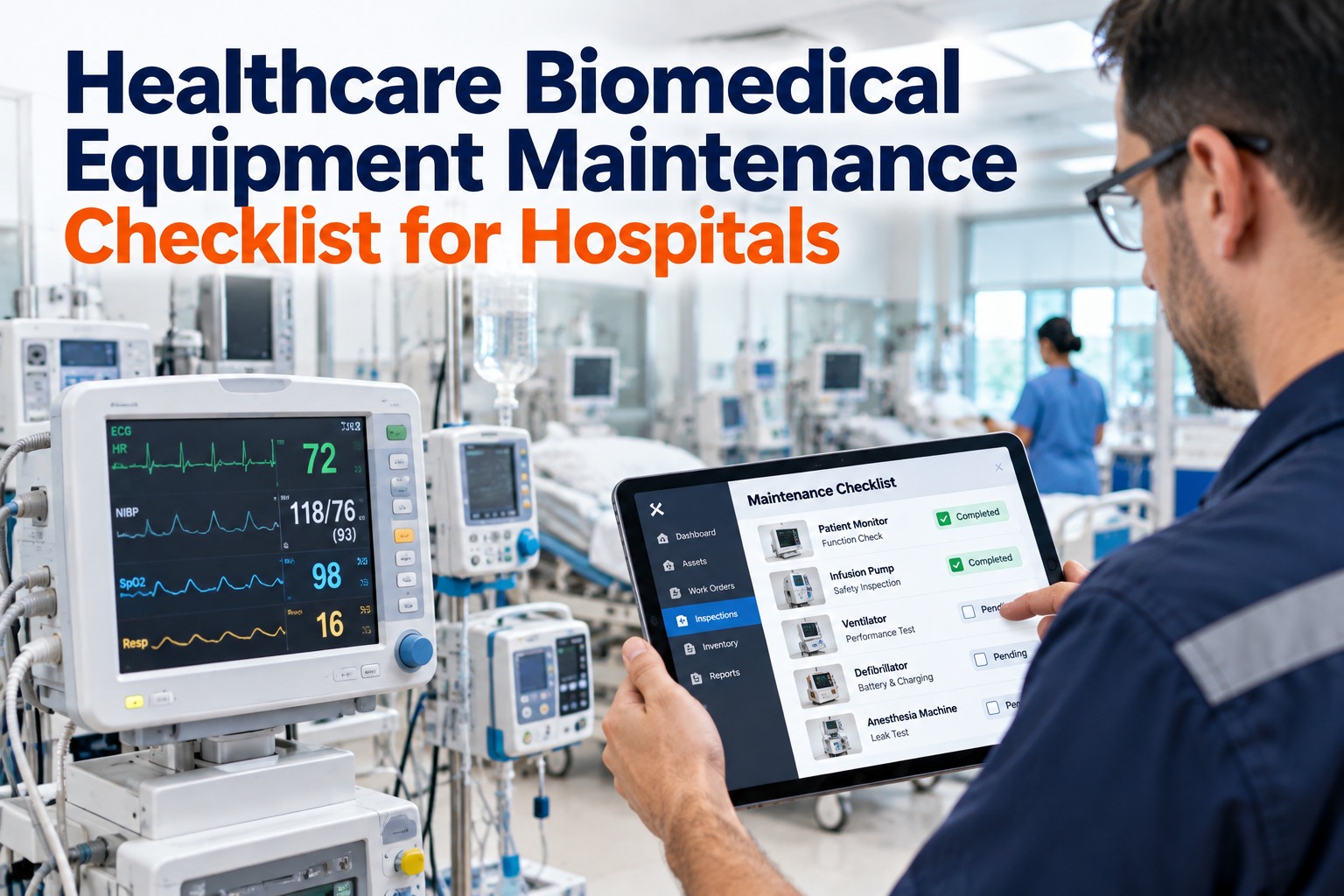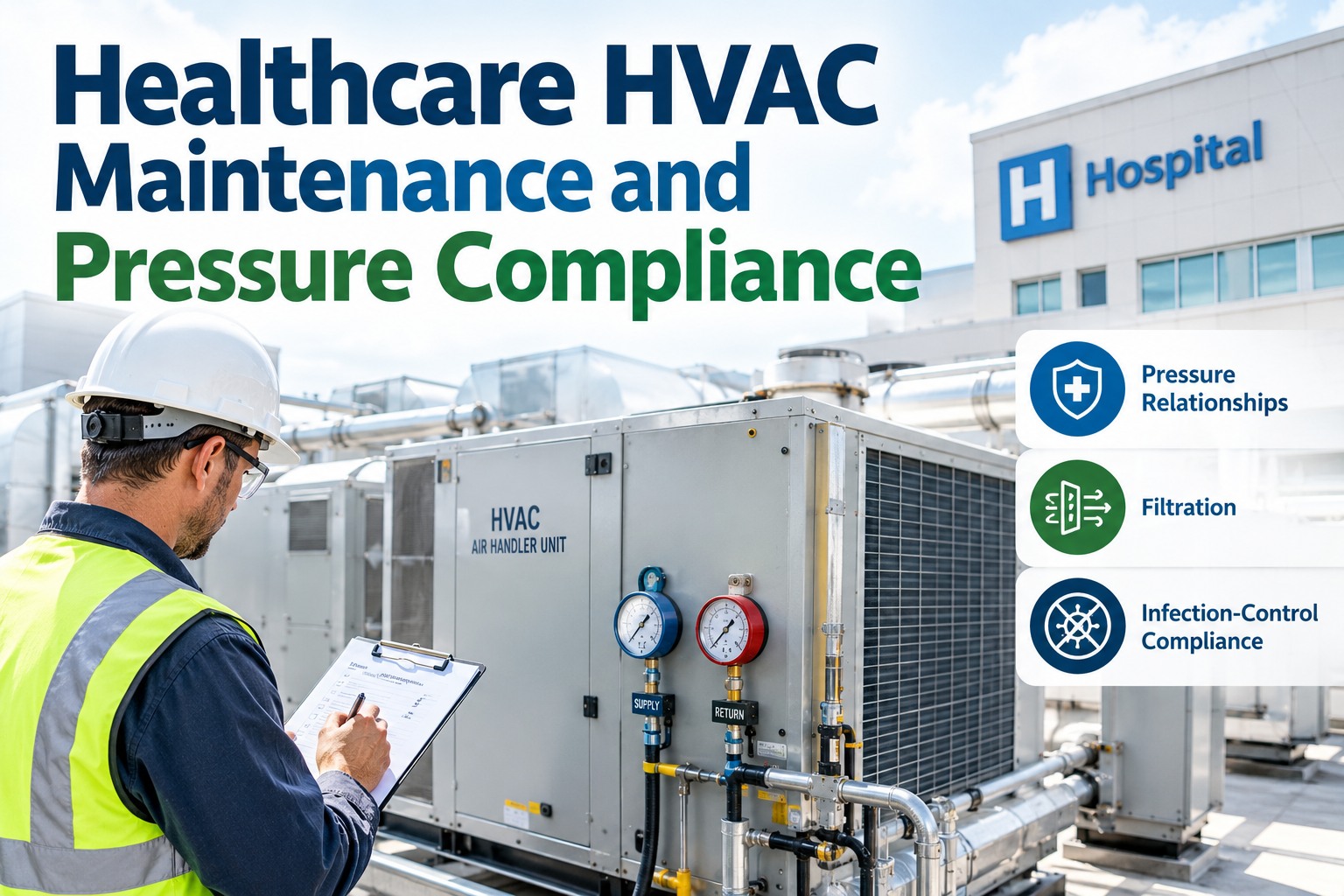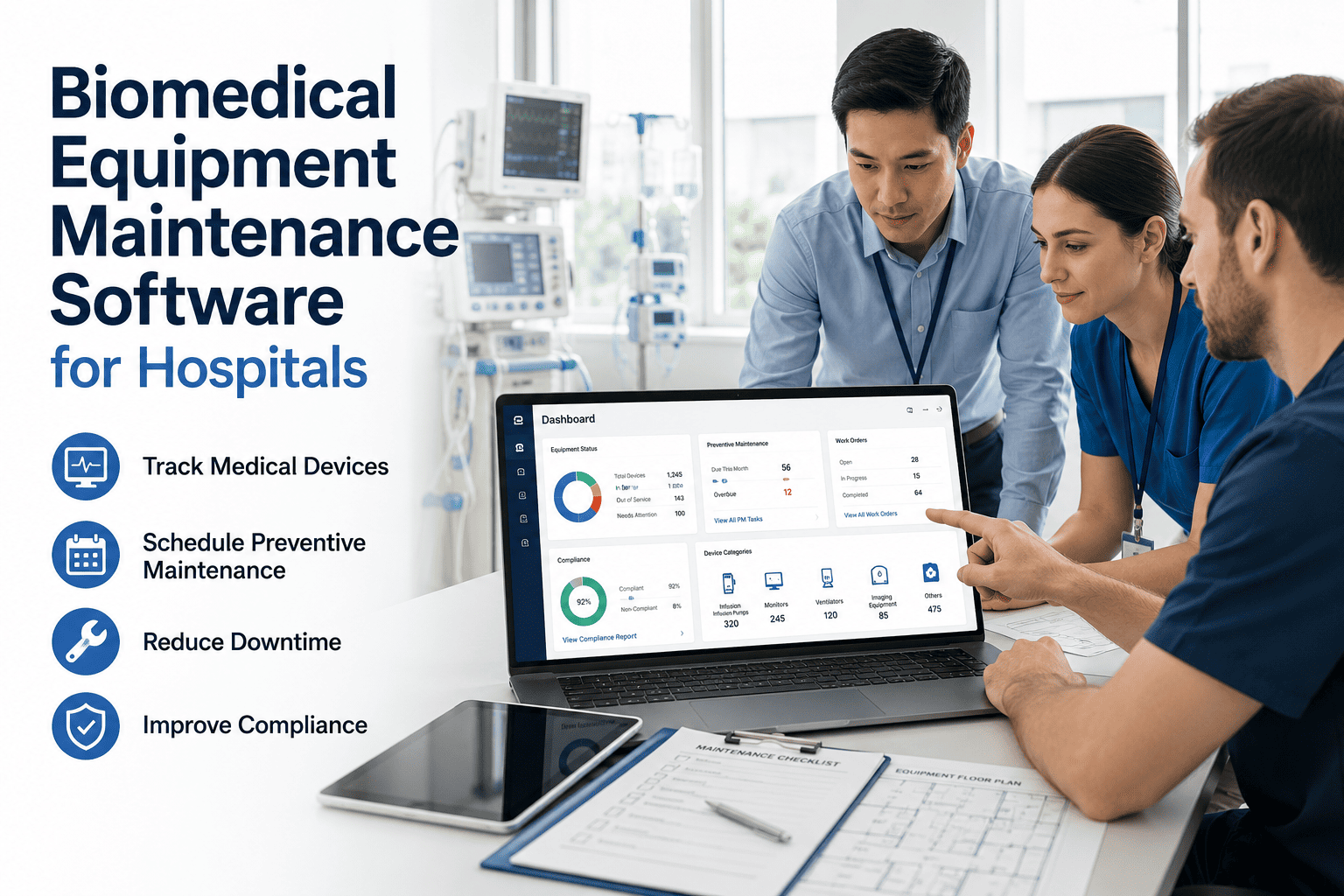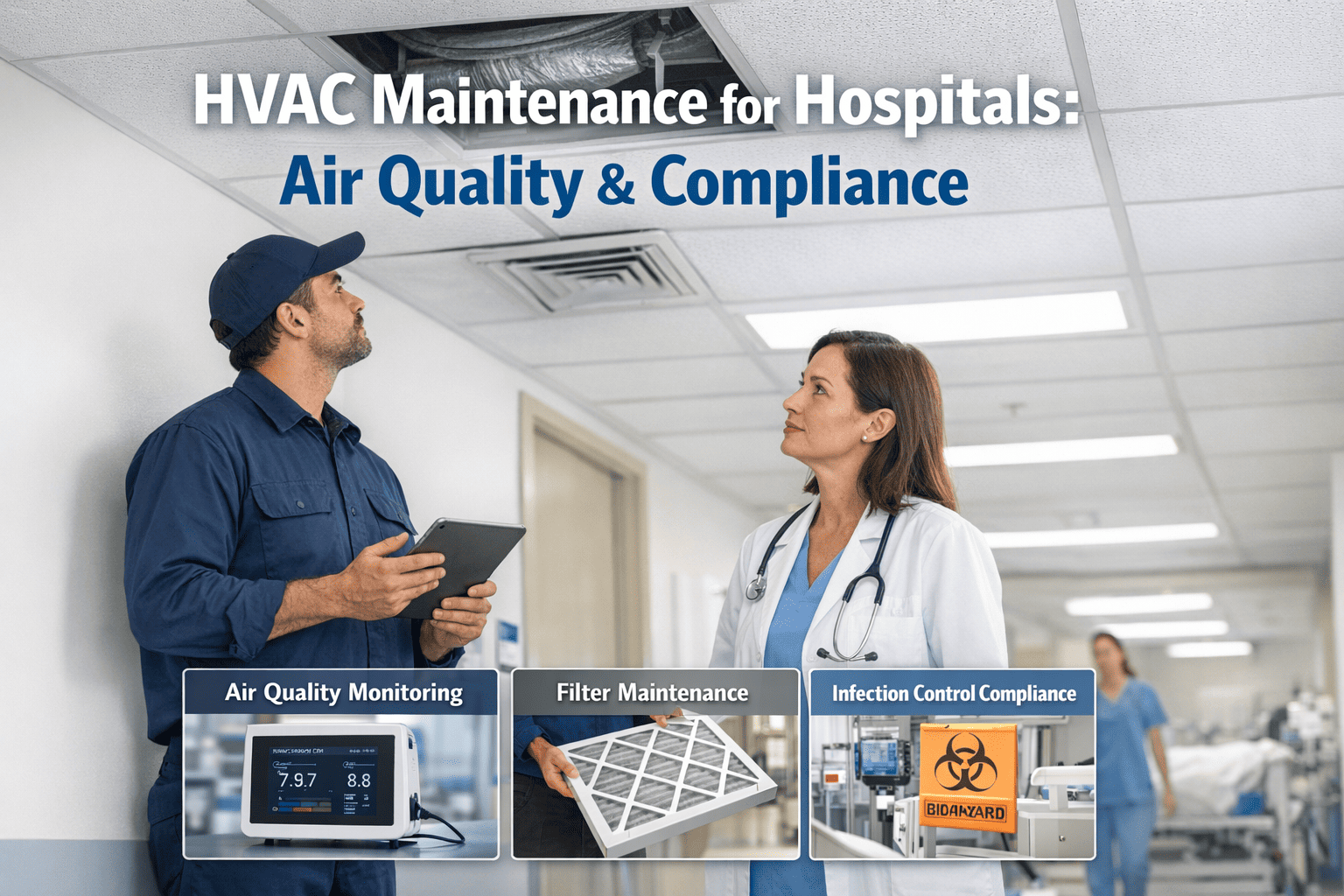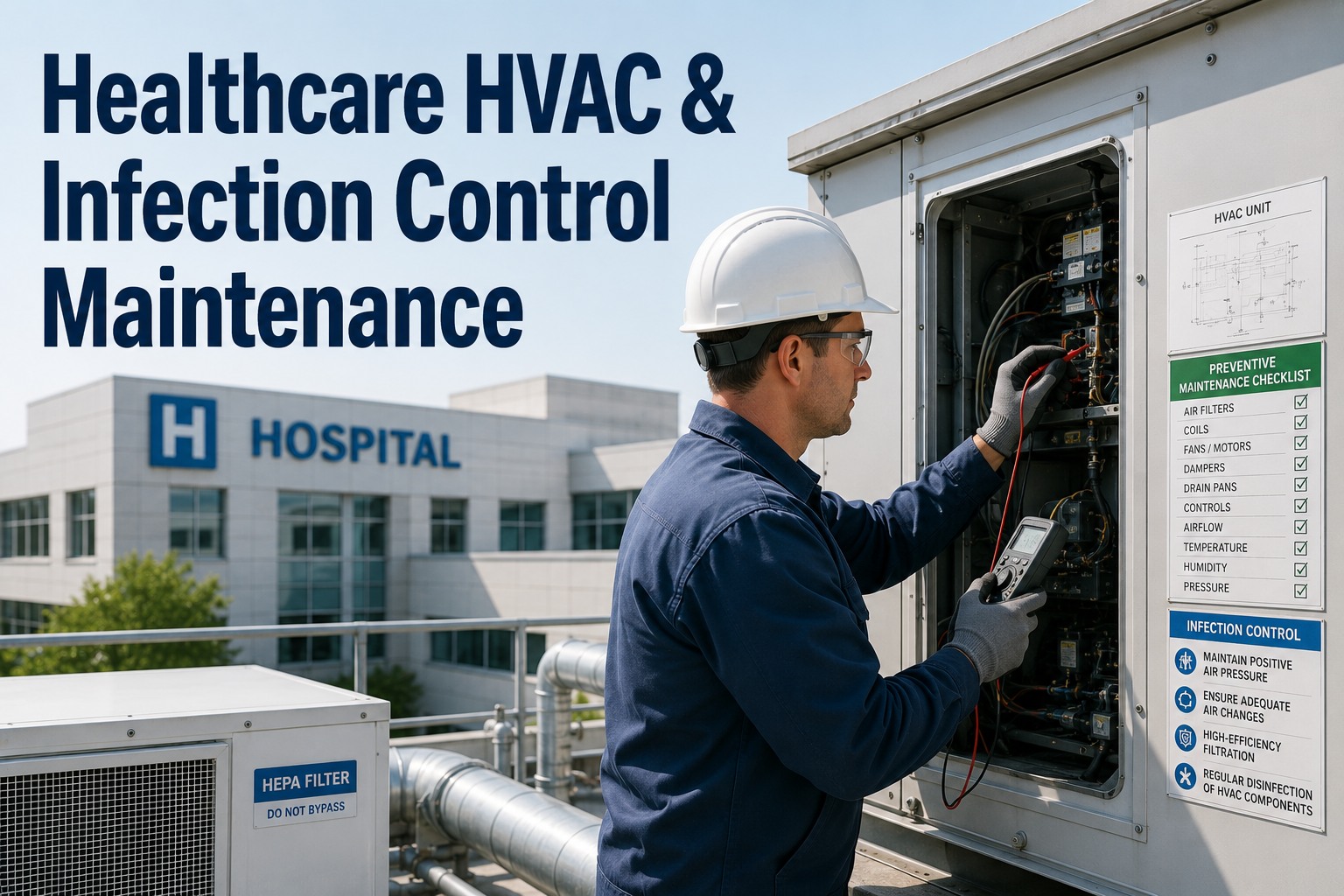
Healthcare HVAC maintenance is the engineered backbone of infection control — the difference between a compliant isolation room and an airborne-transmission event. ASHRAE Standard 170, CDC guidelines, and FGI Facility Guidelines set prescriptive pressure-relationship, filtration, and air-change requirements that maintenance and reliability teams must verify, document, and sustain continuously. OxMaint's AI-powered CMMS gives hospital facility teams the preventive scheduling, pressure-monitoring integration, and audit-ready work-order history needed to keep every critical environment defensible — you can Start Free Trial or book a demo to see it mapped to your facility.
Can your team prove every pressure relationship and HEPA filter is compliant — today?
ASHRAE 170, CMS, and Joint Commission surveyors don't accept verbal assurances. They want documented evidence that AII rooms, PE rooms, operating suites, and pharmacy compounding areas meet pressure, dilution, and filtration requirements continuously — not just on inspection day. OxMaint turns that evidence into an automated, always-audit-ready system of record.
What ASHRAE 170 requires for healthcare HVAC maintenance
ASHRAE Standard 170 (Ventilation of Healthcare Facilities) defines the minimum design, pressure-relationship, and filtration parameters for every clinical space. But compliance isn't a design checkbox — it's an operating condition your maintenance team must verify and sustain 24/7/365.
Pressure Relationships
AII (airborne infection isolation) rooms must maintain continuous negative pressure (-2.5 Pa minimum). Protective Environment (PE) rooms require positive pressure (+2.5 Pa). Operating rooms: positive relative to corridors. Every deviation must trigger an immediate work order and documented corrective action.
Filtration & HEPA
Two filter banks minimum on patient-care AHUs: MERV-7 pre-filter plus MERV-14 final. HEPA filtration (99.97% at 0.3 µm) required for PE rooms, compounding pharmacies (USP 797), and OR terminal diffusers. Filter loading and change-out intervals must be tracked per unit.
Air Change Rates (ACH)
Operating rooms: 20 total ACH, 4 outdoor ACH. AII rooms: 12 total ACH. Patient rooms: 2 outdoor ACH. Maintenance teams must verify airflow at filter changes, belt replacements, and any coil or fan intervention — not assume nameplate performance.
Documentation & Verification
Surveyors expect dated, signed records of pressure checks, filter changes, damper adjustments, and corrective actions for every critical room. Missing or paper-based records are a top deficiency cited in CMS and Joint Commission environment-of-care surveys.
Hospital isolation room & critical-space HVAC maintenance checklist
A defensible infection-control HVAC program isn't built on memory — it's built on checklists that fire on schedule, capture readings, and close the loop with corrective work orders. Below is the tiered verification structure OxMaint automates for healthcare facility teams.
Pressure & Airflow Verification
- Visual check of AII room negative-pressure magnehelic gauges (log reading)
- Confirm PE room positive-pressure indicator within range
- Verify OR suite pressure cascade: OR > corridor > general space
- Inspect anteroom door interlock and door-closure function
- Check supply and exhaust fan status on critical AHUs
Filtration & Dilution
- Measure filter pressure drop across pre-filters and final filters (MERV-14)
- Inspect HEPA filter housing seals on PE, OR, and pharmacy units
- Log ACH readings at each critical-space supply diffuser
- Verify outdoor-air dampers at minimum-position setpoints
- Inspect condensate drainage and drain pans for biofilm growth
Component & Controls Integrity
- Calibrate pressure transducers and room-pressure monitors
- Test fan VFD response and airflow control loop stability
- Inspect fan belts, sheaves, and bearings on critical AHUs
- Verify alarm annunciation on pressure-loss events to nurse station
- Perform smoke-tracer test on AII and anteroom air containment
HEPA Certification & Deep Audit
- Schedule NSF/ANSI 49 HEPA filter certification for all isolation & PE rooms
- Replace or certified-clean HEPA filters that fail DOP/PAO scan test
- Conduct full ductwork inspection for contamination and leakage
- Rebalance airflow for any renovated or reconfigured patient spaces
- Compile annual infection-control HVAC summary for Infection Prevention committee
| Critical Space | Pressure | Total ACH | OA ACH | Filtration | Survey Frequency |
|---|---|---|---|---|---|
| AII Room (Isolation) | Negative (-2.5 Pa) | 12 | 2 | HEPA exhaust | Daily pressure log |
| Protective Environment (PE) | Positive (+2.5 Pa) | 12 | 2 | HEPA supply | Daily pressure log |
| Operating Room (Class B/C) | Positive | 20 | 4 | HEPA terminal | Monthly + quarterly |
| Pharmacy USP 797 Cleanroom | ISO Class 7 / Positive | 30+ | — | HEPA supply | Semi-annual cert |
| ER Treatment/Exam Room | Negative preferred | 12 | 2 | HEPA if AII | Monthly |
| Patient Room (Standard) | Neutral | 6 | 2 | MERV-14 final | Quarterly |
What healthcare HVAC compliance failures actually cost
The cost of a reactive, paper-driven infection-control HVAC program isn't just the filter or the labor — it's the HAI exposure, the survey finding, and the reputational damage that follows. Here's what the numbers look like in practice.
A 220-bed regional hospital running HVAC on paper logs
A 220-bed facility maintained AII and PE room pressure checks on clipboard logs filed in a binder. During a CMS recertification survey, 14 of 18 isolation rooms had incomplete or missing daily pressure records — two had unreported pressure-reversal events. The result: an Immediate Jeopardy citation, mandated corrective action plan, two full-time FTEs redirected to manual re-verification for 90 days, and an estimated $180K in unbudgeted remediation and consultant costs. After implementing OxMaint, the same facility now auto-generates daily pressure-verification work orders, captures digital readings via mobile, and produces a survey-ready compliance report in under 10 minutes.
How OxMaint powers healthcare HVAC infection-control maintenance
OxMaint's AI-powered CMMS gives healthcare facility teams the preventive scheduling, pressure-monitoring integration, and audit-ready work-order history needed to keep every critical environment safe, compliant, and defensible — without the clipboard.
Automated ASHRAE 170 PM Scheduling
Generate preventive work orders for filter changes, pressure checks, damper inspections, and HEPA certifications on every AHU and critical room — automatically, based on asset type, criticality, and runtime hours. No missed intervals; no calendar dependence.
Pressure Monitoring Integration
Connect room-pressure sensors and BMS alerts directly to OxMaint. A pressure deviation beyond the ASHRAE 170 threshold instantly triggers a prioritized corrective work order — dispatched to the on-call tech with the room, reading, and response procedure attached.
Audit-Ready Compliance Records
Every work order, reading, filter change, and corrective action is time-stamped, technician-signed, and tied to the specific asset and space. Generate a Joint Commission or CMS survey packet for any date range, room, or AHU in under 10 minutes.
Mobile Verification & Digital Sign-Off
Technicians capture pressure readings, filter pressure drops, and ACH measurements on their phone or tablet at the point of service — with photos, values, and e-signatures attached to the work order before it can be closed. No transcription. No gaps.
How to transition infection-control HVAC to OxMaint in 30 days
Switching from spreadsheets and paper logs to OxMaint is faster than most teams expect. Here's the structured 4-week path to a fully scheduled, audit-ready healthcare HVAC maintenance program.
Asset Registry & Criticality Mapping
Import all AHUs, fans, filters, and critical-room assets into OxMaint. Tag each by ASHRAE 170 space type (AII, PE, OR, pharmacy), criticality, and survey frequency. Most 200–400 bed hospitals complete this in 3–5 days using existing equipment lists and BMS exports.
PM Template Build & Schedule Activation
Configure preventive maintenance templates for daily pressure checks, monthly filter inspections, quarterly calibration, and annual HEPA certification. OxMaint auto-generates the first 90 days of work orders instantly — no calendar setup, no manual triggers.
Mobile Deployment & Integration
Deploy the OxMaint mobile app to facility technicians. Connect room-pressure sensors and BMS alarms to auto-generate corrective work orders on deviation. Run live for one week with both paper and digital in parallel to validate data quality.
Go Live & Compliance Report Generation
Retire paper logs. Generate your first full compliance report for the Environment of Care committee — covering every critical room, every PM completed, every deviation and corrective action — in under 10 minutes from the OxMaint dashboard.
Ready to make every isolation room audit-ready?
See how OxMaint maps your AHUs, critical rooms, and pressure-monitoring points into a single, defensible compliance system — in a 30-minute walkthrough tailored to your facility.
Healthcare HVAC & infection control maintenance — frequently asked questions
How often should hospital isolation rooms have pressure verified?
ASHRAE 170 and CDC guidelines require daily verification of negative-pressure isolation (AII) rooms when occupied, with continuous monitoring strongly recommended. Protective Environment rooms require the same daily cadence. OxMaint automates this by generating a daily pressure-check work order for each critical room, capturing the reading on mobile, and flagging any deviation for immediate corrective action — so your team never misses a day or loses a log.
What is the ASHRAE 170 standard for healthcare HVAC filtration?
ASHRAE 170 requires two filter banks on patient-care AHUs — typically a MERV-7 pre-filter and a MERV-14 final filter. HEPA filtration (99.97% efficient at 0.3 µm) is required for protective environment rooms, operating room terminal diffusers, and pharmacy compounding areas per USP 797. OxMaint tracks filter pressure drop, loading trends, and change-out history per asset so you can prove compliance at any point.
Can a CMMS integrate with hospital pressure-monitoring and BMS systems?
Yes. OxMaint can receive alerts from room-pressure sensors and building management systems via API or integration, automatically generating a prioritized corrective work order when a pressure deviation exceeds the ASHRAE 170 threshold. This eliminates manual alarm-to-work-order translation and cuts response time from hours to minutes. Book a demo to see the integration workflow on your facility's data points.
What records do Joint Commission and CMS surveyors expect for HVAC infection control?
Surveyors expect dated, technician-signed records of daily pressure checks, filter changes (with pressure-drop readings before and after), damper adjustments, calibration events, and corrective actions for any deviation — tied to the specific room and AHU. OxMaint stores every work order, reading, photo, and e-signature in a searchable, time-stamped archive, and generates a survey-ready compliance report for any date range in under 10 minutes.
How long does it take to implement healthcare HVAC maintenance software?
Most 200–400 bed hospitals complete a full OxMaint implementation — asset registry import, PM template build, mobile deployment, and pressure-sensor integration — in 30 days or less. You can Start Free Trial today to begin importing assets, or book a demo and our team will walk you through a facility-specific rollout plan on the call.
Make infection-control HVAC maintenance defensible — starting today
Every day on paper logs is a day of audit risk. OxMaint gives your team the scheduling, monitoring, and documentation to keep every critical environment compliant — and prove it in minutes, not days.
Free 14-day trial · No credit card