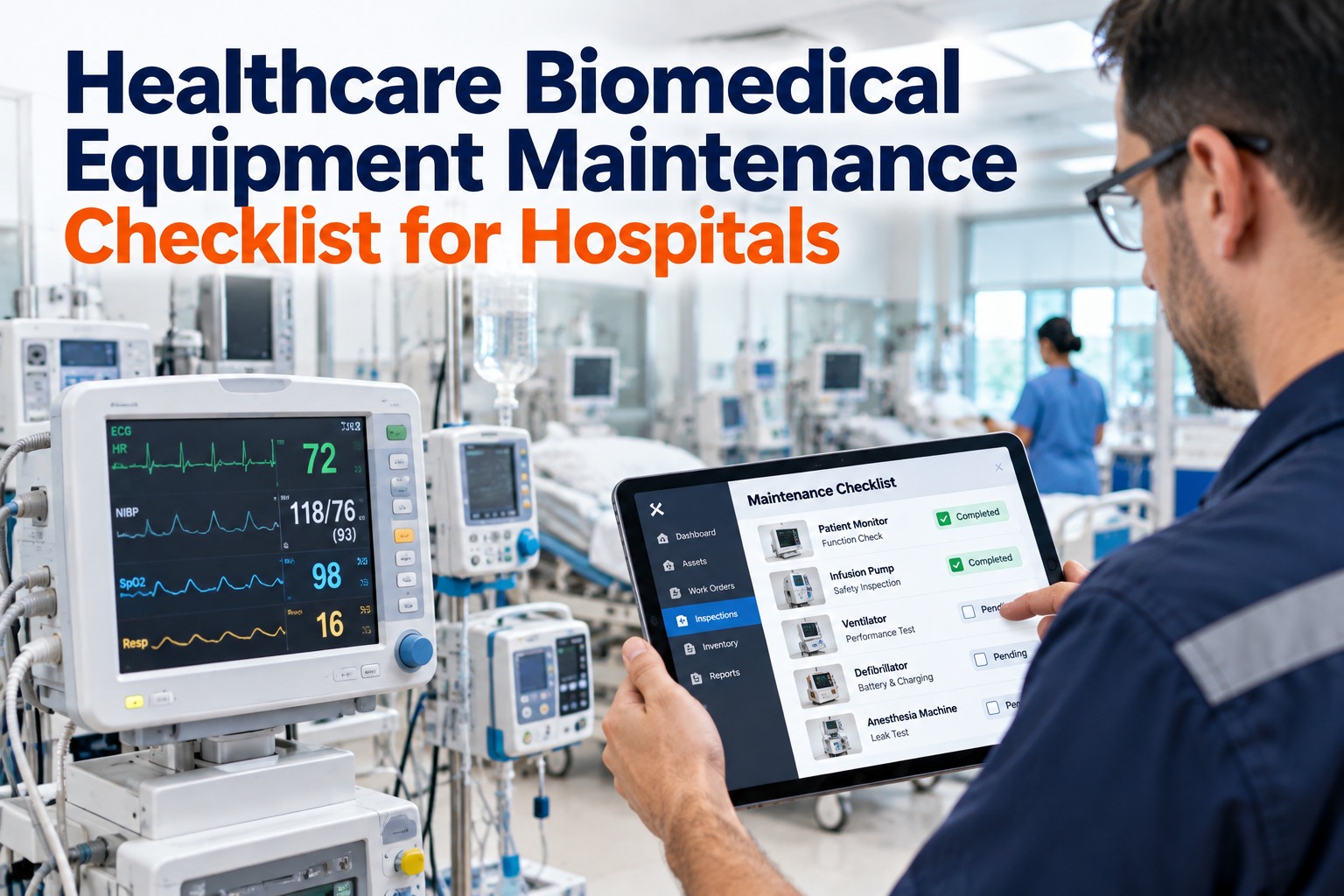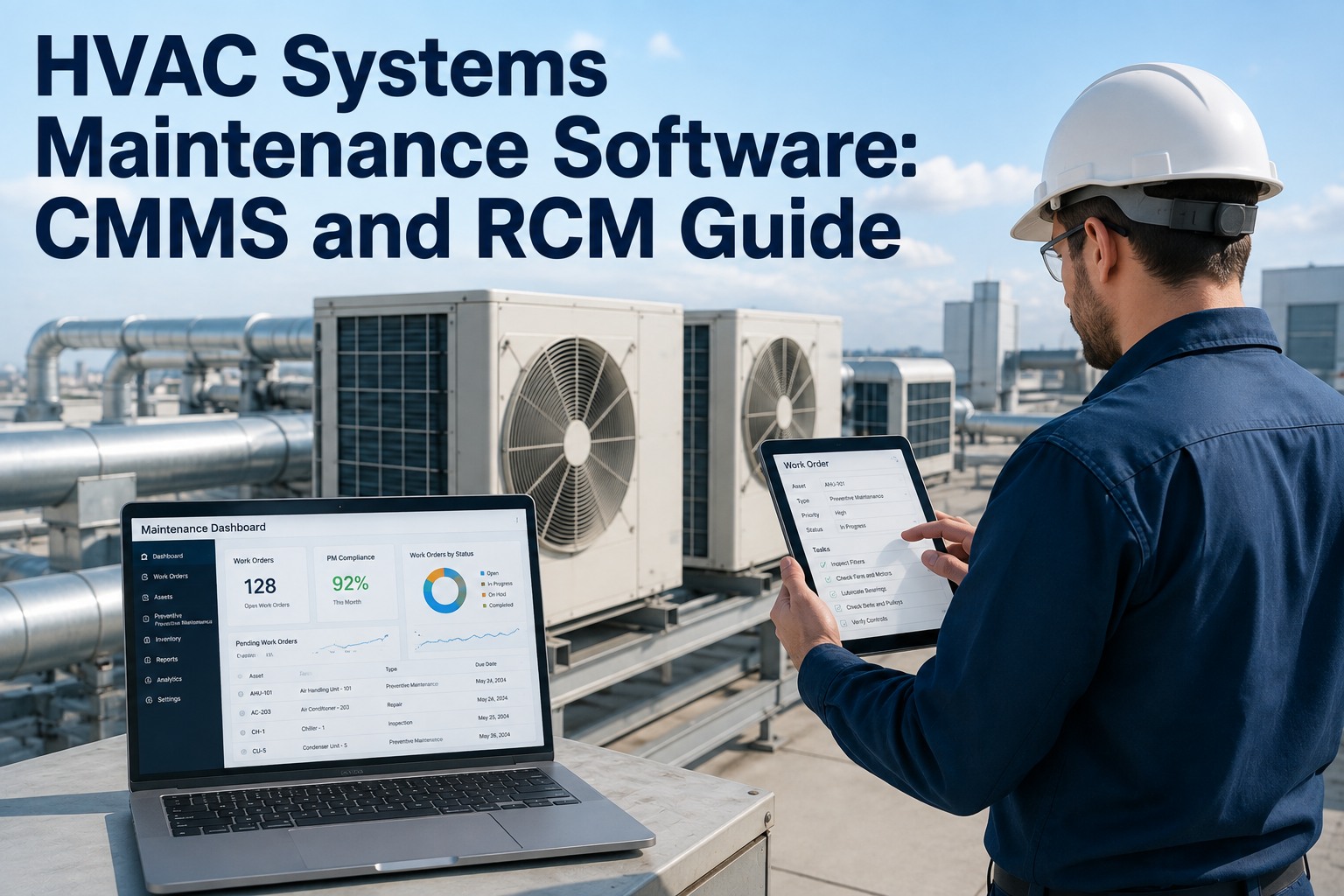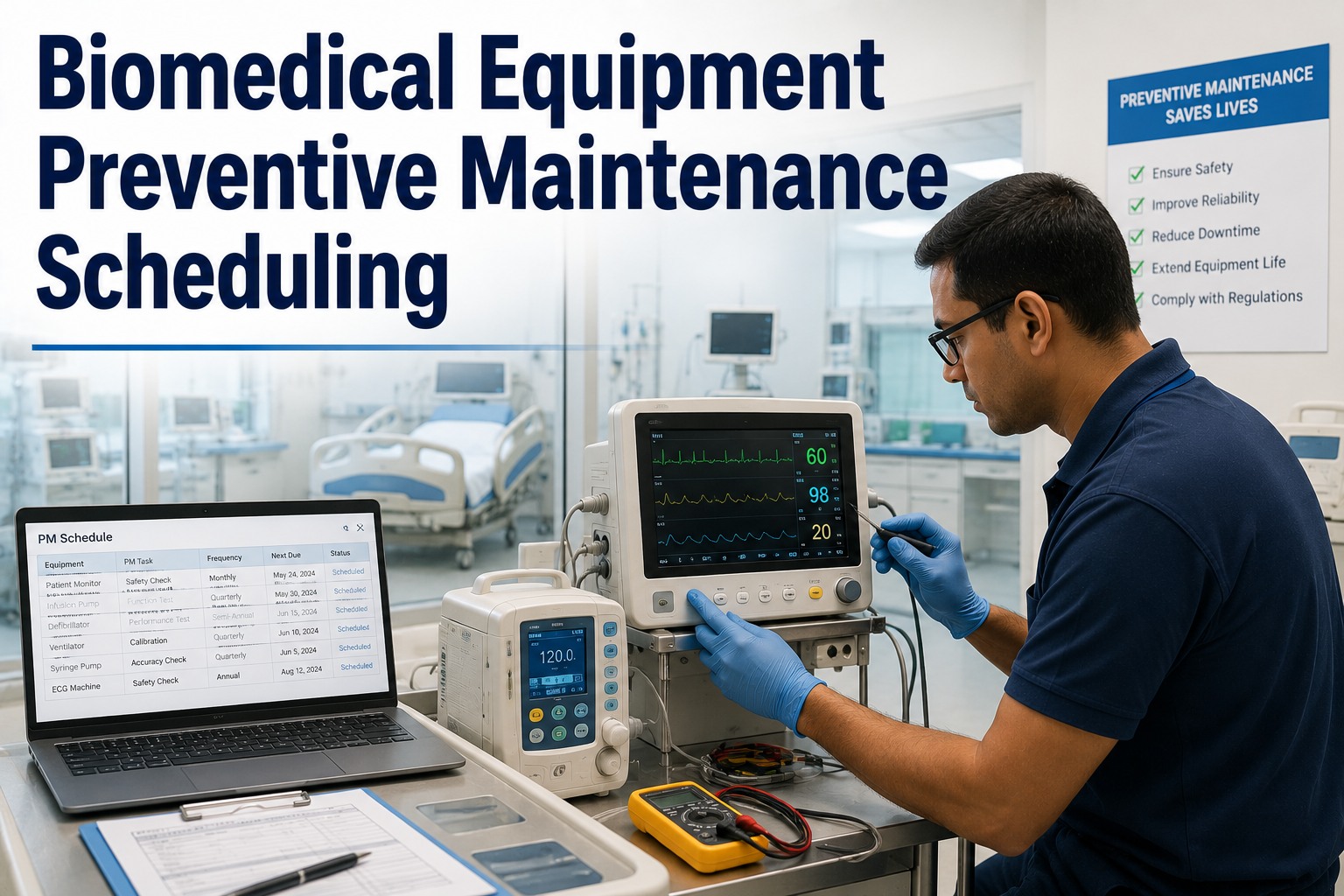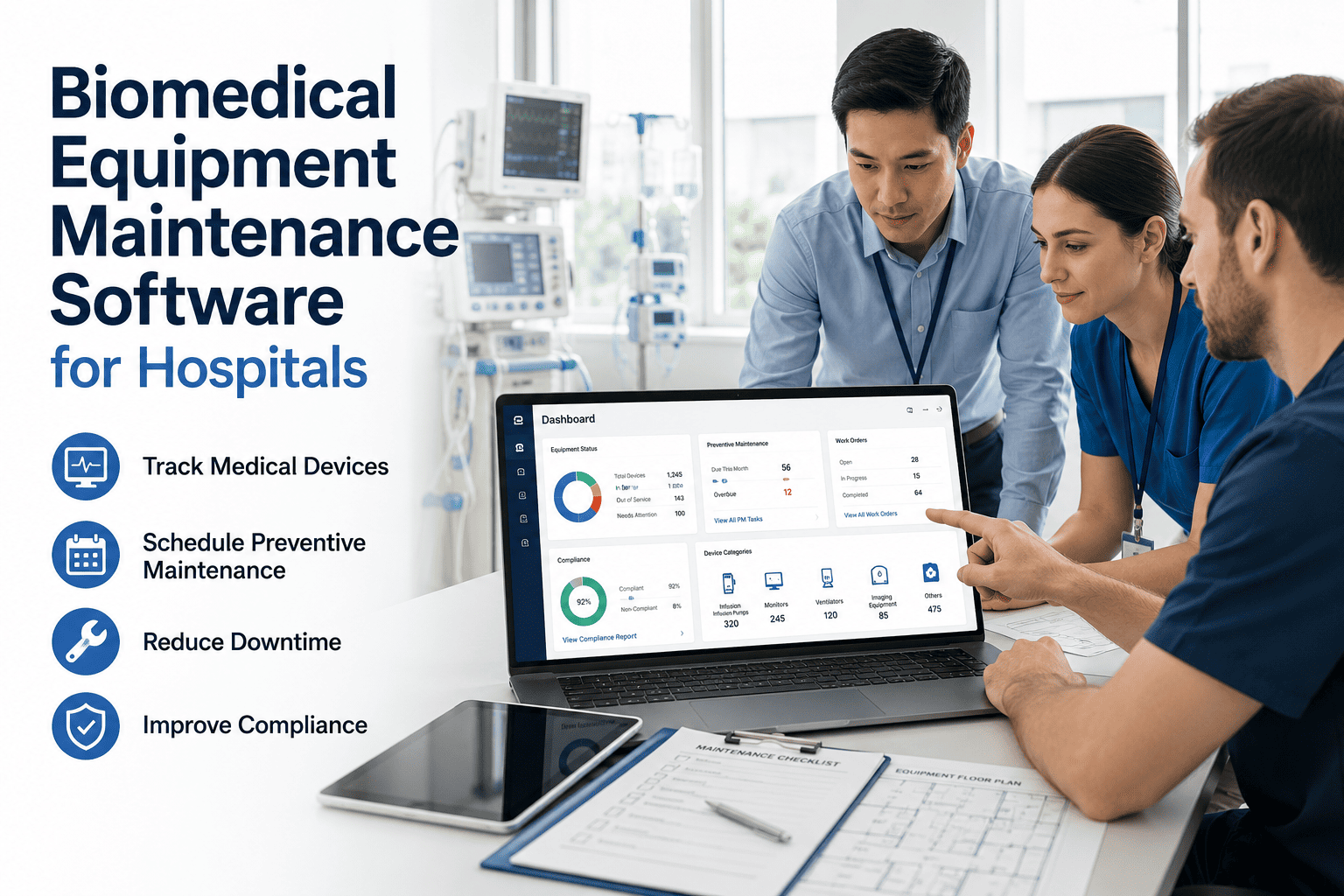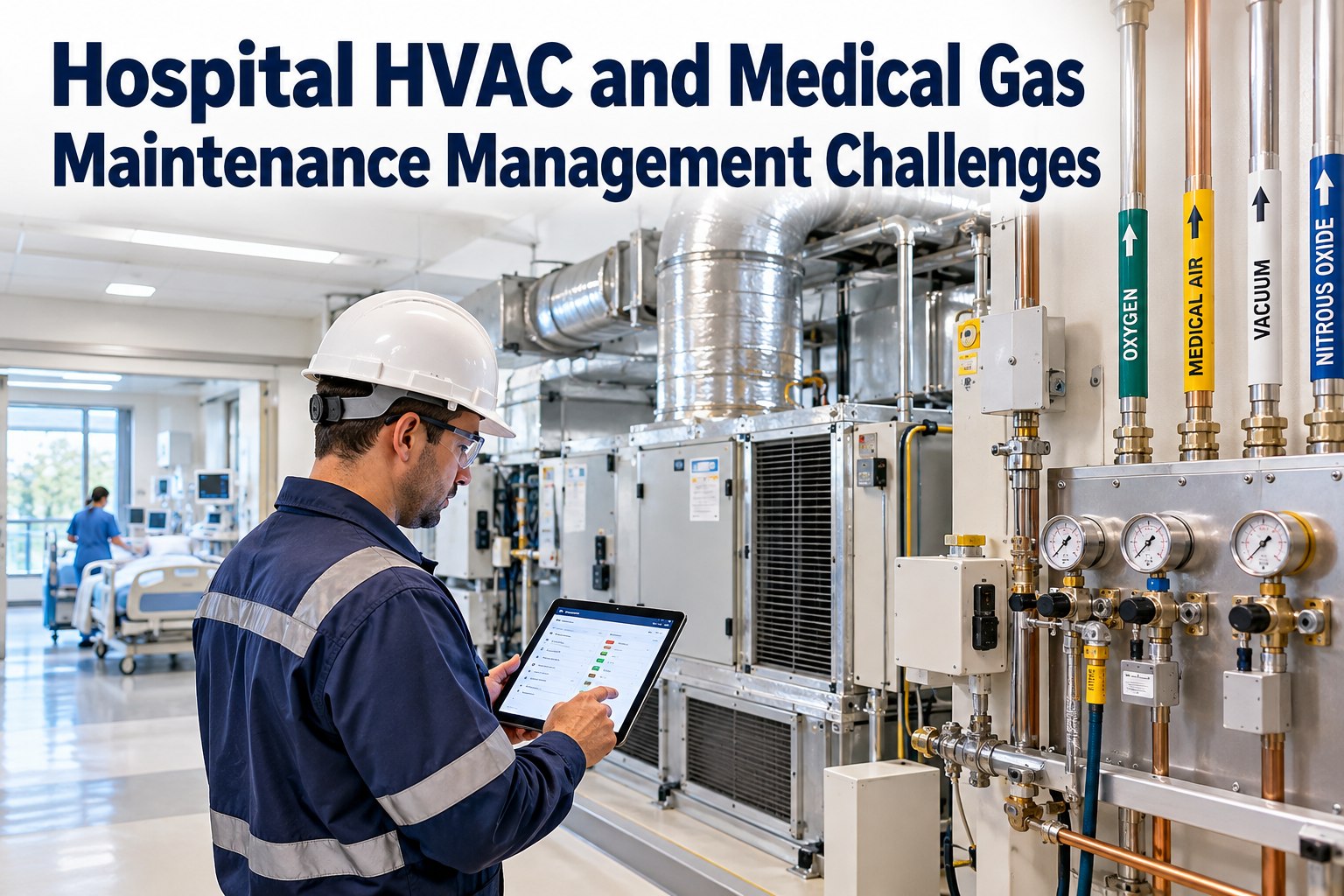
In a hospital, two invisible systems keep patients alive and the building compliant: the HVAC that holds an operating room at positive pressure and an isolation room at negative, and the medical gas network that delivers oxygen, air and vacuum to every headwall. Both are governed by unforgiving codes, both fail quietly, and a lapse in either can close an OR or trigger a survey finding. Managing them on spreadsheets and memory is how deficiencies slip through. This guide covers the maintenance challenges across both systems and how OXMAINT AI, the AI-powered healthcare CMMS, keeps every regulated space inspected, documented and audit-ready.
Hospital HVAC & Medical Gas Maintenance Management Challenges
A drifting OR pressure reading, missed medical-gas alarm test, or documentation gap can create patient-safety and accreditation risks. OXMAINT AI, an AI-powered CMMS, manages critical hospital systems by scheduling inspections, recording results by asset and space, flagging out-of-tolerance readings, and creating prioritized work orders with a complete audit trail.
System One: HVAC — Pressure Is Patient Safety
In a hospital, airflow direction is a clinical control. A positive room keeps contaminants out; a negative room keeps pathogens in — and when a relationship drifts, the protection is gone before anyone sees it. ASHRAE 170 sets the pressure and air-change requirements, and OXMAINT AI tracks each regulated space against them. Book a demo to see space-level HVAC tracking in OXMAINT AI.
Pressure is only half of it — each space also carries a minimum air-change rate and outdoor-air fraction, and filtration grade rises with clinical acuity. Here's what the critical spaces require. Start free and map your spaces to their requirements in OXMAINT AI.
| Space | Min ACH | Outdoor air | Filtration |
|---|---|---|---|
| Operating rooms | 20+ | 4 OA | MERV 16 min; HEPA for specialized |
| AII isolation | 12 | 2 OA | Exhaust to outside |
| Protective environment | 12 | 2 OA | HEPA (ortho / transplant / neuro) |
| ICU / CCU | 6 | 2 OA | High-efficiency |
| Patient rooms | 6 | 2 OA | Standard |
| Emergency dept | 6 | 2 OA | Standard |
Pharmacy compounding adds its own layer — ISO 7 cleanroom conditions on top of positive pressure — so a single space can answer to several standards at once. That overlap is exactly where manual tracking breaks down.
System Two: Medical Gas — Four Lifelines Under NFPA 99
Oxygen, medical air, vacuum and nitrous oxide run from source plant to headwall through a network of manifolds, alarms and zone valves — all governed by NFPA 99 Chapter 14, and maintainable only by ASSE 6040-certified staff. Each gas has its own parameters to watch. Book a demo to see medical-gas tracking in OXMAINT AI.
| Gas system | Source | Monitored parameters |
|---|---|---|
| Oxygen | Cryogenic bulk vessel | Source pressure, liquid level, changeover status |
| Medical air | On-site compressor plant | CO level (Grade D, < 10 ppm), dew point, compressor alternation |
| Medical vacuum | Pump station | Header pressure, pump alternation, collection-vessel drain |
| Nitrous oxide | Manifold, primary / secondary banks | Bank pressures, automatic changeover, WAGD airflow |
The alarm architecture is its own discipline: master alarm panels in a 24-hour staffed location, area alarm panels per clinical zone, and zone valve boxes for emergency isolation by floor or area — every one of which needs periodic functional testing and sign-off.
A Survey Doesn’t Ask If the OR Is Safe. It Asks You to Prove It.
Accreditation turns on documentation — the timestamped record that this OR held pressure, that alarm panel was tested, this filter was changed. OXMAINT AI captures every inspection against its regulated space with mobile checklists and timestamped photos, building the audit trail before the surveyor arrives.
The Real Challenge: Frequency, by Criticality
Neither system is a once-a-year check. The highest-risk spaces and gases demand daily verification, stepping down to weekly, monthly and annual tasks — and keeping that cadence across hundreds of assets by hand is where hospitals fall behind. OXMAINT AI schedules each task at its interval and escalates a miss. Start free and automate the cadence in OXMAINT AI.
How OXMAINT AI Holds Both Systems to Code
Managing two code-bound systems across a hospital campus is a documentation problem as much as a mechanical one. OXMAINT AI is built to carry both — scheduling by regulation, capturing in the field, and keeping the record audit-ready. Book a demo to see the compliance workflow in OXMAINT AI.
Our two highest-stakes systems used to live in two different places — HVAC balancing reports in one binder, medical-gas alarm tests in another, and the daily OR and isolation checks on clipboards that didn't always make it back to a file. During a survey that fragmentation is exactly what gets found. Running both on one platform, scheduled by criticality and captured against each space, means when a surveyor asks us to prove an OR held pressure or an alarm panel was tested, the record is one search away instead of a scramble.
Frequently Asked Questions
Keep Both Critical Systems Compliant on One Platform.
Manage hospital HVAC and medical gas on the OXMAINT AI maintenance management software — ASHRAE 170 pressure and air-change tracking, NFPA 99 medical-gas inspections, risk-based scheduling, ASSE 6040 certification tracking, and an audit-ready record behind every regulated space. Prove patient safety and compliance without the scramble.