A walk-in that drifts above 41°F overnight, a dish machine rinsing below 180°F, a hood filter pooling grease before service — in a hotel kitchen each one is a food-safety breach, a fire risk or a five-figure spoilage event waiting to happen. This is the full hotel kitchen equipment maintenance checklist by station, with the food-safety and fire-code thresholds that matter, and how OXMAINT AI, the AI-powered hospitality CMMS, schedules every task and keeps the HACCP-ready record.
Hospitality · F&B Operations · Kitchen Equipment Checklist · 2026
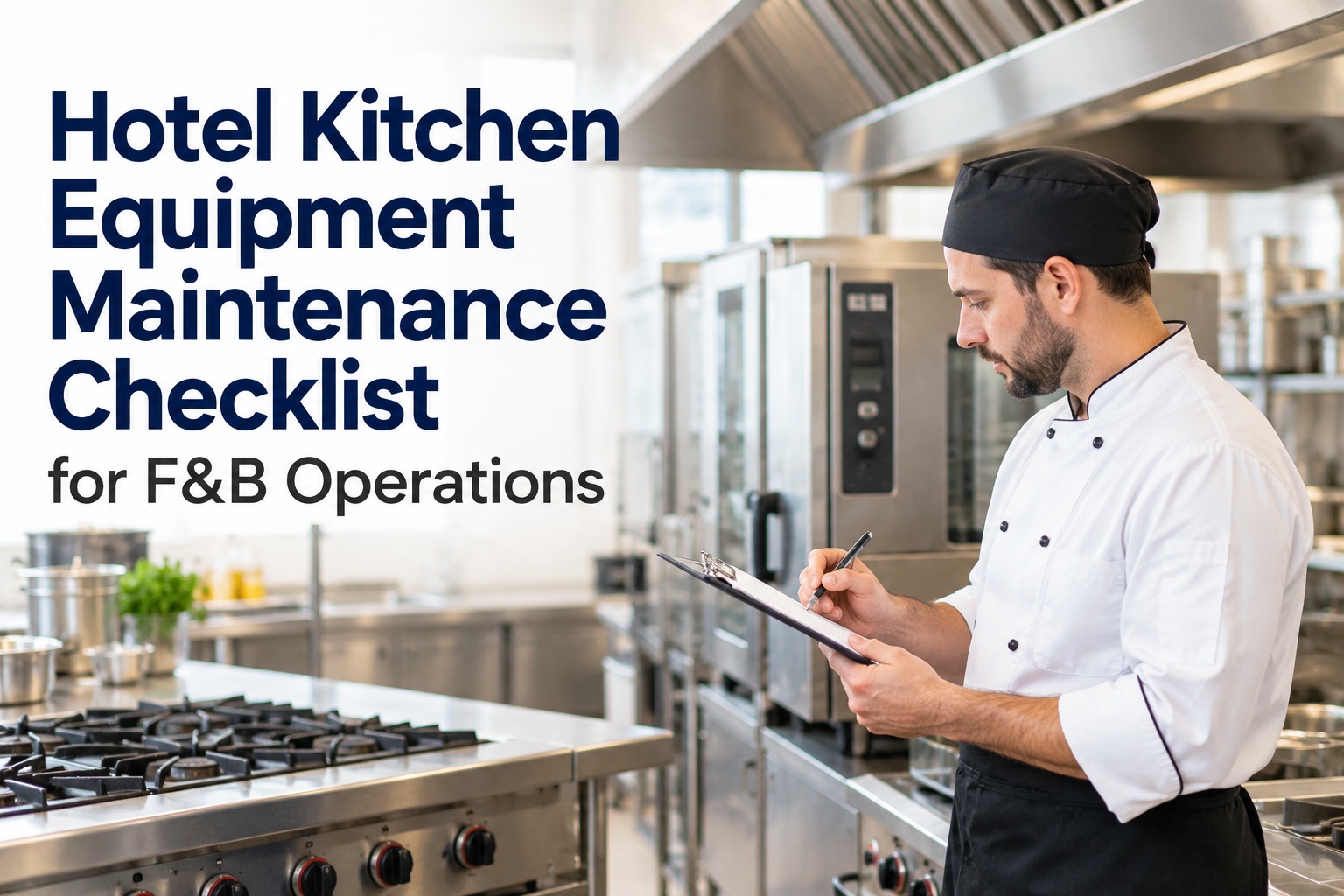
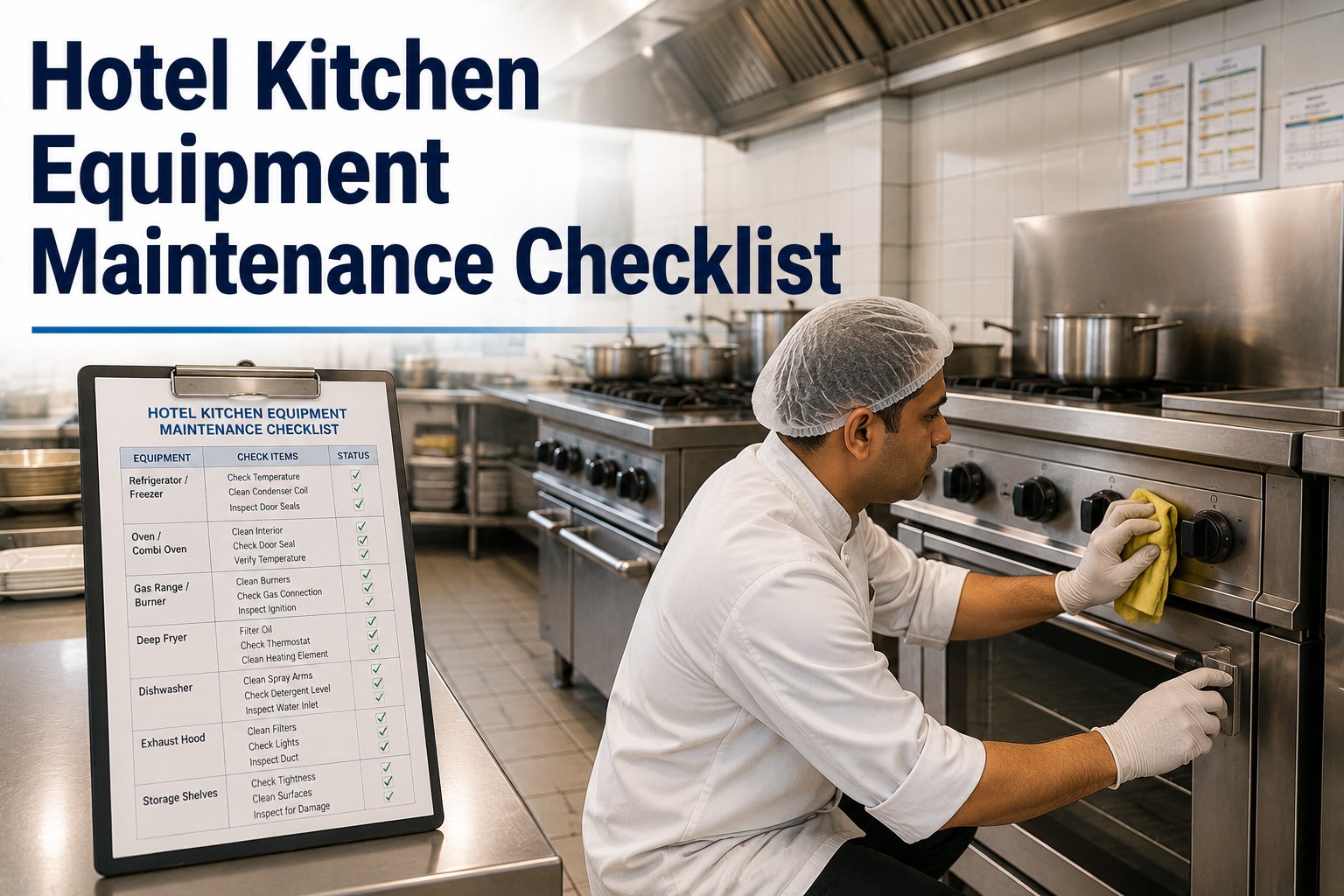
Hotel Kitchen Equipment Maintenance Checklist for F&B Operations
A fryer high-limit that fails, a condenser coil nobody cleaned, a missing grease-trap manifest at inspection — that's how F&B loses a service, a health score or a kitchen. OXMAINT AI, the AI-powered CMMS and maintenance management software, schedules every PM at the right frequency, alerts before a temperature crosses its threshold, and logs each check with technician sign-off for HACCP and fire-code audits.
6Equipment stations
·
5Frequency tiers
·
0Missed manifests
FREQUENCY LEGEND
DDaily — every service day
WWeekly
MMonthly
QQuarterly
AAnnual / certified service
marks a food-safety or fire-code critical item
41°F
walk-in cold-holding ceiling, logged every 4 hours
180°F
dish machine final-rinse minimum — HACCP CCP
NFPA 96
governs hood, duct and grease cleaning
25%
grease-trap depth that triggers a pump-out
How to Use This Checklist
Each station below carries its field-level checks, a frequency badge, and a red dot on any item that is a food-safety or fire-code critical point. Thresholds are standard references — always follow local health code, the fire marshal and the OEM manual. OXMAINT AI stores each completed check against the asset with a timestamp and sign-off, and you can book a demo to see station checklists in OXMAINT AI.
1Cooking Line — Ranges, Ovens & Griddles
Clean burner grates, drip pans and oven interior — remove grease residueD
Inspect door gaskets for tears or compression failureW
Calibrate thermostat against a certified thermometer — drift undercooks proteinM
Gas connection leak check and safety-interlock verificationA
2Refrigeration — Walk-ins & Reach-ins
Log temperature every 4 hours — hold at 41°F or belowD
Inspect door gaskets and seals for wear and air leaksW
Clean condenser coils — the leading cause of compressor failureM
Clear evaporator drain lines; verify refrigerant pressureQ
3Fryers & Hot Holding
Filter oil and record TPM (total polar materials) readingD
Run a boil-out cycle to clear carbonized greaseW
Calibrate thermostat — a 30°F error undercooks foodM
Verify high-limit thermostat — a failed one is a leading fire causeA
4Warewashing — Dish Machines
Verify final-rinse temperature reaches 180°F (82°C) — HACCP critical control pointD
Clean spray arms and filters; clear mineral depositsW
Check detergent and sanitizer dosing against specW
Descale the interior with a manufacturer-approved solutionQ
5Exhaust Hood, Duct & Fire Suppression
Visual filter check for grease pooling; clean at once if drippingD
Remove and degrease baffle filters; empty grease cupsW
Inspect duct for grease over 1/8 inch; verify fire-suppression pull station is clearM
Professional duct cleaning to bare metal per NFPA 96 §11.6.2; heavy-use kitchens quarterlyQ
UL-300 certified inspection — nozzles, fusible links, pull station, cylinder pressureA
6Grease Traps, Ice & Steam
Inspect grease-trap FOG; clean when combined depth passes 25% per ordinanceW
Professional trap cleaning by a licensed service — retain the pump-out manifestM
Sanitize ice machine, clean condenser and replace water filterM
Descale steamers and combi boilers; verify trap sizing to current volumeA
THE FOUR THAT CLOSE A KITCHEN
Cold-hold 41°F
A walk-in that drifts warm spoils inventory and breaches HACCP — log it every 4 hours and alert on the threshold.
Rinse 180°F
Below the dish-machine rinse minimum, sanitization fails — a critical control point, not a nice-to-have.
Grease & hood
Grease in the duct is the primary accelerant in kitchen fires — NFPA 96 cleaning cadence is non-negotiable.
Trap manifest
A missing pump-out manifest is itself treated as a violation — the record matters as much as the service.
The Threshold Was Crossed At 2 A.M. Nobody Was Logging.
A walk-in warms, a rinse temperature slips, a fryer high-limit drifts — and the first anyone knows is a failed health check or a service lost. Scheduled PMs plus temperature alerts turn each of those into a work order before it becomes an incident.
From Checklist to Audit-Ready Record
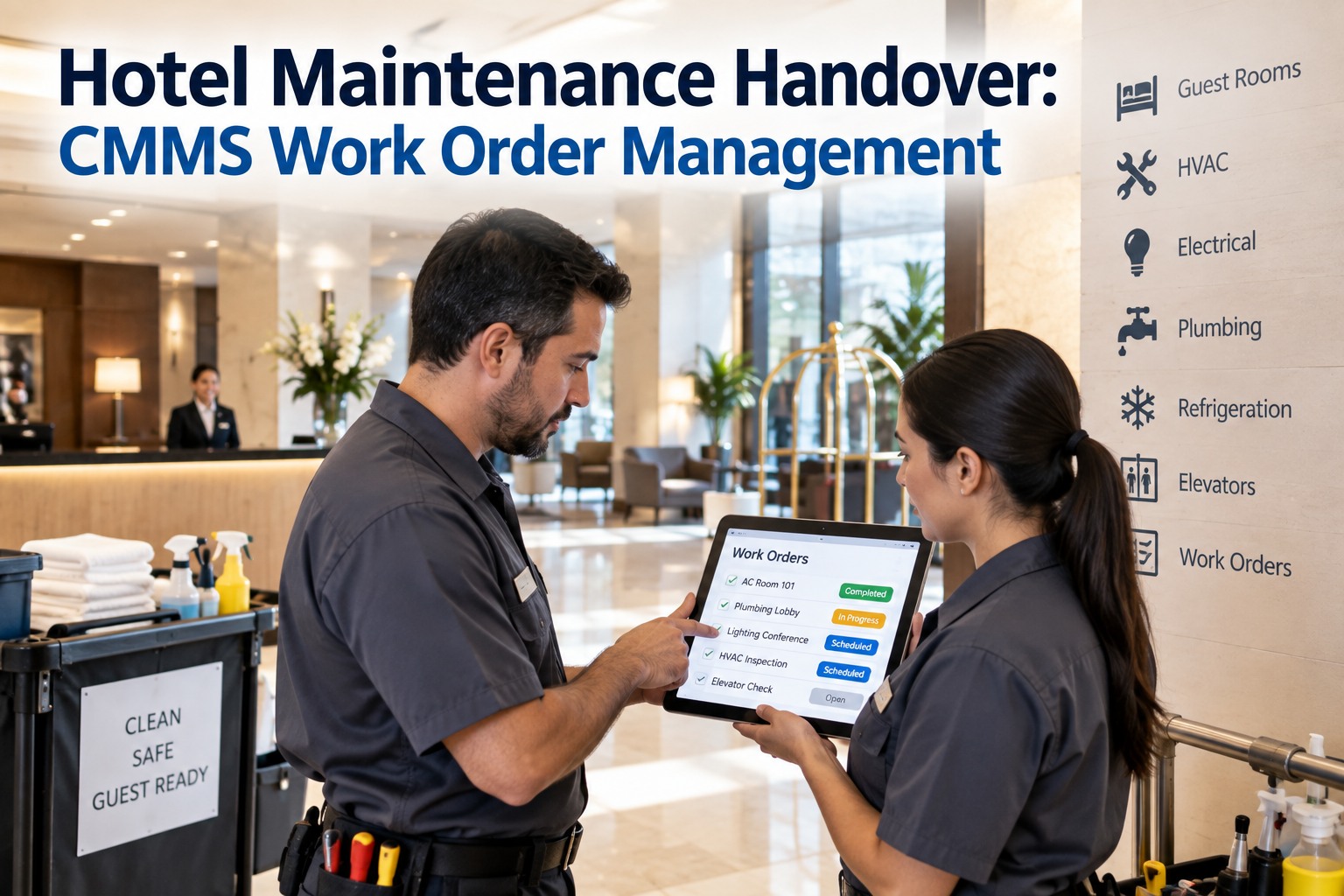
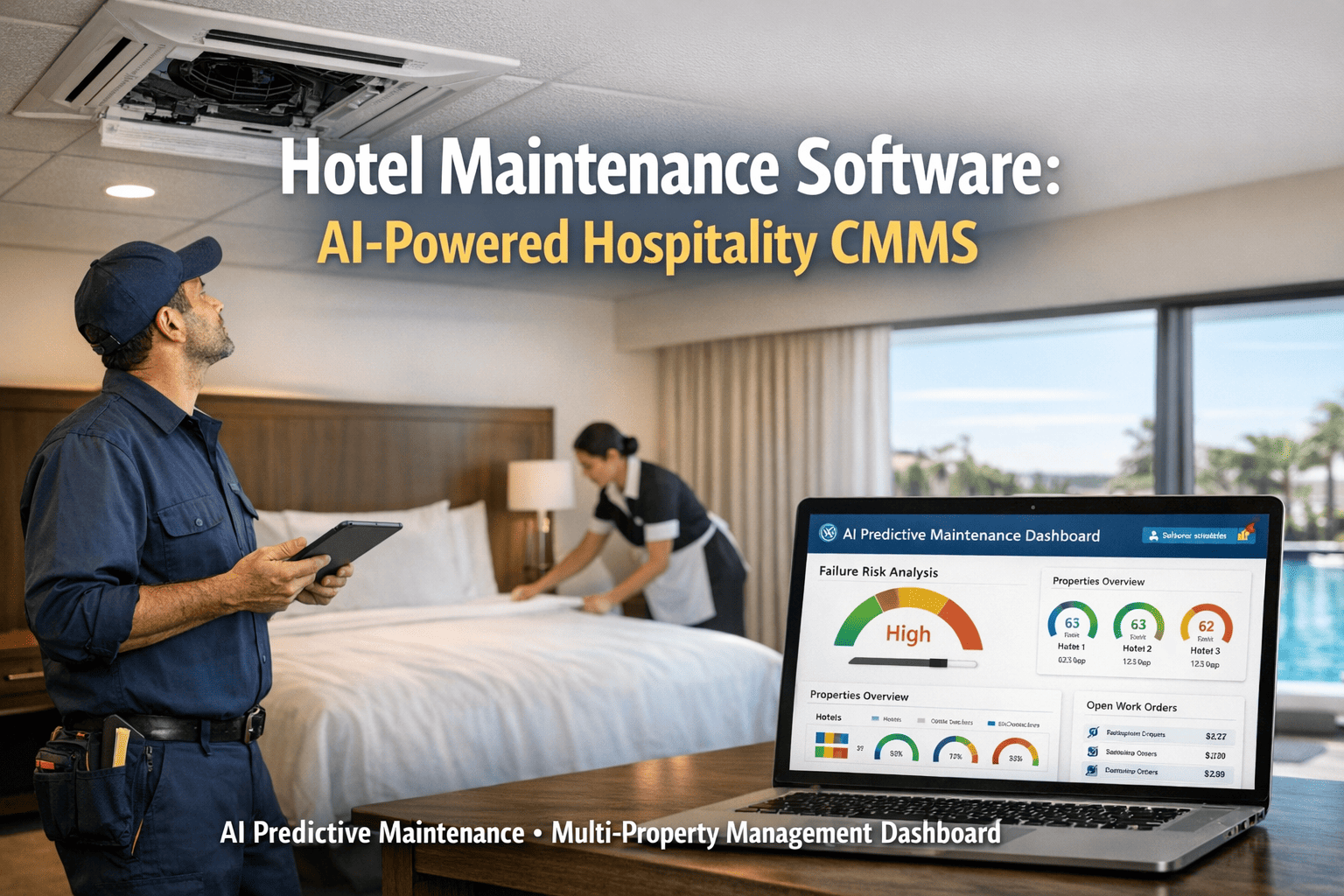
A kitchen checklist only protects F&B if every check is scheduled, done and logged where an inspector can see it. OXMAINT AI turns each task into a recurring work order and each completion into a timestamped, signed record, and you can start free and build your kitchen asset register in OXMAINT AI.
◉
Frequency-Based Work Orders
Daily through annual PMs auto-generated per asset, with assignment, reminders and completion tracking.
◉
Temperature Threshold Alerts
A walk-in or rinse reading crossing its limit raises an alert and a work order before equipment fails the check.
◉
HACCP-Ready Logs
Every inspection captured with a timestamp and technician sign-off, ready for a health or fire-code audit.
◉
Manifest & Document Store
Grease-trap pump-out manifests and UL-300 reports kept against the asset, not in a binder.
◉
Multi-Outlet Coordination
Every restaurant, banquet and bar kitchen in the property run from one dashboard.
◉
Per-Asset History
Each fryer, cooler and hood carries its own PM and repair record, so repeat faults surface fast.
“
Our health inspection used to be a frantic week of pulling temperature logs and hunting for the last grease-trap manifest. Putting every station on a scheduled checklist, with the walk-in temps logged on a clock and the manifests filed against the asset, meant the inspection became a login, not a scramble — and we caught a fryer high-limit drifting before it ever became a fire marshal's problem.
Director of Engineering · Full-Service Hotel
Frequently Asked Questions
What are the critical food-safety checks in a hotel kitchen?
The two that are formal critical control points are cold-holding — walk-ins and reach-ins at 41°F or below, logged through the day — and warewashing, where the dish machine final rinse must reach 180°F (82°C) to sanitize. Thermostat calibration on ovens and fryers is close behind, since drift undercooks protein invisibly.
Book a demo to see HACCP logging in OXMAINT AI.
How often must the exhaust hood and ducts be cleaned?
Under NFPA 96, cadence scales with cooking volume — heavy-use kitchens typically need professional hood and duct cleaning quarterly, moderate-use semi-annually — with daily filter checks, weekly baffle degreasing, and ductwork cleaned to bare metal per §11.6.2. Grease accumulation in the duct is the primary accelerant in kitchen fires, so this cadence is a fire-code matter, not housekeeping.
What's the rule on grease traps?
Inspect FOG accumulation weekly and clean when the combined grease-and-solids depth passes 25% of the trap — the common local-ordinance threshold — using a licensed service and retaining every pump-out manifest. A missing manifest is itself treated as a violation, so the documentation is as important as the service.
What is the UL-300 inspection on the fire system?
It's the annual inspection of the kitchen's wet-chemical fire-suppression system by a certified technician, verifying nozzle positions, fusible links, manual pull-station function and suppression-agent cylinder pressure. It sits alongside the monthly pull-station accessibility check and the NFPA 96 hood and duct program.
How does a CMMS keep a kitchen audit-ready?
It generates each PM as a recurring work order at the right frequency, alerts when a temperature crosses a threshold, and records every completion with a timestamp and technician sign-off — while storing manifests and UL-300 reports against the asset. An inspection becomes a search instead of a week of reconstruction.
Start free and schedule your kitchen PMs in OXMAINT AI.
Keep The Kitchen Open, Compliant And Off The Fire Marshal's List.
Run hotel kitchen equipment maintenance on the OXMAINT AI maintenance management software — the full station-by-station checklist, scheduled PMs from daily to annual, temperature threshold alerts, and HACCP and NFPA 96 records with sign-off and manifests held against each asset. Catch the threshold on the checklist, not at the inspection.