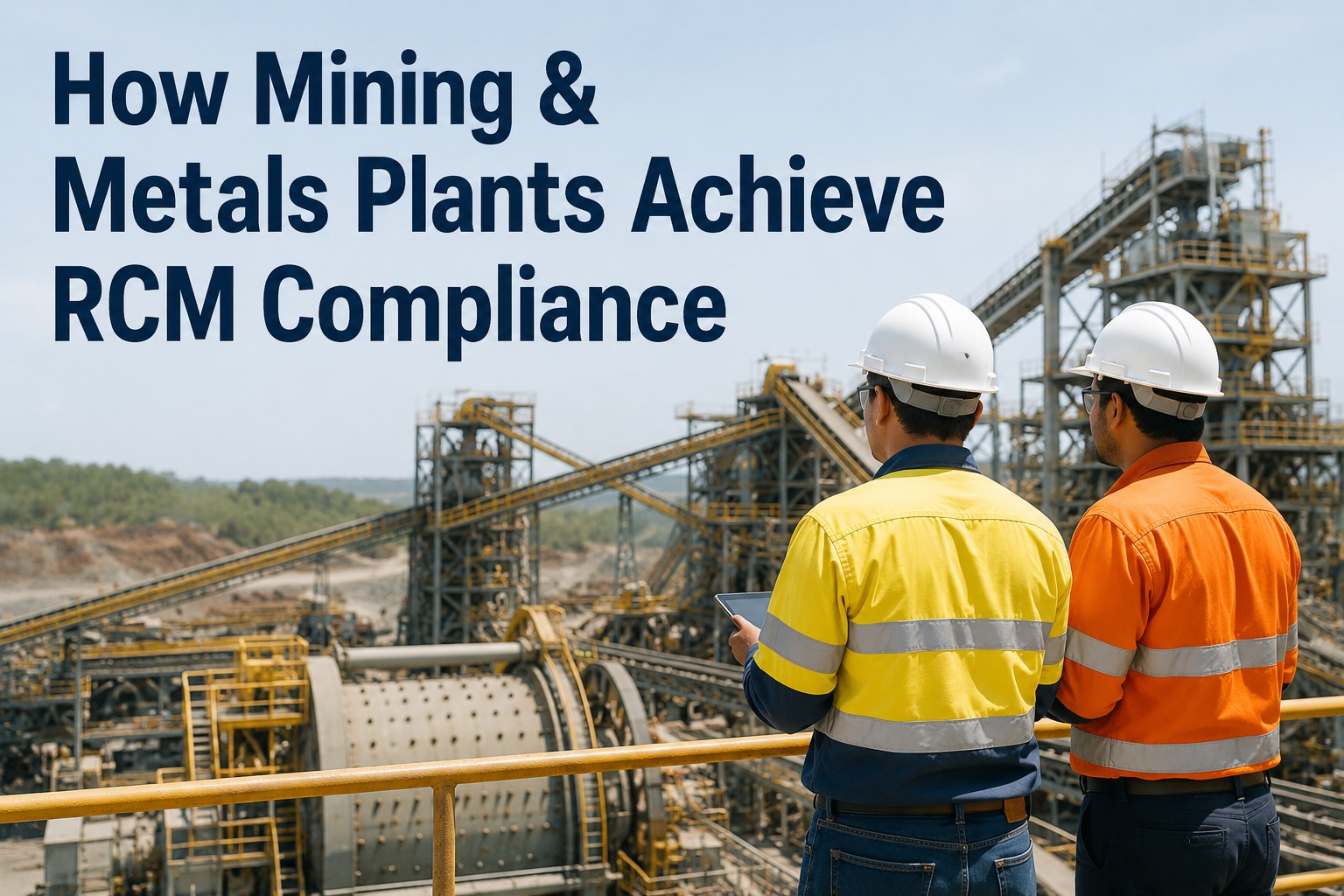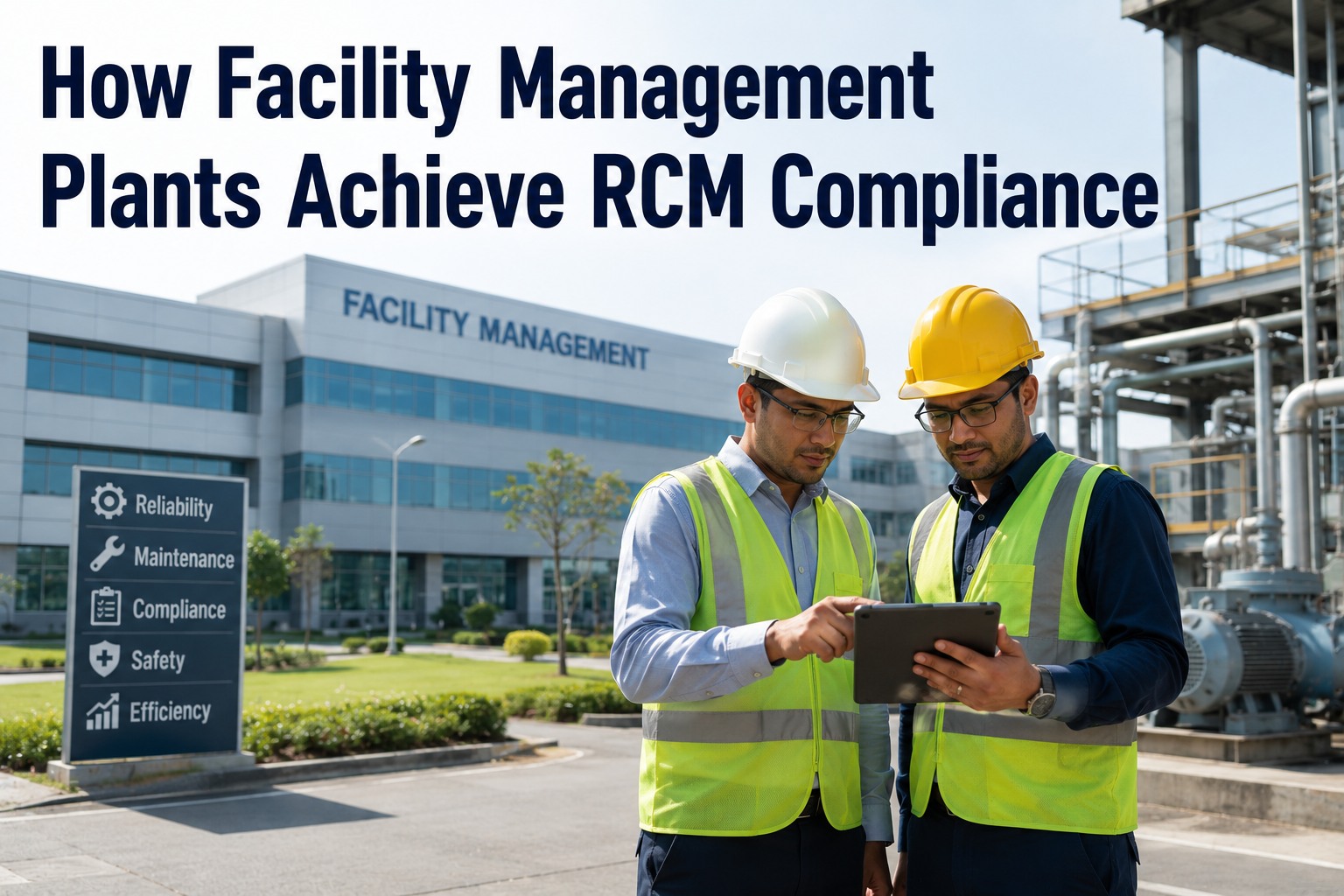
RCM compliance in facility management means aligning every preventive maintenance task, failure mode analysis, and inspection record with internationally recognized standards like SAE JA1011 and ISO 55001. Facility management maintenance standards demand rigorous documentation, systematic asset criticality ranking, and continuous reliability engineering to pass audits and prevent catastrophic equipment failures. By implementing a structured facility management reliability program, plants can reduce unplanned downtime by up to 40% while extending asset lifecycle. Transitioning from reactive firefighting to a compliant, standardized maintenance operation is exactly what OxMaint's AI-powered CMMS is built to handle—you can Start Free Trial today to see how quickly your audit readiness improves.
Facility Management RCM Compliance Guide
Are your maintenance records audit-ready — or a liability?
Achieving facility management regulatory compliance isn't just about passing an ISO 55001 audit. It's about proving that every work order, PM trigger, and failure mode is systematically controlled, documented, and optimized for reliability.
68%
of maintenance audits fail due to incomplete documentation and untracked PM compliance
The Compliance Gap
Why most facility management plants fail RCM audits
Reliability-Centered Maintenance (RCM) is governed by SAE JA1011, which requires seven core questions to be answered for every asset. Most facility management operations fail audits not because their technicians are doing poor work, but because the documentation proving their work is fragmented across spreadsheets, paper logs, and disconnected CMMS modules.
$50B
Annual losses in U.S. plants due to unplanned downtime and non-compliance penalties
25%
Of preventive maintenance tasks have no verifiable completion record during typical audits
3.5x
Higher maintenance costs for plants operating without facility management maintenance standards
A 180-asset commercial facility spending $42K annually on reactive maintenance failed their ISO 55001 certification audit. The root cause? Their maintenance team was performing the right PMs, but had no centralized facility management compliance documentation. Paper work orders were lost, failure modes weren't linked to specific asset criticality rankings, and schedule adherence was tracked manually on a whiteboard. Within 90 days of implementing OxMaint's CMMS, they achieved 98% PM compliance tracking and passed their re-audit with zero non-conformances.
Audit-Ready Checklist
Facility management RCM compliance checklist: 7 SAE JA1011 requirements
SAE JA1011 sets the minimum criteria for RCM processes. Every asset in your facility management maintenance program must have documented answers to these seven questions to achieve true standards adherence.
Define Asset Functions
Document the primary and secondary functions of each asset in the operating context, including performance standards and design capability metrics.
Identify Functional Failures
Map how each asset can fail to perform its intended functions, categorizing total loss versus partial degradation of performance.
Determine Failure Modes
List the specific events (failure modes) that cause each functional failure, down to the component level, with root cause analysis.
Describe Failure Effects
Document what happens when each failure mode occurs, including safety risks, operational impact, and environmental consequences.
Classify Failure Consequences
Categorize each failure's impact as hidden, safety/environmental, operational, or non-operational to prioritize mitigation efforts.
Select Maintenance Tasks
Choose the right proactive maintenance strategy: predictive, preventive, or run-to-failure, based on consequence severity and technical feasibility.
Document Default Actions
Record one-time changes (redesign, procedural updates) and ensure all default actions are tracked through to completion with audit trails.
Implementation Timeline
How to achieve facility management ISO 55001 compliance in 6 months
Building a compliant RCM framework from the ground up takes a structured approach. Here is a proven six-month timeline that takes a facility management plant from fragmented spreadsheets to full audit readiness.
Asset Hierarchy & Criticality Ranking
Centralize your asset registry. Rank assets by criticality based on safety, production impact, and regulatory exposure. Establish the baseline facility management regulatory requirements you must meet.
FMEA & Failure Mode Documentation
Conduct Failure Mode and Effects Analysis (FMEA) on all critical assets. Map failure modes to specific components and document the effects for SAE JA1011 compliance.
Maintenance Strategy Optimization
Assign the right maintenance strategy to each failure mode. Shift 30-40% of PMs to condition-based predictive maintenance where sensors and analytics support it.
Work Order Standardization
Digitize all work orders. Ensure every completed task auto-generates an audit trail capturing who, what, when, and why. Eliminate paper-based facility management compliance documentation.
KPI Baselines & Compliance Tracking
Establish baseline metrics: MTBF, MTTR, Schedule Compliance, and PM Compliance. Build dashboards that prove continuous facility management safety compliance to auditors in real time.
Internal Audit & Certification
Run a mock facility management maintenance audit against ISO 55001 and SAE JA1011 criteria. Close gaps, verify documentation, and submit for formal third-party certification.
Audit Readiness is Not Optional
Stop scrambling for documentation when auditors arrive
If you cannot produce a complete, timestamped history of every PM, work order, and failure analysis within minutes, you are not compliant. OxMaint makes facility management compliance tracking automatic.
Standards Comparison
Facility management regulatory requirements: ISO 55001 vs. SAE JA1011 vs. OSHA
Facility management plants are subject to overlapping regulatory frameworks. Understanding exactly what each standard demands ensures your compliance documentation satisfies every auditor.
| Standard / Regulation | Primary Focus | Documentation Required | Audit Frequency |
|---|---|---|---|
| ISO 55001 | Asset Management System | Asset management policy, objectives, lifecycle plans, and continuous improvement records | Annual surveillance; 3-year recertification |
| SAE JA1011 | RCM Process Validity | Documented answers to 7 RCM questions for every critical asset | Internal review; triggered by process changes |
| OSHA 1910 | Worker Safety Compliance | Lockout/Tagout (LOTO) logs, equipment guarding inspections, PPE assessments | Continuous; OSHA can audit anytime |
| EPA Clean Air Act | Environmental Risk Management | Refrigerant leak tracking, emissions monitoring, containment system inspections | Quarterly self-reporting; annual review |
OxMaint Solution
How OxMaint ensures facility management RCM compliance
OxMaint's AI-powered CMMS and EAM platform is engineered to map directly to SAE JA1011 and ISO 55001 requirements. Here is how our specific capabilities solve the compliance challenges that sink most facility management operations.
Automated Compliance Documentation
Every work order, PM completion, and failure mode analysis is automatically time-stamped and stored in a tamper-proof audit trail. Generate ISO 55001 readiness reports in seconds. Outcome: Eliminate 95% of manual documentation time and pass any facility management maintenance audit without scrambling.
Real-Time KPI & PM Compliance Tracking
Live dashboards track Schedule Compliance, PM Compliance, MTBF, and MTTR against your facility management maintenance standards. Outcome: Identify compliance gaps before auditors do and cut unplanned downtime by 30-50% through proactive intervention.
AI-Driven Predictive Maintenance
Machine learning algorithms analyze asset history and sensor data to predict failures before they occur, automatically generating work orders. Outcome: Shift 40% of preventive tasks to condition-based maintenance, extending asset life by 20-40% while maintaining full RCM justification.
Centralized FMEA & Asset Hierarchy
Map your entire asset hierarchy with linked failure modes, effects, and consequence ratings. OxMaint stores the SAE JA1011 seven-question framework for every asset in one searchable database. Outcome: Prove RCM process validity instantly and achieve 100% facility management standards adherence.
ROI & Cost Impact
The cost of non-compliance vs. the OxMaint payback
Facility management regulatory compliance is not just about avoiding fines—it's about capturing the massive financial upside of a standardized, reliability-focused maintenance operation.
Annual Compliance ROI Formula
ROI = (Downtime Costs Avoided + Penalty Avoidance + Labor Savings) / Annual Software Cost × 100
$1.2M
Average annual downtime cost avoided by moving from reactive to RCM-compliant maintenance
12x
Typical first-year ROI for facility management plants implementing OxMaint for compliance tracking
90 Days
Average time to full platform adoption and measurable compliance improvements
Frequently Asked Questions
Facility management RCM compliance: what teams ask most
What is RCM compliance in facility management?
RCM compliance in facility management means systematically applying the Reliability-Centered Maintenance process—defined by SAE JA1011—to identify and document failure modes, consequences, and optimal maintenance strategies for every critical asset. It requires proving that your maintenance decisions are driven by data, not guesswork, with auditable records for every step. OxMaint digitizes this entire framework, making compliance tracking automatic.
How does ISO 55001 apply to facility management maintenance?
ISO 55001 is the international standard for asset management systems. In facility management, it requires a documented asset management policy, lifecycle planning, risk assessment, and continuous improvement metrics. You must demonstrate that maintenance decisions align with business objectives. You can Book a Demo to see how OxMaint generates these specific ISO 55001 reports automatically.
What documentation is needed for a facility management maintenance audit?
Auditors typically require a complete asset register, criticality rankings, FMEA documentation, PM schedules with completion records, work order histories, failure analysis reports, and KPI dashboards (MTBF, MTTR, schedule compliance). All records must be timestamped and traceable. OxMaint stores all of this in a centralized, searchable database with one-click audit report generation.
How long does it take to achieve RCM compliance using CMMS software?
A facility management plant can typically achieve baseline RCM compliance within 3 to 6 months using a dedicated CMMS like OxMaint. The timeline depends on asset count, existing data quality, and team adoption. Centralizing asset data and digitizing work orders can be done in the first 30 days, with FMEA documentation and KPI baselining following in months 2 and 3.
Can OxMaint help with facility management safety compliance and OSHA requirements?
Yes. OxMaint tracks LOTO (Lockout/Tagout) procedures, equipment guarding inspections, and PPE assessments within the same platform as your RCM and ISO 55001 documentation. This ensures that facility management safety compliance is integrated into your daily work order execution, not maintained as a separate, easily forgotten spreadsheet. You can Start Free Trial to test these features on your assets today.
Get Audit-Ready Today
See OxMaint on your assets — book a 30-min demo
Join the facility management plants that have eliminated paper work orders, achieved 98% PM compliance, and passed their ISO 55001 audits with zero non-conformances.
Free 14-day trial · No credit card