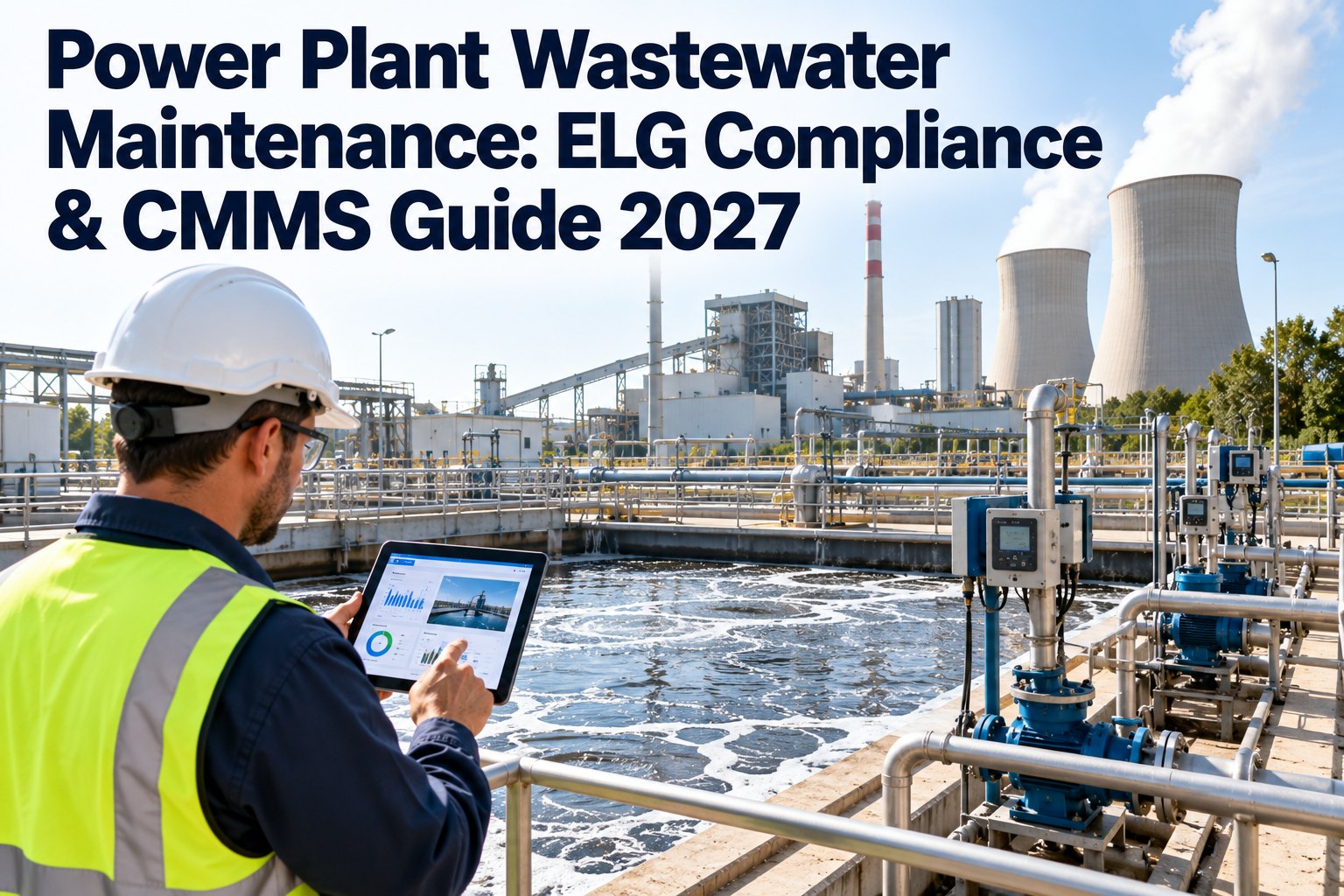
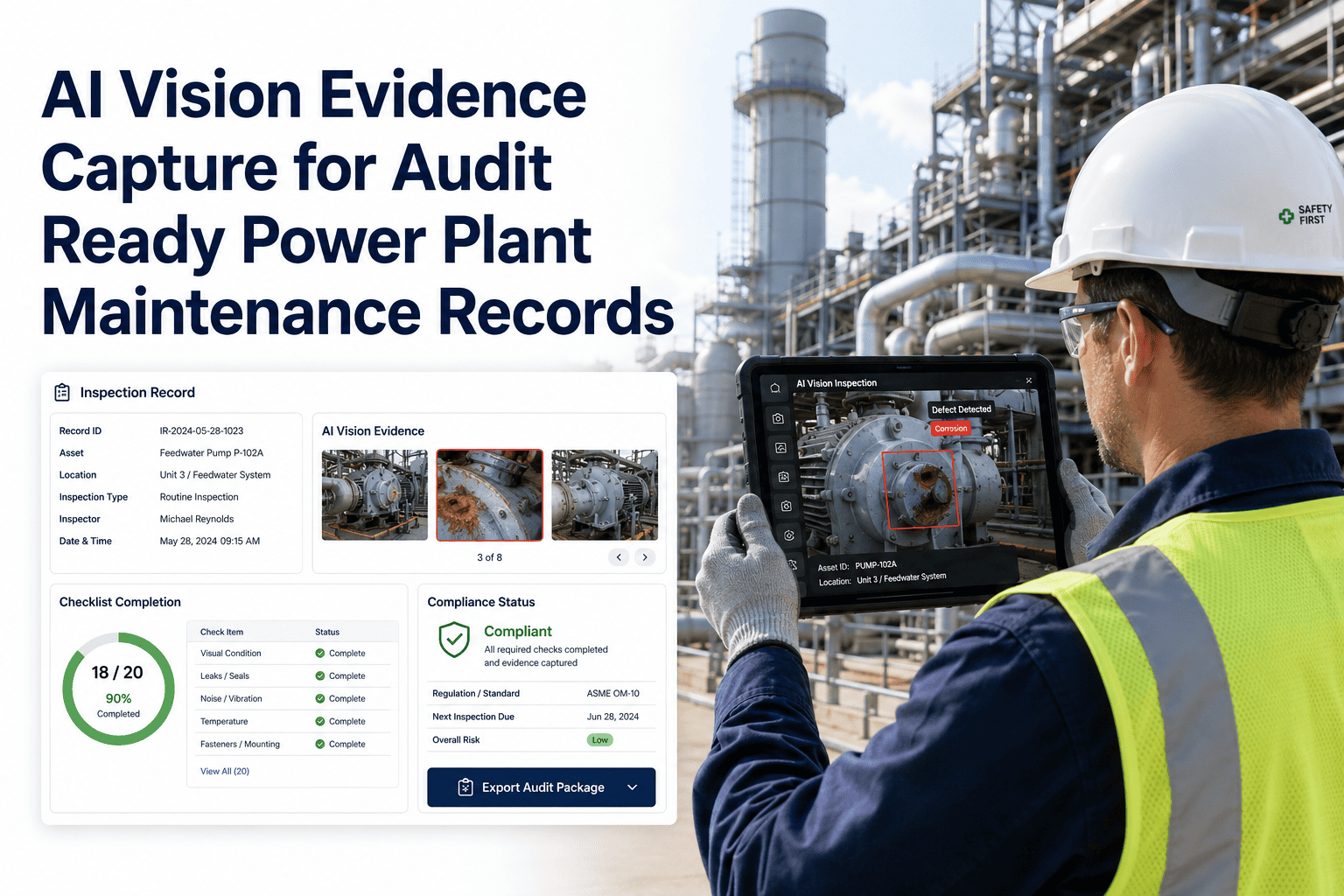
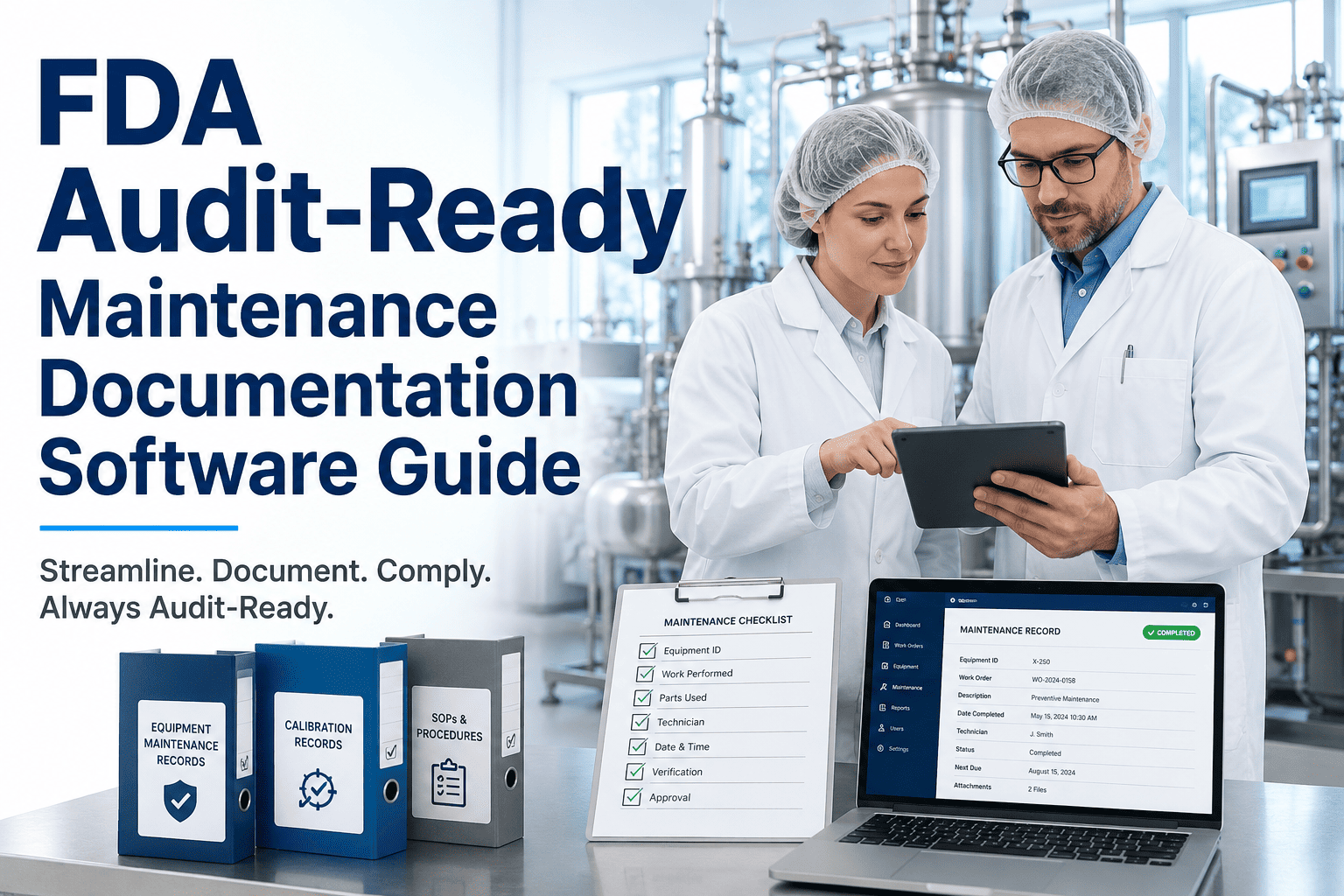
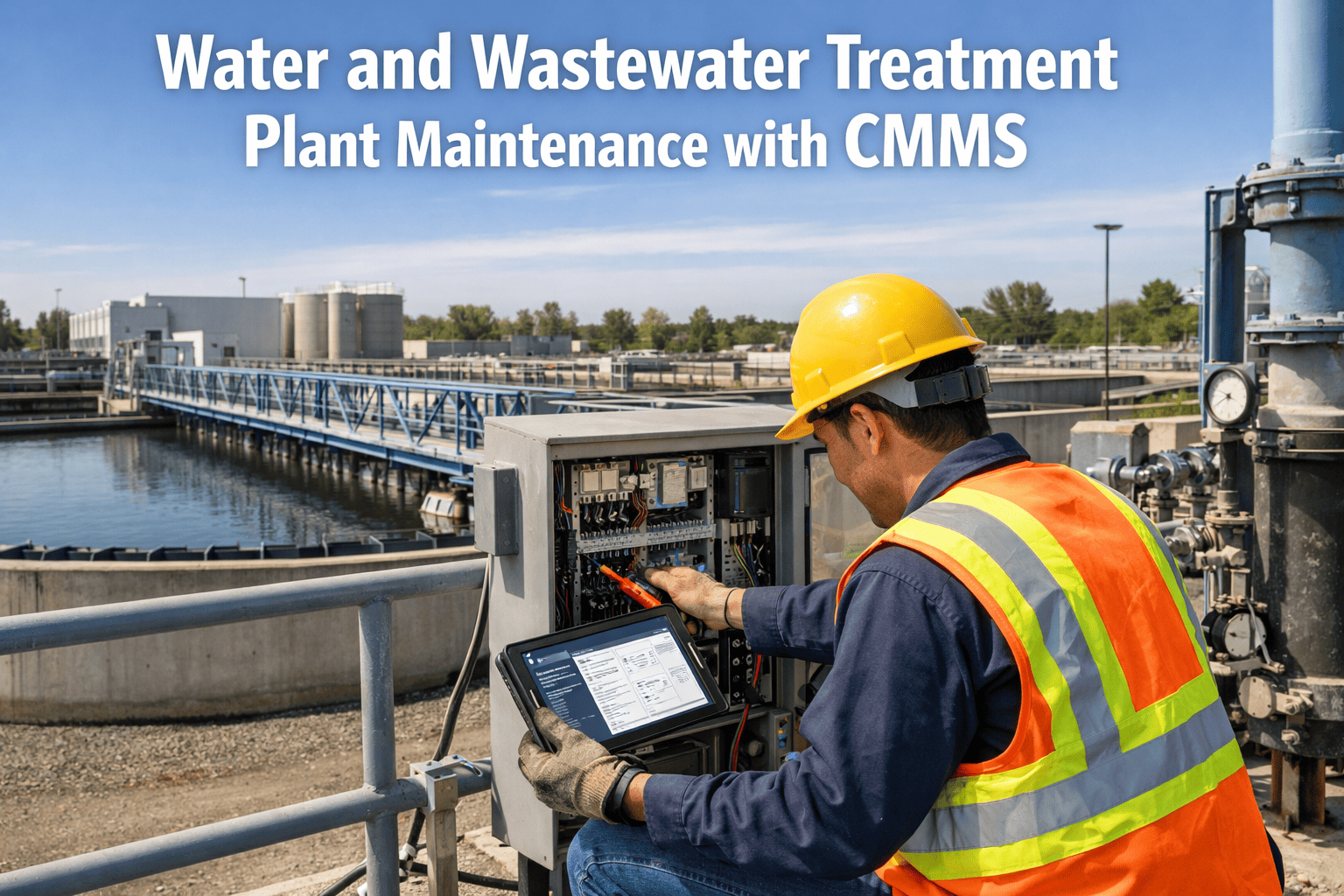
A power plant wastewater system is judged twice: once by what leaves the outfall, and once by the paperwork that proves it was running properly all year. Most compliance trouble starts with the second test. The clarifier was working, but nobody can show when it was last inspected. The flow meter was reading correctly, but the calibration record is in someone's email. Steam electric plants face evolving effluent limitation guideline (ELG) requirements for several wastewater streams, so the equipment behind treatment has to be reliable and its records audit-ready. This guide shows which assets matter, what evidence to keep, how to answer an auditor quickly, and how OXMAINT AI, the AI-powered CMMS, turns maintenance work into compliance proof.
Power Plant Maintenance · Wastewater Treatment · ELG Compliance
Power Plant Wastewater Maintenance: ELG Compliance & CMMS Guide 2027.
OXMAINT AI, the AI-powered CMMS/maintenance management software, ties every pump, filter, sampler and inspection to a dated, signed record, so compliance evidence builds itself as the work gets done.
Audit-Ready Records
Calibration Tracking
Excursion Work Orders
3 Streams
FGD wastewater, bottom ash transport water and combustion residual leachate
5 Asset Groups
pumps, treatment vessels, filtration, instruments and outfall
1 Evidence Trail
task, date, person, reading and photo in one record
Minutes
not days, to answer "show me the records"
The Three Wastewater Streams Maintenance Teams Live With
The ELG rules for steam electric plants have been revised several times, and compliance dates have moved. What does not move is the equipment burden: each stream has its own treatment assets, and each asset needs to be reliable and documented. Sign up free and organise assets by stream.
STREAM 1
FGD Wastewater
Bleed from flue gas desulfurisation scrubbers, often heavy in dissolved solids and metals.
Maintenance exposure: chemical feed pumps, reaction tanks, clarifiers, filter presses, corrosion and scaling
STREAM 2
Bottom Ash Transport Water
Water used to move bottom ash, which plants may recycle or treat depending on their compliance path.
Maintenance exposure: dewatering bins, recirculation pumps, settling tanks, erosive wear on piping
STREAM 3
Combustion Residual Leachate
Liquid that collects from landfills and surface impoundments holding coal ash.
Maintenance exposure: collection sumps, lift pumps, level controls, force mains, remote stations
Check the current rule for your plant. Deadlines, subcategories and permit terms differ from plant to plant, and EPA has indicated further rulemaking on parts of the 2024 requirements. Confirm your obligations with your environmental compliance team and your permit before planning around any date.
Follow the Water: Where Each Treatment Step Can Break Compliance
A typical treatment train moves wastewater through collection, conditioning, separation, polishing and monitoring. A failure at any step can push the final discharge out of range, which is why maintenance sits at the heart of compliance. Your train will differ. Use this as a template. Book a demo to map your own treatment train.
1
Collection
Sumps, lift pumps, level switches
Risk: overflow
▶
2
Equalisation
Tanks, mixers, transfer pumps
Risk: shock loads
▶
3
Chemical Treatment
Dosing pumps, reactors, pH control
Risk: wrong dose
▶
4
Separation & Filtration
Clarifiers, filter presses, media filters
Risk: solids carryover
▶
5
Monitoring & Outfall
Flow meters, samplers, analysers
Risk: bad data
The Equipment-to-Evidence Matrix
For each asset group, here is the compliance risk, the task that controls it and the record that proves it. Intervals depend on your permit, manufacturer guidance and site risk assessment. Start free and build this matrix inside OXMAINT AI.
| Asset Group | If It Fails | Maintenance Task | Evidence to Keep |
| Lift & transfer pumps |
Overflow, flow interruptions |
Vibration and seal checks, runtime balancing |
Dated readings, work orders, run-hour logs |
| Chemical dosing pumps & lines |
Under- or over-dosing, poor removal |
Calibration draw-down tests, line and check-valve inspection |
Calibration results, parts replaced |
| Clarifiers & reaction tanks |
Solids carryover, treatment upset |
Rake drive, sludge pump and scraper inspection |
Inspection checklist with photos |
| Filter presses & media filters |
Elevated suspended solids |
Plate, cloth and backwash checks |
Cycle logs, cloth change history |
| Flow meters, pH & turbidity probes |
Inaccurate or missing data |
Scheduled calibration and verification |
Calibration certificates, as-found and as-left values |
| Autosamplers & sample points |
Invalid or missed samples |
Cleaning, tubing change, cold-chain and function checks |
Sampler check logs, sample chain records |
Make Every Inspection Double as Compliance Evidence
OXMAINT AI captures the date, the person, the reading and the photo at the moment the work is done, so the record exists before anyone asks for it.
The Auditor's Questions and Where the Answers Live
Think about the questions an inspector is likely to ask. If each answer is one search away, an audit is a conversation. If each answer is a scavenger hunt, it is a finding waiting to happen. Book a demo and try these questions on a sample plant.
ASKED"When was the effluent flow meter last calibrated, and by whom?"
▶
FOUND INInstrument asset record: calibration history with certificate attached
ASKED"Show me the inspections on the clarifier this year."
▶
FOUND INAsset work order history, filtered by date and task type
ASKED"What did you do when the pH alarm tripped last spring?"
▶
FOUND INExcursion work order with cause, action and sign-off
ASKED"Are your sampler checks done on schedule?"
▶
FOUND INPM compliance report: completed versus overdue
ASKED"Who is trained to service the dosing system?"
▶
FOUND INTechnician assignment history on each completed job
When an Alarm Trips: A Response That Leaves a Paper Trail
Excursions and near-misses happen even in well-run plants. What regulators and managers want to see is a fast, documented response. Follow your permit's notification requirements for anything that qualifies as reportable. Sign up free and set up your alarm response workflow.
1
Alarm or Out-of-Range Reading
Operator logs it with time and location
▼
2
Immediate Work Order
High-priority job opens, assigned to the on-shift technician
▼
3
Notify Environmental Lead
Compliance decides if external reporting applies
▼
4
Fix & Root Cause
Repair, record the cause and attach photos and readings
▼
5
Prevent Repeat
Add or tighten a PM so the same failure cannot return
Is Your Plant Audit-Ready? An 8-Point Self-Check
Be honest. If you cannot tick most of these today, your records are the weak link, not your equipment. Book a demo for a records gap review.
✔Every wastewater asset has a unique ID and a location
✔Every instrument has a calibration schedule and certificate
✔PMs are scheduled, tracked and show overdue items
✔Alarms and excursions each create a work order
✔Photos and readings are attached to completed jobs
✔Critical spares such as seals, probes and tubing are stocked
✔Records can be filtered by asset, date and stream
✔Contractor work is logged in the same system
What OXMAINT AI Gives a Power Plant Environmental and Maintenance Team
Built for teams that need reliable equipment and defensible records in one place. Start free and load your wastewater assets today.
Stream-Based Asset Register
Group assets by treatment area with specs, manuals and permit references.
Calibration Scheduling
Recurring tasks for flow, pH and turbidity instruments with certificates attached.
Preventive Maintenance
Calendar and runtime-based PMs for pumps, presses and clarifier drives.
Digital Checklists & Photos
Technicians capture readings and evidence on mobile at the point of work.
Excursion Work Orders
Alarms become prioritised, assigned and fully documented jobs.
Compliance Reports
Export maintenance history by asset, date range and completion status.
Frequently Asked Questions
Does a CMMS make us compliant with ELG requirements?
No software does that on its own. Compliance depends on your treatment design, operations, permit and monitoring. A CMMS keeps the equipment reliable and the maintenance records complete and retrievable.
Sign up free and see how records are built.
Can OXMAINT AI store instrument calibration certificates?
Yes. Calibration tasks can be scheduled on each instrument, with certificates, as-found and as-left values and technician sign-off attached to the asset record.
Book a demo to see calibration tracking.
How long should maintenance records be kept?
Retention periods are set by your permit and applicable regulations, and can vary by record type. Confirm the requirement with your environmental team, then keep records in a searchable system for at least that long.
Start free and centralise your records.
Can contractors' work be recorded too?
Where should we begin if our records are scattered today?
Start with the instruments and pumps that feed your compliance data, register them, schedule calibrations and PMs, and require evidence on every completed job. Expand to the rest of the system once the habit holds.
Sign up free and begin with one stream.
Reliable Equipment. Defensible Records. No Scramble When the Auditor Calls.
Move your wastewater maintenance onto OXMAINT AI and turn every inspection, calibration and repair into audit-ready evidence.