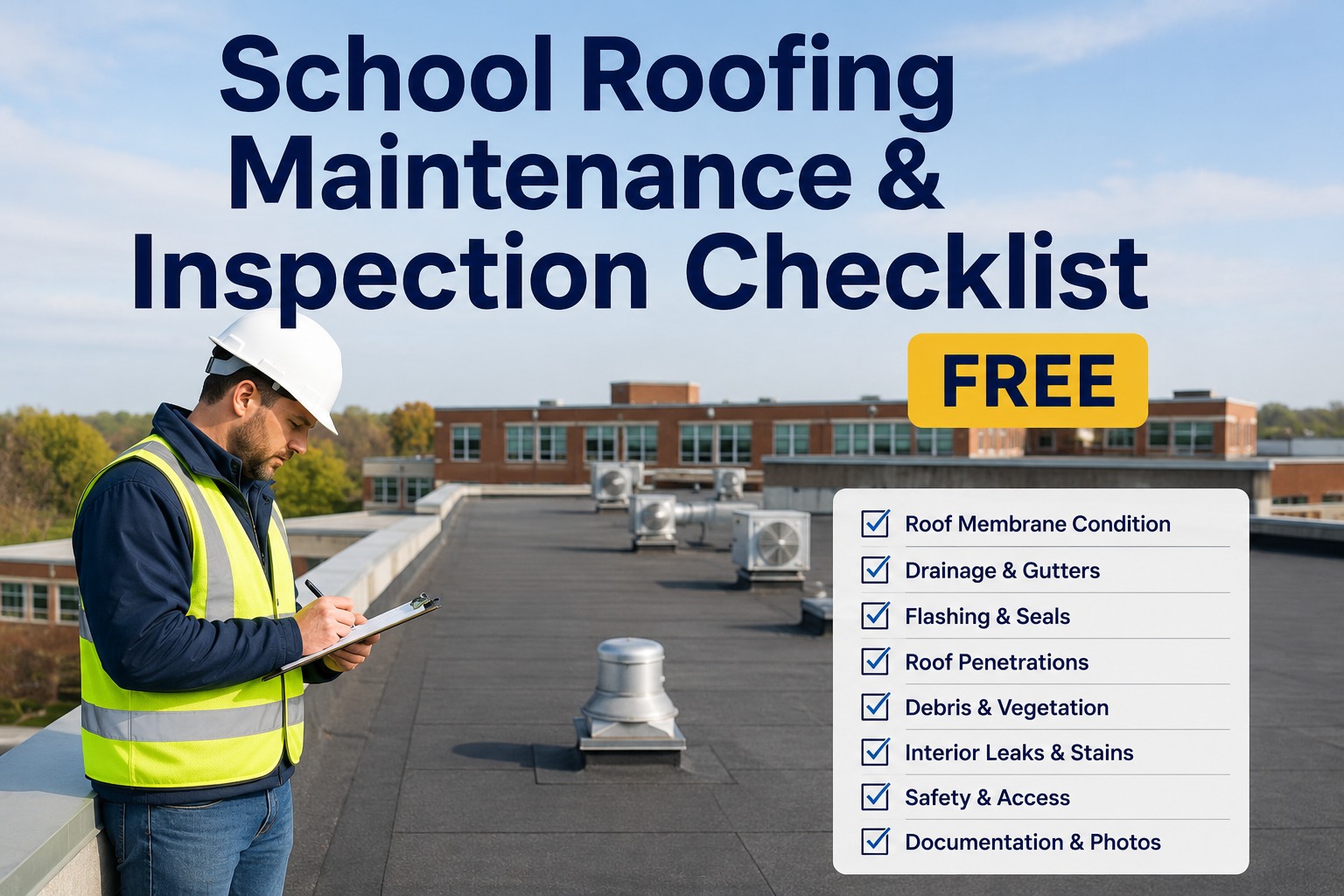
A school roof does not leak on a Tuesday morning at 10 AM. It leaks the first Friday after a heavy October rain, drips down into a first-grade classroom, and closes the building for three days while insulation is torn out and mold remediation gets scheduled. The membrane was in trouble for two years. A drain was blocked for six months. A flashing joint had cracked over the summer. Every one of those failures was catchable during a routine inspection — and every one of them was missed because the roof program lived in a paper binder in the maintenance office. This is the reality for K-12 districts and university facility teams across North America, and it is why the roof needs to be run on maintenance management software, not intuition. Oxmaint is the CMMS built for school facilities: zone-based inspection templates, warranty tracking per section, condition trending across every visit, and automated PM scheduling aligned to the academic calendar. Start a free Oxmaint trial to set up a school roof inspection program that stops surprise leaks, or book a demo to see the CMMS mapped to your K-12 or university building portfolio.
Education · School Facilities · Roof Inspection Software
School Roofing Maintenance & Inspection Checklist — The 2026 Guide
Every zone to inspect, every seasonal task, every failure mode, and every CMMS record required — for K-12 buildings and university facilities running roof programs the right way.
-
20–25 yrs
typical service life of a school roof — extended 5–8 years with disciplined PM
-
65–75%
of active roof leaks come from flashing and penetration failures, not the membrane (NRCA)
-
6×
the remediation cost when water damage is caught late versus early inspection
-
2×/yr
minimum professional inspection frequency — spring after winter, fall before it
Why the School Roof Is a Special Case
Why K-12 and University Roofs Break Differently
A school roof is not a warehouse roof. Occupancy is 100% during the day, buildings sit empty every summer, budgets are set 18 months before the fix is needed, and any leak into a classroom triggers a mold-remediation event that closes learning spaces. The roof program has to be built for that reality — and that starts with knowing what makes school roofs different from every other commercial building.
-
01
Older Building Stock
A significant share of US school buildings pre-date 1990. Many roofs are already inside the last third of their service life, meaning inspection findings translate into capital planning, not just repair tickets.
-
02
Summer-Only Work Window
Major roof work has to fit inside a 10–12 week summer window. Findings from spring inspection must translate into scoped contractor work by June — or the fix slips a full year.
-
03
Warranty Compliance Is Real
Most school roof warranties require documented biannual inspections. A skipped inspection can void a 20-year warranty, turning a covered $80,000 tear-off into a district capital cost.
-
04
One Leak Closes a Classroom
Water into a classroom is not a maintenance issue — it is a health incident. Ceiling tiles, insulation, and drywall become mold remediation. Learning space closes for days. Parents get an email.
The Five Roof Zones
Every Inspection Must Cover These Five Zones
A good inspection is not a walk with a clipboard. It is a systematic zone-by-zone assessment where each area of the roof carries its own checklist, its own failure modes, and its own priority. Oxmaint pre-loads all five zones as inspection templates for K-12 and university buildings — so every walk covers the whole roof and nothing gets skipped between visits.
-
Z1
Membrane Field
The primary weatherproofing surface — EPDM, TPO, PVC, modified bitumen, or built-up. Blisters, ridging, surface cracking, seam integrity, ballast condition.
Watch for: open seams, ponding after 48 hours, alligatoring, exposed felts
-
Z2
Flashing & Seals
The single most common leak source. Base flashings, counter flashings, wall-to-roof transitions, parapet coping. Fully adhered, sealed, no lifted edges.
Watch for: open laps, debonded sealant, embedded reglets, corroded metal
-
Z3
Drainage
Primary drains, overflow scuppers, sumps, downspouts. A blocked drain is the single most preventable cause of a leak. 10-minute clearance versus weeks of interior damage.
Watch for: debris in strainers, blocked overflows, low-spot ponding, downspout backup
-
Z4
Penetrations & Curbs
Every HVAC unit, vent stack, skylight, gas line, and antenna is a hole through the membrane. Curb flashings, pipe boots, and skylight glazing all require dedicated inspection.
Watch for: cracked pipe boots, failed skylight sealants, membrane bridging at curbs
-
Z5
Edges & Perimeter
Drip edge, fascia metal, parapets, gutters. The perimeter takes wind uplift on every storm and gets missed on every casual inspection because the walk stays in the middle of the roof.
Watch for: lifted metal, corrosion, wind-lifted membrane, cracked coping joints
The Annual Checklist
The 12-Point School Roof Inspection Checklist
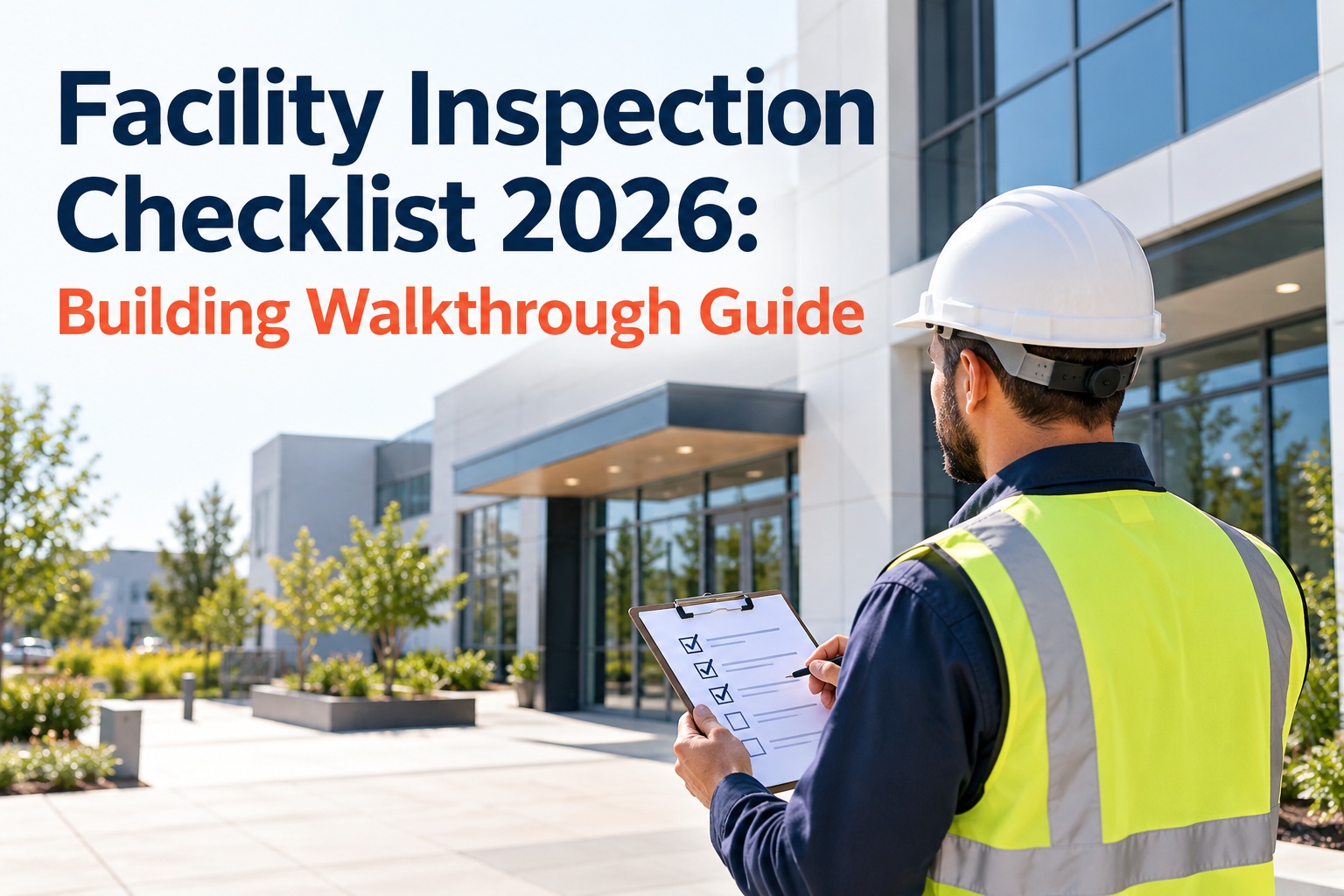
Below is the working checklist a facilities coordinator can hand to any technician for a routine walk. Twelve items, four categories, mobile-first. Oxmaint runs this as a digital form on the technician's phone during the walk — every check is timestamped, every finding generates a work order, every photo attaches to the correct roof section automatically.
Category A · Membrane & Surface
- 01
Walk the full membrane field
Blisters, ridging, surface cracking, seam integrity. Probe any suspect blisters — those with open seams flag for immediate repair.
- 02
Check for ponding after 48 hours of dry weather
Any standing water 48 hours after rainfall indicates a drainage or slope deficiency. Note location, size, and depth.
- 03
Inspect ballast distribution (if applicable)
Ballast evenly distributed, no exposed membrane, no shaling that could puncture the surface during a windstorm.
Category B · Flashing & Sealants
- 04
Every base flashing at wall and curb bases
Fully adhered, no lifted edges, no open laps at wall-to-roof transitions. Highest-risk zone in the entire inspection.
- 05
Counter flashing embedded in reglet
Continuous sealant bead in reglet. Open reglets let wind-driven water behind the flashing at parapets and equipment curbs.
- 06
Parapet coping and sealant joints
All sealant joints intact. Reseal any cracked or open joints before winter — freeze-thaw accelerates deterioration.
Category C · Drainage
- 07
Clear every primary drain and strainer
Remove all debris, verify strainer bolts tight, confirm free drainage. Highest-value 10 minutes of any inspection.
- 08
Verify overflow scuppers unobstructed
Code-required secondary drainage. A blocked overflow during heavy rain becomes a structural load risk on the deck.
- 09
Downspouts and leaders discharging correctly
No backup, discharging clear of the foundation. A blocked leader shows up as ponding around the drain bowl.
Category D · Penetrations, Curbs & Edges
- 10
Every HVAC curb and equipment penetration
Top sealant continuous, corner details intact, no membrane bridging at curb bases. Check refrigerant line sleeves.
- 11
Skylight curbs, glazing, and seals
Perimeter flashing intact. Condensation between glazing panes indicates a seal failure — flag for glazier follow-up.
- 12
Perimeter edge metal, drip edge, fascia
No corrosion, no lifting, no separation from substrate. Wind uplift hits the perimeter first on every storm.
The Seasonal Calendar
Four Seasons, Four Different Inspection Priorities
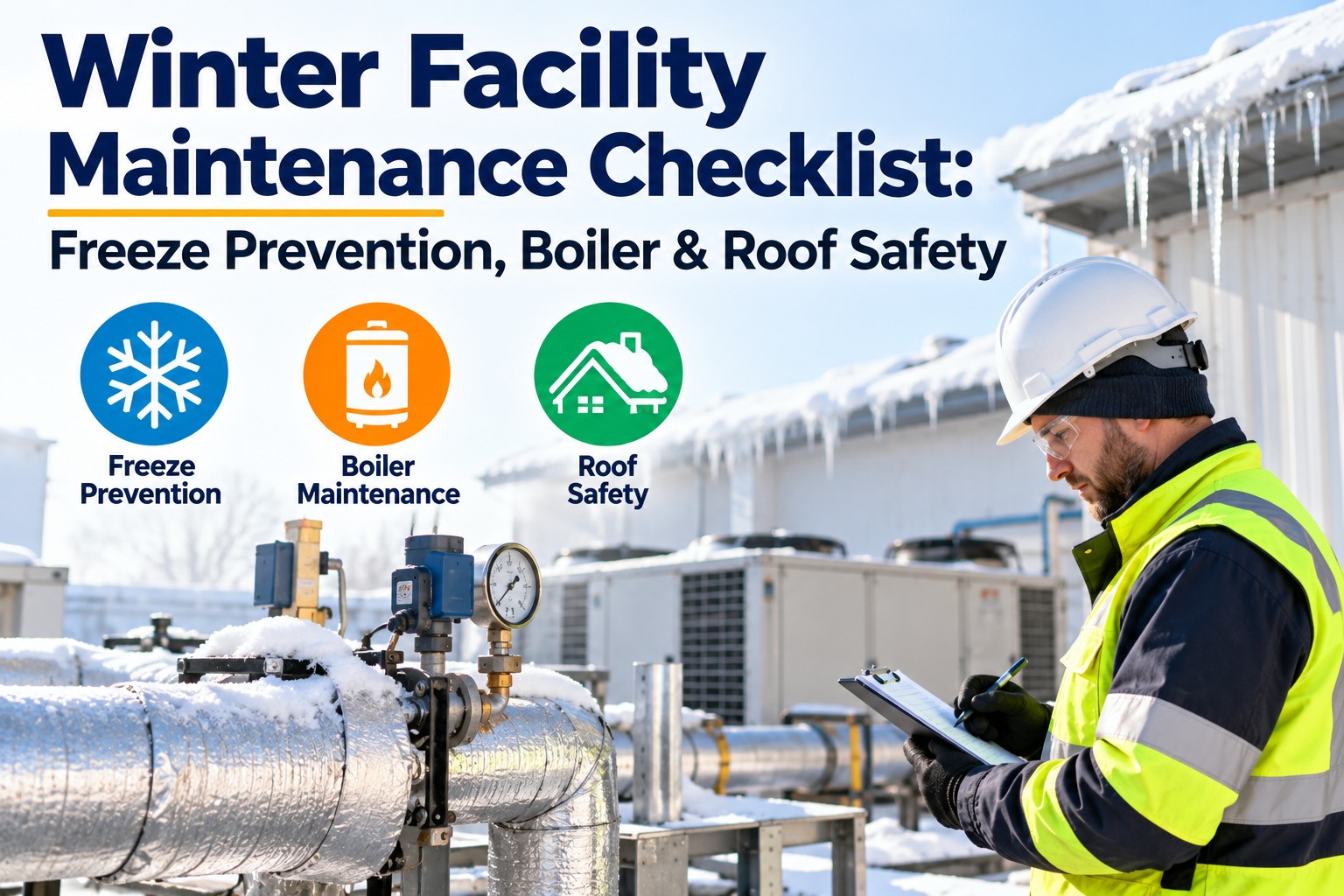
The same 12-point checklist runs year-round — but each season loads it with a different priority. Spring surfaces winter damage. Summer opens the window for major work. Fall races to seal before the freeze. Winter is a monitoring cycle. This is the four-quadrant seasonal cadence that Oxmaint schedules automatically inside the CMMS for school districts and university estates.
Spring · Mar–Apr
Post-Winter Damage Assessment
- Full roof walk for freeze-thaw membrane cracking
- Check for winter wind damage and displaced ballast
- Clear drains of accumulated winter debris
- Photo-document all findings — feeds summer contractor scope
Summer · May–Aug
The Only Real Work Window
- Execute contractor repairs identified in spring inspection
- Infrared moisture scan on roofs over 10 years old
- Section replacements, re-flashing, drain overhauls
- Roof condition survey before students return
Fall · Sep–Oct
Pre-Winter Sealing Race
- Full roof walk before leaf-fall peak
- Clear all drains before first frost
- Seal every open joint and penetration gap
- Reseal cracked coping and parapet sealants
Winter · Nov–Feb
Monitoring & Post-Storm Response
- Interior walk-throughs for early leak signs on top floors
- Snow load monitoring on flat sections
- Post-storm 24-hour drain inspection protocol
- Ice dam identification and safe removal
The Costliest Finding
A Blocked Drain Cleared in 10 Minutes Prevents Three Weeks of Classroom Repair
Blocked roof drains are the single most preventable cause of school roof damage. Ponding water adds structural load, saturates insulation, forces water through any weakness. Oxmaint puts drain-clearance PMs on quarterly cadence, generates the work order automatically, and holds every technician to a photograph-verified completion inside the software.
Severity Triage
Every Inspection Finding Falls Into One of Three Bins
A good inspection produces action, not paperwork. Every finding gets triaged into one of three severity levels — Critical, Action, or Monitor — so the maintenance team knows what has to happen tonight versus what can wait for the next quarterly walk. Oxmaint auto-generates work orders from Critical and Action findings at the correct priority tier.
Critical
Fix Before Next Rainfall
Blocked primary drain, blocked overflow, open flashing lap at wall transition, torn membrane at penetration, active interior leak evidence.
Response: same day
Action
Schedule Within 30 Days
Debonded sealant on parapet, cracked pipe boot, small membrane blister with intact seams, minor coping joint separation.
Response: 30-day window
Monitor
Log & Recheck Next Cycle
Minor debris accumulation, small birdbath ponding under 6 inches diameter, cosmetic staining, ballast redistribution.
Response: next quarterly walk
Deferred vs Preventive
The Cost of Waiting Versus Inspecting
Every district has a version of this story: the inspection did not happen, the finding did not surface, the leak arrived, and the number on the repair invoice was 6× what a scheduled fix would have cost. Building the roof program on Oxmaint moves the numbers on the left column onto the right column — and typically pays for the software before the first academic year is out.
Deferred Reactive Model
What Waiting Costs
- Emergency contractor call-out at premium rates
- Interior water damage — ceiling tiles, drywall, flooring
- Mold remediation of insulation and cavity spaces
- Classroom or lab closure — displaced learning
- Voided manufacturer warranty on missed inspection
- Insurance premium increase after claim
CMMS-Managed PM Model
What Inspecting Saves
- Scheduled contractor pricing, off-peak rates
- Repair caught before water reaches interior spaces
- No mold remediation event
- Zero classroom disruption during summer work
- Documented biannual inspections — warranty preserved
- Insurance evidence base at renewal
Built for School Facilities
How Oxmaint Software Runs a School Roof Program
-
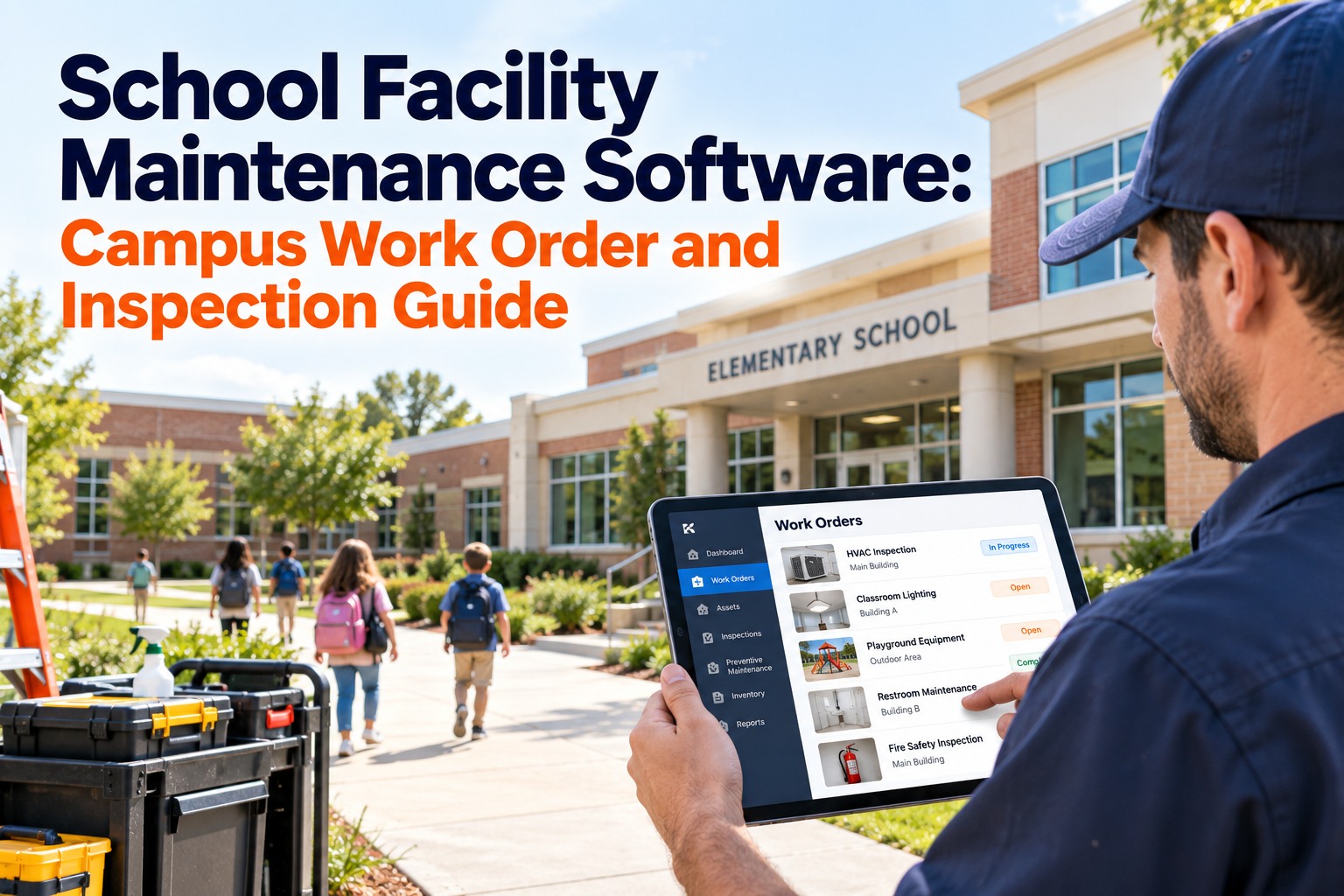
Zone Templates
Five Pre-Built Inspection Templates on Mobile
Every zone loads as a digital form on the technician's phone. Photo capture, defect tagging, and work-order generation happen during the walk — no clipboard-to-spreadsheet transcription.
-
Warranty Tracking
Every Roof Section as Its Own Asset
Each roof section carries install date, manufacturer, warranty expiry, and inspection history in Oxmaint. Warranty alerts fire before required inspection dates — never miss a compliance window.
-
Auto-Scheduled PMs
Seasonal Cadence Runs Without a Coordinator
Spring, summer, fall, and winter inspection cycles pre-loaded on the academic calendar. Post-storm inspection protocols trigger automatically after severe weather events.
-
Condition Trending
Zone Scores Trend Across Every Inspection Cycle
Condition ratings roll up per building and per section. Facilities Directors see which roofs are on the wear curve, which need re-flash, and which need capital replacement — all in one dashboard.
-
Capital Planning
Inspection Data Feeds Budget Submissions
Roof condition data flows into capital forecasts. Estimated repair quantities, section priority sequence, and replacement cost estimates — ready for board-level budget conversations.
-
Audit Records
Warranty and Insurance Documentation Ready
Every inspection creates a timestamped, inspector-attributed audit record with weather data captured. Insurance renewals, warranty claims, and district audits all pull from one source.
Measured Outcomes
What School Districts Gain When Oxmaint Runs the Roof Program
-
5–8 yrs
Extended Roof Life
Disciplined PM extends roof service life 5–8 years beyond the reactive baseline — deferring capital projects by full budget cycles.
-
78%
Fewer Compliance Gaps
Districts using Oxmaint's digital compliance platform cut compliance gaps by 78% and turn week-long audit prep into minutes.
-
Zero
Voided Warranties
Documented biannual inspections preserve manufacturer warranties across the full 20-year term — no district capital cost for missed paperwork.
-
Same-Day
Post-Storm Response
Post-storm inspection protocols trigger automatically. Findings surface within 24 hours — before leaks reach classroom ceilings.
Frequently Asked
School Roof Inspection Questions
How often should a school roof be professionally inspected?
A qualified roofing contractor twice per year — spring after winter damage, fall before the freeze — supplemented by in-house quarterly walks and drain clearing. Post-storm inspections within 24 hours are standard. Roofs over 10 years old should add annual infrared moisture scans. Oxmaint schedules all of it on the academic calendar. Sign up for Oxmaint to configure the full inspection cadence for your district.
What is the most common cause of school roof failure?
Flashing and penetration failures — accounting for 65–75% of active roof leaks per NRCA claims data. The membrane field is more visible but degrades slowly; flashing failures happen suddenly and produce immediate interior damage. That is why Zone 2 (Flashing) and Zone 4 (Penetrations) carry the highest severity weight in the inspection template.
Does missing an inspection really void the warranty?
On most modern school roof warranties, yes. Manufacturers require documented semi-annual inspections. A gap in the record can void a 20-year warranty on a partial replacement — turning a covered $80,000 tear-off into a district capital line item. Oxmaint stores every inspection record against the section asset so nothing gets lost. Book a demo to see how Oxmaint preserves warranty compliance across your building portfolio.
Can we import our existing roof inventory into Oxmaint?
Yes. Roof section asset lists, warranty dates, historic inspection reports, and repair history all import into Oxmaint during setup. Inspection templates for the five zones are pre-loaded — your team walks the roof and captures the first digital baseline inside the software. Sign up for Oxmaint to import your roof inventory and start capturing digital inspections.
Inspect · Document · Extend
Every Leak Into a Classroom Was Preventable Months Before It Happened
The blocked drain, the cracked coping, the debonded flashing — every warning was on the roof, waiting for someone to walk the right zone with the right checklist. Oxmaint is the maintenance software that makes sure the walk happens, the finding gets logged, and the repair gets scheduled before the ceiling tiles come down. Build the roof program on a CMMS made for K-12 and university facilities.

.png)
