There is one sentence every steel plant EHS manager needs to internalize before anything else: OSHA treats an undocumented inspection as an inspection that never happened. Your crew can walk every ladle crane before every shift, check every hook and every rope, catch every defect — and if the signed, dated record does not exist when an inspector asks, you are cited for not inspecting. That is not a technicality; documentation gaps are OSHA's single most common trigger for crane citations, and crane violations rank first in citation frequency across all industrial sectors, drawing $364 million in fines in 2023 alone, up nearly 600% since 1990. In a steel mill the stakes behind that paperwork are physical: ladle cranes carry 300 tonnes of molten metal over shop floors where people are working. The problem with paper checklists is not that people do not care — it is that paper cannot prove when a check happened, who performed it, or what they actually saw. This guide covers how to replace paper safety inspections with a digital workflow across cranes, pressure vessels, and permit-to-work. Start a free Oxmaint trial and turn every inspection into a signed, timestamped record, or book a demo to see findings convert straight into tracked work orders.
Steel Plant · EHS Manager · OSHA Compliance
Steel Plant Safety Inspection Digital Workflow Guide
Replace paper safety inspections with digital CMMS workflows — covering overhead crane intervals under OSHA 1910.179, pressure vessel checks, and permit-to-work — so every inspection produces the signed, timestamped evidence an audit demands.
-
#1
crane citations rank first across all industrial sectors
-
$364M
in OSHA crane fines issued in 2023, up ~600% since 1990
-
Quarterly
periodic inspection for severe-service ladle cranes, not annual
-
42/yr
average crane-related deaths in the US
The Rule That Governs Everything
Undocumented Means Not Done
The gap between a paper program and a digital one is not effort — it is evidence. Each column below describes the same inspection, performed by the same competent person, on the same crane. Only one of them survives an inspector's file review.
- On Paper Digital Record
- Checklist signed at end of shift, from memory Each item timestamped as it is checked, on the crane
- "Wire rope OK" — no evidence of condition Photo of the rope attached to the inspection item
- Defect noted, verbally passed to maintenance Finding auto-generates an assigned, tracked work order
- Records in a binder, months to assemble for audit Signed, dated history exported per asset on demand
Digital documentation with timestamps and signatures is non-refutable compliance evidence — the thing a paper binder can never be. Book a demo to see a signed, timestamped inspection record built on the floor.
OSHA 1910.179
Three Crane Intervals, and the One Mills Get Wrong
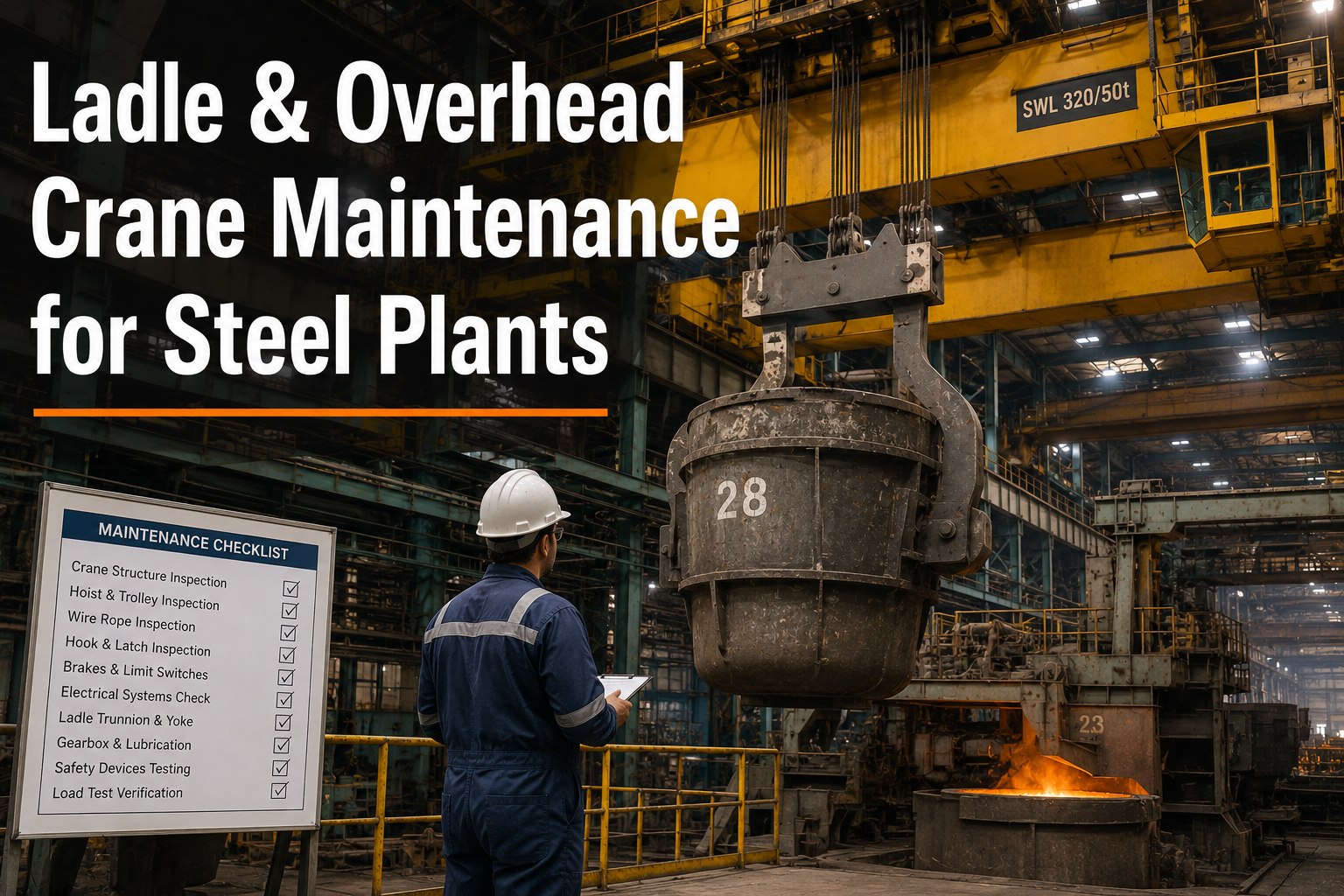
The standard defines distinct inspection tiers, and confusing them creates exactly the compliance gaps that get cited. The most common error in steel: treating severe-service cranes as annual-inspection equipment. Ladle, charging, and soaking-pit cranes are severe service — their periodic inspection is quarterly.
| Tier | Interval | Documentation |
|---|---|---|
| Frequent | Every shift (severe service) | Visual & functional; evidence it happened |
| Monthly certification | Monthly | Signed, dated record naming the hook or rope |
| Periodic | Quarterly for severe service | Full structural, mechanical, electrical |
| Idle 1–6 months | Before return to service | Frequent-level inspection required |
| Idle over 6 months | Before return to service | Full periodic inspection required |
Removal thresholds are precise, not discretionary — a hook twisted 10 degrees from plane, a cracked hook body, or a failed safety latch comes out of service, and welded hook repairs are not permitted. Sign up for Oxmaint to schedule every crane tier at its correct interval.
Three Inspection Domains
Where the Digital Workflow Has to Reach
An EHS program in a steel plant lives across three record-keeping domains. Each has its own competent person, its own interval, and its own statutory certificate — and each fails the same way on paper.
-
Overhead Cranes
Pre-shift operator checks, monthly hook and running-rope certification, and quarterly periodic inspection for severe service. Operators must be designated personnel with documented training on that specific crane — and empowered to tag equipment out of service without production pressure. -
Pressure Systems
Relief valves inspected for weeping and seat corrosion with test dates current, gauges verified against design pressure, and statutory boiler and pressure-vessel certificates kept current — each with its own logged record and responsible inspector. -
Permit-to-Work
Hot work, confined space, and lockout/tagout permits issued against written programs required by 1910.147, 1910.146, and related standards — with training certifications current and every permit authorized, logged, and closed against the job.
All three feed the same annual review — where inspectors examine LOTO integrity, confined-space permits, statutory certificates, and every incident closed with evidence. Book a demo to see cranes, pressure systems, and permits in one compliance record.
Finding to Closure
An Inspection Is Worthless If the Finding Dies in a Binder
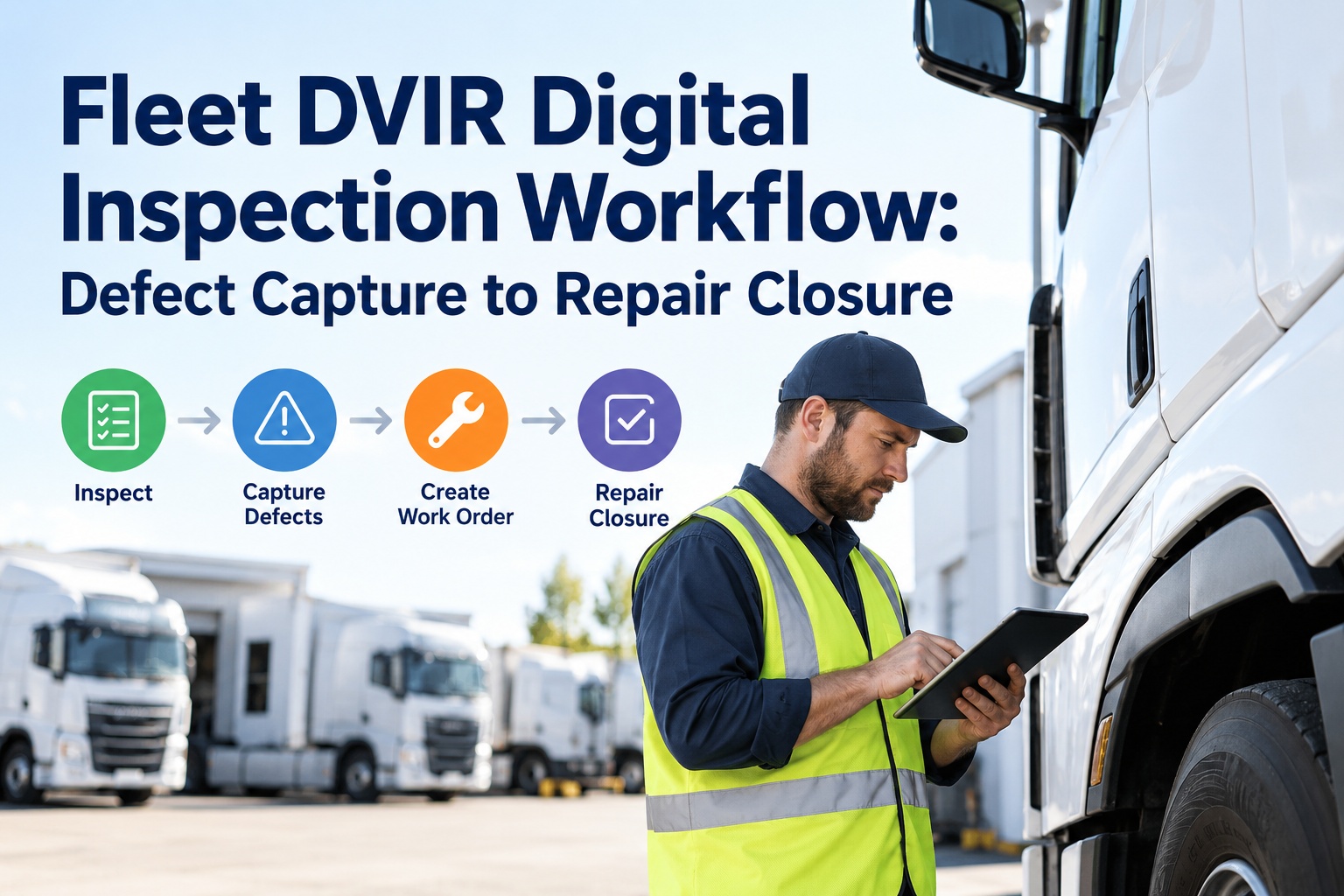
The point of an inspection is not the checklist — it is the corrective action. A digital workflow closes the loop from a defect spotted on the crane walkway to a verified repair, with every step evidenced. Four stages, no handoff lost.
- 1 Inspect on mobile, with photos The competent person works the checklist on a phone at the equipment, capturing photo evidence of rope condition, hook integrity, and brake function as each item is verified.
- 2 Failed item stops the equipment A critical failure — brake slipping, hook cracked, limit switch inoperative — tags the crane out of service immediately and notifies maintenance, before the next lift.
- 3 Finding becomes a work order Every defect converts automatically into a timestamped, assigned, prioritized work order — not a verbal handoff at shift change that nobody can later prove happened.
- 4 Closed with evidence, retained Supervisor authorization, corrective action, and closure evidence are retained against the asset for the full retention period — an audit trail assembled by doing the work.
Steel plants running digital daily crane checks report substantially fewer load-drop incidents — because a developing wire-rope failure gets caught and actioned, not noted and forgotten. Sign up for Oxmaint to turn every finding into a tracked corrective action.
The First Ten Minutes of an Audit
The Documents an Inspector Asks For First Decide Everything
Factory Inspectorate visits and OSHA inspections arrive unannounced, and the records requested in the opening minutes determine whether the visit is a formality or an enforcement action. Signed daily crane checklists. Monthly hook and rope certification records naming the exact component. Quarterly periodic inspection reports for severe-service cranes. Current boiler, pressure-vessel, and crane load-test certificates. Written LOTO, confined-space, and HazCom programs. Incident investigations closed with evidence. Every one of these must be dated, signed, and retrievable. When each is a byproduct of the daily digital workflow rather than a binder someone has to reconstruct, an unannounced audit stops being an event and becomes a query.
Oxmaint for Steel Plant EHS
How Oxmaint Digitizes Safety Inspections
-
Digital Checklists
Signed and Timestamped
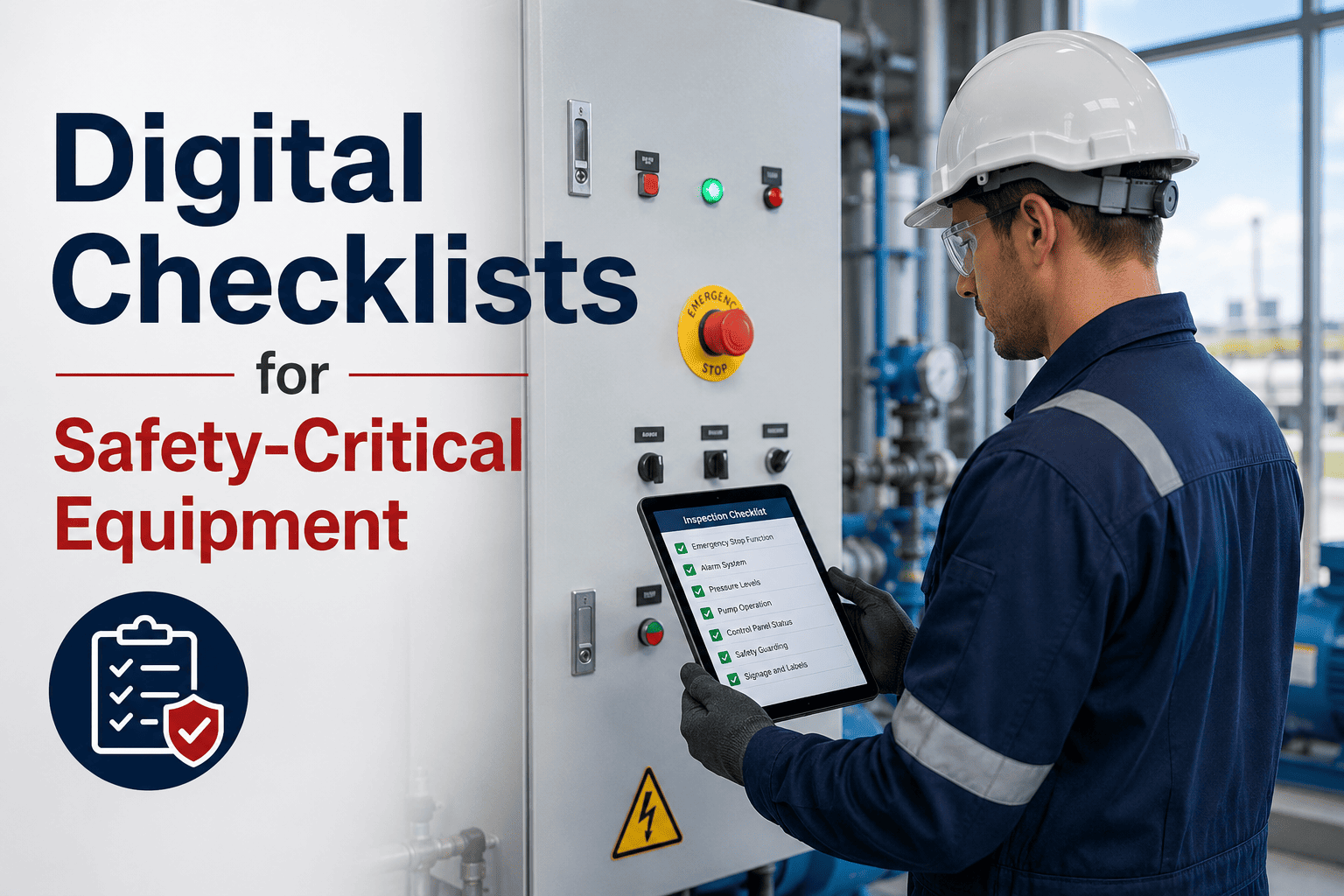
Every 1910.179 checklist item becomes a signed, timestamped, photo-backed inspection record captured at the equipment — the non-refutable evidence a paper binder cannot produce.
-
Interval Scheduling
Frequent, Monthly, Periodic
Schedule each crane at its correct tier — per-shift frequent, monthly hook and rope certification, quarterly periodic for severe service — with return-to-service checks enforced on idle cranes.
-
Out-of-Service Tagging
A Failed Item Stops the Lift
Critical failures flag the asset out of service and notify maintenance immediately, giving operators the authority to stop equipment without production pressure and leaving a record of the decision.
-
Findings to Work Orders
Corrective Action Tracked
Every inspection finding converts into an assigned, prioritized work order tracked to closure with evidence — so the defect that was spotted is the defect that gets fixed and proven.
-
Permits & Certificates
Hot Work to Load Tests
Permit-to-work for hot work, confined space, and isolation enforced inside the job, with statutory certificates — boiler, pressure vessel, crane load test — tracked with expiry alerts.
-
Audit Export
Ready Before They Arrive
Any asset's full inspection, certification, and corrective-action history exported in minutes for an unannounced OSHA or Factory Inspectorate visit — retention periods configured per record type.
Frequently Asked
Steel Plant Safety Inspection Questions
Why does OSHA treat an undocumented inspection as not done?
Because the record is the only thing an inspector can verify. A facility might inspect its cranes thoroughly, but if signed, dated records do not exist, OSHA will cite it for not inspecting — documentation gaps are the most common trigger for crane citations. Digital documentation with timestamps, signatures, and photo evidence is non-refutable proof the inspection occurred, when, and by whom. Book a demo to see how every inspection becomes provable.
How often must steel plant ladle cranes be inspected?
Ladle, charging, and soaking-pit cranes are severe-service equipment under OSHA 1910.179. That means frequent inspections every shift, monthly hook and running-rope certification records that are signed, dated, and identify the specific component, and full periodic inspections quarterly — not annually. Many mills incorrectly run annual schedules on these cranes, creating a compliance gap. A crane idle 1 to 6 months needs a frequent-level inspection before returning to service; over 6 months, a full periodic inspection.
What takes a crane hook or wire rope out of service?
The thresholds are precise, not discretionary. A hook comes out of service if it is cracked, twisted 10 degrees or more from the plane of the unbent hook, has excess throat opening beyond the standard's limit, or the safety latch fails — and welded hook repairs are not permitted. Wire rope is removed for broken wires beyond the listed thresholds, kinking, crushing, bird-caging, heat damage, corrosion, or reduction from nominal diameter. The inspection must measure against these criteria, not eyeball them from the floor. Sign up for Oxmaint to build removal criteria into digital checklists.
Who is allowed to operate an overhead crane in a steel mill?
Only designated personnel. Under 1910.179, "designated" means the employer has selected the person, assigned them to that specific equipment, and can demonstrate they are competent to run it — with documented training on that crane's operation, load ratings, safety features, and emergency procedures. This is the general-industry standard and differs from the construction-industry operator certification required under 29 CFR 1926 Subpart CC, which many mills incorrectly apply to their bridge cranes. Book a demo to see operator training and designation records tracked.
Inspect · Evidence · Action · Retain
Make the Inspection Provable, Not Just Performed
Every checklist signed from memory, every defect passed along verbally, and every binder reconstructed before an audit is a citation waiting to be written — on equipment that carries molten metal over people. Oxmaint gives steel plant EHS managers one platform to run crane, pressure-system, and permit-to-work inspections digitally, schedule every OSHA interval correctly, tag failed equipment out of service, drive findings into tracked corrective actions, and export the signed, timestamped record an inspector will ask for first.