A driver finds a soft brake at the end of a shift and notes it on a paper DVIR. The sheet goes in a tray, the truck rolls at 5 a.m. with the next driver, and the defect is still there — because nobody closed the loop between finding it and fixing it. A DVIR isn't a form, it's a chain: the driver reports, the shop repairs and certifies, and the next driver confirms before the wheels turn. Break any link and you've got an undocumented defect on the road and a violation waiting at the scale. OXMAINT AI is the AI-powered maintenance management software that carries a DVIR defect from capture to certified repair closure — and keeps the record.
Fleet Management · Digital DVIR · Defect Capture to Repair Closure · 2026
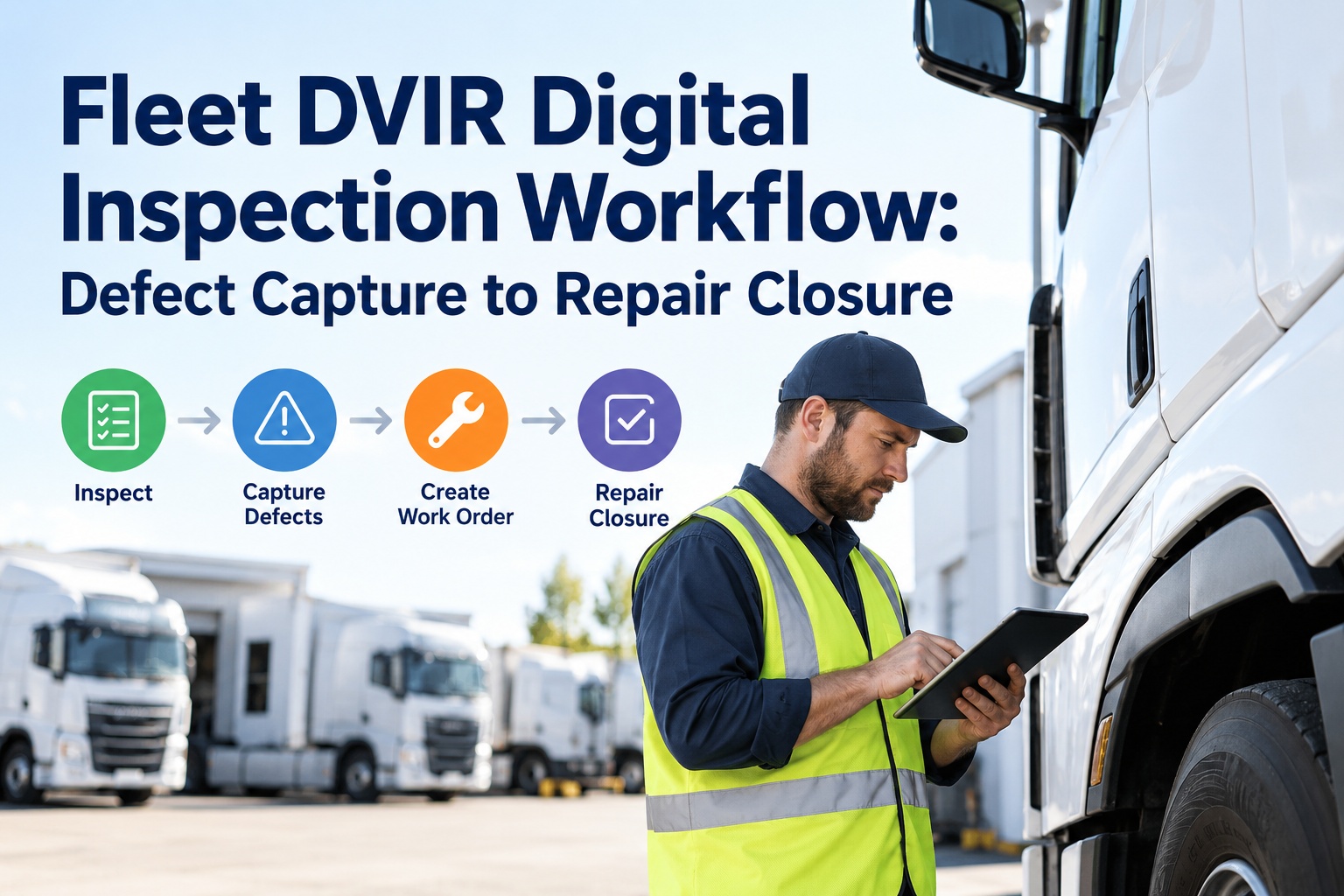
Fleet DVIR Digital Inspection Workflow, Closed End to End
A defect is only handled when it's captured, repaired, certified and confirmed — not when it's written down. The OXMAINT AI maintenance management software runs the full DVIR loop: a driver's defect becomes a work order, the repair is certified, the next driver signs off, and the whole chain is retained for the auditor.
1Capture
→
2Repair
→
3Certify
→
4Close
Daily
a written DVIR is required under 49 CFR 396.11 for each vehicle operated
No roll
a safety defect must be repaired before the vehicle is operated again
3 sign-offs
driver, mechanic and next driver — the chain that proves closure
3 months
the DVIR and its repair certification must be retained on file
Why Paper DVIR Breaks the Loop
The paper DVIR captures the defect and then loses it — the handoff from driver to shop to next driver is where safety and compliance both leak. These are the breaks a digital workflow closes; book a demo to close the DVIR loop in OXMAINT AI.
Defect in a tray
A reported defect on paper depends on someone reading the sheet and raising a repair — a link easily missed.
Truck rolls on a defect
Without a gate, a vehicle with a safety defect goes back out before the repair — the risk the rule exists to stop.
No proof of repair
The fix happened, but the certification linking defect to repair isn't on the record an inspector asks for.
Records you can't find
A DVIR filed in a cab or a drawer can't be produced in seconds — and a missing record is its own violation.
The Defect-Capture-to-Closure Workflow
Every DVIR defect runs the same path — from the driver's walk-around to a signed, certified, retained close. The OXMAINT AI maintenance management software routes and records each step; start free and run a defect through the loop in OXMAINT AI.
01
Inspect & capture
The driver works the pre- or post-trip on a device, logging each component and capturing any defect with a photo.
↓
02
Report or certify clean
The driver submits the DVIR — defects listed, or a clean report if none — signed and timestamped.
↓
03
Severity gate
A safety defect holds the vehicle; a minor one is scheduled — the gate decides whether the truck can roll.
↓
04
Work order to the shop
The defect becomes a corrective work order routed to the shop with the component, photo and vehicle attached.
↓
05
Repair & certify
The mechanic completes the repair and certifies it corrected — or certifies no repair was needed.
↓
06
Driver reviews & signs
The next driver reviews the prior DVIR and signs that the listed defects were repaired before the trip.
↓
07
Retain the record
The DVIR and its repair certification are kept on file and producible on demand for the retention period.
A Defect Written Down Isn't a Defect Closed Out.
The gap between capture and closure is where fleets get hurt — on the road and at the scale. The OXMAINT AI maintenance management software turns a DVIR defect into a work order, holds the truck on a safety item, and keeps the certification chain that proves the loop closed.
The Certification Chain That Proves It Happened
What makes a DVIR a closed loop — not just a report — is three signatures in sequence, each a different person answerable for a different thing. Miss one and the chain doesn't hold. The OXMAINT AI maintenance management software captures all three; book a demo to see the certification chain in OXMAINT AI.
DRIVER
Reports the defect
Signs the DVIR listing the defect — or certifying the vehicle had none. The chain starts with the person who found it.
→
MECHANIC
Certifies the repair
Signs that the defect was corrected — or that no repair was needed — linking the fix back to the exact defect.
→
NEXT DRIVER
Confirms before the trip
Reviews the prior DVIR and signs that the listed repairs were done before operating the vehicle.
The Safety Gate: Not Every Defect Lets the Truck Roll
The whole point of the DVIR is the gate between a defect and the road. A defect that affects safe operation holds the vehicle until it's repaired; a minor one is scheduled without parking the truck. Getting that call right is the heart of the workflow; start free and set your severity gate in OXMAINT AI.
SAFETY DEFECT — HOLD
Affects safe operation — brakes, steering, tires, lights, coupling
Vehicle is held, not operated, until the repair is done
Repair certified before the truck can return to service
The rule the DVIR exists to enforce
MINOR DEFECT — SCHEDULE
No effect on safe operation — cosmetic or comfort
Logged and scheduled into planned work
Truck keeps running while the fix is queued
Tracked so it still gets closed, not forgotten
What a Complete DVIR Defect Record Carries
A corrective work order is only as good as the defect behind it — and a DVIR record has to satisfy both the shop and the auditor. These are the fields that travel with it; book a demo to see a complete DVIR record in OXMAINT AI.
VEHICLE & DRIVER
The unit, the driver and the date — who inspected what, and when.
COMPONENT & DEFECT
The item that failed and what was wrong with it, from the inspection list.
PHOTO
The image the driver captured, so the shop sees the defect before the truck arrives.
SEVERITY
Safety or minor — the call that drives the gate and the priority.
REPAIR CERTIFICATION
The mechanic's sign-off linking the fix to the defect it corrected.
DRIVER SIGN-OFF
The next driver's confirmation that the repairs were done before the trip.
How OXMAINT AI Runs the DVIR Loop
Capture, gate, repair, certify and retain only hold together on one connected record. Here's what the OXMAINT AI maintenance management software brings to the DVIR workflow; start free and build your DVIR flow in OXMAINT AI.
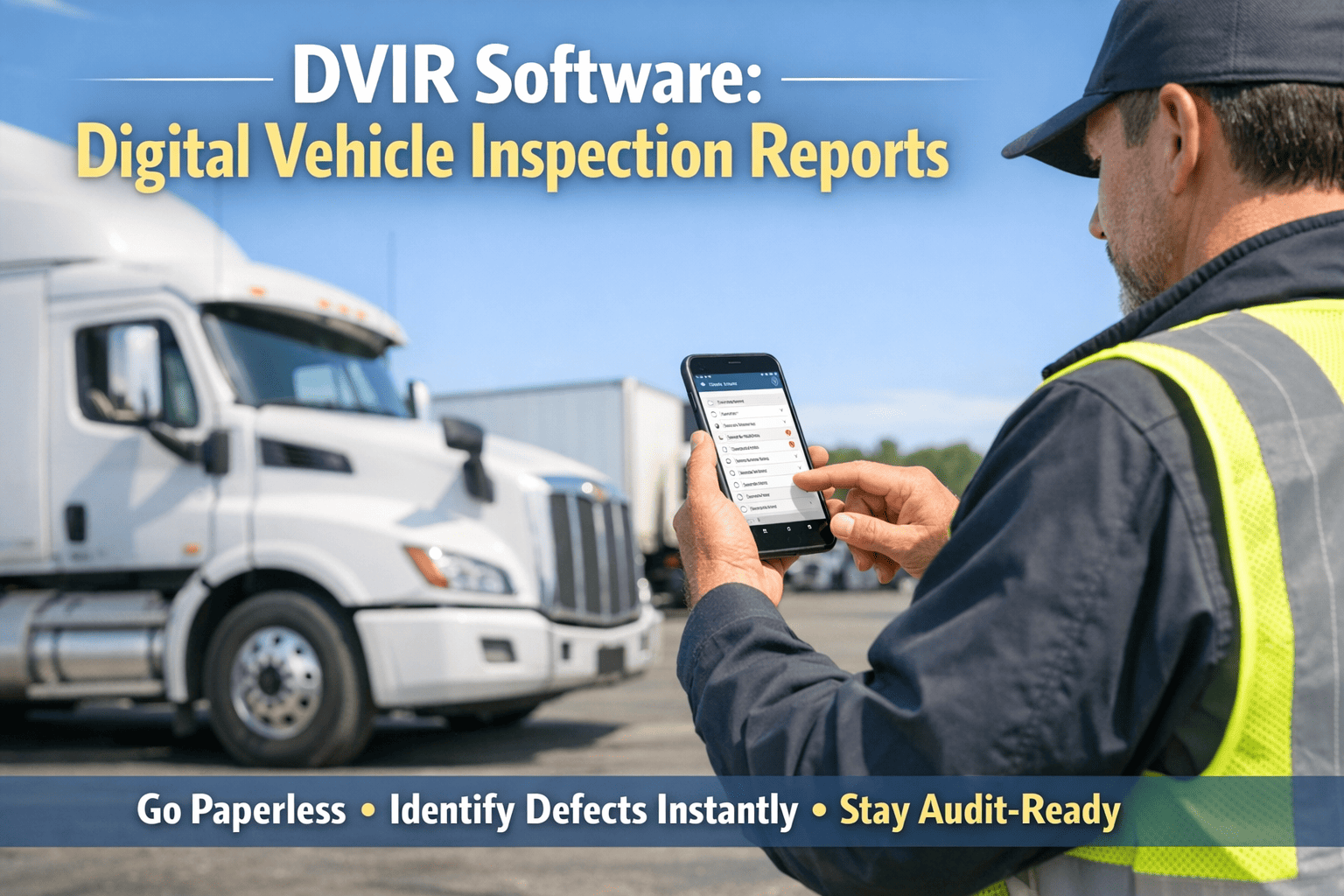
Digital DVIR on a device
Drivers work the pre- and post-trip on a phone or handheld, with readings and photos captured, not scribbled.
Safety-defect gate
A safety defect flags the vehicle as held until repaired, so a truck can't roll on an open safety item.
Defect to work order
A reported defect becomes a corrective job routed to the shop on its own, with the photo and vehicle attached.
Certification chain
Driver report, mechanic repair certification and next-driver sign-off captured in sequence, each on the record.
Defect trends per vehicle
Recurring defects tracked by unit, so a repeat fault is caught on the trend, not just reported again.
Retained & audit-ready
Every DVIR and repair certification kept on file and producible in seconds — the record an inspection asks for.
“
Our DVIRs were paper, and the honest truth is half the defects never became repairs — they sat in a tray until someone noticed or the truck broke. Going digital, with a safety defect holding the vehicle and the mechanic's certification tied to the driver's report, closed that gap. At the last roadside inspection we pulled the full chain for a flagged unit in under a minute. Missed repairs and DVIR violations are the numbers that fell the most.
Director of Fleet Maintenance · Regional Carrier
Frequently Asked Questions
What is a DVIR and who has to complete one?
A Driver Vehicle Inspection Report is the written record a driver prepares on a commercial vehicle, required under 49 CFR 396.11 for each vehicle operated. It lists any defect affecting safety or likely to cause a breakdown, or certifies the vehicle had none.
Start free and digitize your DVIRs.
What happens when a driver reports a safety defect?
The vehicle must be repaired before it's operated again. The carrier or mechanic certifies the defect was corrected — or that no repair was needed — and the next driver reviews and signs the prior report before driving, under 49 CFR 396.13.
How long must DVIR records be kept?
The DVIR and its certification of repairs must be retained for three months from the date the report was prepared, and produced on demand. A digital system keeps them searchable instead of filed in a cab or a drawer.
Book a demo to see the record trail.
How is a digital DVIR better than paper?
Paper captures a defect and then loses it between driver, shop and the next driver. A digital DVIR turns the defect into a work order automatically, holds the truck on a safety item, captures the certification chain, and keeps every record audit-ready — so the loop actually closes.
Does a minor defect stop the vehicle?
No — only a defect affecting safe operation holds the vehicle. A minor, non-safety defect is logged and scheduled into planned work, so the truck keeps running while the fix is queued and still gets closed, not forgotten.
Close Every DVIR Defect — and Prove You Did.
Run the full DVIR loop with the OXMAINT AI maintenance management software — defects captured on a device, safety items holding the vehicle, repairs turned into certified work orders, and the driver-mechanic-driver chain retained and audit-ready. Stop losing defects between the cab and the shop.