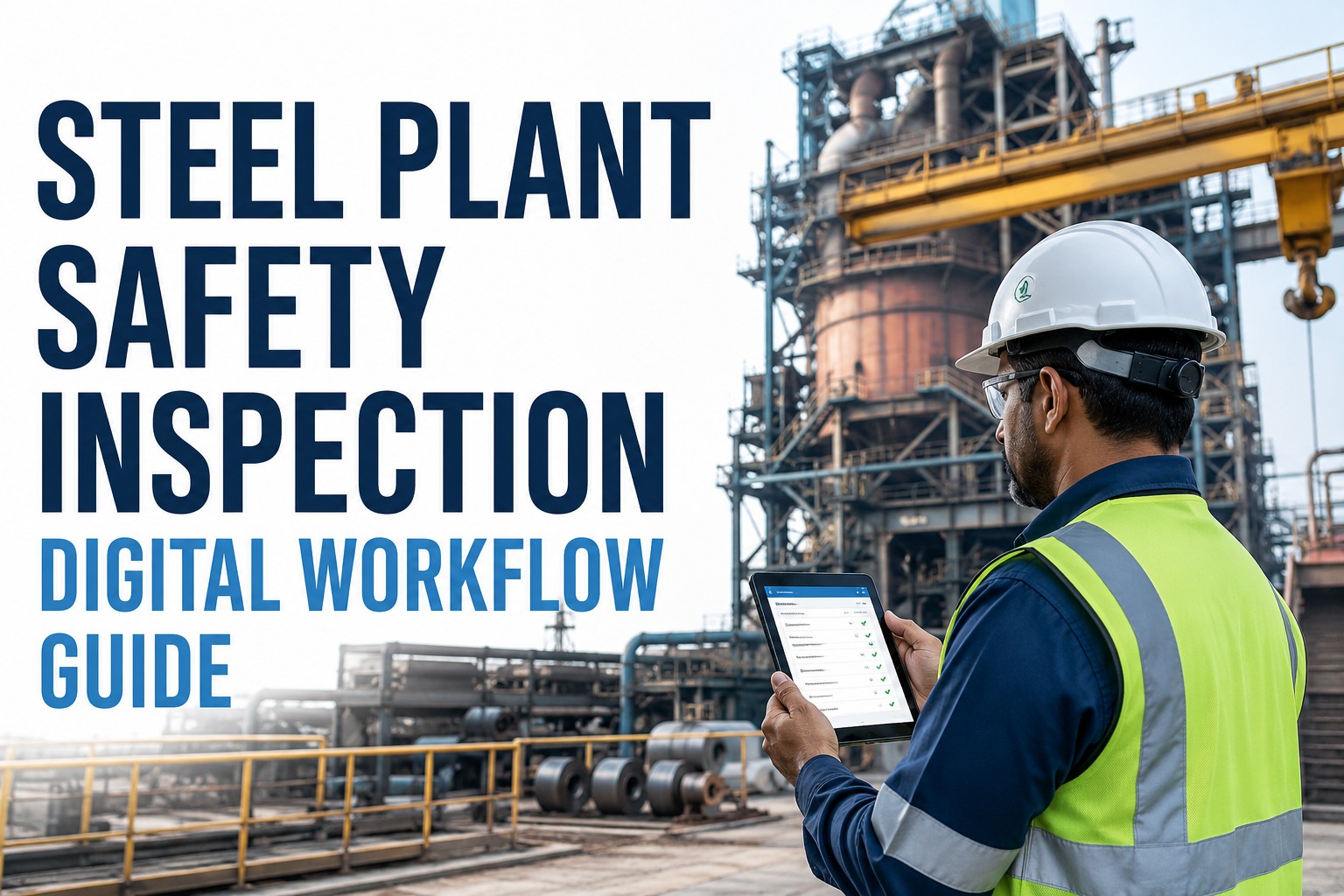
The blast furnace is the most capital-intensive, campaign-critical asset in an integrated steel plant — and the one where the gap between what maintenance teams can observe and what is actually happening inside the process is widest. A thermocouple array can tell you the temperature at a stave. A camera can show you the casthouse floor. A tap-hole radar can measure campaign wear. But synthesising those data streams into a real-time model of lining wear, hot-spot progression, and predicted tapping interval requires an architecture that goes beyond sensor monitoring: it requires a digital twin — a continuously updated computational model of the physical asset that connects sensor data to maintenance intelligence. Steel plant CMMS with digital twin integration closes the loop between the model and the maintenance action — when the digital twin predicts a tuyere overheat or a stave wear threshold exceedance, the CMMS creates the work order, dispatches the technician, and stores the result in the asset record that feeds the next model update. Robot patrol systems add the sensor collection layer for assets where fixed instrumentation is insufficient — autonomous inspection robots that traverse the blast furnace platform, rolling mill basement, or CCM segment bay collecting condition data that no technician can efficiently gather manually at the required frequency.
Steel Plant CMMS: Digital Twin and Robot Fleet Management
How digital twin integration, autonomous robot inspection fleets, and AI-driven work order automation are transforming blast furnace, CCM, and rolling mill maintenance from reactive response to predictive control.
Digital Twin Integration with OxMaint: Closing the Loop from Model to Work Order
A digital twin without a connected CMMS is a monitoring tool. A CMMS without a digital twin is a reactive record system. Together, they create a closed-loop maintenance intelligence system — the model predicts, the CMMS acts, the work order outcome updates the model. Book a demo to see OxMaint's digital twin integration architecture.
Blast Furnace Digital Twin
The blast furnace digital twin continuously models lining wear, hot-spot development, and raceway condition from thermocouple arrays, stave cooling water delta-T, and tuyere temperature distributions. When the model predicts that a stave or tuyere will reach a wear threshold before the next planned campaign end, OxMaint creates a predictive work order — triggered by the model, not by a failure event. The maintenance team is dispatched to inspect and remediate the predicted location before the physical failure occurs.
Continuous Caster Digital Twin
The CCM digital twin models strand solidification profile, mold heat flux distribution, and segment roll wear from mold cooling water delta-T, oscillation force data, and segment hydraulic pressure trends. Deviations from the modelled normal indicate developing quality risks — a hot spot in the solidification profile that precedes internal cracking, or a segment roll drag that indicates bearing degradation. The digital twin converts these deviations into maintenance signals before they appear as quality rejections downstream.
Rolling Mill Digital Twin
The rolling mill digital twin models roll force distribution, bearing temperature trajectories, and gearbox vibration signatures across all stands simultaneously. Roll wear patterns from digital twin analysis enable campaign length prediction — the model tells the roll planning team when a specific roll will reach its discard criterion before the roll is physically pulled, enabling optimised roll schedule planning rather than reactive mid-campaign roll changes. Sign up to configure rolling mill digital twin integration in OxMaint — free.
Autonomous Robot Inspection Fleets in Steel Plants
Robot inspection systems are the data collection layer that makes digital twins accurate and makes human inspection of hazardous or high-frequency inspection zones operationally viable. OxMaint manages the robot fleet as a maintenance asset class — robot PM, inspection route records, and condition data integration all flow through the same work order and asset record architecture as conventional maintenance. Sign up to configure robot fleet management in OxMaint — free.
Blast Furnace Platform Patrol Robots
Wheeled or tracked robots traverse the blast furnace platform on programmed routes, collecting thermal imaging of tuyere and stave temperatures, visual inspection of casthouse equipment, and gas leak detection data. The inspection frequency achievable by robot patrol — multiple times per shift — is orders of magnitude higher than what is feasible for human inspectors in the thermal and gas environment of the BF platform. OxMaint receives the robot inspection data and generates work orders for any finding that exceeds a configured threshold.
Rolling Mill Basement Crawlers
The rolling mill basement is one of the most hazardous and least accessible inspection zones in a steel plant — confined, loud, covered in mill scale, and at significant injury risk for human inspectors during operation. Crawler robots collect vibration data from bearing housings, thermal images of drive couplings, and visual inspection of oil seal conditions on the full roll table drive train. The robot covers the full basement during a scheduled inspection window, generating structured inspection records in OxMaint rather than relying on human inspections conducted at reduced frequency due to access risk.
CCM Segment Bay Inspection Drones
The segment bay beneath the continuous caster operating deck is a hot, wet, spray-cooling environment where human inspection frequency is limited by access and PPE constraints. Inspection drones equipped with thermal cameras traverse the segment bay collecting spray nozzle thermal distribution data, segment roll surface temperature, and visual inspection of coolant headers. Blocked nozzles — the primary cause of internal strand quality defects — are detected within the production shift rather than at the campaign-end inspection.
Robot Fleet Maintenance Management in OxMaint
The inspection robots themselves are maintainable assets — battery systems, drive motors, sensor calibration, and software update cycles all require PM management. OxMaint manages the robot fleet as an asset category with its own PM templates, calibration records, and deployment history. Robot inspection reports are stored as work order attachments in OxMaint, creating a searchable history of every inspection route, every finding, and every maintenance action taken in response. Book a demo to see OxMaint's robot fleet management module.
API-first integration — digital twin threshold alerts become dispatched work orders in under 4 seconds. Free to start, live in days.
Frequently Asked Questions
How does a digital twin integrate with OxMaint to create maintenance work orders?
What robot inspection platforms does OxMaint integrate with?
What is the business case for digital twin and robot inspection investment in steel plants?
From Model Prediction to Closed Work Order. In Under 4 Seconds.
OxMaint connects your steel plant digital twin and robot inspection fleet to structured maintenance work orders — dispatched to qualified technicians, documented with compliance records, and fed back into the model as asset history.