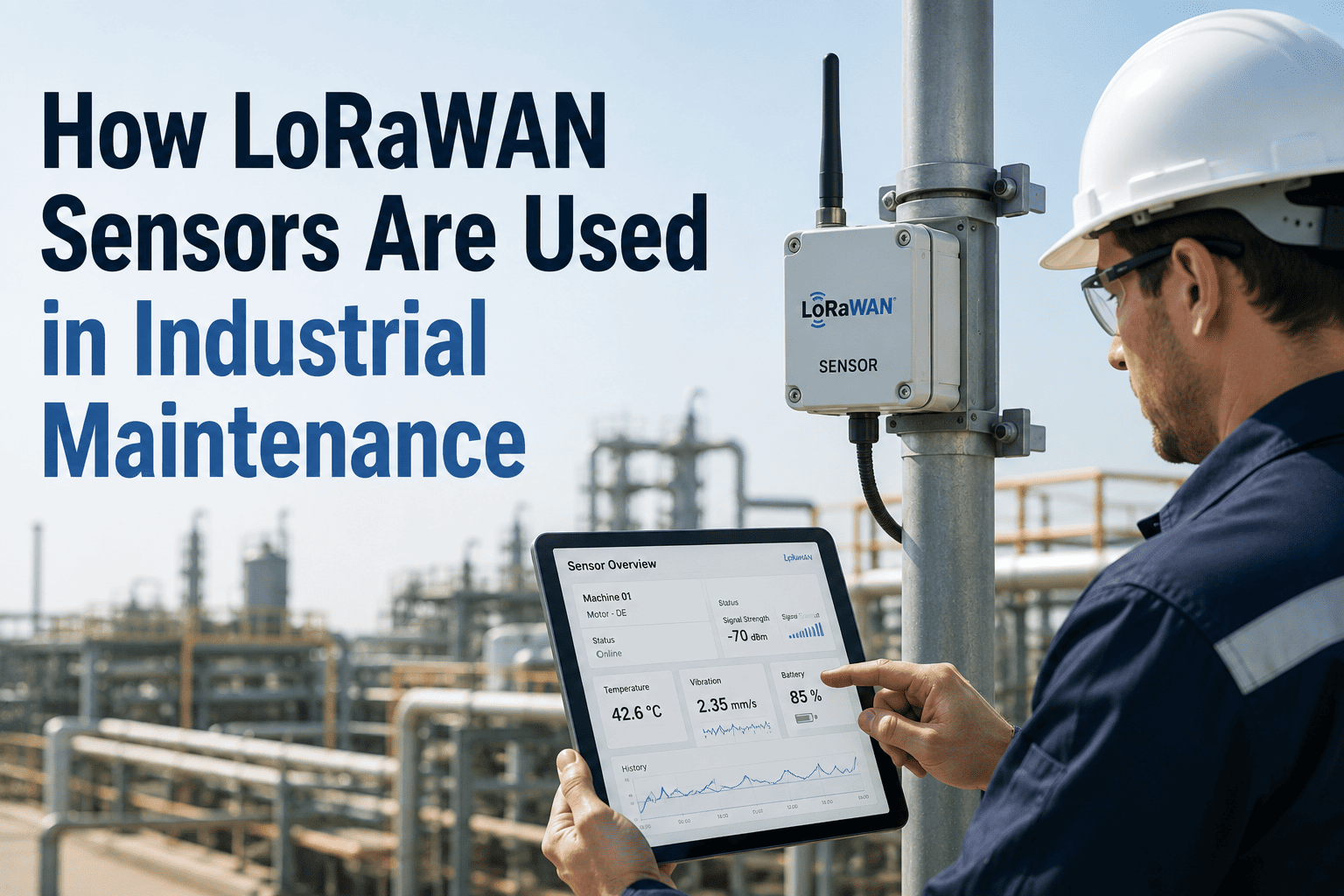
Most manufacturing facilities still rely on Wi-Fi networks designed for office environments to carry mission-critical IoT sensor data across the plant floor. The result is predictable dropped connections during peak load, inconsistent latency spikes reaching 150ms or more, and maintenance teams making decisions on stale data while equipment degrades in real time. Private 5G networks are changing this equation entirely, delivering sub-10ms latency and supporting over 1 million devices per square kilometer. If your CMMS is only as good as the data feeding it, connectivity is not an IT decision it is a maintenance strategy decision. See how OxMaint integrates with IoT and SCADA systems over any network start a free trial or book a demo to see it in action.
Industrial IoT Connectivity Private 5G CMMS Integration
Private 5G for Industrial IoT Maintenance: 5G vs Wi-Fi vs LoRaWAN
Choosing the right wireless protocol for your maintenance IoT sensors determines whether your CMMS receives real-time condition data or delayed, unreliable readings. This guide compares private 5G, Wi-Fi, and LoRaWAN across latency, density, cost, and CMMS integration readiness.
1M+
Devices per sq km supported by 5G
<10ms
Deterministic latency on private 5G
25-30%
Reduction in unplanned downtime with real-time IoT
12 mo
Typical ROI timeline for private 5G deployment
Understanding the Landscape
What Is a Private 5G Network for Industrial Maintenance?
A private 5G network is a dedicated cellular network deployed within a factory, plant, or campus owned and controlled by the enterprise rather than a telecom carrier. Unlike shared public networks, it delivers guaranteed bandwidth, ultra-low latency below 10ms, and deterministic performance that industrial IoT sensors and CMMS platforms require for real-time condition monitoring. Approximately 40% of manufacturing enterprises are evaluating or deploying private 5G by 2026, driven by the need to connect thousands of vibration, temperature, and pressure sensors across complex production environments where Wi-Fi coverage gaps and interference create blind spots in maintenance visibility. To explore how OxMaint connects sensor data to automated work orders regardless of your network type, start a free trial or book a demo with our team.
Technology Comparison
5G vs Wi-Fi vs LoRaWAN: Which Protocol Fits Your Maintenance Strategy?
Each protocol serves a different layer of the industrial IoT stack. The right choice depends on your data volume, sensor density, latency requirements, and budget. Most advanced operations use a hybrid architecture combining two or more protocols to cover the full range of maintenance use cases.
Private 5G
Mission-Critical, High-Bandwidth
Best for real-time vibration analysis, robotic control, AR-guided maintenance, and high-density sensor environments. Supports seamless mobility for AGVs and mobile technicians. Latency below 10ms with deterministic QoS.
Up to 10 Gbps throughput
Wi-Fi 6/6E
General Purpose, Cost-Effective
Suitable for routine data offloading, tablet-based CMMS access for technicians, and localized monitoring. Familiar ecosystem with lower upfront cost, but contention-based access creates latency spikes under load.
Typically 30-150ms latency
LoRaWAN
Low-Power, Wide-Area Sensors
Ideal for battery-powered temperature, humidity, and leak detection sensors across large facilities. Sensors run 5-10 years on a single battery. Low data rate (0.3-50 Kbps) suits periodic condition readings, not real-time streaming.
10+ km range, 5-10yr battery
Hybrid Architecture
Best-Practice Multi-Protocol
Combine LoRaWAN for widespread low-power monitoring with private 5G for critical-path assets and real-time analytics. OxMaint CMMS ingests data from all protocols through unified IoT gateways no protocol lock-in required.
94% fault detection rate combined
Industry Pain Points
Why Wi-Fi Alone Fails Industrial Maintenance IoT
Over 60% of manufacturing facilities report Wi-Fi reliability issues on the plant floor. The consequences go beyond IT inconvenience they directly impact maintenance response time, sensor data quality, and CMMS effectiveness. Facilities that rely exclusively on Wi-Fi for IoT maintenance often discover these failures the hard way. If your team is experiencing any of these challenges, start a free trial to see how OxMaint handles multi-protocol sensor integration, or book a demo for a walkthrough.
01
Signal Interference from Metallic Environments
Steel structures, rotating machinery, and metallic enclosures cause multipath interference that degrades Wi-Fi signal quality by 40-60% compared to office environments.
02
Coverage Gaps in Large Facilities
Dense AP deployment needed every 20-30 meters creates maintenance overhead. Dead zones near machinery create sensor blackout areas where condition data goes missing.
03
Latency Spikes Under Peak Load
Wi-Fi contention-based access means latency rises unpredictably when device density increases exactly when real-time alerts matter most during production peaks.
04
No Seamless Mobility for Mobile Assets
AGVs, mobile robots, and technicians with tablets experience connection drops during AP handoffs. Private 5G provides seamless handover at speeds up to 500 km/h.
Head-to-Head Comparison
Private 5G vs Wi-Fi vs LoRaWAN: Complete Specification Comparison
| Specification | Private 5G | Wi-Fi 6 | LoRaWAN |
| Latency |
<10ms deterministic |
30-150ms variable |
1-5 seconds |
| Device Density |
1M+ per sq km |
200-500 per AP |
50K+ per gateway |
| Range |
1-5 km per cell |
20-50m indoor |
2-15 km |
| Throughput |
Up to 10 Gbps |
Up to 9.6 Gbps |
0.3-50 Kbps |
| Power Consumption |
High (mains powered) |
High (mains powered) |
Ultra-low (battery) |
| Mobility Support |
Seamless handover |
Poor, AP-dependent |
Not applicable |
| Security |
SIM-based, encrypted |
WPA3, shared medium |
AES-128 encryption |
| CMMS Integration |
Real-time streaming |
Periodic batch upload |
Threshold-based alerts |
How Oxmaint Solves It
How Oxmaint CMMS Integrates with Any Industrial Wireless Protocol
Oxmaint is protocol-agnostic. Whether your plant runs private 5G, Wi-Fi, LoRaWAN, or a hybrid stack, Oxmaint ingests IoT sensor data through unified gateways and API connections automatically triggering work orders when condition thresholds are breached. Ready to see it live? Start a free trial today or book a demo with our industrial IoT specialists.
IoT Integration
Real-Time Sensor Data Ingestion
Connect vibration, temperature, current, and pressure sensors over 5G, Wi-Fi, or LoRaWAN. Oxmaint normalizes all sensor feeds into a unified condition monitoring dashboard updated in real time.
Automated Alerts
Threshold-Based Work Order Triggers
Set condition thresholds per asset. When a 5G-connected vibration sensor crosses 8mm/s RMS, Oxmaint auto-generates a priority work order no manual monitoring required.
Mobile-First
Technician Mobility Over 5G
Technicians use Oxmaint's mobile app over private 5G for seamless access to work orders, asset history, and digital checklists even in RF-dense machinery zones where Wi-Fi fails.
Multi-Protocol
LoRaWAN Gateway Integration
Battery-powered LoRaWAN sensors monitoring temperature and humidity in remote plant areas feed directly into Oxmaint's asset condition records 5-year intervals between battery changes.
SCADA Bridge
OT/IT Convergence via 5G Backbone
Private 5G enables secure, low-latency SCADA-to-CMMS data flows. Production counters, OEE metrics, and alarm states feed directly into Oxmaint's maintenance scheduling engine.
Analytics
Cross-Site IoT Performance Reporting
Portfolio-level dashboards show sensor uptime, data quality scores, and connectivity health across all sites helping maintenance managers identify network gaps before they create monitoring blind spots.
ROI and Results
What Industrial IoT Connectivity Delivers in Practice
25-30%
Reduction in Unplanned Downtime
Enterprises deploying private 5G with real-time CMMS integration report 25-30% fewer unplanned stoppages within 12 months of deployment.
40%
Lower Infrastructure Cost vs Dense Wi-Fi
Cloud-based 5G cores reduce infrastructure cost by up to 40% vs equivalent dense Wi-Fi deployments in large manufacturing facilities.
94%
Fault Detection Rate with Hybrid Sensors
Combining vibration analysis over 5G with LoRaWAN environmental sensors raises fault detection accuracy from 55-65% (single method) to 94%.
4.8x
Higher Cost of Reactive vs Planned Repair
Real-time IoT connectivity enables condition-based maintenance scheduling avoiding reactive failures that cost 4.8x more than planned interventions.
Frequently Asked Questions
Private 5G and Industrial IoT Maintenance Common Questions
Is private 5G necessary for industrial IoT maintenance, or will Wi-Fi suffice?
For most routine monitoring technician tablet access, periodic sensor readings, and general CMMS connectivity Wi-Fi 6 is sufficient and more cost-effective. Private 5G becomes necessary when you need deterministic sub-10ms latency for real-time control, seamless mobility for AGVs, or sensor density exceeding what Wi-Fi APs can support. Most advanced operations use both.
Book a demo to discuss your specific connectivity requirements with our team.How does Oxmaint CMMS receive data from LoRaWAN sensors?
Oxmaint integrates with LoRaWAN network servers via API. Sensor readings from your LoRaWAN gateways are mapped to specific asset records in Oxmaint, with configurable thresholds that trigger automated work orders when values exceed defined limits no manual data entry, no batch uploads.
Start a free trial to connect your first sensor feed today.What is the typical ROI timeline for private 5G deployment in manufacturing?
Most enterprises report ROI within 12 months of private 5G deployment, driven by reductions in unplanned downtime (25-30%), productivity gains from improved mobility, and reduced Wi-Fi AP infrastructure maintenance costs. ROI accelerates when 5G connectivity enables real-time CMMS integration that eliminates reactive maintenance cycles.
Can Oxmaint support multi-protocol IoT environments across multiple sites?
Yes. Oxmaint is built for multi-site, multi-protocol environments. Whether each facility uses 5G, Wi-Fi, LoRaWAN, or a combination, Oxmaint presents a unified asset condition view at portfolio level enabling maintenance managers to compare condition data, work order response times, and sensor health across all locations from a single dashboard.
Industrial IoT Private 5G CMMS Integration Free to Start
Connect Your Sensors. Automate Your Maintenance. Stop Reacting to Failures.
Whether your plant runs private 5G, Wi-Fi, LoRaWAN, or a hybrid network Oxmaint connects every sensor to automated work orders, real-time condition dashboards, and predictive maintenance scheduling. No heavy implementation. No long onboarding. Live in under 60 minutes.