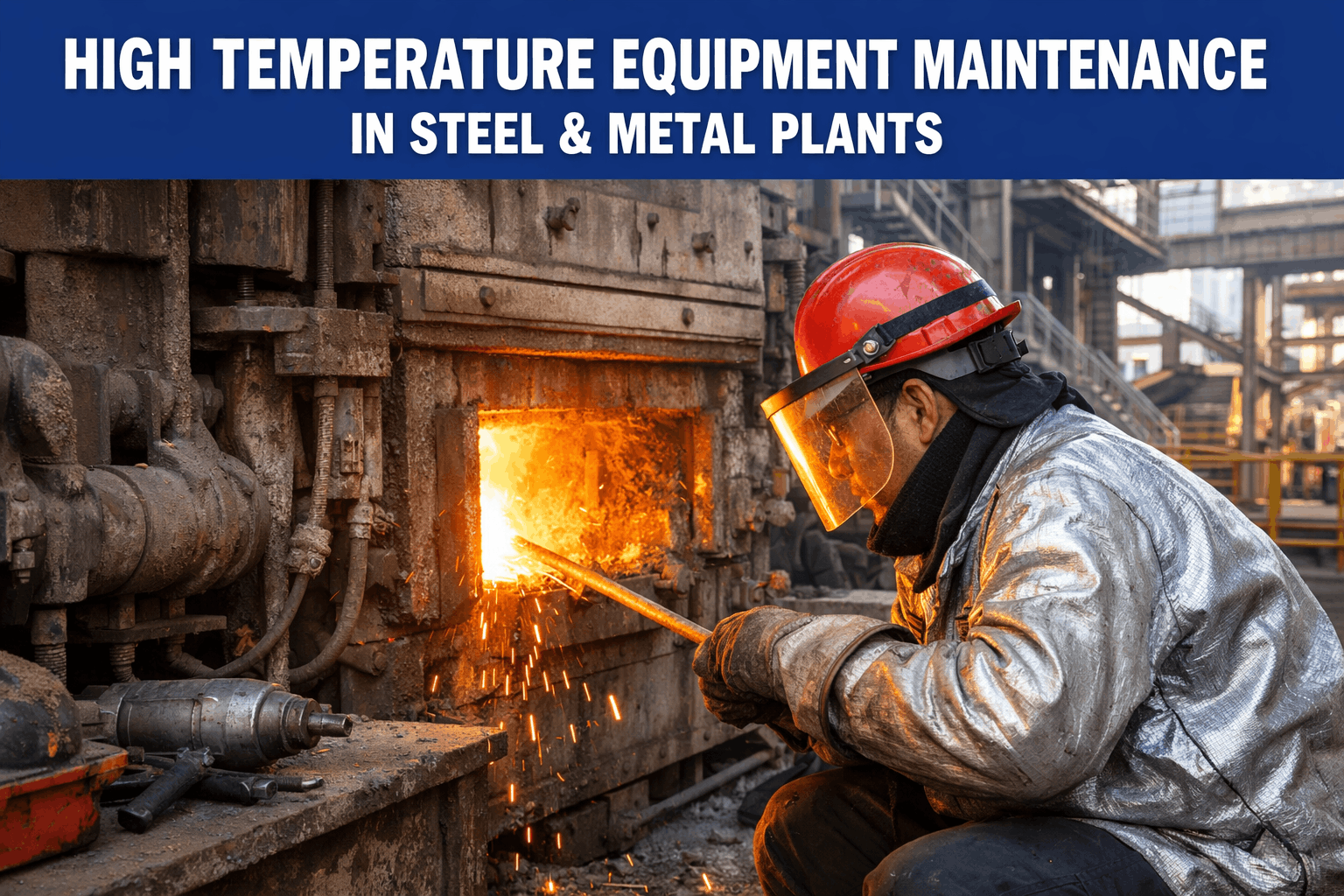
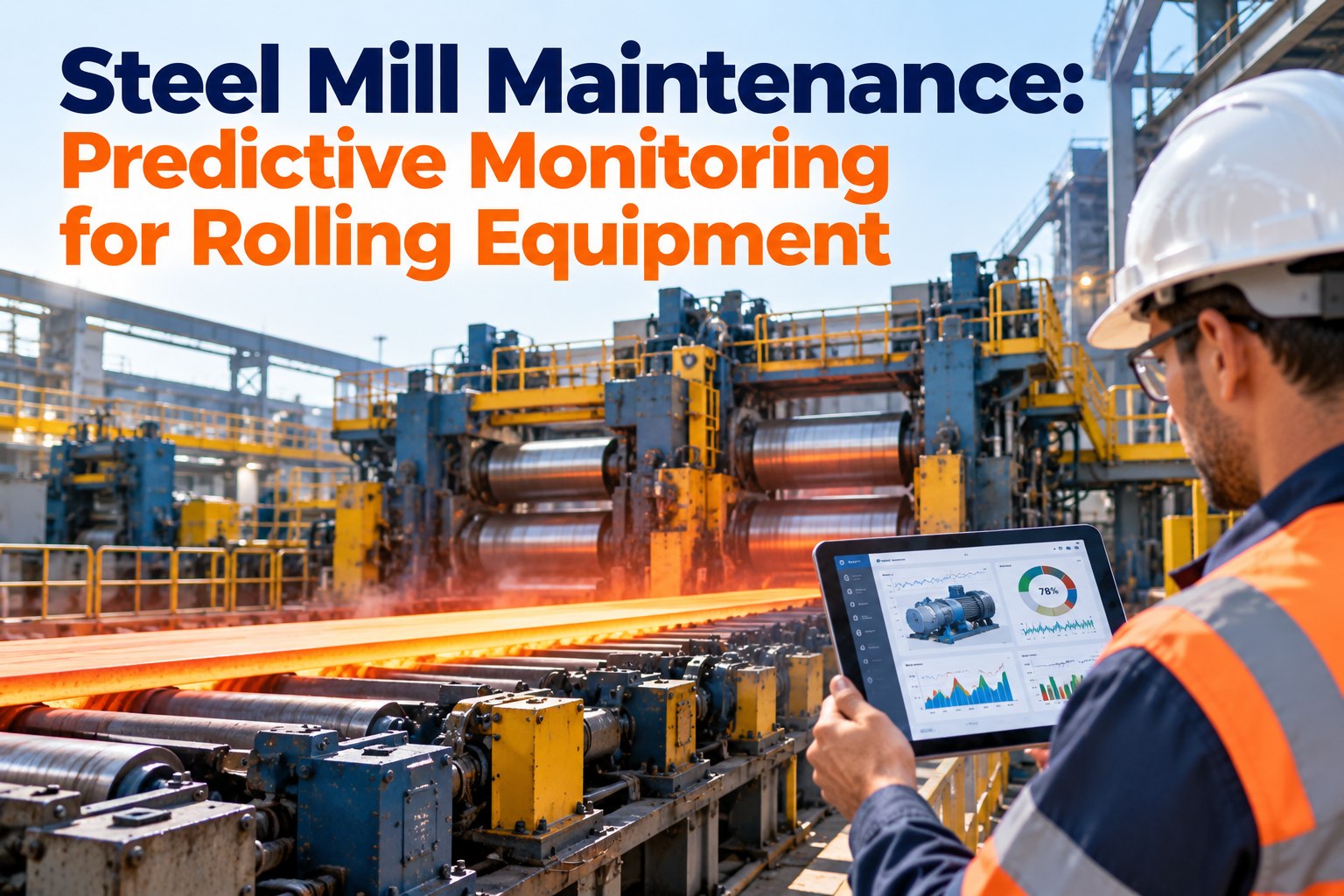
A steel plant in Middletown, Ohio operating two 150-ton electric arc furnaces, a twin-ladle furnace station, and a six-strand continuous caster was losing an average of 22 heats per quarter to unplanned refractory failures, tundish breakouts, and ladle nozzle blockages — equipment that operates continuously between 1,200°C and 1,650°C in contact with molten steel. Each lost heat cost $42,000 in wasted energy, alloy additions, and schedule disruption. When the plant deployed IoT thermal imaging arrays, embedded thermocouples, refractory wear modeling, and AI-driven maintenance scheduling integrated with their CMMS, unplanned high-temperature equipment failures dropped 67%, refractory lining life extended by 31%, and annual maintenance costs on heat-critical assets decreased by $1.8 million. The metric that justified the capital outlay: cost per heat on refractory-dependent equipment dropped from $3,400 to $1,350 within 14 months. Schedule a demo to see how Oxmaint manages high-temperature asset maintenance with AI-driven predictive analytics, or sign up now to start tracking your heat-critical equipment in minutes.
What Happens When High-Temperature Equipment Outgrows Reactive Maintenance
Most steel plants manage refractory-lined and heat-exposed equipment the same way they have for decades: periodic visual inspections during scheduled shutdowns, conservative calendar-based relining schedules, and emergency repairs when a breakout or failure forces an unplanned stop. That approach worked when energy was cheap and production schedules were forgiving. In 2026, neither condition applies. When refractory wear accelerates between inspections, when tundish shell temperatures spike outside of shutdown windows, and when ladle nozzle blockages interrupt a casting sequence mid-heat — the cost compounds in ways that calendar-based maintenance cannot predict or prevent. The plant described above had a maintenance team that knew their furnaces intimately. What they lacked was continuous visibility into equipment degradation between shutdowns — the thermal blind spot that IoT and AI eliminate.
67%
Fewer Unplanned Failures
Refractory breakouts, tundish failures, and ladle nozzle blockages reduced by two-thirds through continuous thermal monitoring and AI-predicted intervention scheduling
$1.8M
Annual Cost Reduction
Eliminated emergency relining, reduced refractory material waste from premature replacement, and cut unplanned furnace idle time across two EAFs and a ladle station
31%
Longer Refractory Life
AI-optimized maintenance timing extended average lining campaigns by 31% — deferring capital refractory spend while maintaining safety margins on residual wall thickness
Your Furnaces Run at 1,650°C. Your Maintenance System Should See Every Degree.
Oxmaint connects every high-temperature asset — EAF shells, ladle linings, tundish systems, caster molds — into a single platform with IoT-driven thermal monitoring and AI work order generation. When refractory wear approaches intervention thresholds, a work order is created automatically with the diagnosis, recommended action, and scheduled repair window.
The Three Thermal Blind Spots That Cause Catastrophic Failures
The decision to deploy IoT thermal monitoring is never driven by a single breakout. It is the accumulation of three systemic blind spots — each one manageable in isolation, but devastating in combination across a melt shop operating 300+ heats per month at temperatures that destroy conventional sensors within hours.
Invisible Refractory Wear
Degradation between shutdowns
Refractory linings erode at non-linear rates driven by slag chemistry, thermal cycling, and mechanical impact — but visual inspections only happen during shutdowns. A lining that looks safe at 80 heats can develop critical hot spots by heat 95 because wear accelerated after a high-FeO slag event. By the time the next scheduled inspection arrives, the remaining wall thickness may be below the safety minimum — forcing either an emergency reline or a dangerous production decision.
Premature Replacement Waste
Conservative schedules destroy value
Without continuous wear data, plants set relining schedules conservatively — replacing refractory with 30–40% remaining safe life to avoid breakout risk. Across two EAFs and a ladle station, this conservative approach wastes $400K–$800K annually in refractory material that still had usable life remaining. The irony: being "safe" through early replacement costs nearly as much as the emergency repairs the schedule is designed to prevent.
Thermal Cascade Failures
One hot spot triggers system-wide damage
A refractory hot spot on a ladle sidewall does not just risk a breakout — it overheats the steel shell behind it, degrades the backup lining, and can compromise the ladle trunnion attachment. A tundish nozzle blockage does not just lose the current heat — it causes reoxidation, destroys the mold copper plates, and forces a caster restart sequence that loses 3–5 additional heats. In high-temperature systems, single-point failures cascade into multi-asset damage events that multiply repair costs 4–8×.
From Shutdown Inspections to Continuous Thermal Intelligence: The Implementation
The transition from calendar-based refractory management to continuous AI-driven thermal monitoring did not happen in a single turnaround. The plant followed a phased approach — proving value on the highest-risk equipment before expanding to full melt shop coverage. Here is how the deployment unfolded from the first embedded thermocouple to full predictive refractory management.
Catalog Every Heat-Critical Asset with Thermal Profiles
Each high-temperature asset was registered in Oxmaint with its full refractory specification: lining material (MgO-C, alumina-graphite, dolomite), design wall thickness, condemning thickness, expected campaign life, slag chemistry exposure profile, and thermal cycling frequency. EAF shells, ladle linings, tundish bodies, tundish nozzles, ladle shrouds, submerged entry nozzles, and caster mold assemblies each received distinct asset profiles with zone-specific refractory maps.
Deploy IoT Thermal Monitoring Arrays
Embedded thermocouples (Type K and Type S) installed at multiple depths through refractory linings provide continuous temperature gradient data. External infrared thermal imaging cameras mounted on fixed positions scan EAF shells, ladle sidewalls, and tundish bodies every 30 seconds — detecting surface hot spots that indicate internal refractory thinning. Shell-mounted fiber optic distributed temperature sensing (DTS) on ladles provides continuous thermal profiles across the entire vessel surface.
Build AI Refractory Wear Models Per Asset Zone
AI models correlate thermal data with operational variables — slag basicity, tap temperature, heat count, thermal cycle severity, and refractory age — to project remaining wall thickness between physical measurements. Each refractory zone (EAF sidewall, slag line, tap hole, ladle bottom, ladle barrel) gets a dedicated wear model calibrated against laser scanner measurements taken during shutdowns. Models achieve ±5mm accuracy on wall thickness prediction within two campaign cycles.
Automate Intervention Scheduling via CMMS
When AI projects that a refractory zone will reach its condemning thickness within a defined safety margin — typically 15–25 heats before minimum — Oxmaint auto-generates a work order with the specific zone, current estimated thickness, recommended repair action (gunning, patching, or full reline), required refractory material quantities, and suggested scheduling window aligned with the next planned production gap.
5
Close the Loop with Post-Intervention Validation
After every relining or repair event, laser scanner measurements validate the AI model's prediction — confirming accuracy or triggering recalibration. Every work order completion feeds back into the wear model with actual-vs.-predicted thickness, repair quality metrics, and refractory material performance data. Models improve with each campaign, achieving 90%+ prediction accuracy within 3–4 full lining cycles.
Running a melt shop, foundry, or continuous casting operation? Book a 15-minute walkthrough and we will map your high-temperature equipment to a live Oxmaint environment — no commitment, just clarity on what predictive thermal management looks like for your specific operation.
Book a Walkthrough
The Four Operational Failures That Drain Steel Plant Refractory Budgets
You do not need a two-furnace melt shop to feel these pain points. Across integrated mills, mini-mills, and specialty steel producers, four recurring operational failures account for the majority of refractory budget waste and heat-related unplanned downtime. Solving these four solves most of the problem.
Failure 01
Reactive Relining — The Emergency Tax
The PatternRefractory runs until a hot spot appears on the shell, a breakout alarm triggers, or a visual inspection during shutdown reveals critical thinning. Emergency relining crews are mobilized at premium rates, production is halted for 36–72 hours, and refractory material is expedited at 2–3× standard cost.
Root CausesNo continuous thermal monitoring between shutdowns. Calendar-based schedules that do not account for variable slag chemistry or thermal cycling severity. Maintenance relies on the same heat-count estimates used 30 years ago.
CMMS FixAI-driven thermal wear models project remaining life per refractory zone. CMMS auto-generates relining work orders 15–25 heats before the condemning limit — scheduling repairs during planned production gaps at standard material and labor rates.
Failure 02
Conservative Replacement — The Hidden Waste
The PatternWithout real-time wear data, plants reline at fixed heat counts — typically 20–40% before actual end-of-life. An EAF campaign designed for 1,200 heats gets stopped at 900 "to be safe." Across all vessels, this conservative approach wastes $400K–$800K per year in unused refractory capacity.
Root CausesRisk-averse culture without data to support extended campaigns. No zone-by-zone wear tracking — one thin zone triggers a full reline even when 80% of the lining is healthy. Refractory suppliers incentivized by volume, not by lining life optimization.
CMMS FixZone-specific wear models enable spot repairs (gunning, patching) on degraded zones while the rest of the lining continues. AI extends campaigns to actual end-of-life — not estimated end-of-life — safely adding 25–40% more heats per campaign.
Failure 03
Cascade Damage — The Multiplier Effect
The PatternA refractory hot spot overheats the steel shell behind it, compromising structural integrity. A tundish nozzle blockage forces a caster restart — destroying mold copper, contaminating the strand, and losing 3–5 heats in recovery. A ladle slide gate failure spills steel during teeming, damaging tundish furniture and risking personnel safety.
Root CausesNo early warning between inspection windows. Single-point failures propagate because adjacent equipment has no real-time monitoring to detect the developing cascade. Emergency response focuses on the primary failure while secondary damage goes undetected.
CMMS FixContinuous thermal monitoring detects developing hot spots and flow anomalies before they breach containment — converting 4–8× cascade events into single-zone planned repairs. AI correlates thermal signatures across connected equipment (ladle → tundish → mold) to predict downstream risk.
Failure 04
Thermal Data Silos — The Knowledge Gap
The PatternLaser scan data lives in one system. Thermocouple data lives in the Level 2 automation. Slag chemistry is in the lab system. Refractory purchase records are in procurement. No single platform correlates thermal performance with maintenance actions, operational conditions, and material quality — making root cause analysis nearly impossible.
Root CausesProcess data systems designed for production control, not maintenance intelligence. No integration layer between thermal monitoring, refractory management, and CMMS work orders. Institutional knowledge walks out the door when experienced relining supervisors retire.
CMMS FixOxmaint becomes the single source of truth — ingesting thermal data, correlating it with slag chemistry and heat counts, linking every data point to the asset record and maintenance history. Root cause analysis that once took weeks now takes hours.
Measuring What Matters: The Thermal Equipment KPI Dashboard
The plant did not just deploy sensors — they built a performance measurement culture around thermal equipment reliability. The following severity framework shows how they classify high-temperature asset health, modeled on the same zone logic used in industrial condition monitoring and aligned with the residual lining thickness standards that drive every relining decision in steelmaking.
Safe — Normal Campaign Operation
Refractory above 65% of original thickness in all monitored zones. No thermal anomalies on shell surface. Normal campaign progression. Continue standard production with routine thermal monitoring at 30-second scan intervals.
Monitor — Wear Tracking Active
One or more zones approaching mid-life. AI wear model actively projecting remaining heats to condemning thickness. CMMS flags asset for upcoming maintenance planning. Acceptable for continued production with increased monitoring frequency.
Plan — Intervention Window Opening
Zone-specific wear approaching intervention threshold.
CMMS generates work order with repair type (gunning, patching, or full reline), material requirements, and recommended scheduling window. Production planning aligns repair with next available production gap.
Critical — Immediate Action Required
Residual wall thickness below safety minimum or active shell hot spot detected. Production hold on affected vessel. Emergency relining authorized. Cascade damage assessment on adjacent equipment. Root cause investigation initiated in CMMS.
Lining percentage = residual wall thickness ÷ original installed thickness. Thresholds calibrated for MgO-C EAF linings and alumina-graphite ladle barrels. Adjust condemning thickness by refractory grade, vessel geometry, and slag chemistry per your plant's refractory engineering standards.
Asset Coverage: What Gets Tracked and How
The quality of your thermal equipment management depends on knowing exactly what you are monitoring — and tracking the right parameters for each equipment class. Comprehensive asset records produce reliable wear projections. Incomplete profiles produce blind spots that mask developing failures until they become breakout events.
High-Temperature Equipment Monitoring Matrix
One Platform. Every Vessel. Every Lining Zone. Every Heat.
Oxmaint maps each refractory-lined vessel zone by zone, stores its full thermal history, sets AI-driven intervention thresholds, and auto-generates work orders when wear models project approaching condemning limits — all from a single platform your entire melt shop team can access on any device.
The Playbook: Building a Predictive High-Temperature Maintenance Program
You do not need a greenfield melt shop to start. The most successful plants follow the same pattern — instrument the highest-risk vessels first, prove the model against real campaign data, and expand with evidence that the boardroom cannot ignore.
Phase 1
Thermal Risk Assessment & Sensor Design (Weeks 1–6)
Audit every refractory-lined vessel: EAFs, ladles, tundishes, caster molds, ladle furnace roof, and RH degasser
Rank assets by breakout consequence, campaign cost, production impact, and historical failure frequency
Design sensor placement per vessel: thermocouple depths, IR camera positions, fiber optic DTS routing
Register all pilot assets in Oxmaint with zone-by-zone refractory specifications and condemning thresholds
Phase 2
Pilot Deployment on Critical Vessels (Months 2–5)
Install sensor arrays on 2–3 highest-risk vessels during planned turnarounds — typically one EAF and one ladle station
Configure real-time thermal dashboards for melt shop operators and maintenance planners
Establish baseline thermal profiles across one full lining campaign per vessel
Validate AI wear model predictions against laser scanner measurements at end-of-campaign
Phase 3
Predictive Model Activation & CMMS Integration (Months 5–9)
Activate AI-driven remaining-life projections for every monitored refractory zone
Configure automated work order generation in Oxmaint at intervention thresholds per zone
Integrate thermal data with slag chemistry and heat count records for multi-variable wear correlation
Train maintenance planners to use AI projections for scheduling repairs during production gaps
Phase 4
Full Melt Shop Coverage & ROI Documentation (Month 10+)
Expand monitoring to all refractory-lined vessels, tundish systems, caster molds, and ancillary heat-exposed equipment
Introduce advanced analytics: campaign-over-campaign lining performance trending, refractory supplier benchmarking, and cost-per-heat optimization
Present ROI report to plant management: avoided breakouts, extended campaigns, reduced emergency relining, and cost-per-heat improvement
Use documented savings to justify next capital investment in sensor coverage or refractory engineering upgrades
The most effective high-temperature maintenance program is not the one with the most sensors — it is the one where every thermal reading, every refractory measurement, and every intervention decision is captured, correlated with operating conditions, and traceable back to the asset record. The connection between your thermal data and your work order system is what separates plants that manage refractory as a strategic asset from plants that manage it as an emergency expense.
Your Refractory Is an Asset. Manage It Like One.
Whether you are running one EAF or a full integrated steelworks, Oxmaint gives your melt shop the structure to track every refractory zone, schedule every intervention at optimal timing, control every dollar of relining spend, and produce campaign performance reports that drive continuous improvement. The 15-minute walkthrough is free — and tailored to your specific melt shop configuration.
Frequently Asked Questions
Can IoT sensors survive direct contact with molten steel temperatures?
The sensors do not contact molten steel directly — they are embedded within or behind the refractory lining, or mounted externally on the vessel shell. Embedded thermocouples (Type K to 1,250°C, Type S to 1,600°C) are installed at specific depths within the refractory during relining. External IR cameras and fiber optic DTS systems monitor shell surface temperatures from positions shielded from direct radiant heat. The sensors measure the thermal gradient through the refractory — from which AI models calculate remaining wall thickness. This is the same principle used in blast furnace monitoring for decades, now applied to steelmaking vessels with modern sensor technology and AI interpretation.
Book a demo to discuss sensor architecture for your specific vessels.
How accurately can AI predict remaining refractory life?
After calibration against 2–3 full lining campaigns with laser scanner validation at each reline, AI models typically achieve ±5mm accuracy on wall thickness prediction and ±10–15 heat accuracy on remaining campaign life projection. Accuracy improves with each campaign as the model incorporates your specific slag chemistry variations, thermal cycling patterns, and refractory material performance data. The key is that even ±15 heat accuracy is dramatically better than the ±50–100 heat uncertainty that calendar-based estimates provide — and that uncertainty is where both breakouts and premature replacements live.
What ROI should we expect from predictive thermal equipment management?
Most steel plants see payback in 10–16 months based on three revenue streams: avoided emergency relining ($120K–$250K per prevented breakout event including production loss), extended campaign life (25–40% more heats per lining saves $400K–$800K annually in refractory material), and reduced heat losses from better-scheduled maintenance ($15K–$42K per avoided unplanned furnace idle event). The plant in this study documented $1.8M in annual savings across two EAFs, one ladle station, and a continuous caster. Facilities with additional vessels (LF, RH degasser, AOD) see proportionally higher returns.
Schedule a demo to model ROI for your specific melt shop configuration.
Does this integrate with our existing Level 2 automation and process data?
Yes. Oxmaint ingests thermal data from your Level 2 system (heat records, tap temperatures, slag analysis, power profiles) alongside dedicated IoT sensor feeds. The AI model correlates process conditions with refractory wear — meaning it learns that high-FeO heats accelerate slag line erosion, that extended tap-to-tap times increase thermal cycling damage, and that specific alloy additions correlate with nozzle blockage risk. This integration means your existing process data becomes part of the predictive model, not a separate information silo.
Sign up free to start building your thermal asset management alongside your existing automation.
We are a smaller operation with one EAF. Is this worth the investment?
For a single-EAF operation, the investment case is actually stronger — because you have zero redundancy. When your one EAF goes down for an emergency reline, 100% of your production stops. A single avoided breakout event saves $120K–$250K in direct costs plus lost production. Extending one lining campaign by 25–40% defers $150K–$300K in refractory material. Most single-furnace operations recover their full sensor and platform investment from one prevented emergency event. Oxmaint's free tier lets you start tracking refractory campaigns and maintenance history immediately — add IoT sensor feeds as your monitoring capability grows.