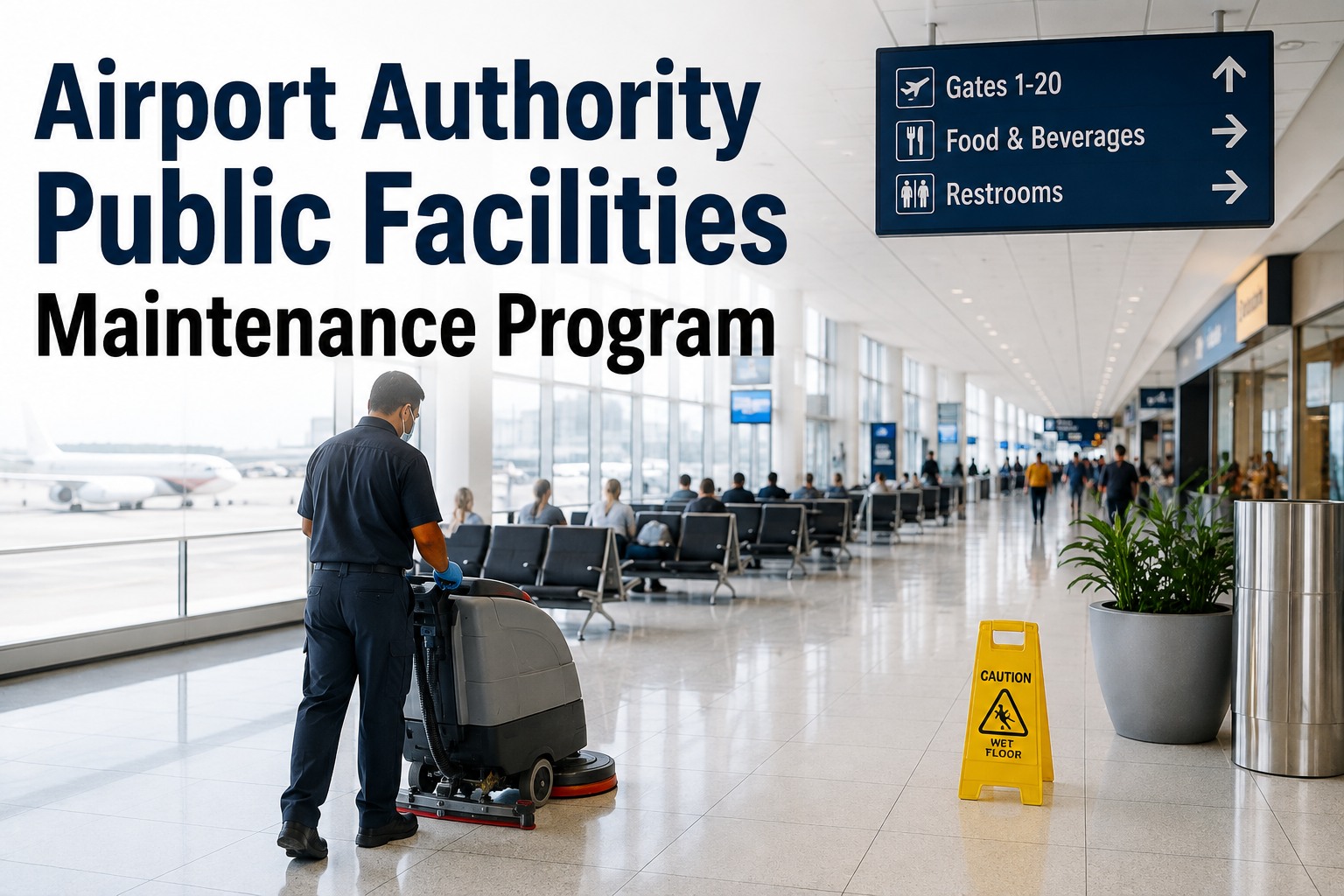
Airport authority public facilities maintenance covers the passenger-facing infrastructure that defines the travel experience — terminal buildings, restrooms, retail concourses, parking structures, and ground transportation zones — and it operates under entirely different service-level expectations than airside maintenance. A single overflowing restroom or malfunctioning parking gate can generate thousands of negative passenger impressions in hours, which is why modern airport facility teams use a CMMS to shift from reactive fire-fighting to preventive, data-driven operations. OxMaint brings AI-powered work-order management, preventive maintenance scheduling, and real-time analytics to airport public FM programs so teams can keep every passenger area guest-ready around the clock. You can explore the full platform when you Start Free Trial or book a personalized walkthrough with our team today.
Passenger areas don't close for maintenance windows — they run 24/7/365.
Airport authority facilities maintenance teams manage thousands of public-facing assets across terminals, restrooms, retail corridors, and parking structures. OxMaint gives you the CMMS structure to keep every zone guest-ready at the service levels passengers expect — without paper work orders, missed PMs, or tenant coordination gaps.
The stakes of passenger-facing maintenance at scale
A mid-sized airport processing 12 million passengers annually sees over 33,000 people pass through its public areas every single day — and each one forms an opinion based on restroom cleanliness, lighting, HVAC comfort, and wayfinding signage functionality.
Airport authority facilities maintenance is fundamentally different from airside operations. Where a missed airside PM risks a gate delay, a missed public-area PM risks a measurable drop in passenger satisfaction scores, retail revenue, and concessionaire renewal rates. The pressure is compounded by the fact that public areas never close — there is no overnight maintenance window when the terminal is empty. Teams must clean, inspect, repair, and coordinate around live passenger flow, which means scheduling precision and real-time work-order visibility are non-negotiable.
What an airport authority public facilities maintenance program covers
A comprehensive airport public FM program spans five distinct asset domains, each with its own failure modes, compliance requirements, and passenger-impact profiles.
Restroom & Sanitation Maintenance
Restrooms are the single highest-impact passenger experience touchpoint. PM cycles should run every 30–60 minutes during peak flow, with sensor-triggered work orders for consumable replenishment, plumbing leaks, and fixture failures. OxMaint routes these automatically to the nearest available technician with SLA timers.
Retail & Concession Coordination
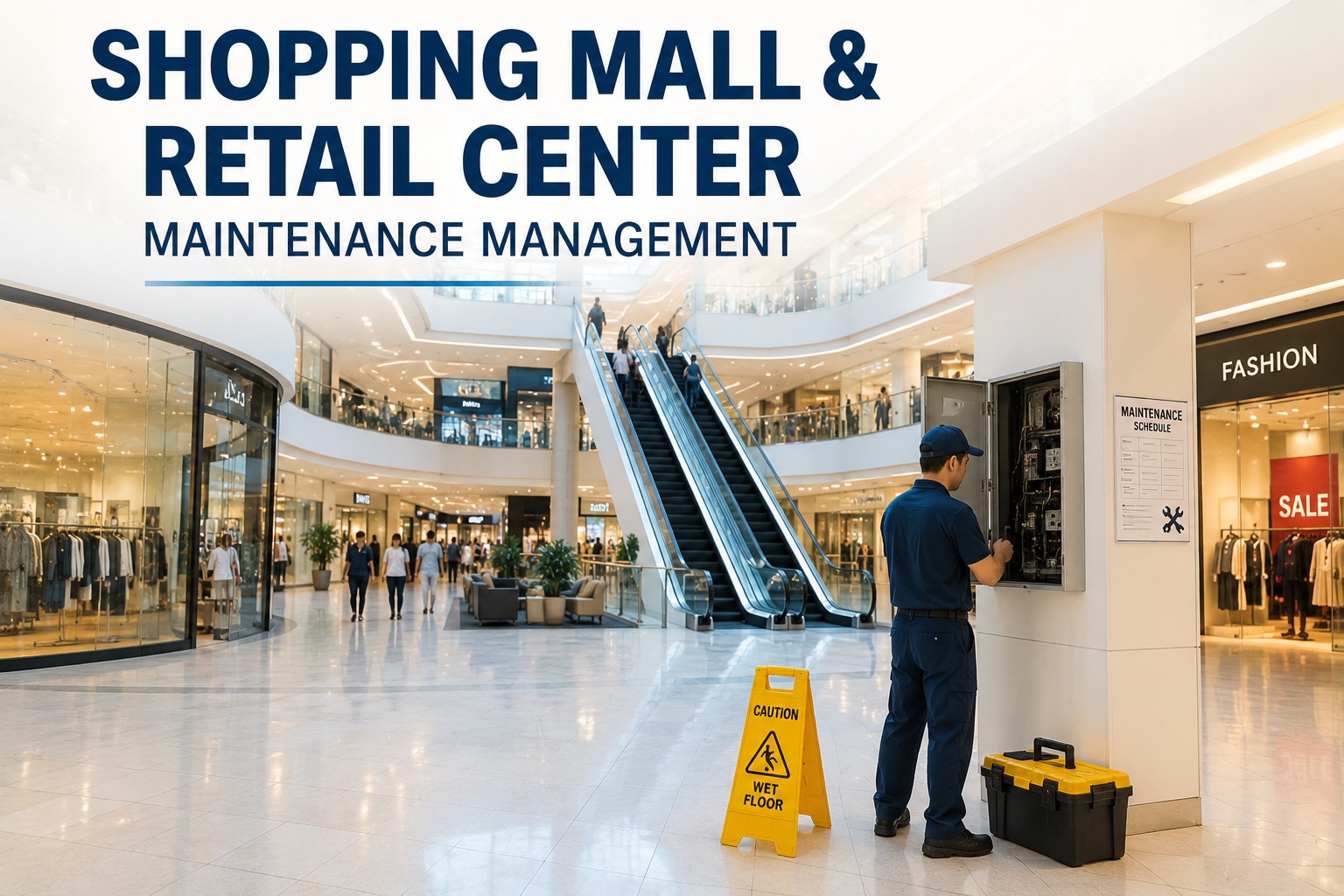
Tenant build-outs, utility tie-ins, and shared HVAC systems require tight work-order coordination between airport FM and concessionaires. Misaligned maintenance windows cost revenue. OxMaint's tenant portal routes shared-system PMs and tracks tenant responsibility for repairs.
Parking Structure Maintenance
Concrete spalling, expansion joint degradation, drainage systems, EV charging stations, and automated payment equipment all demand scheduled structural inspections and predictive monitoring. OxMaint tracks inspection cycles against ASTM and local code requirements with automated compliance alerts.
Ground Transportation Zones
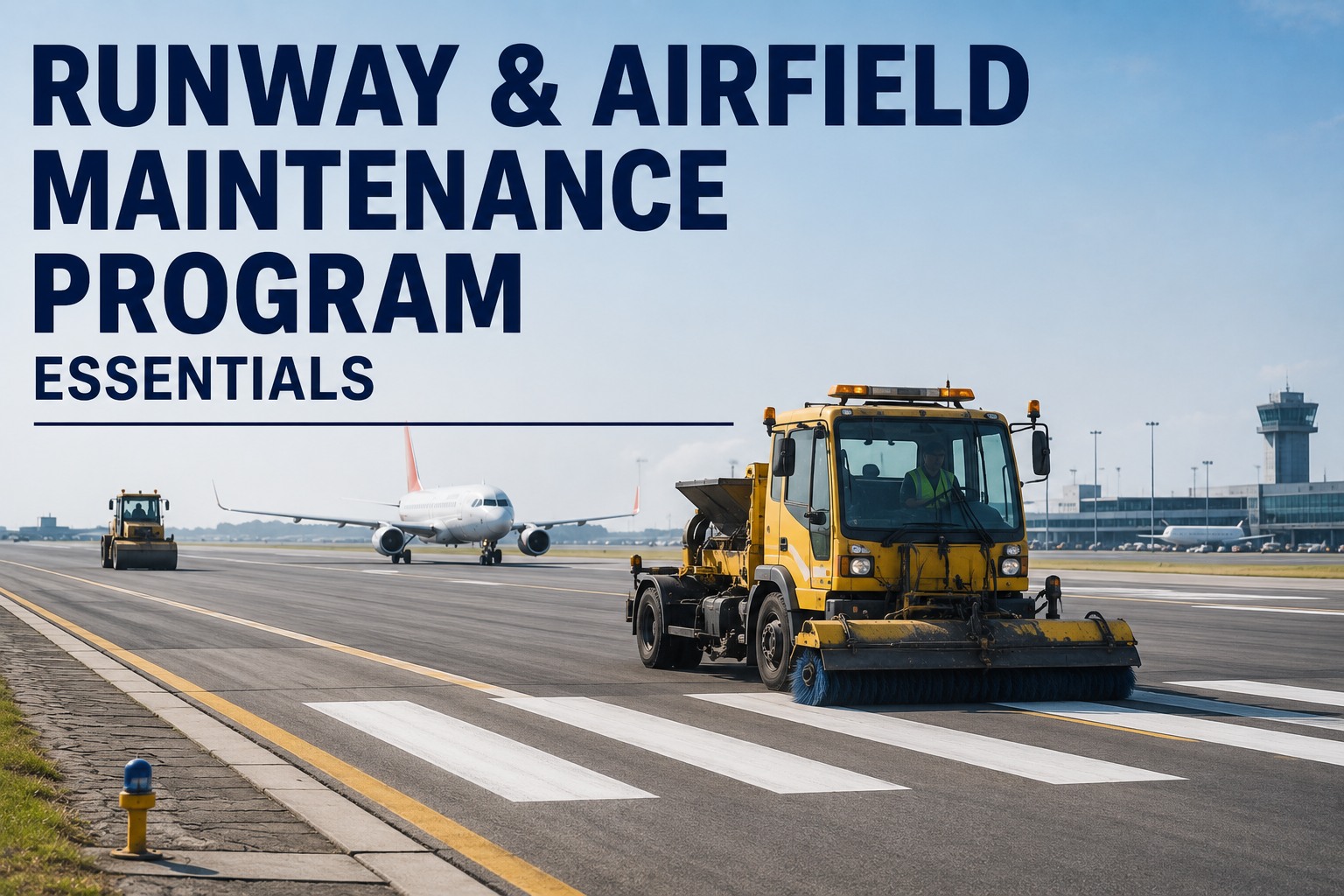
Curbside drop-off areas, bus terminals, taxi queues, rideshare staging, and shuttle facilities experience heavy vehicular wear. Pavement marking, lighting, signage, and traffic-management systems require coordinated PM scheduling that avoids peak passenger surges.
Terminal Building Systems
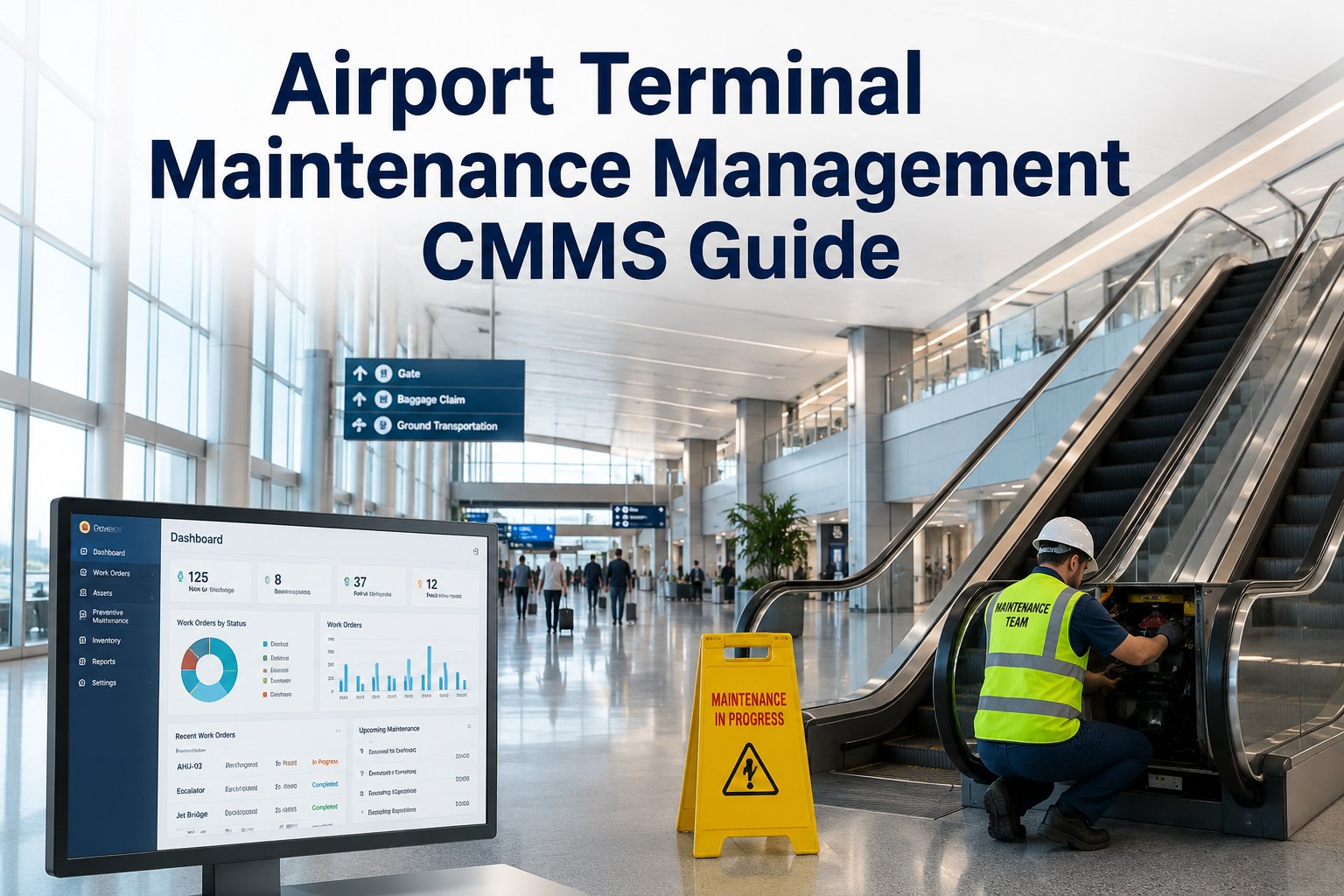
HVAC, escalators, moving walkways, elevators, lighting, baggage-handling support systems, and wayfinding displays form the backbone of passenger comfort. These assets need preventive maintenance schedules tied to manufacturer cycles and usage-based condition monitoring.
Public Area janitorial & Custodial
Terminal flooring, seating, waste management, and public-area sanitation require shift-based task lists with completion tracking. OxMaint digitizes custodial checklists, auto-generates work orders for deficiencies, and provides audit-ready completion records.
How to structure a CMMS for airport authority public facility operations
A well-structured airport building CMMS organizes assets by terminal, concourse, zone, and system hierarchy — enabling targeted PM scheduling, accurate cost roll-ups, and passenger-impact prioritization across thousands of assets.
| CMMS Structure Element | Airport Public FM Application | Without OxMaint | With OxMaint |
|---|---|---|---|
| Asset Hierarchy | Terminal › Concourse › Zone › System › Component | Flat spreadsheets, no parent-child relationships | Multi-level hierarchy with location-based routing |
| PM Scheduling | Time-based + usage-based triggers per asset class | Calendar reminders, manual tracking, missed cycles | Automated triggers with SLA timers and auto-escalation |
| Work Order Routing | Zone-based technician assignment with skill matching | Radio calls, paper tickets, delayed response | Mobile dispatch with real-time status and GPS tracking |
| Tenant Coordination | Shared-system PMs routed to concessionaires with cost allocation | Email chains, disputed costs, compliance gaps | Self-service tenant portal with automated cost tracking |
| Compliance Reporting | ADA, fire-life-safety, elevator, and structural inspection records | Binders, manual compilation, audit scramble | One-click audit reports with digital signatures |
| Spare Parts Inventory | Min/max levels for high-usage restroom and lighting parts | Stockouts, emergency procurement premium | Auto-reorder triggers with vendor integration |
The cost of reactive maintenance in airport public facilities
Consider a regional airport authority managing 1,200 public-facing assets across two terminals, six concourses, and three parking structures — currently running maintenance on spreadsheets and paper work orders.
Current State: Spreadsheet-Based
With OxMaint CMMS Deployed
How OxMaint helps airport authority FM teams stay guest-ready
OxMaint maps directly to the operational challenges of airport public facilities maintenance — from restroom PM cycles to parking structure inspections — with AI-powered automation that eliminates manual coordination overhead.
Automated Preventive Maintenance Scheduling
Time-based and usage-based PM triggers for restroom fixtures, HVAC filters, escalator components, and parking structure elements — auto-generating work orders and routing them to zone-assigned technicians. Cuts missed PMs by up to 85% and extends asset life 20–30%.
AI-Powered Predictive Failure Alerts
Sensor data and historical work-order patterns feed OxMaint's AI engine to predict escalator breakdowns, elevator faults, and HVAC compressor failures 7–21 days before they occur — reducing unplanned downtime 30–50% and eliminating passenger-facing outages.
Retail Tenant Coordination Portal
Self-service portal lets concessionaires submit maintenance requests, track shared-system PMs, and receive automated cost allocations — eliminating email chains and disputed invoices while ensuring tenant compliance with airport FM standards.
Real-Time Maintenance Analytics & KPIs
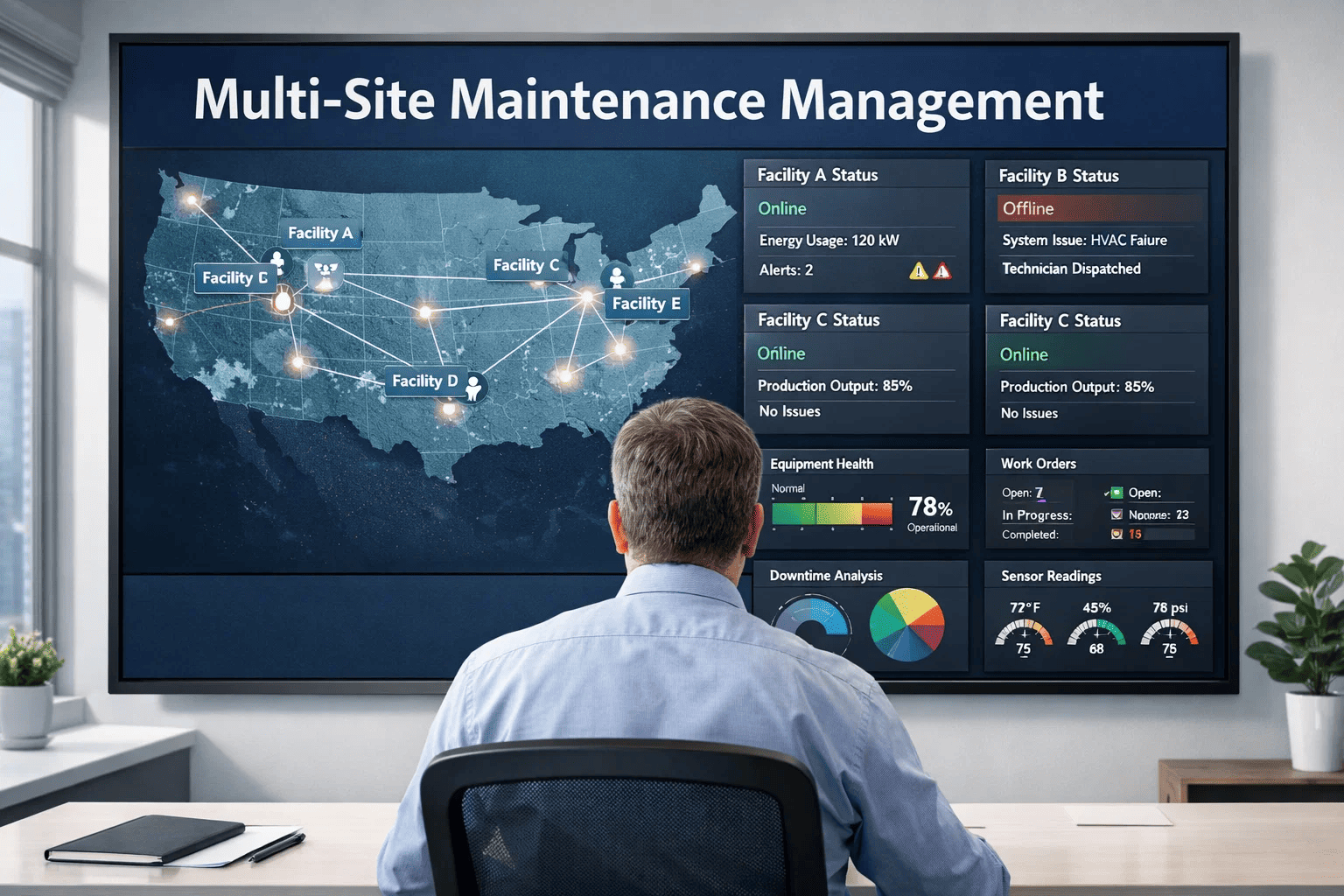
Live dashboards track work-order completion rates, MTTR, PM compliance, asset downtime, and cost-per-asset by zone — giving airport facility directors the data to optimize staffing, justify budgets, and demonstrate compliance to airport authority boards.
Deploying airport public facilities maintenance software in 90 days
Most airport authorities can migrate from spreadsheets or legacy CMMS to OxMaint in a structured 90-day rollout — beginning with restroom and terminal systems, then expanding to parking, retail, and ground transportation.
Asset Hierarchy & Core PM Setup
Import terminal, concourse, and zone asset inventories. Configure PM schedules for restrooms, escalators, elevators, and HVAC. Train zone supervisors on mobile work-order execution. Target: 500+ assets live with active PM cycles.
Parking, Retail & Ground Transit Expansion
Add parking structure inspection cycles, retail tenant portal configuration, and ground transportation zone assets. Enable spare-parts inventory tracking with auto-reorder triggers. Target: 1,200+ assets, tenant portal live, inventory module active.
Predictive Analytics & Compliance Reporting
Activate AI predictive alerts on critical assets. Configure automated compliance reports for ADA, fire-life-safety, and structural inspections. Roll out executive dashboards to facility leadership. Target: full platform adoption, audit-ready reporting.
See OxMaint manage your airport's public facilities — book a 30-minute demo
We'll walk through your terminal layout, parking structures, and retail coordination workflow live on the OxMaint platform — and show you exactly how much time and cost you can reclaim in the first 90 days.
Airport authority facilities maintenance: what teams ask most
What does an airport authority public facilities maintenance program include?
It covers all passenger-facing infrastructure outside airside operations: terminal building systems (HVAC, escalators, elevators, lighting), restroom sanitation and fixture maintenance, retail and concession coordination, parking structure inspections, ground transportation zones, and custodial operations. A robust program uses a CMMS like OxMaint to schedule preventive maintenance, route work orders by zone, track compliance, and coordinate with tenants — all tied to passenger-experience service levels.
How is airport public areas maintenance different from airside maintenance?
Airside maintenance focuses on runways, taxiways, aprons, and gate equipment where the primary risk is flight delays. Public areas maintenance focuses on passenger experience — restrooms, retail corridors, parking, and terminal comfort — where the risk is satisfaction scores, concession revenue, and public safety. Public FM also operates around live passenger flow with no overnight closures, requiring tighter scheduling and real-time work-order visibility. You can see how OxMaint handles both domains when you Start Free Trial.
What CMMS features does an airport authority need for public facility management?
Airport authorities need multi-level asset hierarchies (terminal-concourse-zone-system-component), automated PM scheduling with time- and usage-based triggers, mobile work-order execution for zone-based technicians, a tenant coordination portal for retail concessionaires, spare-parts inventory with auto-reorder, and real-time analytics dashboards for compliance reporting. OxMaint delivers all of these with AI-powered predictive alerts that flag failures 7–21 days before they occur.
How much does airport facility maintenance software cost?
Costs vary based on asset count, user seats, and module selection, but most mid-sized airport authorities (1,000–2,500 assets) see total platform costs of $25K–$60K annually — offset by $100K+ in reduced emergency repair premiums, reclaimed labor hours, and extended asset life. OxMaint typically achieves payback in under 4 months. Book a demo for a custom ROI estimate based on your terminal footprint.
How long does it take to implement a CMMS for airport public facilities?
A structured rollout takes 60–90 days for most airport authorities. Days 1–30 focus on asset hierarchy import and core PM scheduling for restrooms and terminal systems. Days 31–60 expand to parking structures, retail tenant portals, and inventory. Days 61–90 activate predictive analytics and compliance reporting. OxMaint provides onboarding support throughout, and most teams see measurable improvements in work-order response time and PM compliance within the first 30 days.
Every minute a public area is down, passengers notice
OxMaint gives your airport authority FM team the CMMS structure, predictive intelligence, and real-time visibility to keep terminals, restrooms, retail, and parking continuously guest-ready — at the service levels your passengers expect.
Free 14-day trial · No credit card