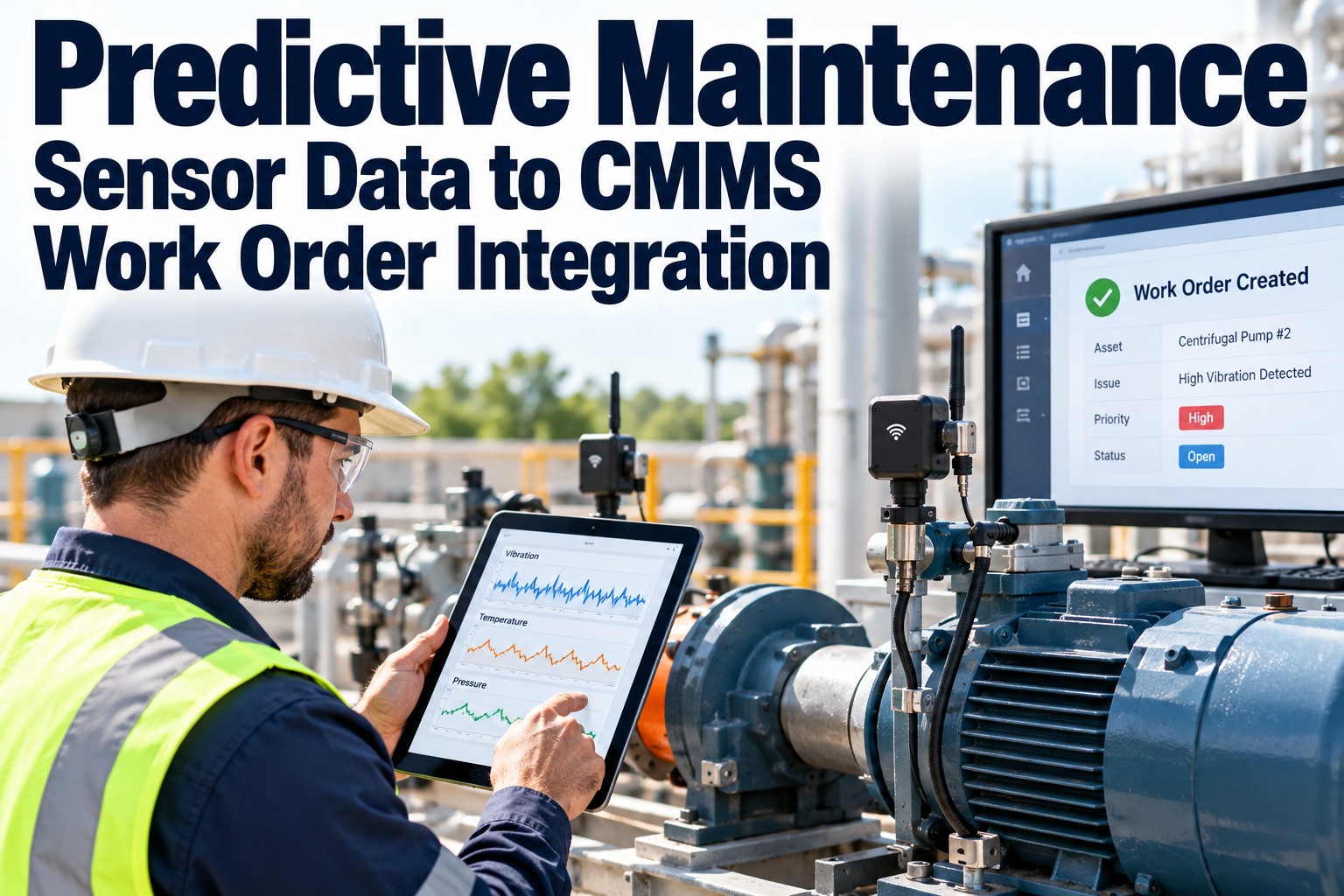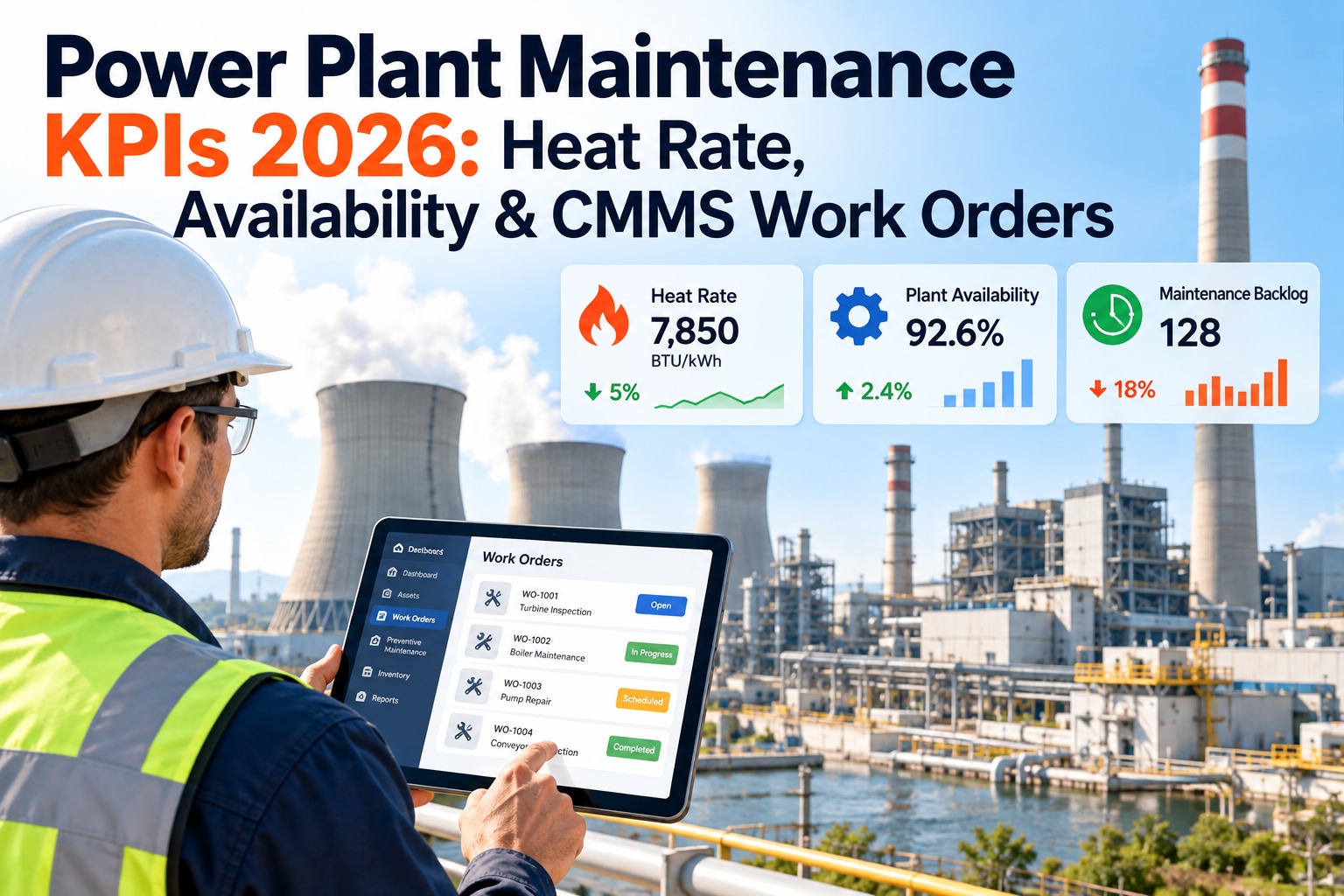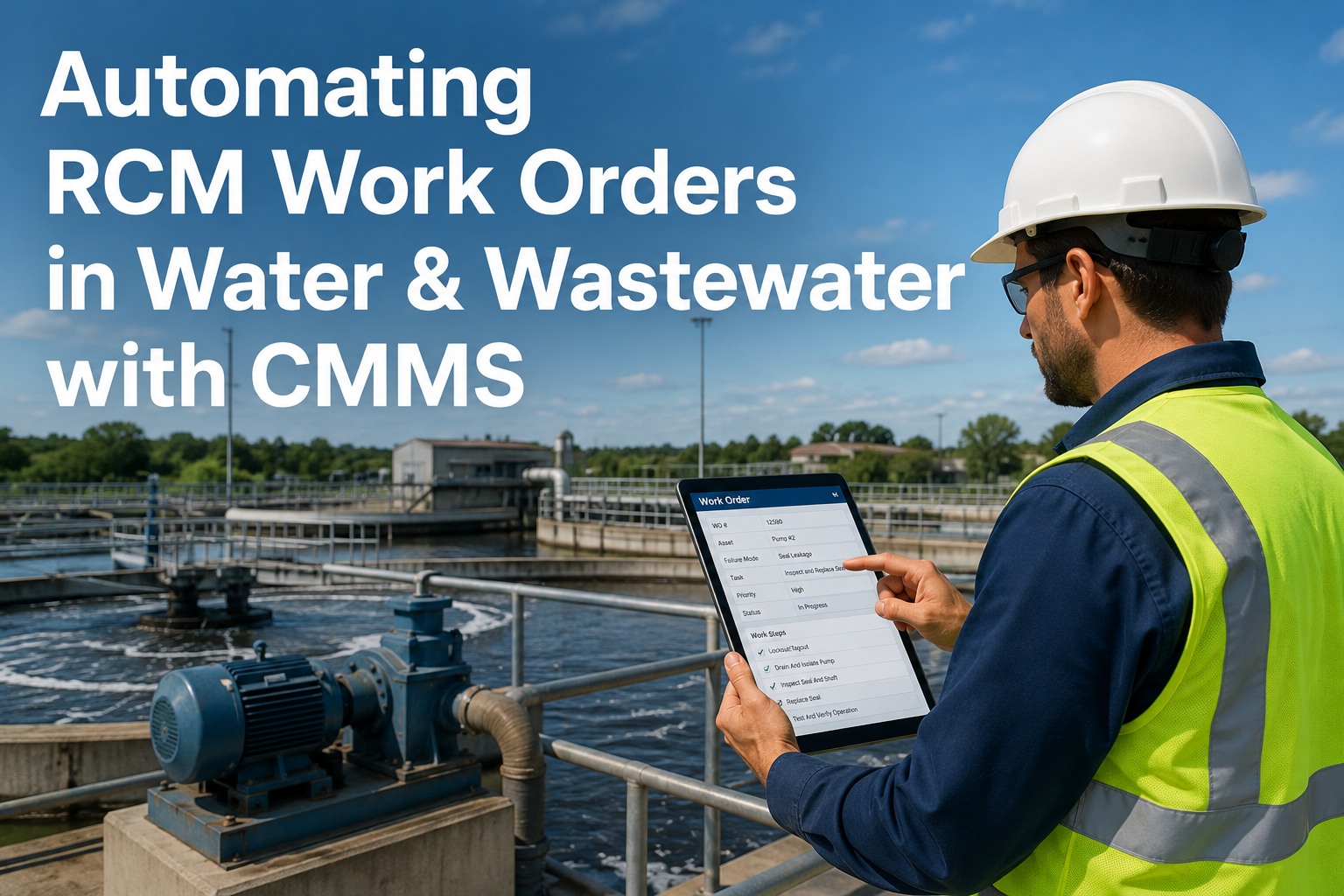
Implementing CMMS for RCM in water and wastewater facilities transforms how maintenance teams automate work orders, track KPIs, and link every critical failure mode to a specific, actionable task. Water and wastewater reliability programs depend on linking failure modes to preventive tasks, but most plants still manage these workflows on spreadsheets or legacy systems that disconnect the SCADA layer from the maintenance team. A purpose-built water and wastewater maintenance system like OxMaint bridges that gap, automating RCM work order generation based on condition triggers, runtime hours, and inspection feedback so nothing slips through. By deploying a modern CMMS setup tailored for utility operations, plants eliminate paper work orders, improve audit readiness, and cut unplanned downtime by up to 40 percent in the first quarter. You can Start Free Trial to see how quickly your team can migrate from reactive firefighting to predictive reliability.
Is your RCM program generating work orders automatically — or just filling binders?
Reliability-Centered Maintenance only cuts downtime when failure modes trigger work orders without manual intervention. OxMaint connects every asset failure mode to an automated task, condition trigger, or PM schedule — so your water and wastewater plant runs on execution, not paperwork.
Why water and wastewater plants fail at RCM execution
Reliability-Centered Maintenance analysis identifies hundreds of failure modes across pumps, blowers, clarifiers, and UV disinfection trains — but 70 percent of those findings never translate into automated work orders because the CMMS setup is disconnected from the RCM logic.
A mid-size wastewater plant with 180 rotating assets spends approximately $42,000 annually on emergency mechanical repairs and overtime. After mapping 12 critical failure modes — bearing degradation on aeration blowers, seal wear on RAS pumps, and impeller cavitation on non-potable pumps — into OxMaint's automated maintenance triggers, the plant shifts 65 percent of those failures to planned work. The result: $18,200 in direct repair savings, a 30 percent drop in after-hours callouts, and a 12-month payback on the CMMS deployment.
How to automate RCM work orders with a water and wastewater CMMS
A successful water and wastewater CMMS integration follows a structured path: build the asset hierarchy, map failure modes, define triggers, automate work order generation, and close the loop with KPI tracking.
Build the asset hierarchy to match your plant
Map every asset from plant level down to component level — influent pump station, pump 1, motor, bearing assembly. OxMaint imports existing asset registers and SCADA tag mappings so technicians see the same hierarchy in the field that engineers see in the P&ID.
Link each failure mode to a maintenance task
For every failure mode identified in your RCM analysis, define the task type: time-based PM, condition-based trigger, inspection checklist, or run-to-failure with a monitored limit. OxMaint stores the failure mode directly on the asset record so every work order carries the reliability context.
Automate work order generation on triggers
Configure OxMaint to auto-generate work orders when a condition threshold is breached — vibration above 0.45 in/sec on a blower, motor temperature exceeding 75°C, or runtime hours hitting 2,000. No technician or supervisor needs to manually create the work order; it arrives pre-populated with instructions, parts, and priority.
Track KPIs and refine failure-mode logic
Measure MTBF, MTTR, planned-versus-reactive ratio, and PM compliance weekly. OxMaint's analytics dashboard surfaces failure modes that are generating repeat work orders — a signal to revisit the task interval or escalate to a redesign.
Water and wastewater CMMS best practices for RCM alignment
Following water and wastewater CMMS best practices ensures your RCM program does not degrade into a static document. These practices keep failure-mode logic live, measurable, and audit-ready.
Mobile-first work order execution
- Technicians receive and close work orders on rugged tablets or phones at the asset location
- Photo attachments and barcode scans captured against the specific failure mode
- Offline mode for below-grade and remote lift stations with sync on reconnect
Condition-based trigger integration
- SCADA and IoT sensor data feed directly into OxMaint trigger logic
- Vibration, temperature, flow, and pressure thresholds auto-generate priority work orders
- Trigger history logged for audit compliance and ISO 55000 alignment
Spare-parts inventory linkage
- Every automated work order reserves required parts from storeroom stock
- Min-max reorder points tied to PM frequency and historical consumption
- Critical spares flagged for emergency availability on RCM-flagged assets
KPI dashboards for reliability teams
- Planned-to-reactive ratio tracked per asset class and per plant zone
- MTBF and MTTR trends overlaid with PM compliance percentage
- Automated weekly reports delivered to plant managers without manual export
Water and wastewater CMMS KPI tracking: what to measure
A water and wastewater maintenance system is only as good as the metrics it surfaces. These KPIs tell you whether RCM automation is actually reducing risk or just generating more paperwork.
| KPI | What It Measures | Target Benchmark | Review Frequency |
|---|---|---|---|
| Planned Maintenance Ratio | Percentage of work hours spent on planned vs. reactive tasks | 70-80% planned | Weekly |
| MTBF (Mean Time Between Failures) | Average operating time between asset failures on RCM-tagged equipment | +25% trend YoY | Monthly |
| MTTR (Mean Time to Repair) | Average time to restore an asset after a failure event | Under 4 hrs for critical | Monthly |
| PM Compliance | Percentage of scheduled PMs completed within the defined window | 90%+ compliance | Weekly |
| Work Order Backlog | Total open work orders aged beyond their due date | Under 10% of total WOs | Weekly |
| Asset Availability | Percentage of time critical assets are available for service | 95%+ for critical | Monthly |
How OxMaint automates RCM work orders for water and wastewater plants
OxMaint is built for maintenance and reliability teams that need automated maintenance without a six-month implementation. Here is how specific OxMaint capabilities map directly to the RCM execution gap in water and wastewater operations.
Automated failure-mode-to-work-order engine
OxMaint links each RCM failure mode to a task template with parts, labor estimates, and safety procedures. When a trigger fires — runtime hours, condition threshold, or inspection failure — a fully populated work order generates automatically and routes to the right technician.
Condition-based predictive triggers
Integrate SCADA tags, vibration sensors, and oil analysis data into OxMaint trigger rules. The system watches thresholds 24/7 and escalates before failure occurs — not after a work order is manually created post-breakdown.
Mobile work orders with RCM context
Technicians see the failure mode, failure history, and last-known condition data on every work order — on a phone or tablet at the asset. No more walking back to the office to check a spreadsheet or binder.
Real-time KPI and compliance dashboards
OxMaint dashboards track planned-to-reactive ratio, MTBF, MTTR, and PM compliance in real time. Export audit-ready reports for ISO 55000, state regulatory inspections, and utility board reviews with one click.
"We mapped 47 failure modes across our aeration and pumping systems into OxMaint in three weeks. Within the first quarter, our unplanned blower downtime dropped 38 percent and our PM compliance hit 94 percent for the first time ever."
See OxMaint on your assets — book a 30-minute demo
Walk through a live RCM work order automation workflow on water and wastewater assets. See how failure modes, condition triggers, and KPI dashboards connect in one platform.
Water and wastewater CMMS and RCM automation: common questions
What is CMMS RCM for water and wastewater plants?
CMMS RCM for water and wastewater is the integration of Reliability-Centered Maintenance analysis with a Computerized Maintenance Management System so that every identified failure mode automatically generates the correct work order — preventive, predictive, inspection, or run-to-failure — based on runtime, condition, or calendar triggers. Instead of RCM findings sitting in a static report, the CMMS executes them continuously.
How long does a water and wastewater CMMS deployment take?
A purpose-built CMMS like OxMaint typically deploys in 2-6 weeks for a mid-size water or wastewater plant, compared to 6 months for legacy systems. The timeline depends on asset register cleanliness, SCADA integration scope, and the number of failure modes to map. OxMaint's import tools and pre-built water and wastewater asset templates accelerate the setup significantly. You can Book a Demo to see a deployment plan for your plant.
What KPIs should a water and wastewater maintenance system track?
The core KPIs are planned-to-reactive maintenance ratio (target 70-80 percent planned), MTBF, MTTR, PM compliance (target 90 percent plus), work order backlog, and critical asset availability (target 95 percent plus). OxMaint tracks all of these in real-time dashboards and can add custom KPIs for specific regulatory or operational requirements.
Can OxMaint integrate with our existing SCADA and sensor data?
Yes. OxMaint supports standard industrial protocols and API integrations to pull SCADA tags, vibration sensors, temperature probes, and other IoT condition data into its trigger engine. When a threshold is breached, OxMaint auto-generates a work order linked to the specific asset and failure mode — no manual intervention required.
How much does water and wastewater maintenance software cost?
Costs vary by plant size, asset count, and integration depth, but most mid-size utilities see a 12-month or shorter payback through reduced emergency repair costs, lower overtime, and extended asset life. A plant spending $42,000 annually on reactive repairs can typically recover $15,000-$20,000 in year one. Start Free Trial to evaluate OxMaint on your assets at no cost for 14 days.
Stop managing failure modes on paper. Start automating them.
Join water and wastewater plants that cut unplanned downtime 30-50% by linking RCM logic to automated work orders in OxMaint. Deploy in weeks, train technicians in hours, and see measurable results in the first quarter.
Free 14-day trial · No credit card