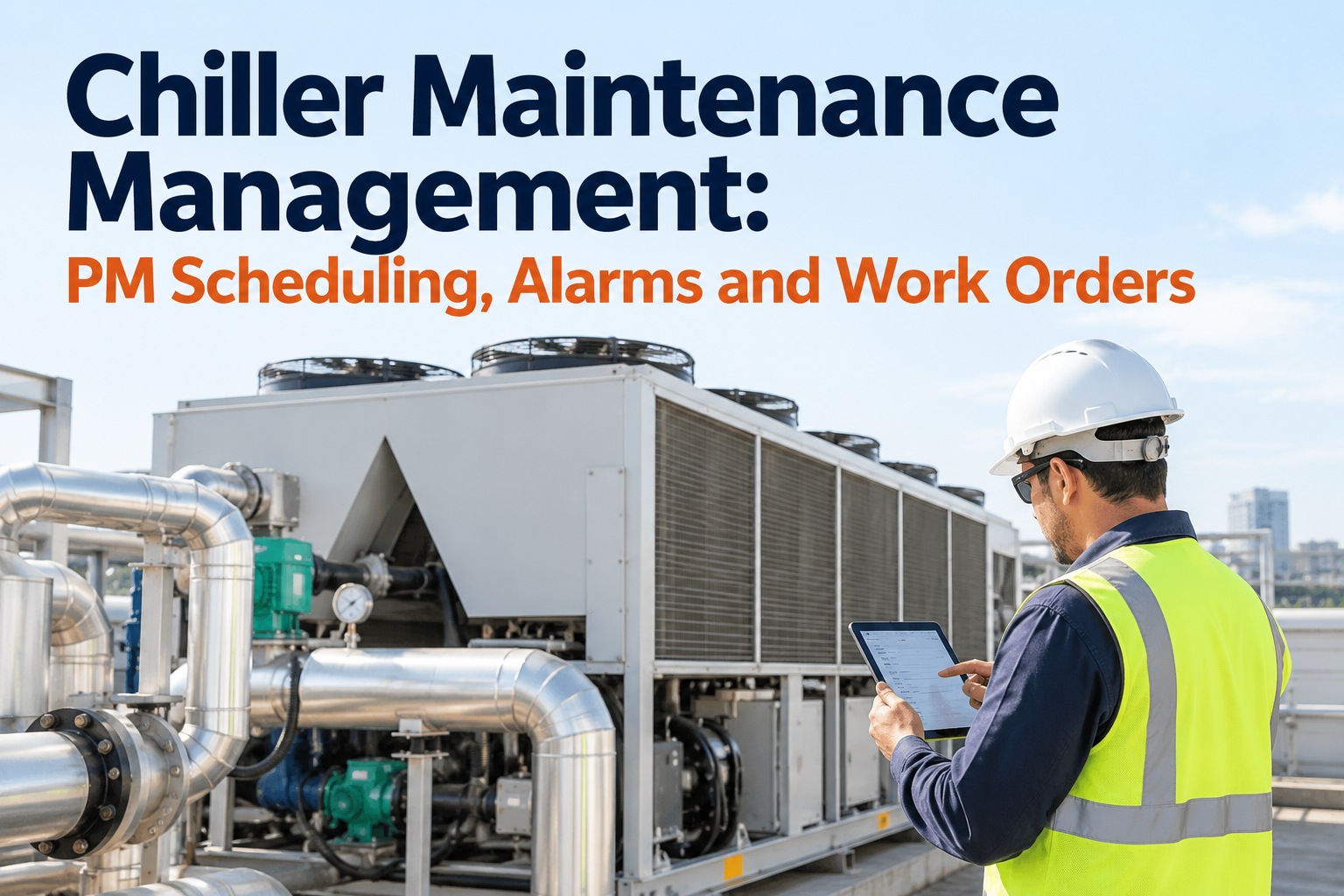
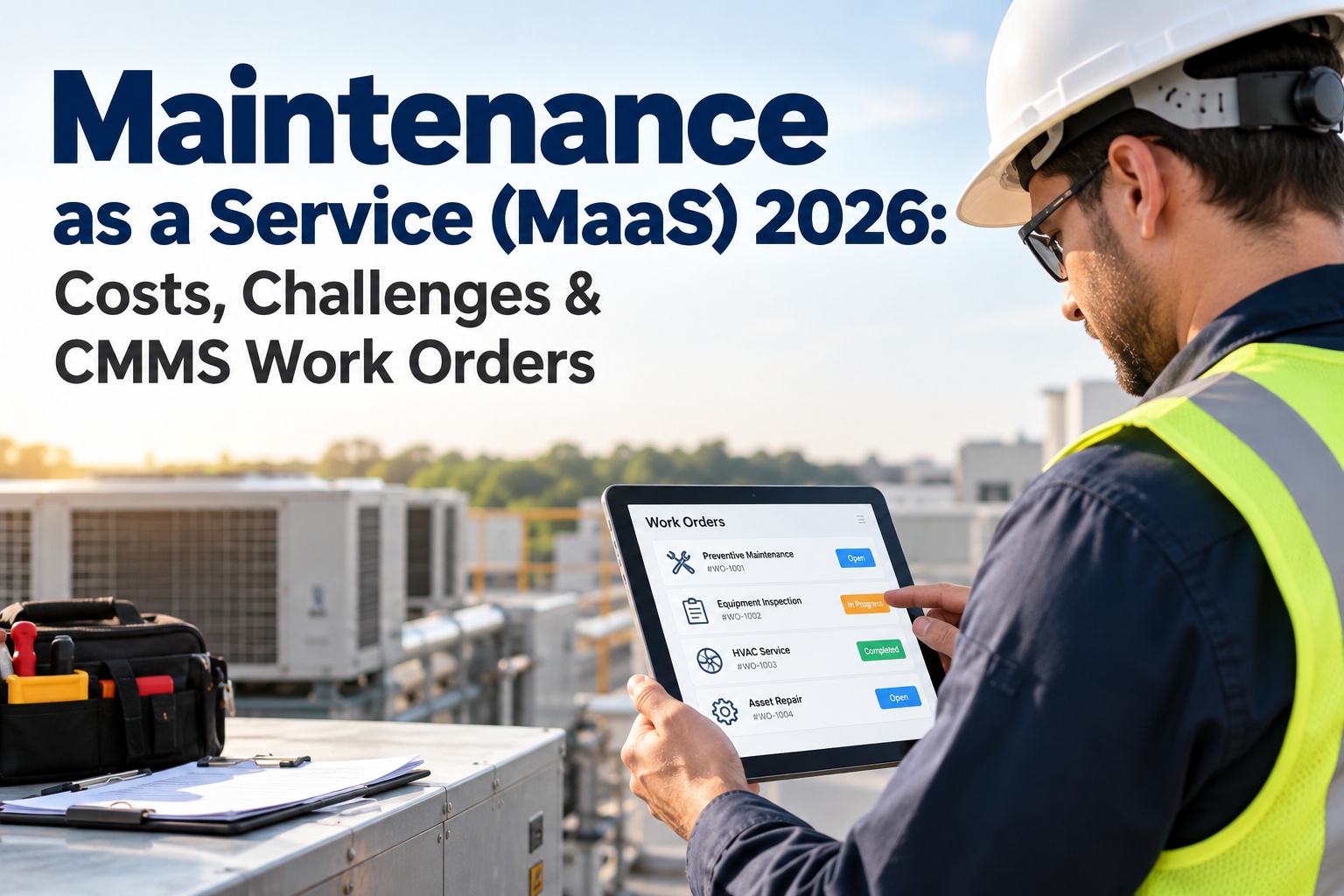
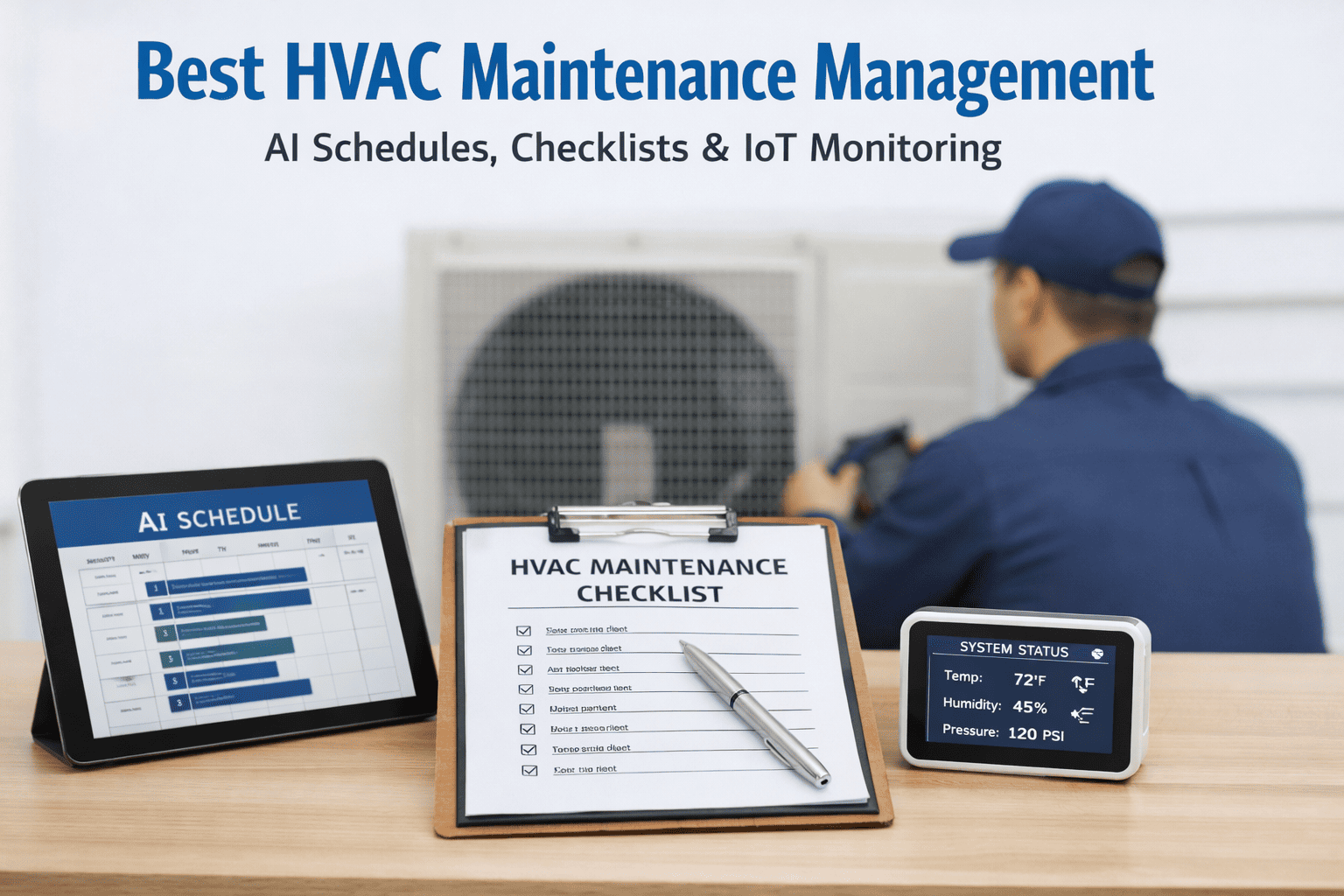
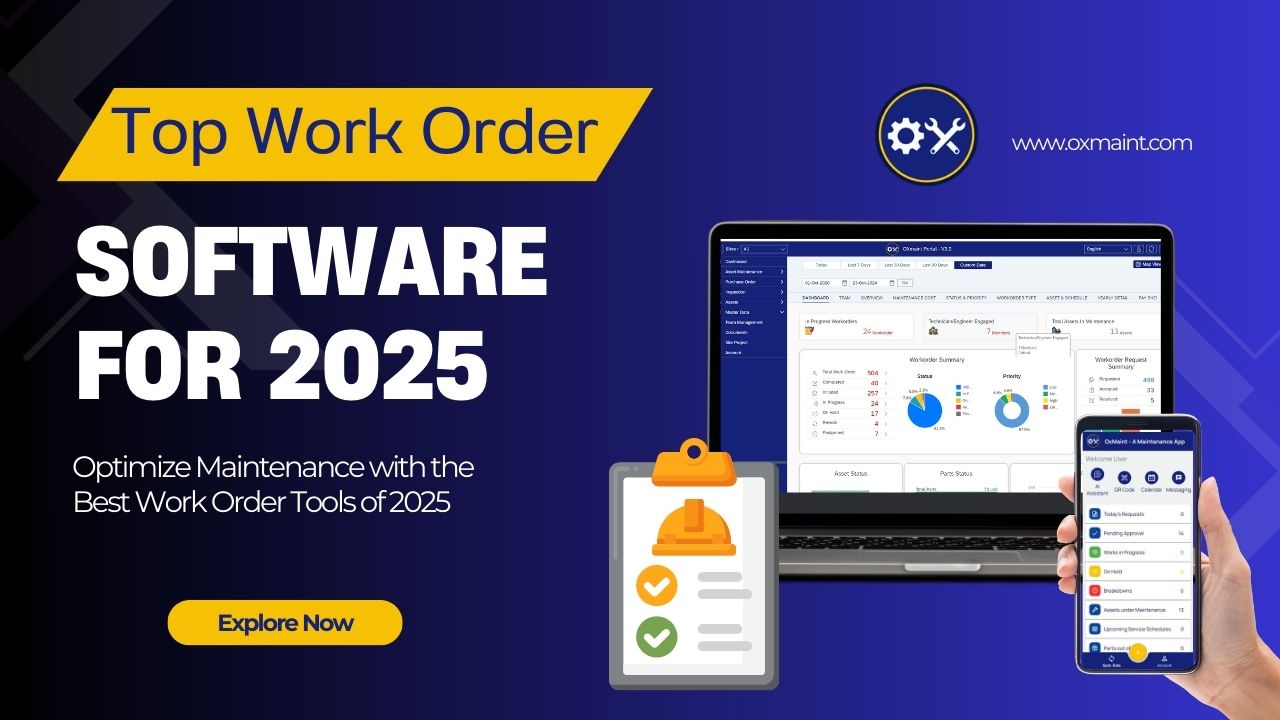
A chiller almost never fails without warning — the approach temperature creeps up, the oil pressure drifts, an alarm trips at 3 a.m. and clears itself. The problem is that the schedule, the alarms and the work orders usually live in three different places, so the warning and the fix never meet until the compressor is down and the building is warm. OXMAINT AI is AI-powered maintenance management software (CMMS) that runs all three as one system — PM on a schedule, alarms triaged to severity, and every fault turned into a ranked work order. Book a demo to see chiller management on one screen.
HVAC · Chiller Maintenance Management
Schedule, Alarms and Work Orders — One Chiller Loop
Managing a chiller well isn't one task, it's three that have to connect: keep PM on schedule, catch the alarm that matters, and turn it into a fix before efficiency slides or the compressor trips. OXMAINT AI runs the whole loop on one record — so a rising approach temperature becomes a scheduled tube cleaning, not a surprise shutdown.
- 1PM on schedule
- 2Alarm triaged
- 3Work order raised
- 4Efficiency held
Healthy chiller targets
kW / ton≤ 0.60
Approach rise≤ 1°F / yr
Superheat8–12°F
Subcooling10–15°F
Centrifugal-class reference targets — trending against them is how you catch trouble early.
The Three Pillars of Chiller Management
Each pillar is useless alone. A schedule with no alarm response misses the sudden fault; alarms with no work orders just make noise. Together they keep the chiller efficient and running. Start a free trial to connect all three.
PM scheduling
Daily logs, monthly oil and control checks, quarterly analysis and tube brushing, annual megger and eddy-current testing — all auto-issued on their own cadence.
Alarm response
Low refrigerant, high head pressure, low oil, freeze risk or surge — each alarm classified by severity so the critical ones can't hide in the noise.
Work orders
A due PM or a tripped alarm becomes a ranked, assigned work order with the reading, the part and the history attached — tracked to closeout.
Read the Alarm: What Each Fault Is Telling You
A chiller alarm isn't just a stop signal — it points at a cause. Knowing which fault means what turns a panic into a targeted work order. Book a demo to see alarm-to-work-order mapping.
Chiller alarms and their likely cause
| Alarm / fault | What it usually means | Response |
| High condenser / head pressure |
Fouled condenser tubes or high condenser-water temp |
Clean tubes; check cooling tower |
| Low refrigerant charge |
A leak or undercharge |
Leak-check and recharge per programme |
| Low oil pressure |
Oil-filter fouling or pump wear |
Check ΔP; change filter; oil analysis |
| Low evaporator temp |
Freeze risk — low flow or low charge |
Verify flow and charge before restart |
| High motor temperature |
Overamperage or cooling issue |
Check load and motor cooling |
| Surge (centrifugal) |
Liquid slugging or unstable operation |
Investigate load and refrigerant condition |
Fault-to-cause mapping per chiller-maintenance guidance; actual diagnosis depends on your unit and readings. Source: OxMaint chiller preventive-maintenance guide.
Turn Every Chiller Alarm Into a Tracked Fix
See how OXMAINT AI classifies a chiller alarm, opens the right work order with the reading attached, and holds it to closeout — so nothing self-clears and gets forgotten.
The Slow Alarm: Approach Temperature
The most expensive chiller fault doesn't trip an alarm at all — it creeps. A rising approach temperature is the tube fouling that quietly eats efficiency, and the log is where you catch it. Start a free trial to trend it automatically.
At baseline
Clean tubes, design approach — the chiller is delivering its rated kW/ton.
+1–3°F rise
Scaling begins; efficiency slips. Schedule a cleaning before it worsens.
>3°F above baseline
Tube cleaning required — uncleaned tubes can cost 15–25% of efficiency.
Thresholds per chiller-maintenance guidance: condenser approach >3°F above baseline triggers tube cleaning; annual fouling can cost roughly 15–25% efficiency. Directional targets — set your own baselines. Source: OxMaint chiller PM guide.
The Readings Worth Logging Every Day
A chiller's operating log is its early-warning system — but only if the numbers are trended, not just written down. These are the ones that predict trouble. Book a demo to trend them per unit.
kW / ton
Efficiency at load — a rising number means the chiller is working harder for the same cooling.
Approach temps
Condenser and evaporator — the leading indicator of tube fouling and scaling.
Superheat / subcooling
Refrigerant health — drift signals charge or metering problems.
Oil pressure & ΔP
Lubrication health — a climbing filter ΔP precedes a low-oil trip.
Chilled-water ΔT
Supply-return differential — a falling ΔT points to flow or load issues.
Motor amps & vibration
Mechanical condition — trended against ISO limits to catch wear.
How OXMAINT AI Manages the Chiller
OXMAINT AI is maintenance management software that keeps the PM schedule, the alarm log and the work orders on one asset record — so scheduling, response and repair are one connected system, not three. Start a free trial to run it on your plant.
-
1
Schedule
Auto-issue daily, monthly, quarterly and annual chiller PMs per unit.
-
2
Watch
Log readings and receive alarms, classified by severity against healthy targets.
-
3
Act
Turn a due PM or a fault into a ranked work order with the reading and part attached.
-
4
Trend
Track approach, kW/ton and oil ΔP over time to catch the slow faults early.
Frequently Asked Questions
What does a rising chiller approach temperature mean?
It usually means the condenser or evaporator tubes are fouling or scaling, which drags down efficiency. A rise past about 3°F over baseline typically calls for tube cleaning.
Start a free trial to trend it.
What are the most common chiller alarms?
High head pressure, low refrigerant, low oil pressure, low evaporator temperature (freeze risk), high motor temperature, and surge on centrifugal units — each pointing to a different cause.
Book a demo to map them.
How often should a chiller be maintained?
Daily operating-log review, monthly oil and control checks, quarterly oil/refrigerant analysis and tube brushing, and an annual full mechanical inspection with megger and eddy-current testing.
Start a free trial to schedule it.
Why connect alarms to work orders?
So an alarm can't self-clear and vanish. When it becomes a tracked work order with the reading attached, the fault gets diagnosed and fixed instead of forgotten.
Book a demo to see it.
Can OXMAINT AI trend chiller efficiency?
Yes — logging kW/ton, approach temperatures and oil ΔP over time lets it surface the slow degradation that never trips an alarm but quietly raises your energy cost.
Start a free trial to track it.
Run the Whole Chiller Loop on One Platform
Keep PM on schedule, triage every alarm, and turn each into a tracked work order — with the readings that catch the slow faults too.