Understanding failure modes in aviation & MRO operations is the backbone of any reliable maintenance strategy, directly impacting aircraft availability, safety, and regulatory compliance. Whether you are building an aviation and MRO FMECA database from scratch or trying to reduce recurring equipment failures, cataloging root causes and their effects allows reliability teams to shift from reactive firefighting to predictable, condition-based maintenance. This guide breaks down the most common aviation and MRO failure modes, their cascading effects, and the best Reliability-Centered Maintenance (RCM) tasks to prevent them. To implement these workflows digitally and ensure every root cause analysis turns into a scheduled preventive action, you can Start Free Trial of OxMaint's AI-powered CMMS today.
Are the Same Aviation Equipment Failures Grounding Your Fleet Every Quarter?
Recurring failures in aviation and MRO facilities cost millions in AOG (Aircraft on Ground) events, delayed MRO turnarounds, and wasted labor. When root cause analyses are skipped, the same breakdowns repeat. It is time to catalog your failure modes and eliminate them for good.
Aviation and MRO Root Cause Analysis Techniques That Actually Work
Every repeat failure in an aviation maintenance plant is a root cause analysis waiting to be done. Skipped RCAs are why the same breakdown shows up quarter after quarter. The right RCA technique depends on the complexity and safety-criticality of the event.
5-Whys Analysis
Best for quick, single-factor incidents like a tool calibration drift or a simple sensor misread. By asking "why" iteratively, MRO technicians move past symptoms to the underlying mechanical or process failure.
Fishbone (Ishikawa) Diagram
Ideal for multi-factor failures where manpower, machinery, materials, and methods intersect. Essential for hangar-level breakdowns where human error, environment, and aging equipment all play a role.
Fault Tree Analysis (FTA)
Reserved for complex, safety-critical events and catastrophic failures. FTA maps logical relationships between component failures and top-level system failures, quantifying failure probabilities for FAA compliance.
Aviation and MRO FMEA Database: Common Failures, Causes & Effects
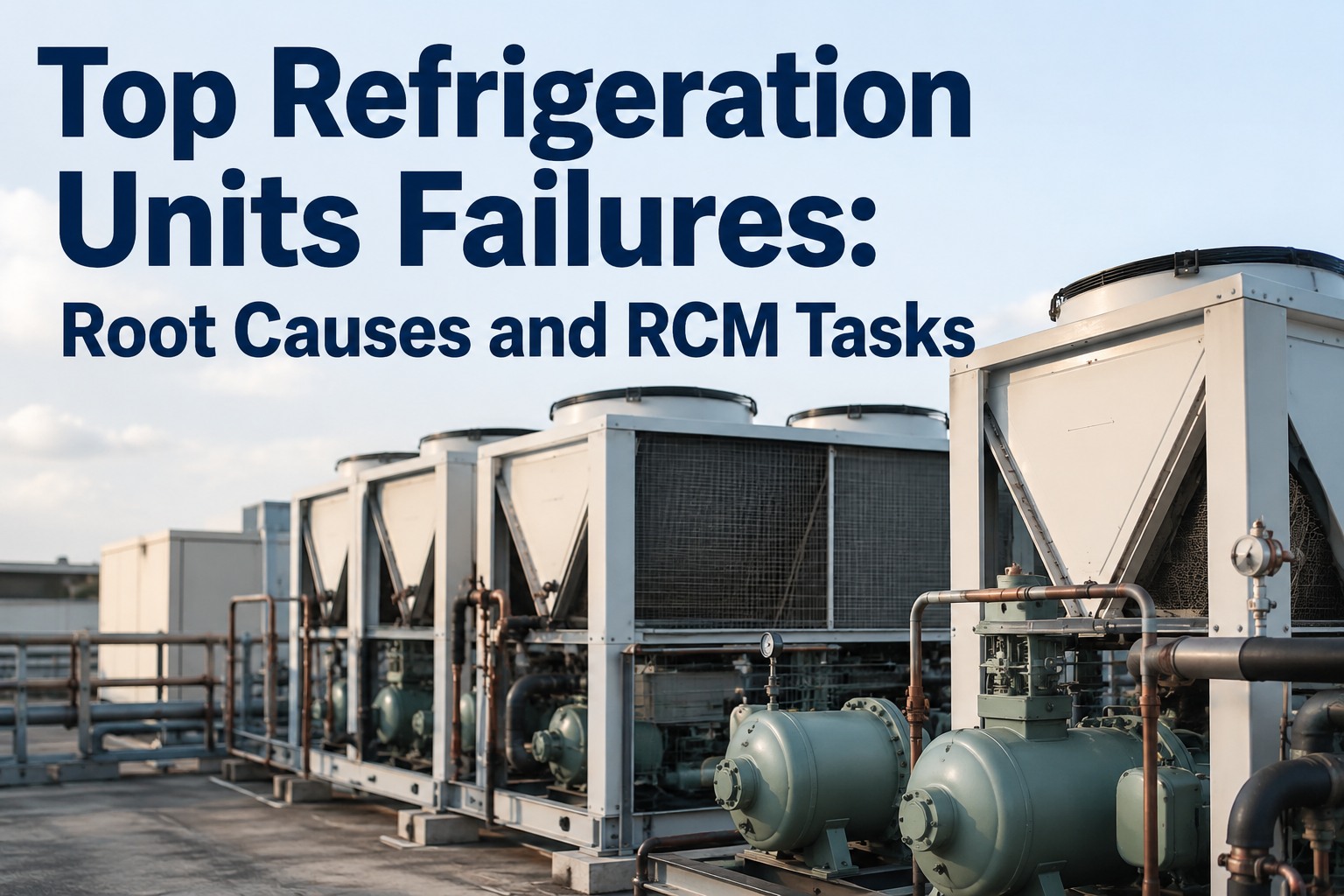
A well-maintained aviation and MRO failure catalog standardizes how reliability teams categorize equipment degradation. Below is a snapshot of high-frequency failure modes plaguing MRO plants, their root causes, operational effects, and the RCM tasks required to mitigate them.
| Equipment / Asset | Failure Mode | Root Cause | Failure Effect | Best RCM Task |
|---|---|---|---|---|
| Hydraulic Test Stands | Pressure decay / Internal leakage | Seal degradation from thermal cycling | Inaccurate component testing, delayed MRO turnaround | Condition-based monitoring (Ultrasonic) |
| APU Turbines | Vibration / Bearing failure | Lubrication starvation & oil contamination | In-flight shutdown, AOG event, FAA reporting | Predictive maintenance (Vibration analysis) |
| NDT / Eddy Current Units | Calibration drift | Environment humidity & handling impact | Missed sub-surface cracks, catastrophic flight risk | Time-based preventive calibration |
| Composite Autoclaves | Temperature control failure | Heating element fatigue & relay wear | Scrapped composite parts, $50K+ material loss per cycle | Run-to-failure (RTF) with redundant spares |
| GSE / Tow Tractors | Brake system failure | Hydraulic fluid degradation & pad wear | Ramp accidents, ground damage to aircraft | Scheduled fluid sampling & pad replacement |
The True Cost of Ignoring Aviation and MRO Equipment Failures
When an aviation and MRO facility operates reactively, the financial impact cascades rapidly. A single untracked failure mode can wipe out a quarter's maintenance budget. Consider a mid-sized MRO plant managing 1,800 critical assets and ground support equipment.
By cataloging failure modes into an aviation and MRO FMECA database and shifting to predictive maintenance, the plant reduces unplanned downtime by 35%. The ROI calculation: $1.2M × 35% reduction = $420,000 saved annually in labor, AOG penalties, and expedited parts shipping.
How OxMaint Solves Aviation and MRO Reliability Challenges
OxMaint makes root cause analysis a habit, not a forgotten project. By integrating your failure catalog directly into a CMMS, you can trigger an RCA workflow on any high-impact work order, capture findings against the specific asset, and turn every root cause into a preventive action that actually gets scheduled and closed.
Automated RCA Workflows
Trigger mandatory 5-Whys or Fishbone templates directly from high-severity work orders. Ensure no catastrophic failure leaves the hangar without a documented root cause.
Predictive Maintenance Triggers
Use AI-driven vibration and thermal data to predict aviation equipment failures before they happen. Automatically generate work orders when asset conditions deviate from baselines.
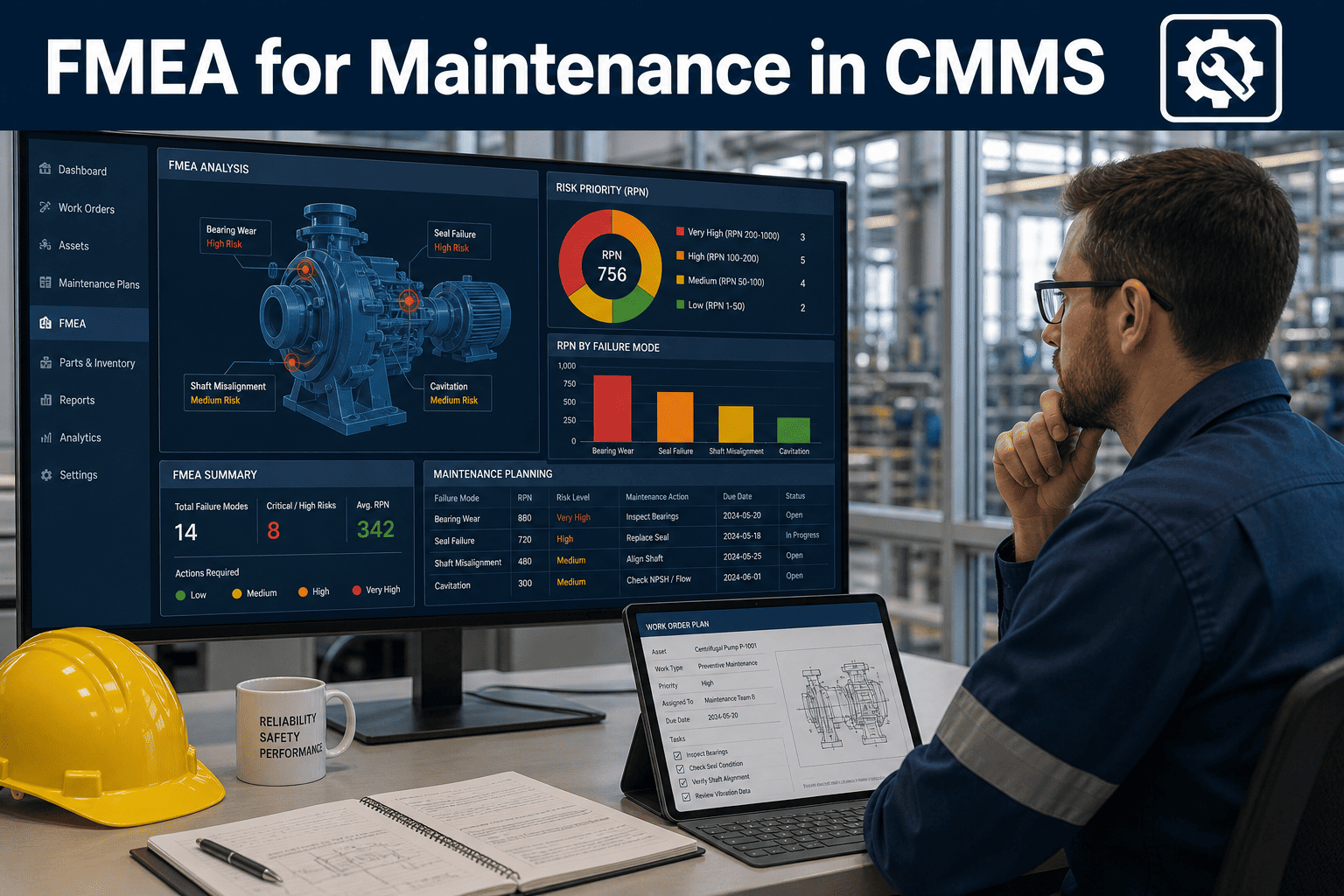
Centralized FMEA Database
Maintain a living aviation and MRO failure catalog inside the CMMS. Link failure modes directly to asset hierarchies, spare parts inventory, and historical corrective actions.
Actionable Corrective Actions
Turn every identified root cause into an assigned preventive task with deadlines. Track completion rates and measure the long-term effectiveness of your RCM strategy.
Stop Losing Revenue to Repeat Failures. See OxMaint on Your Assets.
Book a 30-minute demo today and discover how to digitize your aviation and MRO failure catalog, automate RCA workflows, and eliminate unplanned downtime.
Aviation and MRO Failure Modes: Your Questions Answered
What is the most common failure mode in aviation and MRO maintenance?
The most common failure modes in aviation and MRO maintenance include fatigue cracking in aging airframes, bearing wear in rotating components like APUs and engines, and hydraulic seal degradation. These failures often stem from inadequate lubrication, thermal cycling, or contamination. Implementing a robust aviation and MRO FMECA database helps identify these patterns early, allowing teams to shift from reactive repairs to predictive maintenance.
How does an aviation and MRO FMEA database improve safety?
An FMEA (Failure Modes and Effects Analysis) database improves safety by standardizing how failure data is captured, analyzed, and acted upon. Instead of relying on tribal knowledge, every maintenance technician has access to historical failure effects and prescribed RCM tasks. To build this digitally and ensure real-time access across your hangar, you can Start Free Trial of OxMaint.
What is the difference between RCM and FMEA in aviation maintenance?
FMEA is an analytical tool used to identify potential failure modes, their causes, and their effects on the system. RCM (Reliability-Centered Maintenance) is a broader framework that uses FMEA data to determine the most effective maintenance strategy—whether predictive, preventive, or run-to-failure. In aviation and MRO reliability, FMEA provides the data, and RCM defines the action plan.
How do you perform a root cause analysis for aircraft ground support equipment?
For ground support equipment (GSE), start with a 5-Whys analysis for simple mechanical failures like brake wear or battery drain. For complex system failures, such as a tow tractor hydraulic failure, use a Fishbone diagram to evaluate manpower, materials, and environment. Document the findings against the asset history in your CMMS to ensure the corrective actions are scheduled and tracked.
Why do aviation maintenance facilities struggle with repeat failures?
Repeat failures usually occur because the root cause was never fully addressed—only the symptom was fixed. When maintenance teams are pressured to return aircraft to service quickly, RCA workflows are skipped. Without a centralized system to mandate and track RCA on high-impact work orders, the same aviation and MRO equipment failures will continue to ground fleets and drain budgets.
Ready to Eliminate Unplanned MRO Downtime?
Join the aviation and MRO reliability teams using OxMaint to predict failures, automate work orders, and track every asset in one AI-powered platform.
Free 14-day trial · No credit card