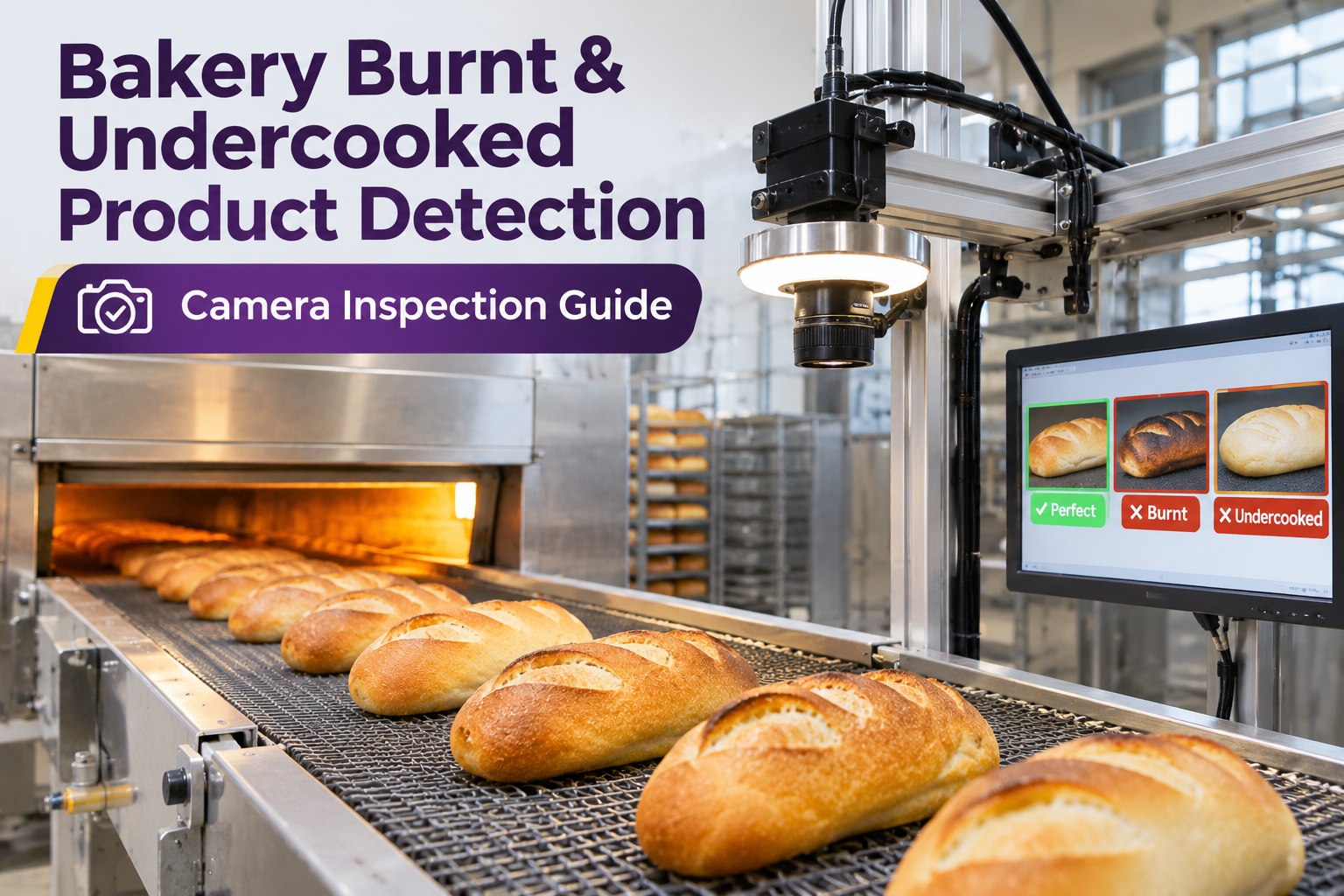
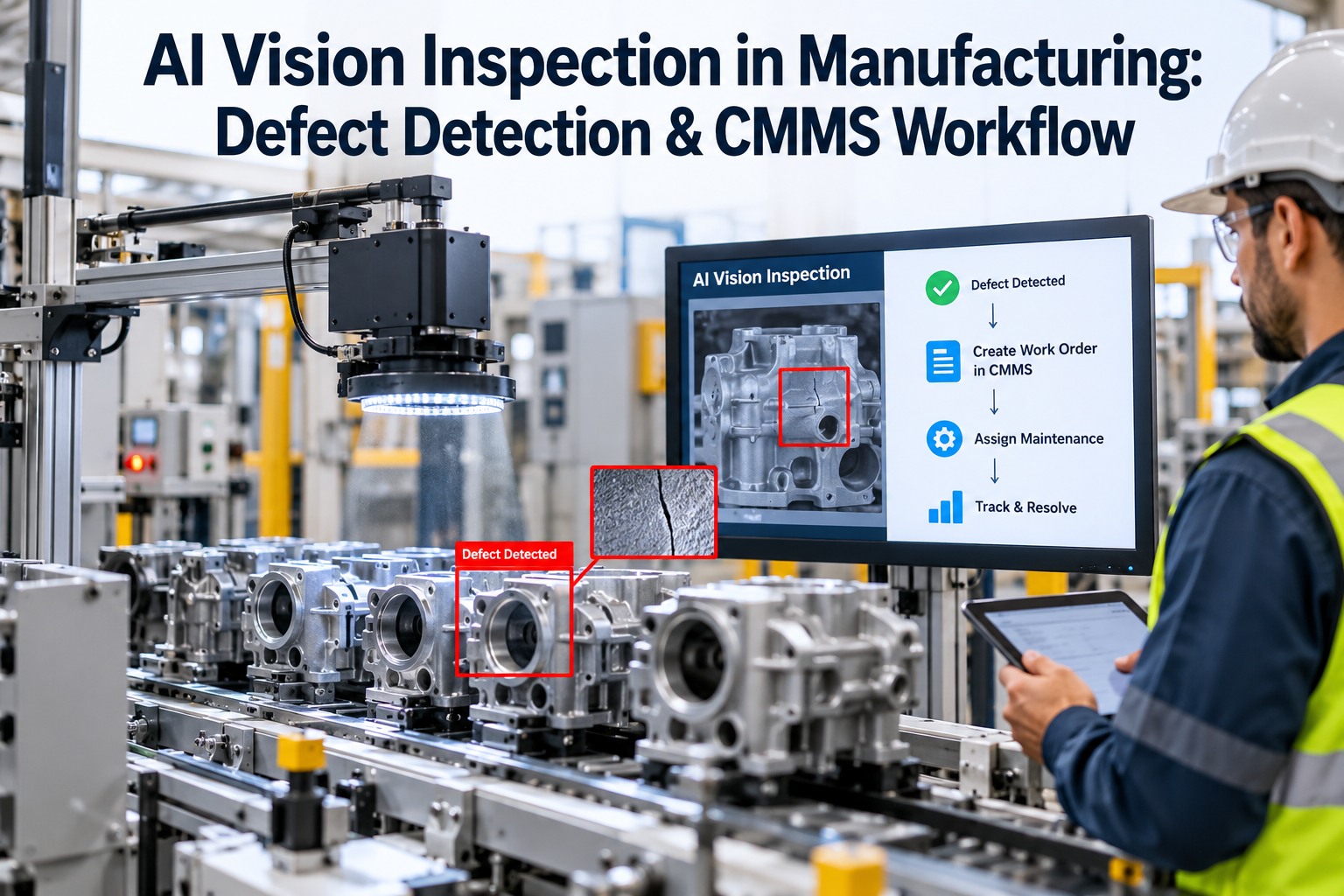
Customers eat with their eyes first, and the crust is the first thing they judge too pale and it reads raw, too dark and it reads burnt. A camera over the belt can score the bake color of every single unit leaving the oven, catching what a sampling inspector never could. But a burnt or underbaked product isn't only a reject — it's the oven telling you something is drifting. This guide shows how camera inspection reads the bake and what the defects reveal about the oven, and how OxMaint AI maintenance management software turns that signal into oven maintenance. Book a demo to see it on your line.
FOOD MANUFACTURING · BAKERY QUALITY · CAMERA INSPECTION
Bakery Burnt & Undercooked Product Detection
Bake color is a spectrum, and the spec is a narrow band in the middle. A camera grades every unit on that scale in real time — and when the color drifts, the oven is the reason. OxMaint AI turns a drifting bake into a fixed oven.
BAKE COLOR · SCORED ON EVERY UNIT
Underbakedpale, doughy
In Specgolden target
Burntscorched, dark
A graded scale, not a pass/fail stamp — the camera scores where each unit lands and flags the drift before a whole batch tips over the edge.
The Crust Is a Thermometer
Browning is the thermal footprint of the bake — the Maillard reaction writing the oven's temperature and time onto the surface of every loaf, bun and cookie. That makes color more than an aesthetic: it tracks doneness, it ties to food-safety compounds like acrylamide, and it is the earliest visible sign that an oven zone has drifted. Read it well and you catch a failing element at six in the morning by a color trend — not by a customer complaint that afternoon.
What the Camera Measures
An inline system uses cameras, controlled lighting and analysis software to inspect every product on the belt, where a human inspector could only sample a few dozen an hour. It reads far more than light-or-dark.
Bake Color
Top and bottom color scored on a graduated scale against the SKU's target, distinguishing under-, properly, and over-baked.
Color Uniformity
Evenness across the surface — catching one side darker than the other, the classic signature of an uneven oven.
Surface Defects
Burnt patches, scorch spots, blisters, cracks and tears that a doneness score alone would miss.
Shape & Size
Height, length and width against spec — flagging collapse, under-proof or misshape alongside the color read.
Toppings & Glaze
Seed and topping coverage and glaze evenness, scored per unit so decoration stays as consistent as the bake.
Trend Over Time
Color scored continuously so a slow drift across a shift shows up as a line, not a sudden wave of rejects.
DEFECT → OVEN DECODER
Every Defect Points at a Cause in the Oven
A reject tells you what came out wrong; the pattern tells you why. This is how a camera's color read becomes an oven work order.
Oven zones are dynamic — burner output, airflow, belt loading and steam all interact — so a ±3°F uniformity target and a quick fix beat chasing the symptom with recipe tweaks.
From Color Trend to Work Order
Detection only pays off when the finding reaches the oven. This is the loop that closes the gap between the camera and the fix.
1Camera Scores ColorEvery unit graded top and bottom
›
2Trend BreaksBurnt rate rises or a zone drifts
›
3Pattern Diagnoses OvenDefect maps to a zone or part
›
4Oven Work OrderRanked, routed, recorded
That turns a rising scrap rate into a scheduled oven fix before the batch, the yield and the complaint pile up. Start free and route color-trend alerts to oven work orders.
The Oven Maintenance Program
Consistent color comes from a consistent oven. These are the maintenance points that hold zone uniformity — where undetected hot and cold zones quietly cost yield.
Zone Temperature Calibration
Verify each zone against its set point and the uniformity target; recalibrate on a schedule, not after a scrap event.
Burner Nozzles
Clean fouling that creates localized cold zones — a leading cause of patchy, uneven browning in tunnel ovens.
Heating Elements
Inspect for blistering, breaks and worn sections that stop emitting even heat and darken one side of the product.
Temperature Sensors
A drifting sensor makes the oven run hot or cold against its set point; verify and recalibrate on interval.
Conveyor & Airflow
Belt speed sets bake time, and airflow and convection set evenness — both drift and both change the color.
Steam & Humidity
Steam injection shapes crust and color; check nozzles and rates as part of holding a consistent bake.
Don't Just Reject the Loaf — Fix the Oven That Burned It.
A camera that only sorts good from bad still lets the oven keep making bad. The value is in connecting the defect to the cause. OxMaint AI takes the color trend, points it at the oven zone or part behind it, and opens the work order that stops the scrap at its source.
How OxMaint AI Runs Bakery Oven Maintenance
OxMaint AI is the AI-powered maintenance management software that carries a bakery from a color-trend signal or a line report to a closed, recorded oven work order — with zone PM, calibration and asset history built in. Book a demo and see a color alert become an oven fix.
Defect-to-Work-Order
A rising burnt or underbake rate, or a drifting zone, opens a ranked oven work order routed to maintenance with the pattern attached.
Oven Zone PM
Calibration, burner-nozzle, element and sensor tasks scheduled to hold zone uniformity before color drifts.
Calibration Records
Every zone calibration and temperature check logged against the oven — the evidence a food-safety audit expects.
Line-Side Reporting
Operators raise a browning issue from the floor with a photo; it becomes a work order against the right oven and zone.
Spares & Elements
Elements, sensors, nozzles and belt parts stocked against each oven, so a fix never waits on a shelf gap.
HACCP-Ready History
Maintenance and calibration history tied to the oven, supporting FSMA, HACCP, SQF and BRCGS records.
EXPERT REVIEW
Written for bakery quality, operations and maintenance teams running tunnel and conveyor ovens on high-speed lines. The defect-to-cause links, color scoring and oven-maintenance points here are a general framework drawn from standard bakery-vision and oven practice — your authoritative bake specs, color targets and zone tolerances come from your product specifications and oven OEM documentation, and camera inspection itself is supplied by a dedicated vision system, not a CMMS. Oven calibration and element or burner work are tasks for qualified technicians under your food-safety and electrical procedures. OxMaint AI structures and records the maintenance, calibration and work order workflow and acts on the signals your vision and process systems produce; it does not replace your vision supplier, your food-safety program, or your technicians' judgement.
Frequently Asked Questions
How does camera inspection detect burnt and underbaked products?
Inline cameras with controlled lighting score the bake color of every unit on the belt against the target for that product, on a graduated scale that separates under-baked, properly baked and over-baked rather than a simple pass or fail. They also read color uniformity, surface burns and shape, so a pale crust, a scorched patch or one dark side is all caught in real time — at speeds a sampling inspector cannot match.
Start free and act on bakery color trends in OxMaint AI.
Why is my product browning unevenly?
Uneven browning almost always points to the oven. One side consistently darker usually means a heating element failing in that section or a zone imbalance; patchy color often traces to burner-nozzle fouling creating cold spots; and a burnt bottom points to the bottom zone or element. Because oven zones are dynamic, the fix is diagnosing and correcting the zone or part, not just adjusting the recipe.
Book a demo and map browning defects to oven work orders in OxMaint AI.
Does bake color matter beyond appearance?
Yes. Color is the visible record of the bake's temperature and time, so it tracks doneness and texture, and it connects to food safety — heavier browning is associated with compounds like acrylamide. It is also the earliest warning that an oven zone has drifted, which is why trending color catches a developing oven fault well before it becomes a wave of rejects or a customer complaint.
Start free and keep bake-quality and oven records together in OxMaint AI.
Where does OxMaint fit if I already have a vision system?
The vision system is the detector; OxMaint is the maintenance layer underneath it. When the camera's color trend drifts or defects rise, OxMaint turns that signal into a ranked oven work order, schedules the zone calibration, burner and element PM that holds uniformity, stocks the spares, and keeps the calibration history for your audits. The camera finds the problem; OxMaint makes sure the oven gets fixed.
Book a demo and connect your vision alerts to oven maintenance in OxMaint AI.
How does oven maintenance reduce burnt and underbaked scrap?
Most color defects are an oven that has drifted out of uniformity, and undetected hot and cold zones quietly cost yield. Keeping zone temperatures calibrated, burner nozzles clean, elements sound and sensors accurate holds the bake where the spec wants it, so fewer units come out burnt or pale in the first place. Preventive oven PM attacks the cause; the camera confirms it worked.
Start free and build an oven PM program in OxMaint AI.
Catch the Color, Fix the Oven, Save the Batch.
Turn every burnt and underbaked signal into an oven fix with OxMaint AI maintenance management software — color trends mapped to zones, work orders routed to maintenance, calibration held on schedule, and the history ready for audit. One platform that keeps the bake in spec and the oven in tune.