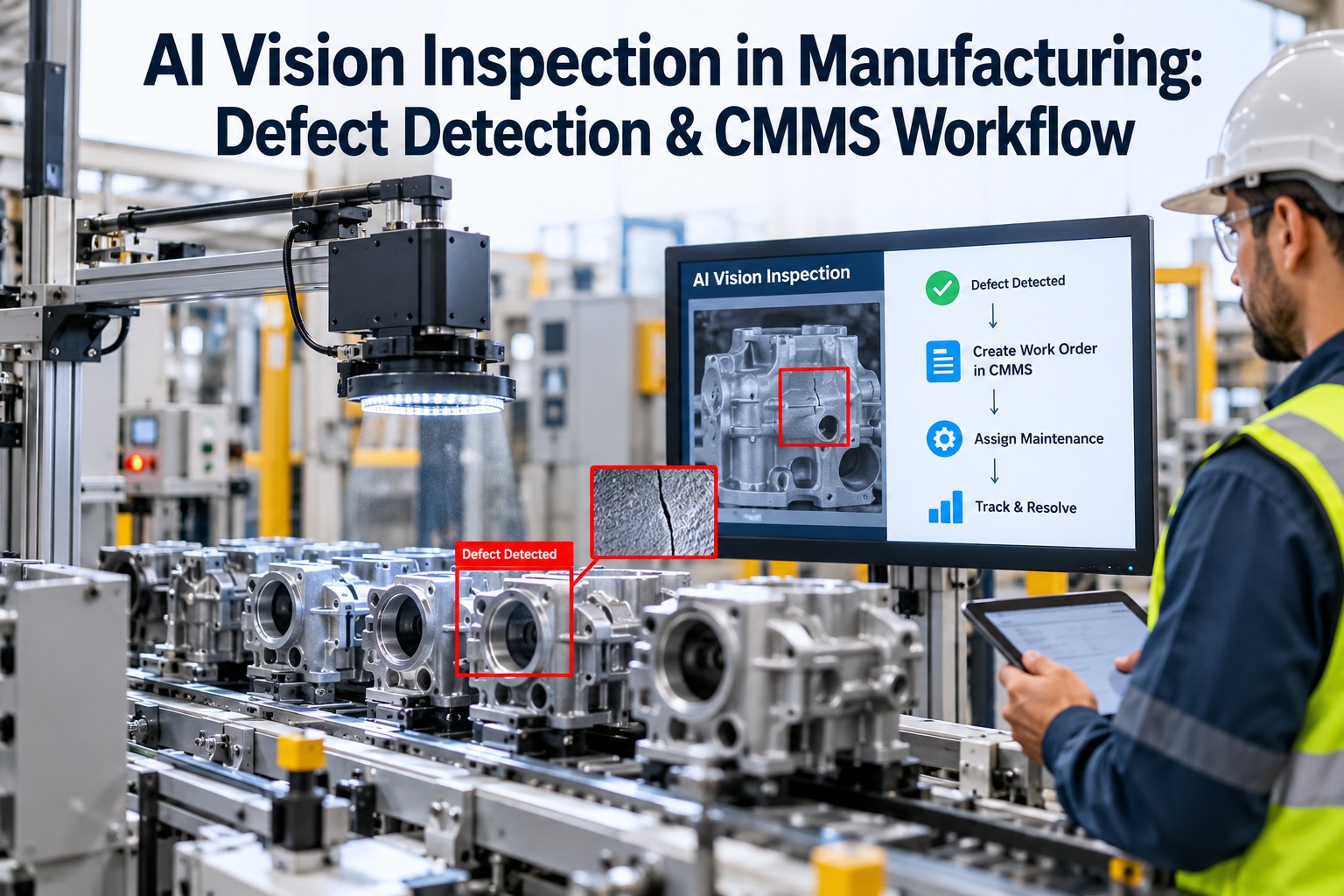
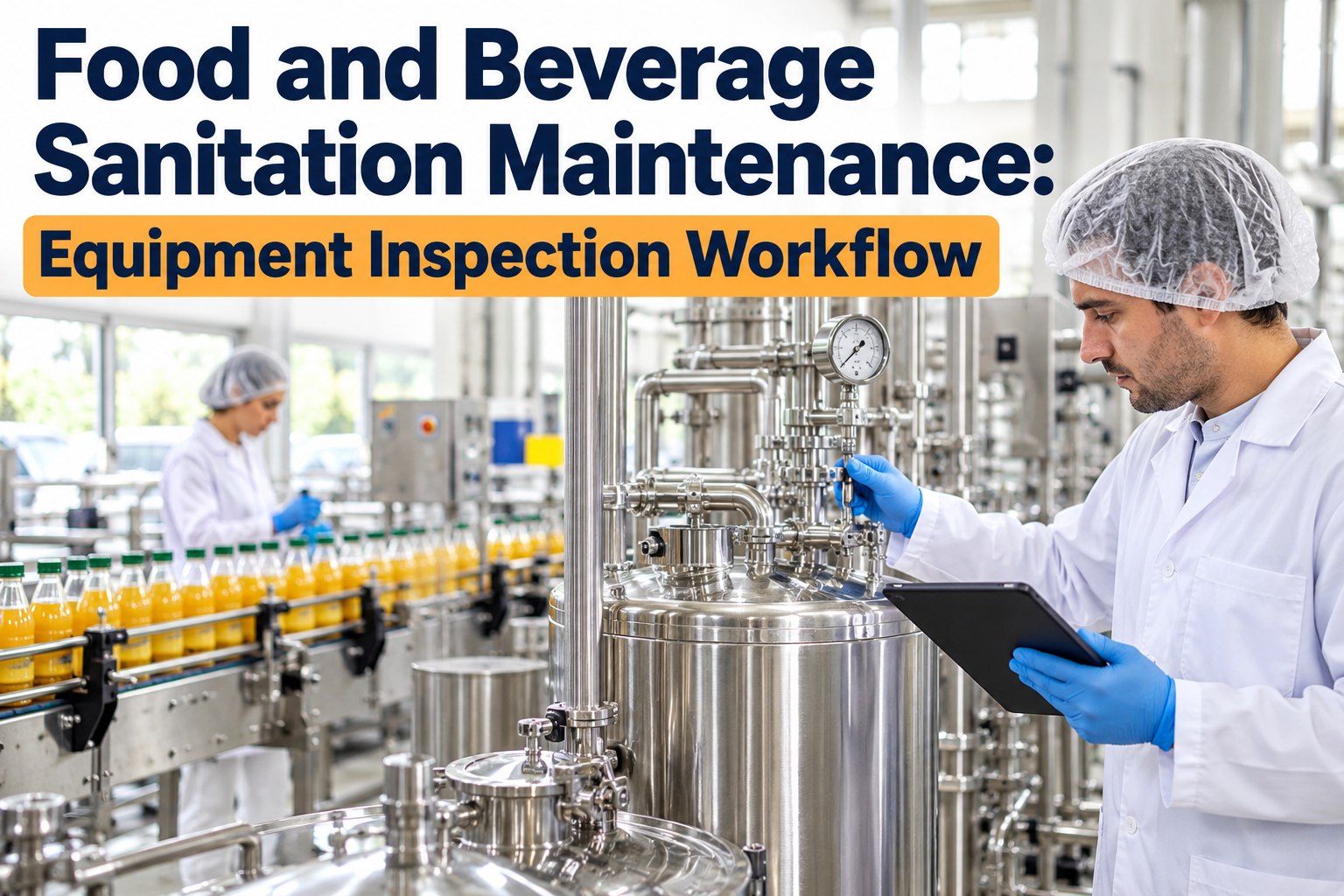
An AI vision camera on the line can catch a sliver of blue glove or a shard of plastic that a human inspector would miss at line speed — but a detection that just rejects the product and moves on solves half the problem. The other half is why it got there, whether the camera is still calibrated, and whether you can prove due diligence in an audit. OXMAINT AI is AI-powered maintenance management software (CMMS) that turns every foreign-object detection into a corrective work order and a root-cause investigation, keeps the vision hardware maintained, and holds the food-safety record. Book a demo to see detection connect to action.
Food & Beverage · AI Vision Foreign-Object Detection
Catching the Contaminant Is Step One. Then What?
AI vision finds the foreign object at line speed — but a reject alone doesn't stop the next one or satisfy an auditor. OXMAINT AI closes the loop: a detection becomes a corrective work order and a root-cause investigation, the camera and sensors stay on a maintenance schedule, and every event is logged as food-safety evidence.
- 1Vision detects
- 2Reject & hold
- 3Work order & RCA
- 4Audit-ready record
What gets detected
Physicalmetal · glass · plastic · stone · wood
Biologicalbone · shell · insects · hair
Processglove bits · belt pieces · lubricant · paint
Every category is a different failure upstream — which is why the detection has to lead to a fix, not just a reject.
No Single Sensor Catches Everything
Vision, X-ray and hyperspectral each see different things — and miss different things. A robust line layers them, and OXMAINT AI ties all their detections into one record. Start a free trial to unify the detections.
Computer vision
Catches: surface plastics, wood, insects, visible foreign objects
Misses: embedded or internal contamination
X-ray
Catches: metal, stone, glass, bone embedded inside product
Misses: materials with density similar to food
Hyperspectral
Catches: plastics, rubber, cartilage, parasites by spectral signature
Misses: anything below the surface layer
Method strengths and limits per foreign-object-detection guidance — vision (surface), X-ray (density/embedded), hyperspectral (chemical/surface). Layering covers the gaps any one leaves. Source: OxMaint FMCG foreign-object-detection guide.
From Detection to Corrective Action
A detection is the start of a workflow, not the end. This is the chain OXMAINT AI runs so a rejected product turns into a prevented recurrence. Book a demo to walk the chain.
1
Detect & reject
The vision system flags the contaminant and the line rejects the unit automatically, with the image captured.
2
Hold the batch
If detections cluster, quarantine the affected batch before it ships — a decision the record supports.
3
Raise the work order
A corrective work order goes to maintenance — a shedding conveyor belt, a failing seal, a broken guard.
4
Find the root cause
Trace the contaminant type to its source upstream so the fix stops the next occurrence, not just this one.
5
Log the evidence
The detection image, the action and the outcome become a timestamped food-safety record.
Turn Every Reject Into a Root-Cause Fix
See how OXMAINT AI takes a foreign-object detection, opens a corrective work order, and traces the contaminant to its source — so the same failure doesn't reach the line twice.
The Camera Is an Asset Too
A vision system only protects the line while it's clean, focused and calibrated. Skip its upkeep and detection quietly degrades — the worst kind of failure, because it's invisible. Start a free trial to schedule vision-system PM.
Lens & housing cleaning
Scheduled cleaning so splatter, condensation and dust don't blind the camera mid-shift.
Calibration checks
Verify focus, lighting and detection thresholds on a schedule so accuracy doesn't drift unnoticed.
Reject-mechanism test
Confirm the air-jet or diverter actually removes a flagged unit — a detection that isn't ejected is useless.
False-reject trending
Watch the false-reject rate — a climbing number means threshold or calibration drift, and wasted good product.
Detection as Food-Safety Evidence
When an auditor or a recall investigation asks "how do you know?", the answer should be a record, not a recollection. Detection tied to a CMMS builds that proof automatically. Book a demo to see the audit trail.
CCP monitoring
Detection points map to HACCP critical control points, monitored continuously rather than by spot check.
Logged images
Every detection keeps its image — visual proof of due diligence for an audit or investigation.
Corrective-action trail
The reject, the work order and the root-cause fix link into one traceable event history.
Batch traceability
A held batch ties to its detections, so a quarantine or recall decision rests on evidence.
Compliance framing per foreign-object-detection guidance: logged images and continuous CCP monitoring support due-diligence and FDA/FSIS-style requirements. Confirm your program with your food-safety team. Source: OxMaint FMCG guide.
How OXMAINT AI Connects Vision to Maintenance
OXMAINT AI is maintenance management software that links the vision system's detections to work orders, the hardware to a PM schedule, and the whole event to a food-safety record — so quality and maintenance work from one source. Start a free trial to connect your line.
-
1
Ingest
Take detection events and images from the vision, X-ray or metal-detection systems on the line.
-
2
Act
Raise a corrective work order and, where needed, a batch hold — with the image attached.
-
3
Maintain
Keep cameras, sensors and reject mechanisms on a PM and calibration schedule.
-
4
Prove
Retain the detection, action and outcome as an audit-ready food-safety record.
Frequently Asked Questions
What can AI vision detect that a metal detector can't?
Surface contaminants a metal detector ignores — plastics, wood, insects, glove fragments and other visible foreign objects. Layering vision with X-ray and metal detection covers the gaps each leaves.
Start a free trial to unify them.
What happens after a foreign object is detected?
The unit is rejected and imaged; if detections cluster, the batch is held. Then a corrective work order and root-cause investigation trace the contaminant to its source.
Book a demo to see the flow.
Why does the vision system itself need maintenance?
A dirty lens or drifted calibration degrades detection silently — the line looks protected while contaminants slip through. Scheduled cleaning and calibration keep accuracy honest.
Start a free trial to schedule it.
How does this support a food-safety audit?
Every detection keeps its image and links to the corrective action, giving continuous CCP monitoring and logged proof of due diligence instead of periodic spot checks.
Book a demo to see the record.
What is a false reject and why track it?
A good unit rejected in error. A rising false-reject rate signals threshold or calibration drift and wastes saleable product — so it's a KPI worth trending, not ignoring.
Start a free trial to trend it.
Detect the Object — Then Stop It Coming Back
Turn every foreign-object detection into a corrective work order, keep the vision hardware calibrated, and hold the food-safety record — on one platform.