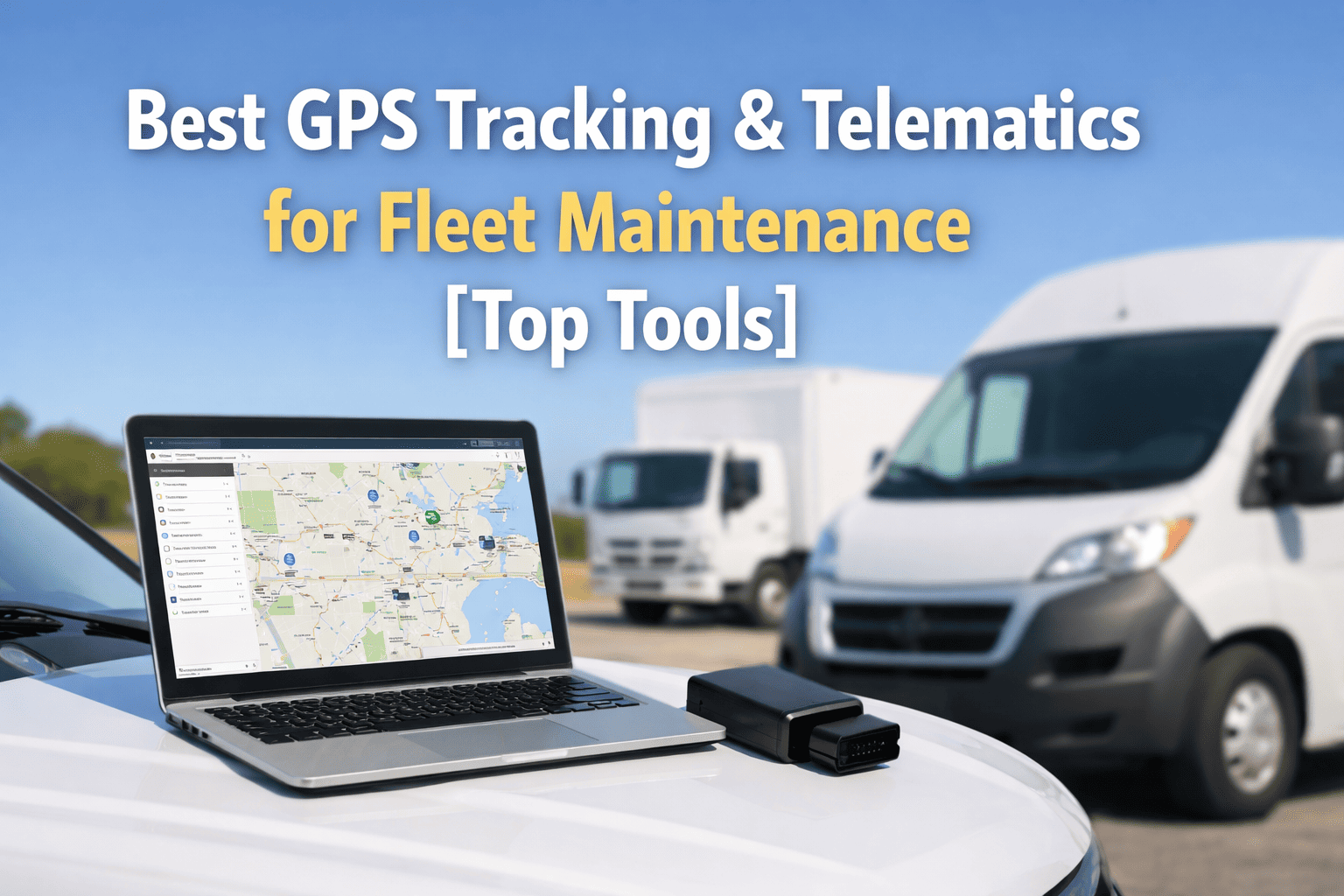
Fleet managers in 2026 face an uncomfortable truth: your vehicles are broadcasting real-time health data every second—engine fault codes, oil pressure readings, coolant temperatures, fuel burn rates—but most of it dies in manufacturer dashboards nobody opens. Meanwhile, your maintenance team schedules oil changes by calendar dates, discovers brake problems at roadside, and spends weekends chasing parts for failures that telematics data predicted three weeks ago. The gap between what your GPS telematics captures and what your maintenance team actually uses is costing the average fleet $1,500-$2,500 per vehicle per year in preventable breakdowns alone. This guide breaks down the GPS tracking and telematics tools that close that gap by connecting live vehicle diagnostics to automated maintenance workflows, predictive AI, and measurable cost reduction. Schedule a free fleet assessment with Oxmaint to see how your existing telematics data can start preventing breakdowns this month.
Why 73% of Fleet Breakdowns Are Preventable with Telematics
The economics of reactive fleet maintenance are brutal. Every unplanned roadside event carries a cascade of costs that extend far beyond the repair itself—towing fees, emergency parts markup, driver downtime, cargo delays, and customer penalties. Modern telematics platforms detect the warning signals behind these failures, but the data only prevents breakdowns when it connects to automated maintenance action inside a CMMS.
$15K+
Average total cost per roadside breakdown when you include towing, emergency labor, cargo rerouting, and lost productivity
16%
Fuel savings reported by GPS-tracked fleets in 2025—nearly double the 9% average from the previous year
47%
Of fleets using GPS telematics achieve full return on investment in under 12 months through combined savings
From OBD-II Port to Work Order: How Telematics Automation Works
GPS telematics for fleet maintenance is not about dots on a map. It is about creating an unbroken data chain from the vehicle's engine control module to your maintenance shop's work queue—with AI making the triage decisions in between. Here is how that chain works when properly connected to a CMMS platform like Oxmaint.
The Telematics-to-Maintenance Pipeline
Vehicle Sensors
OBD-II, CAN bus, and OEM telematics capture DTCs, engine hours, temperature, pressure, and GPS at sub-second intervals
Data Normalization
Multi-OEM data from Freightliner, Volvo, Paccar, Cat, and Komatsu unified into one consistent schema
AI Analysis
Machine learning compares live signals against baselines, benchmarks, and failure histories to predict problems
Automated Work Orders
Critical faults become prioritized shop tasks. Parts pre-staged. Technician assigned. No manual data entry required.
Connect your fleet's existing telematics to automated maintenance today. Sign up for a free Oxmaint account and start converting live fault codes into prioritized work orders within your first week of setup.
6 Telematics Features That Cut Unplanned Downtime in Half
Fleet telematics platforms offer dozens of features, but only a handful directly move the needle on maintenance costs and vehicle uptime. These six capabilities consistently deliver the highest ROI based on industry deployment data from GPS-tracked fleets across transportation, construction, and field service sectors.
High Priority
Live Fault Code Alerts (DTC Monitoring)
Engine, transmission, ABS, and emissions fault codes delivered to your maintenance team the moment they trigger—not at the next scheduled shop visit. AI interprets severity so your team knows what needs action now versus what can wait.
Automation
Dual-Trigger Preventive Maintenance
PM schedules fire on actual engine hours OR real mileage—whichever threshold arrives first. Eliminates the number one cause of missed services: inaccurate driver-reported hour meters and calendar-based guessing.
AI-Powered
Predictive Component Failure Detection
AI correlates oil temperature trends, fuel efficiency degradation, vibration data, and fault code frequency to forecast specific component failures 2-4 weeks before they occur. Parts pre-staged, repairs scheduled during planned downtime.
Safety + Savings
Driver Behavior to Component Wear Mapping
Connects harsh braking frequency, rapid acceleration events, and excessive idle time directly to brake pad wear rates, drivetrain stress levels, and fuel waste. Personalized coaching extends vehicle life and cuts repair spend.
Visibility
Real-Time Vehicle Health Scoring
Every vehicle receives a dynamic green/yellow/red health score calculated from combined telematics signals. Fleet managers assign critical loads only to green-status units and prioritize shop resources by actual urgency.
Compliance
Automated DOT & FMCSA Documentation
Digital DVIR inspections, automated ELD logging, and timestamped maintenance records created by every sensor event and work order completion. Audit-ready documentation assembled automatically—no scrambling when DOT calls.
Manual Fleet Maintenance vs. Telematics-Connected CMMS: A Side-by-Side Look
The operational difference between paper-based maintenance and telematics-integrated workflows is not incremental. It is a structural shift in how vehicles get serviced, how failures get discovered, and how costs get controlled. The comparison below draws from real fleet performance benchmarks.
Maintenance Operations Compared
Without Telematics
Fixed-interval PMs based on estimated mileage or calendar dates
Fault codes found during next shop visit—or roadside breakdown
Drivers self-report engine hours and vehicle problems (often delayed)
Four separate OEM portals for a mixed-manufacturer fleet
Compliance documentation assembled manually before audits
8-15%higher annual maintenance spend from undetected issues and emergency repairs
With Telematics + CMMS
Dual-trigger PMs on real-time engine hours AND actual mileage data
DTCs auto-convert to prioritized work orders within minutes
AI predicts failures 2-4 weeks before vehicles get stranded
All manufacturer data normalized into one unified dashboard
Every sensor event creates timestamped, audit-ready documentation
20-30%reduction in total repair costs through preventive and predictive scheduling
Stop Paying for Breakdowns Your Data Already Predicted
Oxmaint connects GPS tracking and OEM telematics from every manufacturer into a single maintenance command center. Fault codes become work orders. Engine hours trigger PM schedules. AI flags what fails next. Your vehicles earn revenue on the road instead of racking up costs in the shop.
Which Telematics Signals Should Trigger Automated Maintenance?
Every telematics device streams dozens of data points per vehicle. The signals below have the highest maintenance impact and represent the triggers that fleet operations teams should configure first inside their CMMS to start capturing value immediately.
Telematics Signals with Highest Maintenance ROI
Signal
Source
Maintenance Value
CMMS Automation
Engine DTCs
ECM / J1939 / OBD-II
Active failures, emissions violations, derate warnings
Auto-generate work orders with severity priority
Engine Hours
OEM telematics API
Oil change, filter, and component lifecycle timing
Dual-trigger PM (hours + miles, first threshold fires)
Fuel Burn Rate
Flow sensors / ECM
Efficiency drops indicate injector, turbo, or mechanical problems
Alert when consumption exceeds baseline by set threshold
Coolant Temp
ECM sensors
Overheating risk, thermostat and water pump degradation
Immediate critical alert and pull-over instruction
Oxmaint normalizes all of these data streams from multiple telematics providers into one unified maintenance dashboard. Sign up free to connect your fleet's telematics feeds and start configuring automated maintenance triggers today.
Proven Fleet Savings: GPS Telematics ROI by Category
The 2025 Fleet Technology Trends Report confirmed that financial returns from GPS telematics are accelerating across every cost category. Fleets that connect telematics to CMMS platforms see the highest returns because data flows directly into cost-reducing action rather than sitting in unused dashboards.
Integration Roadmap: Live Telematics to Predictive Maintenance in 6 Weeks
Most fleet vehicles manufactured after 2015 already have OEM telematics installed and transmitting data. The missing step for most operations is connecting that data to automated maintenance workflows. The timeline below delivers measurable value without ripping out existing systems or disrupting daily operations.
From Raw Telematics to AI-Powered Maintenance
Week 1-2
Connect and Catalog
Inventory all vehicles and existing OEM telematics feeds. Activate dormant data services. Connect manufacturer APIs to Oxmaint. Establish data quality baselines for each vehicle class.
Week 3-4
Configure Triggers
Set DTC alert thresholds by severity. Build dual-trigger PM schedules. Create work order templates for your 20 most common fault codes. Deploy the mobile app to field technicians.
Week 5-6
Automate and Train
Activate fault-to-work-order automation. Train shop teams on AI recommendations. Establish technician feedback loops that continuously improve prediction accuracy.
Week 7+
Predict and Scale
Turn on predictive failure models for high-impact components. Add driver behavior-to-wear correlation. Expand monitoring to additional facilities and asset types.
Turn Every Mile of Fleet Data Into Prevented Breakdowns
Your vehicles are already generating thousands of data points every trip. Oxmaint connects GPS tracking and OEM telematics across your entire fleet—normalizing multi-manufacturer diagnostics, automating work orders from live fault codes, and predicting component failures before they become roadside emergencies. The data exists. The question is whether you are using it.
What is the difference between GPS fleet tracking and fleet telematics?
GPS tracking shows vehicle location—where it is and where it has been. Fleet telematics adds engine diagnostics (via OBD-II), fuel consumption data, driver behavior metrics, and component health monitoring on top of location. When telematics connects to a CMMS, that data powers automated PM scheduling, predictive failure detection, and real-time vehicle health scoring. Schedule a demo to see live fault-code-to-work-order automation inside Oxmaint.
Can I unify telematics data from multiple vehicle manufacturers in one platform?
Yes. Oxmaint aggregates telematics from Freightliner, Volvo, Paccar, Caterpillar, Komatsu, and third-party ELD providers via standardized APIs. The platform normalizes fault codes and operating metrics into a unified dashboard, so fleet managers see one consistent maintenance view regardless of which OEM built the equipment.
How quickly does telematics-connected maintenance pay for itself?
Industry benchmarking from 2025 shows 47% of GPS-tracked fleets achieve positive ROI within the first year. Quick wins from automated DTC detection and optimized PM scheduling typically pay for the system within 3-6 months, with savings compounding as AI models learn your fleet's specific operating patterns. Sign up free and start measuring your fleet's maintenance savings from day one.
Do I need to install new hardware if my vehicles already have OEM telematics?
Most fleet equipment built after 2015 already has OEM telematics transmitting data. Oxmaint connects to that existing data via API—no new hardware required. For older vehicles, plug-and-play OBD-II devices install in minutes. The priority is connecting data that already exists to automated workflows instead of leaving it unused in separate manufacturer portals.
What is the difference between predictive and preventive maintenance with telematics?
Preventive maintenance follows fixed intervals—oil change every 500 hours or 15,000 miles. Predictive maintenance uses AI to analyze real-time telematics patterns like temperature trends, efficiency changes, and fault code frequency to forecast specific failures weeks before they happen. Parts get pre-staged, repairs happen during planned windows, and emergency breakdowns drop dramatically. Book a demo to see how AI predictive maintenance prevents failures before they strand your fleet.
By oxmaint
✨
Experience Oxmaint's Power
Take a personalized tour with our product expert to see how OXmaint can help you streamline your maintenance operations and minimize downtime.