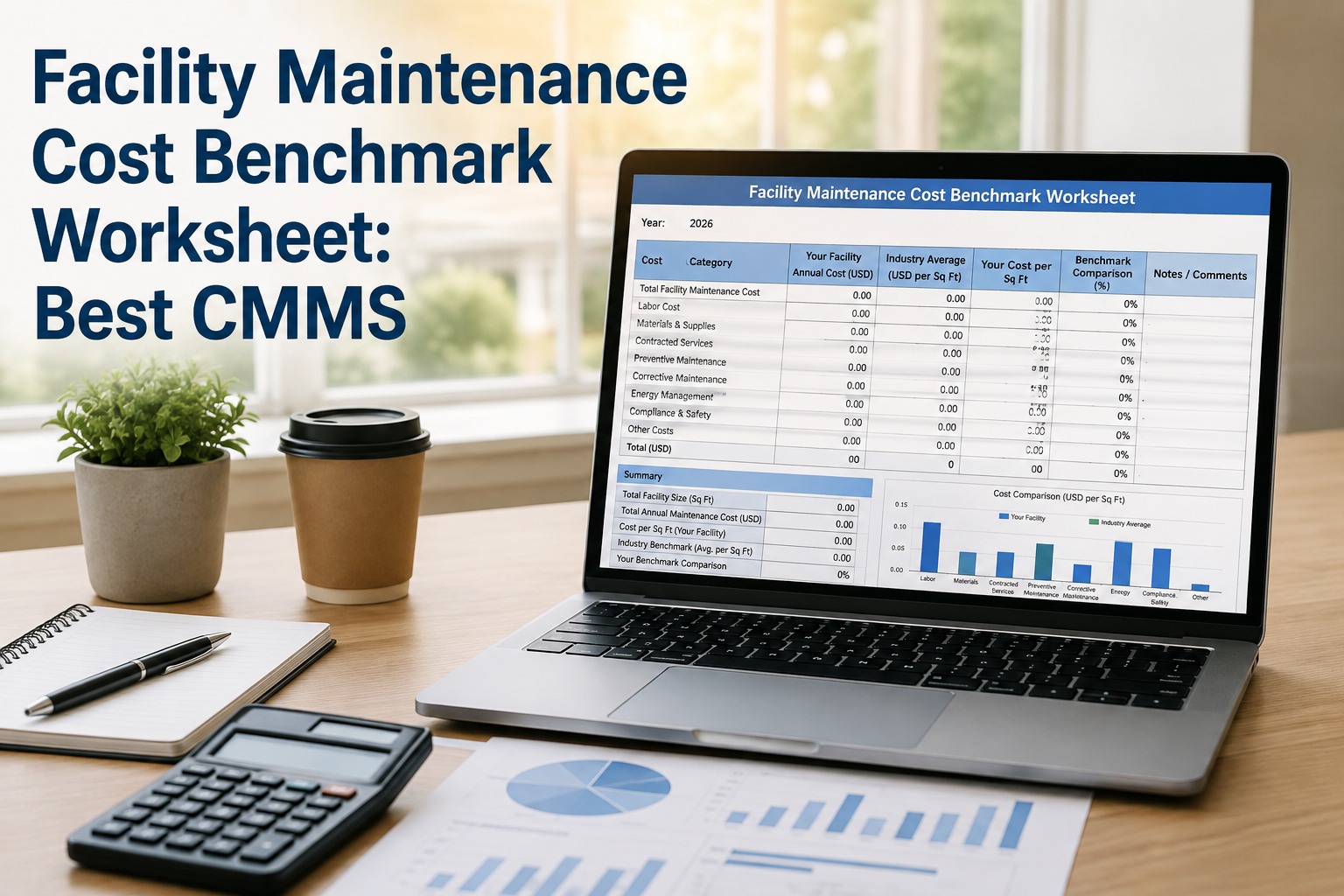
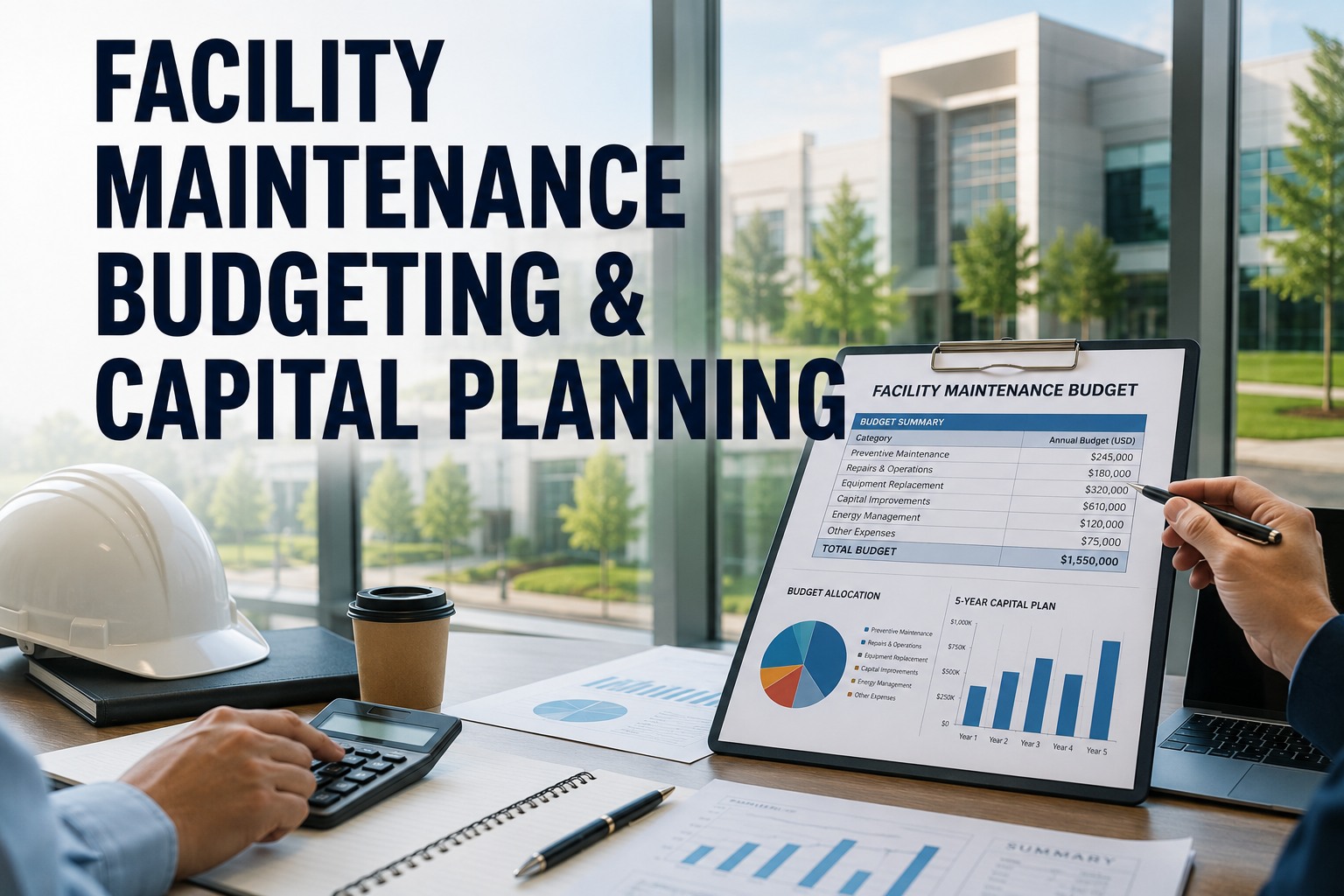
A manufacturing facility submitted a $1.8M maintenance budget request for 2026. The CFO cut it to $1.2M because the maintenance director could not explain why labor costs jumped 22% year-over-year, could not show which equipment would fail without the requested PM schedule, and had no data proving that emergency repairs cost 4.8x more than planned maintenance. The director had gut feel and last year's invoices. The CFO had a spreadsheet showing maintenance as the third-largest variable cost with zero ROI justification. Six months into the year, three unplanned equipment failures cost $680,000 in downtime and emergency repairs, the PM backlog grew to 847 overdue tasks, and the maintenance team requested a $400K supplemental budget to catch up. Total actual spend: $1.6M plus the operational cost of failures. The budget that was cut to save $600K ended up costing $800K more than the original request. The failure was not in the maintenance strategy, it was in budget justification. Without CMMS data linking asset condition to cost projections, maintenance budgets compete against every department using the same subjective argument, and maintenance always loses because it cannot prove prevention value before the failures occur. Schedule a demo to see how CMMS-generated budget reports transform maintenance from a cost guess into a data-backed investment case.
2-4%
of asset replacement value is the industry benchmark for annual maintenance OpEx
60-70%
of budget should fund planned maintenance vs 30-40% reactive in world-class operations
4.8x
emergency repairs cost more than planned maintenance due to overtime, expedited parts, and production loss
10-15%
contingency fund required to buffer against unplanned equipment failures and regulatory changes
Turn Budget Requests Into Approvals
CMMS Data Converts Maintenance From Cost Center to Investment With Measurable Returns
OxMaint generates the condition scoring, cost-per-asset tracking, planned-vs-reactive ratios, and rolling CapEx forecasts that CFOs require to approve maintenance budgets. Asset health data, failure probability models, and deferred maintenance risk quantification replace guesswork with evidence-based budget justification.
The Four Budget Categories Every Maintenance Plan Requires
Effective maintenance budgets separate spending into four distinct categories, each with different approval thresholds, forecast methodologies, and ROI expectations. Blending these categories creates the ambiguity that leads to budget cuts. Separating them creates the clarity that wins approval. Understanding how much goes to each category and why is the foundation of defensible budget planning.
Day-to-day maintenance and repair spending covering labor, parts, consumables, contractor services, and minor corrective work. This is the largest category representing 60-70% of total maintenance spend in well-managed operations. Industry benchmark: 2-4% of total asset replacement value annually for commercial properties, 1.5-2.5% for newer facilities, 3-5% for aging infrastructure.
Includes:
Preventive maintenance tasks
Corrective repairs under $5K
Consumables and supplies
Routine contractor services
In-house labor costs
Minor equipment adjustments
Target split: 70% planned preventive, 30% reactive corrective for optimal cost control
Major asset replacements and system upgrades typically above $5K-$10K with useful life exceeding one year. Capital budgets require multi-year planning horizons because large equipment replacements cannot be deferred without compounding risk. Facilities without rolling 5-10 year CapEx models face $120K-$250K chiller replacements as crises rather than planned capital events.
Includes:
HVAC system replacements
Roof and envelope repairs
Electrical infrastructure
Production equipment
Building automation systems
Major component overhauls
68% of reactive portfolios overrun CapEx by 20%+ annually without condition-based forecasting
Buffer fund for unplanned equipment failures, emergency repairs, regulatory compliance changes, and supply chain disruptions. This is not discretionary spending, it is risk mitigation. Industry best practice allocates 10-15% of total maintenance budget to contingency. Organizations without contingency reserves face emergency budget requests mid-year when critical equipment fails unexpectedly.
Covers:
Unexpected equipment failures
Emergency contractor call-outs
Expedited parts shipping
Regulatory compliance changes
Natural disaster recovery
Supply chain disruptions
Contingency usage below 50% suggests good PM effectiveness; above 80% indicates chronic reactive mode
Investments in maintenance effectiveness including CMMS implementation, predictive maintenance technologies, technician training, tool upgrades, and process optimization. This category is the first cut in tight budgets but delivers the highest ROI. CMMS platforms typically pay for themselves within 6-18 months through labor productivity gains, parts inventory optimization, and downtime reduction.
Includes:
CMMS software and sensors
Predictive maintenance tech
Technician certifications
Specialized tools and equipment
Process documentation
Workflow automation
CMMS ROI averages 10:1 within 18 months through labor savings and downtime prevention
How CMMS Data Transforms Budget Justification
Budget requests fail when they present costs without context. CMMS platforms generate the KPIs that convert maintenance spending from an opaque overhead into a measurable investment with tracked returns. These six data points are what CFOs and finance committees require to approve maintenance budgets, and manual record systems cannot produce them at the required frequency or granularity. Organizations tracking these metrics quarterly see 40% higher budget approval rates and 35% lower mid-year supplemental requests compared to teams relying on annual invoices and spreadsheets.
01
Cost Per Asset Category
Total annual maintenance spend divided by asset category (HVAC, electrical, production equipment, building envelope). Reveals which systems consume budget disproportionately and identifies candidates for replacement vs continued repair. Example: if chillers represent 8% of asset value but 28% of maintenance spend, replacement NPV analysis becomes urgent.
CMMS auto-calculates from work order cost fields tagged to asset records
02
Planned vs Reactive Ratio
Percentage of maintenance spend on scheduled preventive work versus emergency corrective repairs. Target: 70% planned, 30% reactive for world-class operations. Ratios below 50% planned indicate chronic firefighting mode where emergency costs compound. Every 10% improvement in planned ratio typically reduces total maintenance cost by 8-12%.
CMMS tracks work type classification on every work order automatically
03
Asset Condition Scores
Health rating (1-5 or 1-10 scale) for each critical asset based on age, maintenance history, inspection results, and failure frequency. Condition scoring identifies which equipment will require CapEx replacement within 1-3-5 year horizons. Without condition data, capital replacements arrive as budget crises instead of planned investment events.
CMMS calculates condition scores from inspection data and failure frequency
04
Deferred Maintenance Backlog Value
Dollar value of all overdue PM tasks, pending repairs, and delayed capital projects. Every dollar of deferred maintenance costs $4 later due to accelerated deterioration and secondary failures. Backlog trending upward signals inadequate budget funding; trending downward validates budget effectiveness. Facilities with backlogs exceeding 20% of annual budget face compounding failure risk.
CMMS sums cost estimates from all overdue work orders and inspections
05
Mean Time Between Failures (MTBF)
Average operating hours between equipment failures by asset type. MTBF improvement demonstrates PM program effectiveness. Example: if HVAC MTBF increases from 2,200 hours to 3,800 hours year-over-year, the PM budget is provably extending equipment life and reducing failure frequency. Declining MTBF indicates underfunding or ineffective maintenance strategy.
CMMS calculates from failure work orders and equipment runtime tracking
06
Rolling 5-Year CapEx Forecast
Projected capital replacement timeline for all major equipment based on condition scores, age curves, and useful life estimates. Rolling forecasts update quarterly as condition data changes. Facilities presenting 5-year CapEx models get capital approved 40% faster because finance teams can plan for large expenses instead of reacting to emergency requests.
CMMS generates forecast from asset age + condition + expected useful life fields
Teams using CMMS platforms to generate these six KPIs report 85% first-time budget approval rates compared to 52% for teams relying on manual records. Start a free trial and see cost-per-asset, planned-vs-reactive ratios, and rolling CapEx forecasts auto-generate from your work order data in real time.
Budget Planning: The Data-Driven Five-Step Process
Step 1
Analyze 3-5 Years Historical Spend
Pull complete maintenance cost history covering minimum three years, ideally five. Organize by asset category, work type (preventive vs corrective), labor vs parts vs contractor, and month-by-month trending. Identify seasonal patterns, one-time capital events to exclude, and cost inflation trends. Longer historical periods improve forecast accuracy but require inflation adjustment to current dollars.
Output: Baseline cost per asset category, annual growth rate, seasonal spending patterns
→
Step 2
Update Asset Condition Assessments
Conduct or review condition inspections for all critical equipment. Score each asset on 1-5 or 1-10 scale reflecting current health, remaining useful life, and failure risk. Photo-document deterioration. Review maintenance history for chronic repeat failures indicating approaching end-of-life. Equipment scoring below threshold triggers CapEx replacement evaluation in next step.
Output: Condition score per asset, replacement candidates list, inspection photos
→
Step 3
Build Rolling 5-Year CapEx Model
For every asset with condition score below replacement threshold or age exceeding 80% of expected useful life, project replacement year and cost. Group by fiscal year to create rolling capital forecast. Include vendor quotes for large items. Update model quarterly as condition data changes. This transforms capital replacements from budget crises into planned investment events with multi-year visibility.
Output: Year-by-year capital requirement, total 5-year CapEx projection, priority sequence
→
Step 4
Calculate OpEx Budget by Category
Project operating maintenance spend using baseline costs from Step 1 adjusted for: asset additions/disposals, condition-driven PM schedule changes, labor rate increases, parts price inflation, and planned-vs-reactive ratio improvement targets. Split into subcategories: preventive maintenance, corrective repairs, consumables, contractor services, utilities. Add 10-15% contingency for unplanned events.
Output: Line-item OpEx budget by category, monthly cash flow projection, variance thresholds
→
Step 5
Generate Executive Budget Package
Assemble presentation including: total budget request with YoY comparison, cost-per-asset trending showing efficiency gains, planned-vs-reactive ratio target showing shift toward prevention, rolling CapEx forecast proving visibility into large expenses, deferred maintenance risk quantification if budget is cut, and ROI metrics from process improvement investments. Include variance analysis if prior year came in under budget.
Output: Executive summary, detailed line-item budget, supporting KPI charts, approval request
Organizations completing this five-step process report average 18-day budget approval cycle compared to 47-day average for teams submitting spreadsheet-only requests. The data-driven approach answers every CFO question before it is asked. Book a demo to see how OxMaint auto-generates the historical analysis, condition scoring, CapEx forecasting, and KPI dashboards that make Steps 1-5 a two-week process instead of a two-month scramble.
Budget Control: Monthly Variance Tracking vs Annual Surprises
Annual Budget Review Only
•
Spend tracked quarterly or annually in spreadsheets manually updated from invoices
•
Overruns discovered months after they occur when correction is impossible
•
No visibility into which asset categories or work types drive variance
•
Budget cuts made blindly across all categories without understanding root causes
•
Year-end deficits require emergency supplemental budget requests to close fiscal year
•
Multi-site portfolios cannot benchmark properties or reallocate budget between locations
Result: Overruns compound undetected for 6-9 months. Course correction impossible. Supplemental budget requests damage credibility.
CMMS Real-Time Budget Tracking
•
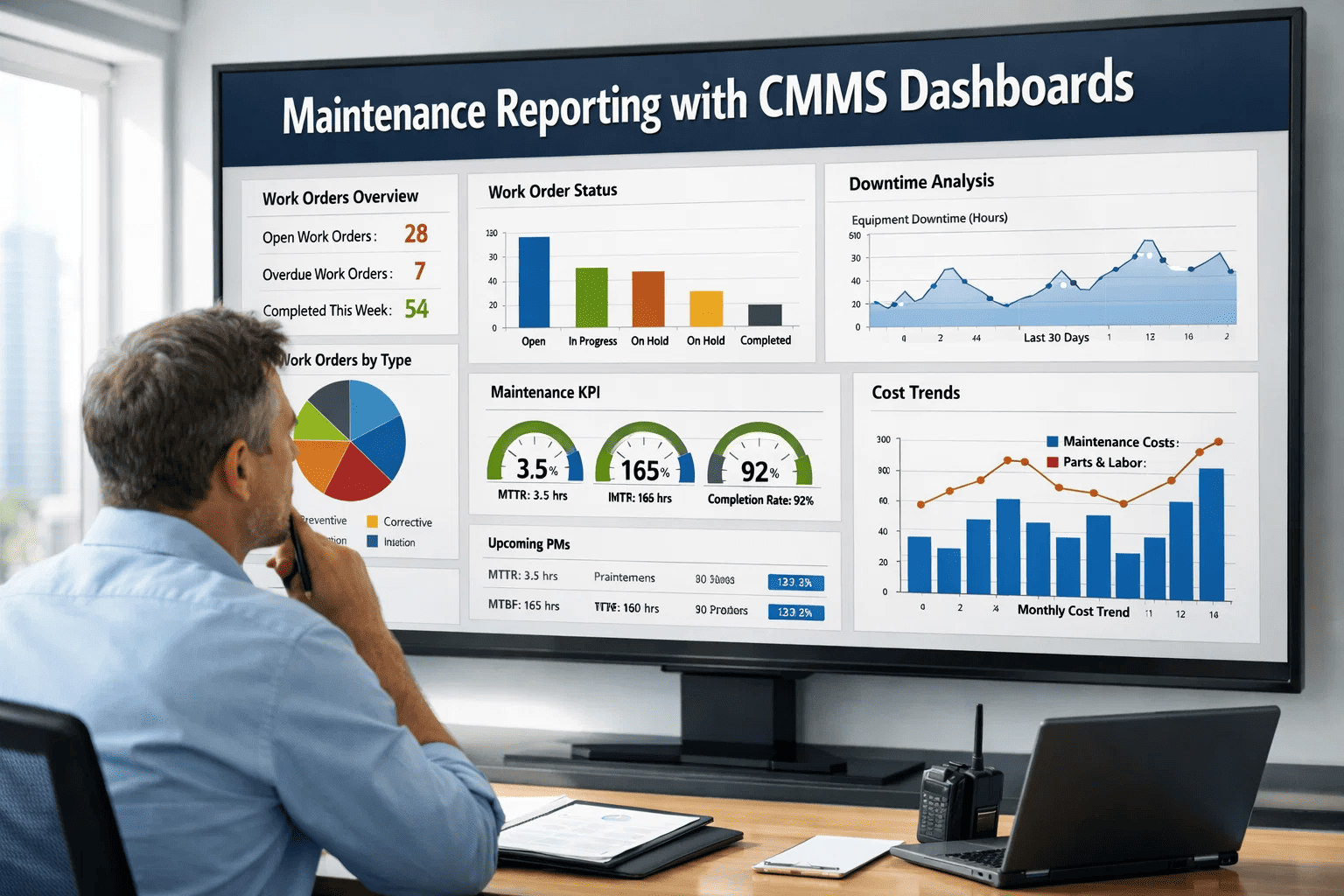
Every work order captures actual cost the day it closes feeding live budget dashboard
•
Monthly variance alerts flag overspend by asset category before it compounds
•
Drill-down reports show exactly which equipment or work types drive budget variance
•
Targeted spending adjustments address root causes instead of across-the-board cuts
•
Rolling 12-month forecast updates weekly showing projected year-end position
•
Portfolio dashboard benchmarks cost-per-sqft across all properties enabling budget reallocation
Result: Variance detected within 30 days. Course corrections prevent overruns. Year-end actuals within 3-5% of budget consistently.
ROI Metrics That Win Budget Approval
$4 saved
for every $1 of deferred maintenance prevented
Delaying a $10K repair today costs $40K later due to secondary failures and accelerated deterioration
22-35%
reduction in total maintenance cost
Moving from 40% planned / 60% reactive to 70% planned / 30% reactive mix through CMMS-enabled PM scheduling
12-18 hrs
per week technician productivity gain
Mobile work orders, automated scheduling, parts pre-staging eliminate administrative overhead and travel waste
15-25%
parts inventory cost reduction
Accurate consumption tracking, automated reorder points, and elimination of duplicate emergency orders
40% faster
capital budget approval
Rolling 5-year CapEx forecasts with condition data enable finance teams to plan large expenses proactively
85% vs 52%
first-time budget approval rate
Teams presenting CMMS-generated KPIs vs teams submitting invoice-based spreadsheet requests
BUDGET REQUESTS BUILT ON DATA GET APPROVED
Stop
Guessing.
Start
Proving.
OxMaint transforms maintenance spending from an opaque overhead into a measurable investment with tracked ROI. Asset condition scoring, planned-vs-reactive tracking, rolling CapEx forecasts, and real-time variance monitoring give you the KPIs that CFOs require to approve budgets and the financial control to deliver on them.
85%
First-time approval rate with CMMS budget reports
18
days
Average approval cycle vs 47-day manual process
3-5%
Budget variance with monthly tracking vs 15-20% annual
Frequently Asked Questions
01
What percentage of asset replacement value should maintenance budgets represent?
Industry benchmarks recommend 2-4% of current replacement asset value for annual maintenance OpEx in commercial facilities. Class A buildings with newer systems typically run 1.5-2.5% while older facilities with aging infrastructure require 3-5%. Manufacturing plants range from 2-6% depending on equipment intensity and production demands. The critical metric is not the absolute percentage but the planned-to-reactive ratio within that spend. Organizations maintaining 70% planned / 30% reactive consistently hit the lower end of benchmark ranges while reactive-heavy operations push toward the top even with newer equipment.
02
How do you calculate contingency budget for unexpected failures?
Allocate 10-15% of total maintenance budget to contingency reserves for unplanned equipment failures, emergency repairs, and regulatory compliance changes. Base the percentage on historical emergency repair frequency and average failure cost. Facilities with mature PM programs and low reactive ratios can budget toward the lower 10% range. Operations in reactive mode or with aging critical equipment should budget 15% or higher. Track contingency utilization monthly. Usage below 50% annually suggests overfunding or excellent PM effectiveness. Usage exceeding 80% indicates chronic reactive firefighting requiring PM strategy overhaul.
03
What CMMS reports do CFOs need to approve maintenance budgets?
Finance teams require six core reports: cost-per-asset category showing where budget is consumed, planned-vs-reactive ratio demonstrating shift toward prevention, asset condition scores identifying capital replacement timing, deferred maintenance backlog quantifying risk of underfunding, MTBF trending proving PM program effectiveness, and rolling 5-year CapEx forecast enabling multi-year financial planning. These reports convert maintenance from cost center to measurable investment. OxMaint auto-generates all six from daily work order data with no manual compilation.
Start a free trial to see these reports populate from your asset and work order records automatically.
04
How often should maintenance budgets be reviewed and updated?
Budget variance should be reviewed monthly with category-level detail showing actual vs projected spend by asset type and work type. Monthly reviews enable course corrections before overruns compound. Quarterly executive reviews assess strategic variances such as planned-vs-reactive ratio changes or deferred maintenance backlog growth. Annual budget planning cycles incorporate 3-5 years historical data, updated asset condition assessments, and rolling CapEx forecast revisions. CMMS platforms enable continuous budget monitoring through real-time dashboards eliminating manual monthly compilation effort.