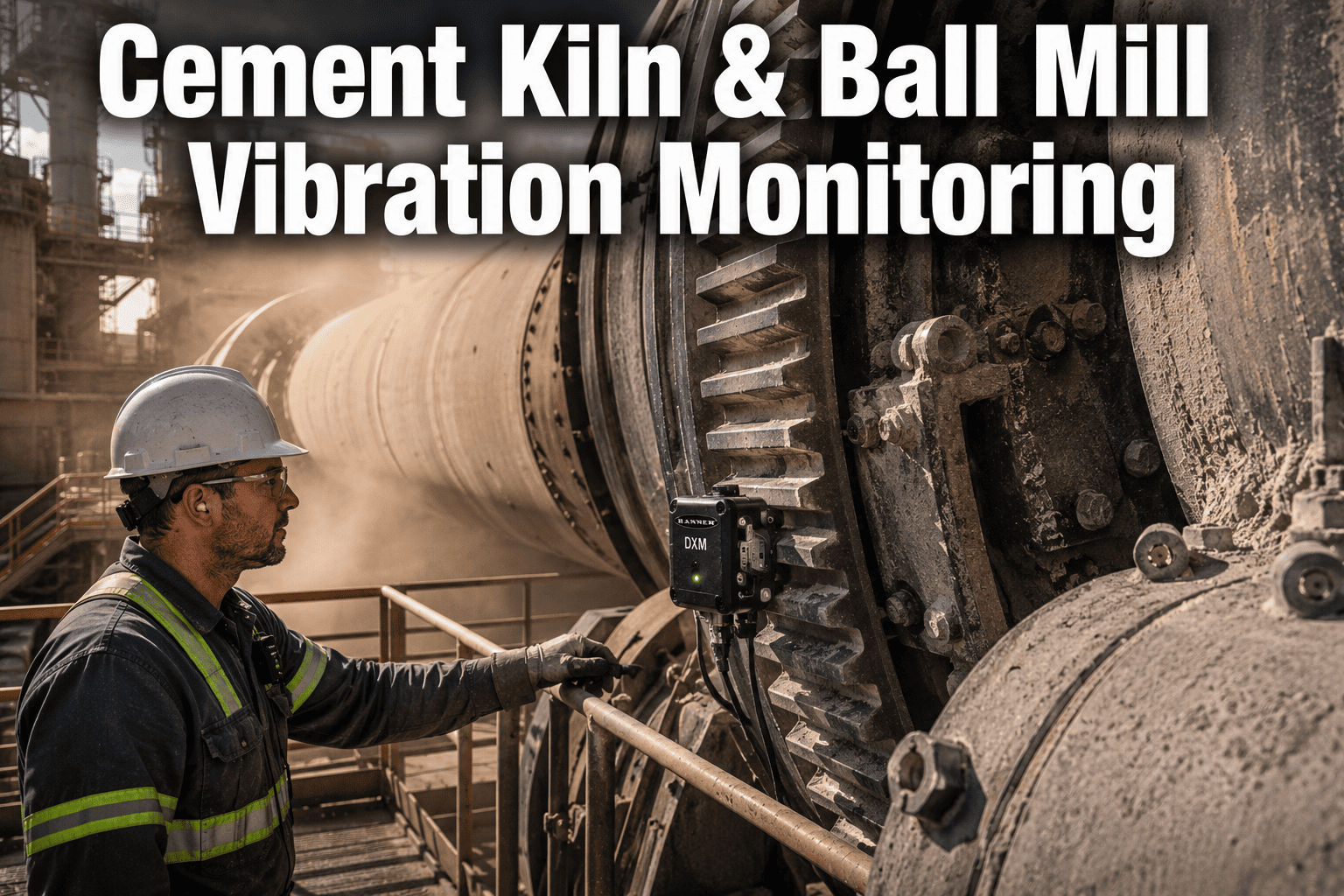
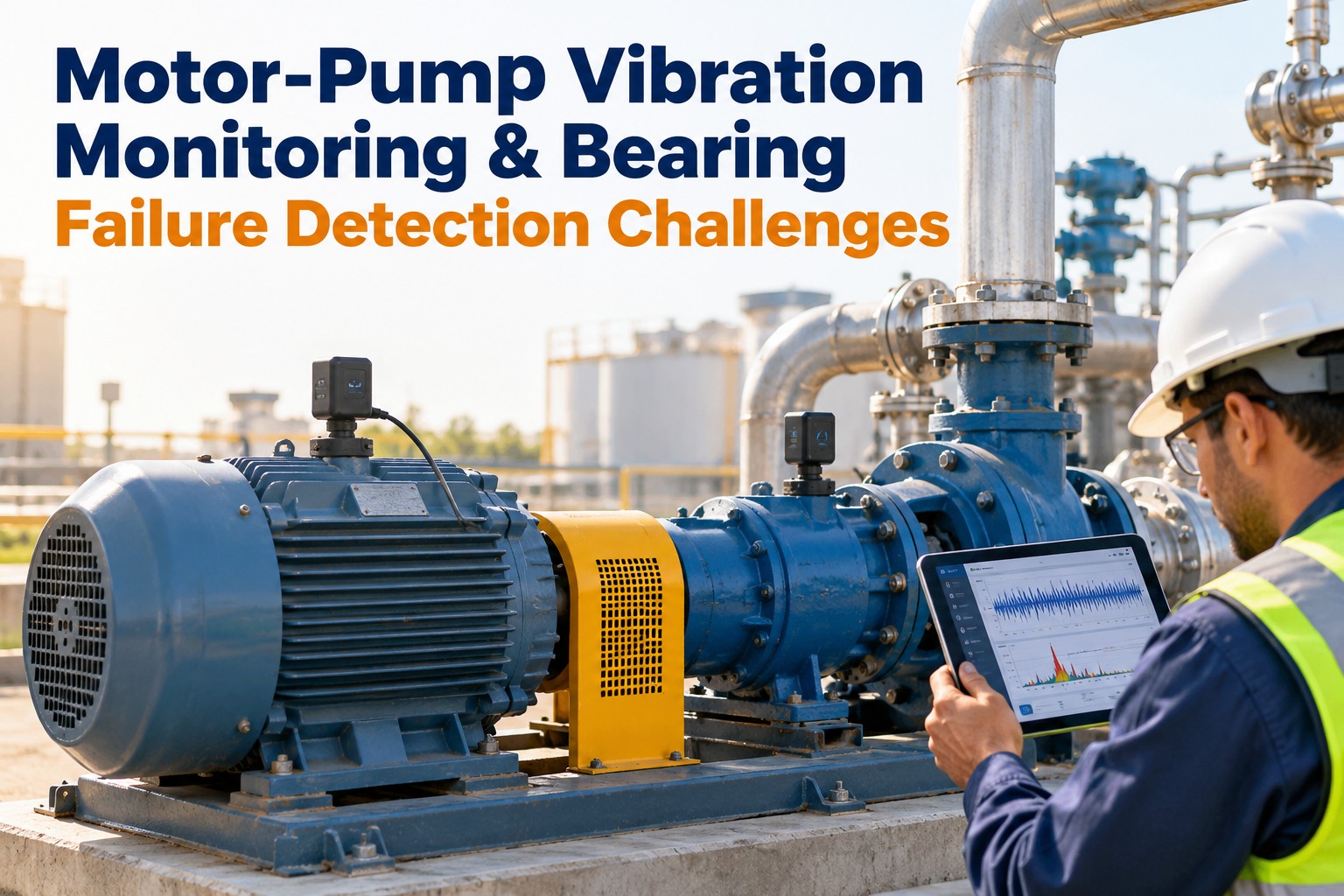
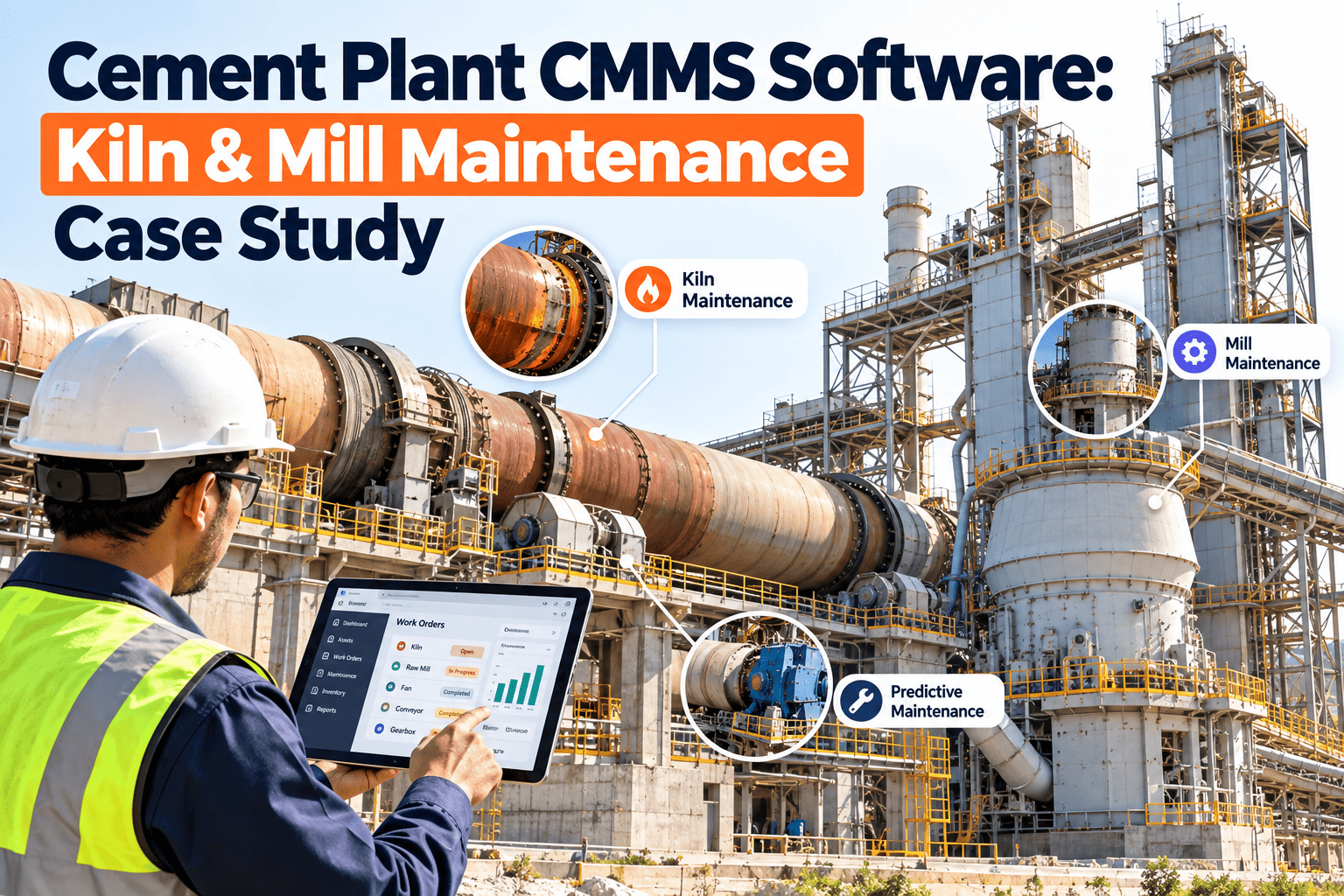
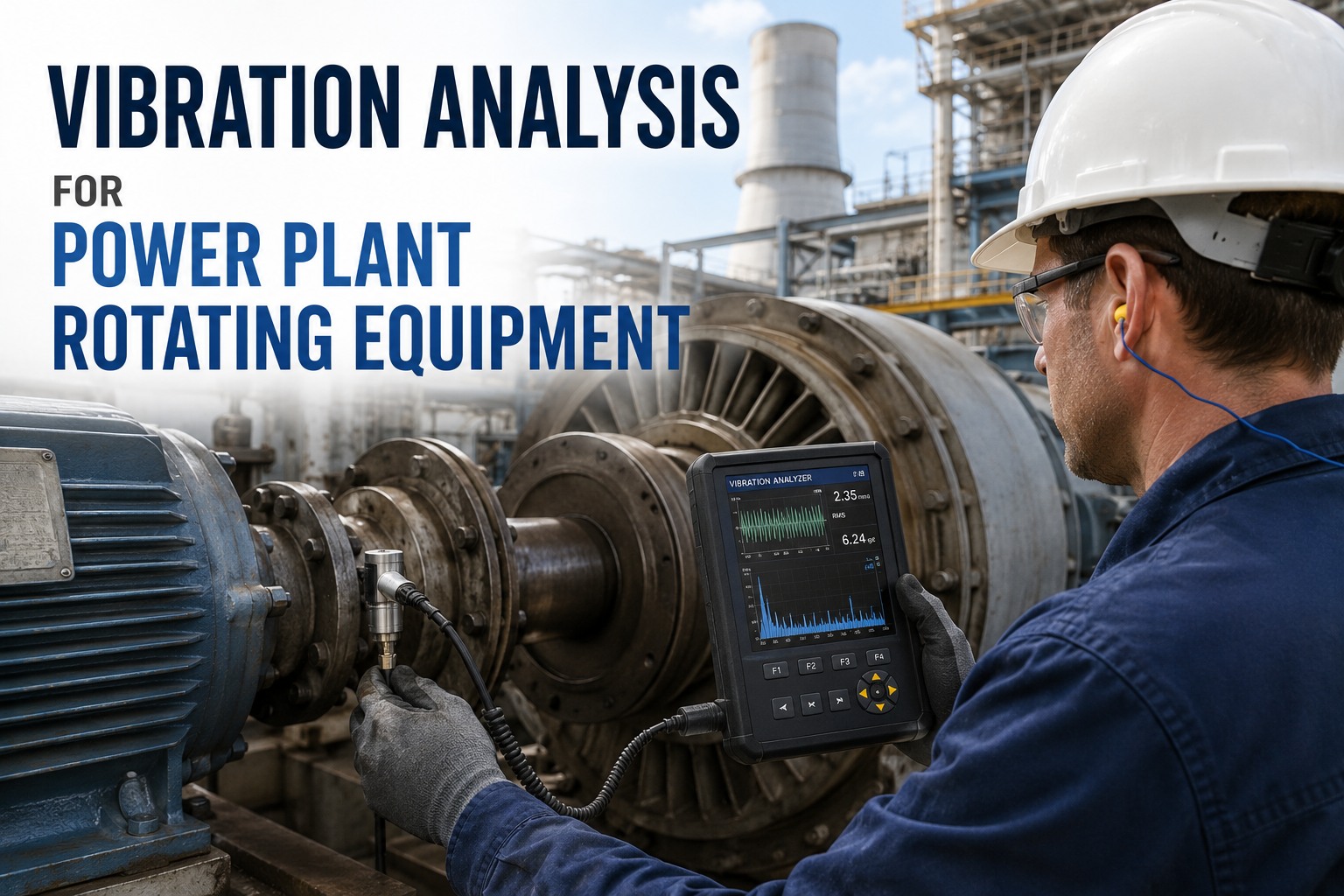
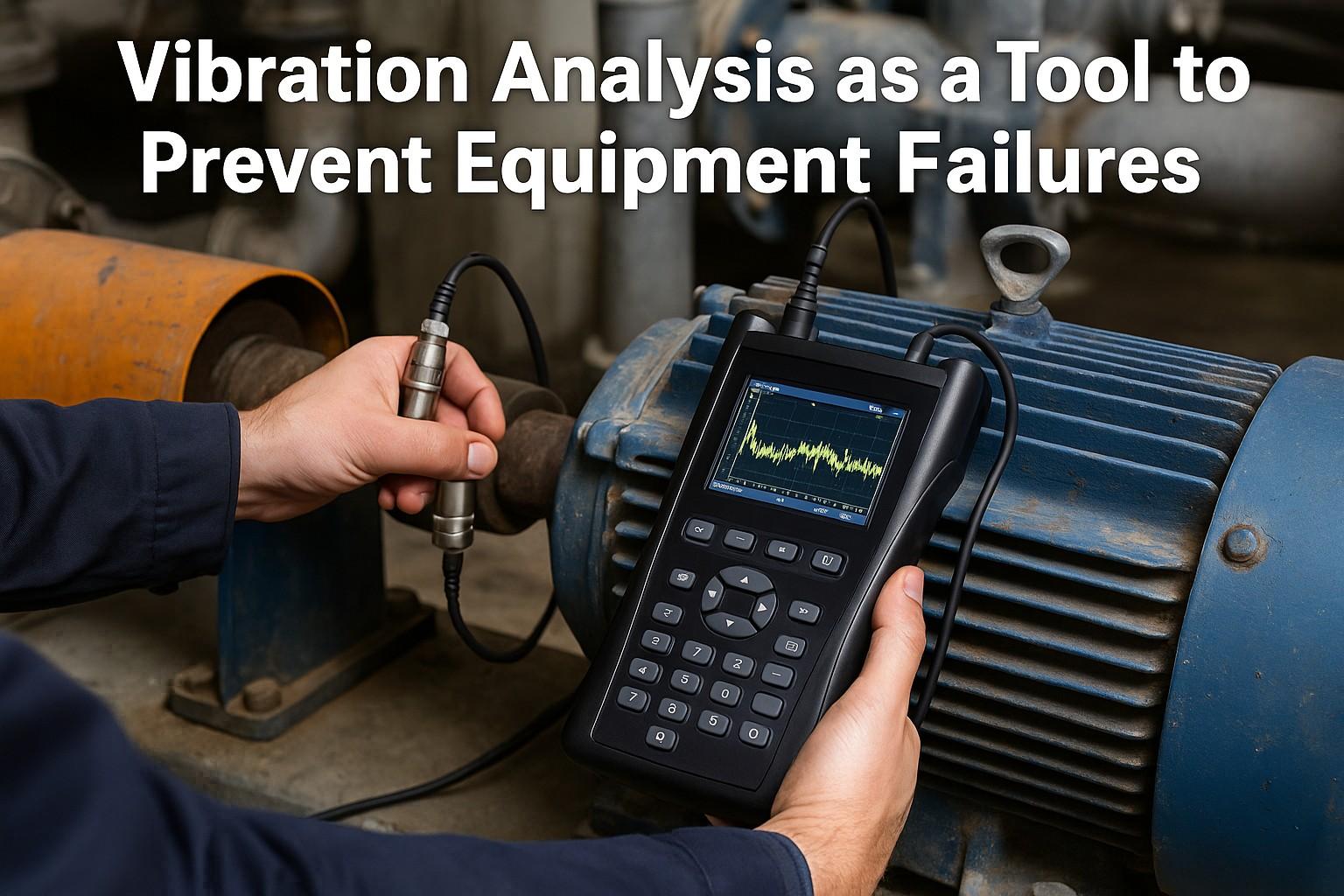
Every cement plant runs on rotating mass — kilns spinning at 1–4 RPM under 2,000-tonne loads, ball mills grinding clinker at 15–20 RPM, vertical roller mills under 1,500 kN of hydraulic pressure. When support roller misalignment goes undetected, kiln shell deformation begins weeks before the catastrophic stop. When a ball mill girth gear develops backlash, the damage cascades into the pinion, gearbox, and mill shell within days. Industry data from the European Cement Research Academy shows unplanned rotary equipment shutdowns cost between €180,000 and €420,000 per event — excluding refractory repair and kiln reline costs. The answer is not more inspections. It is continuous wireless vibration monitoring mapped to an ISO 10816-3 alert framework and integrated into a CMMS that converts sensor data into work orders before failures reach the critical threshold. Start a free trial to connect your kiln and mill sensors to a structured reliability workflow, or book a demo and we will map your rotary equipment hierarchy into Oxmaint within 30 minutes.
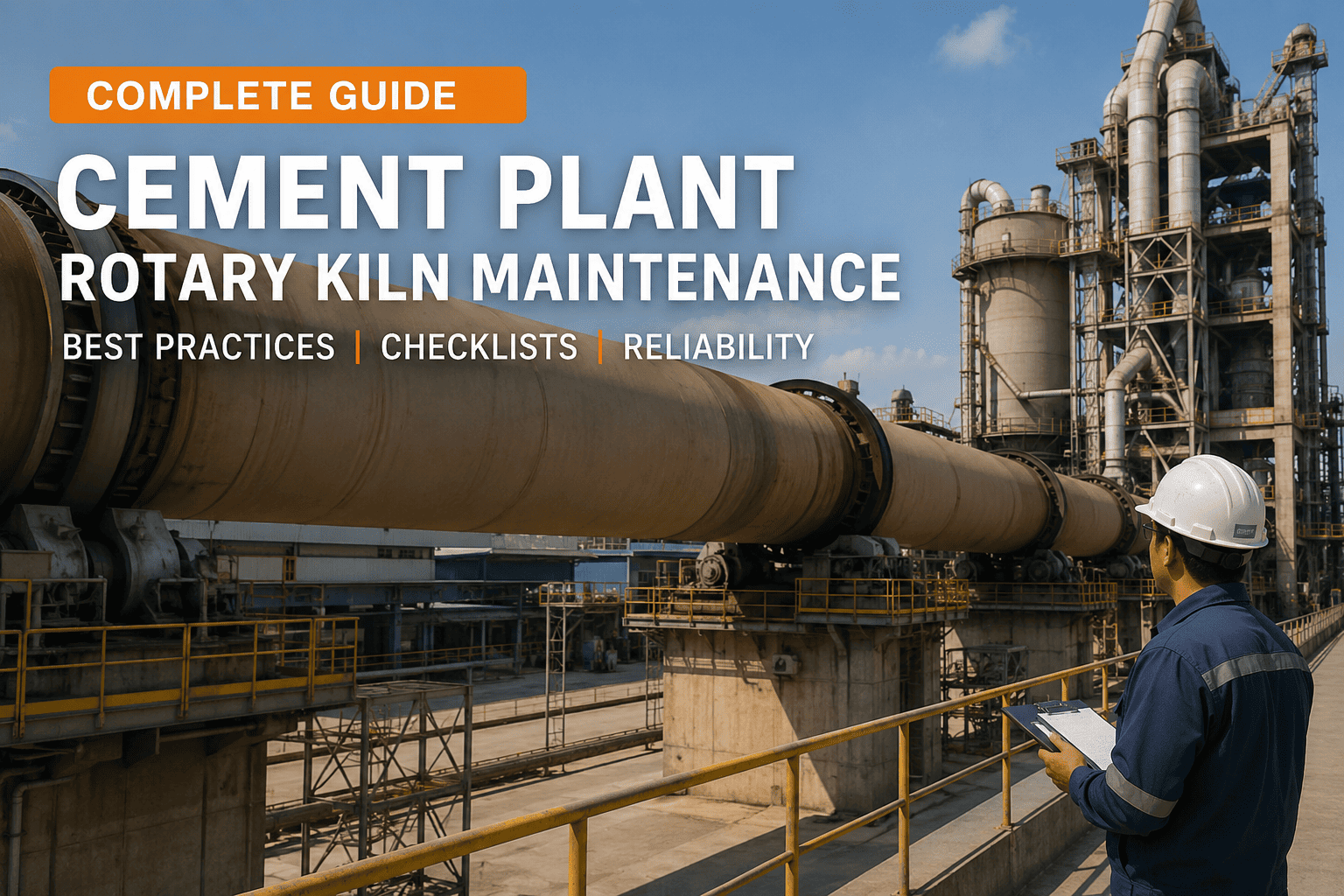
Monitor kiln support rollers, ball mill girth gears, and vertical roller mills with wireless vibration sensors. ISO 10816-3 compliant program — from sensor placement to CMMS work order generation.
average cost per unplanned kiln shutdown including refractory damage (ECRA, 2024)
68%
of cement plant failures originate in rotating equipment — kilns, mills, and fans
4–6 wk
average vibration fault detection window before failure — sufficient for planned intervention
45%
reduction in unplanned downtime reported by cement plants operating continuous vibration PdM
What Is Vibration Monitoring in Cement Plants
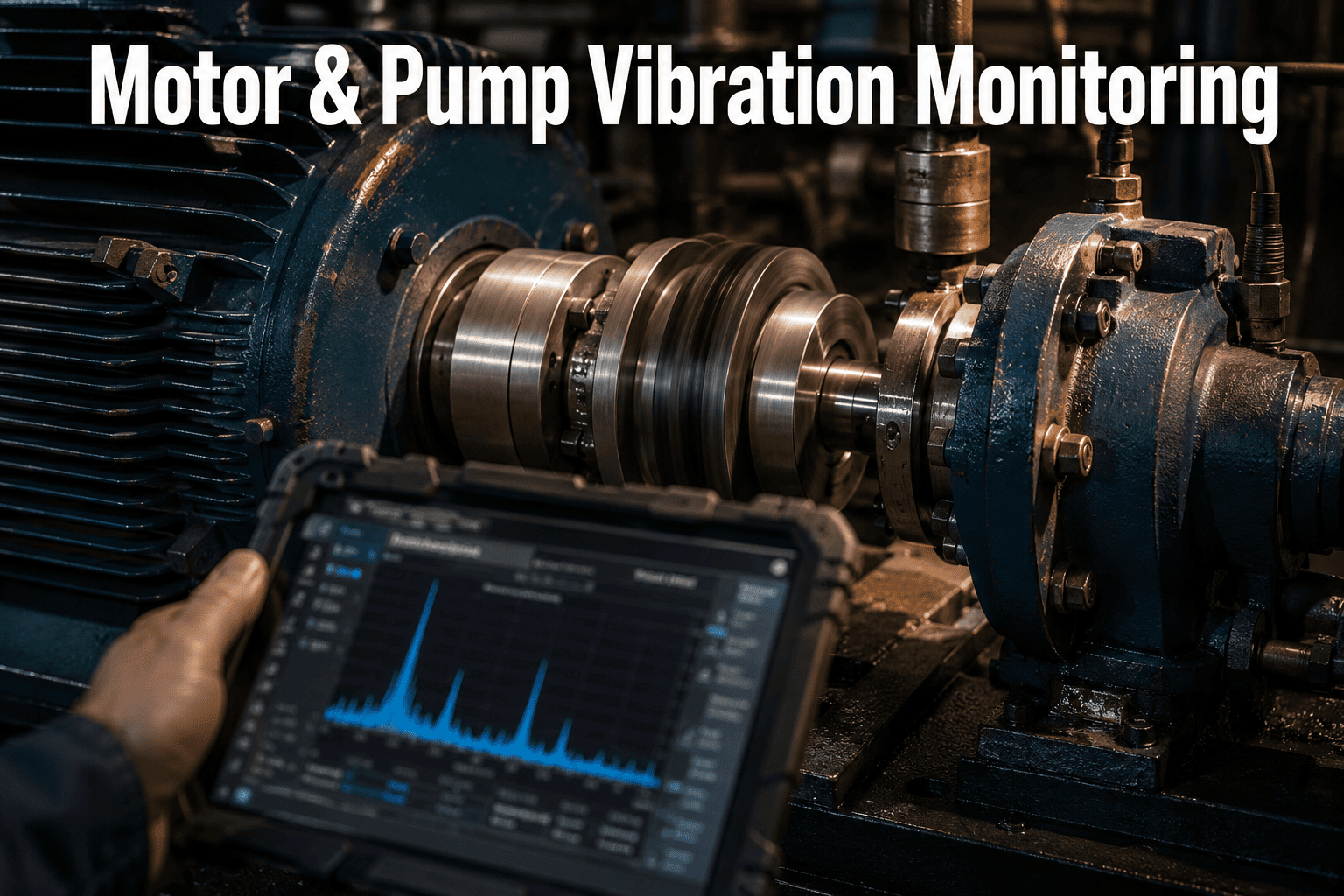
Vibration monitoring in cement manufacturing is the continuous or periodic measurement of mechanical vibration on rotating and reciprocating equipment — kilns, ball mills, VRMs, ID/FD fans, separators, and compressors — to detect developing faults before they cause unplanned stops. Unlike thermal imaging or oil analysis, vibration data provides direct mechanical fault signatures: bearing race defects generate predictable frequency patterns, gear mesh anomalies appear at tooth-pass frequency harmonics, and shaft imbalance shows up as 1× rotational frequency amplitude spikes. ISO 10816-3 defines the velocity and displacement thresholds that classify equipment condition from Zone A (new machine acceptance) through Zone D (immediate shutdown required) — giving cement reliability engineers a standard framework that insurance auditors, safety inspectors, and plant engineers share.
The critical difference in 2026 is wireless. Wired accelerometers on kiln support roller bearing housings required conduit routing through high-temperature zones and manual data retrieval. Modern wireless MEMS sensors transmit continuously at 1–10 kHz sample rates, tolerating temperatures up to 85°C, and integrate directly to CMMS platforms via MQTT or REST API — turning raw vibration data into timestamped asset health records and auto-generated work orders. To see how this connects to your existing maintenance workflow, start a free trial or book a demo and we will show you the sensor-to-work-order path on a live asset.
Key Monitoring Points: Kiln, Ball Mill, and VRM
01
Kiln Support Roller Bearings
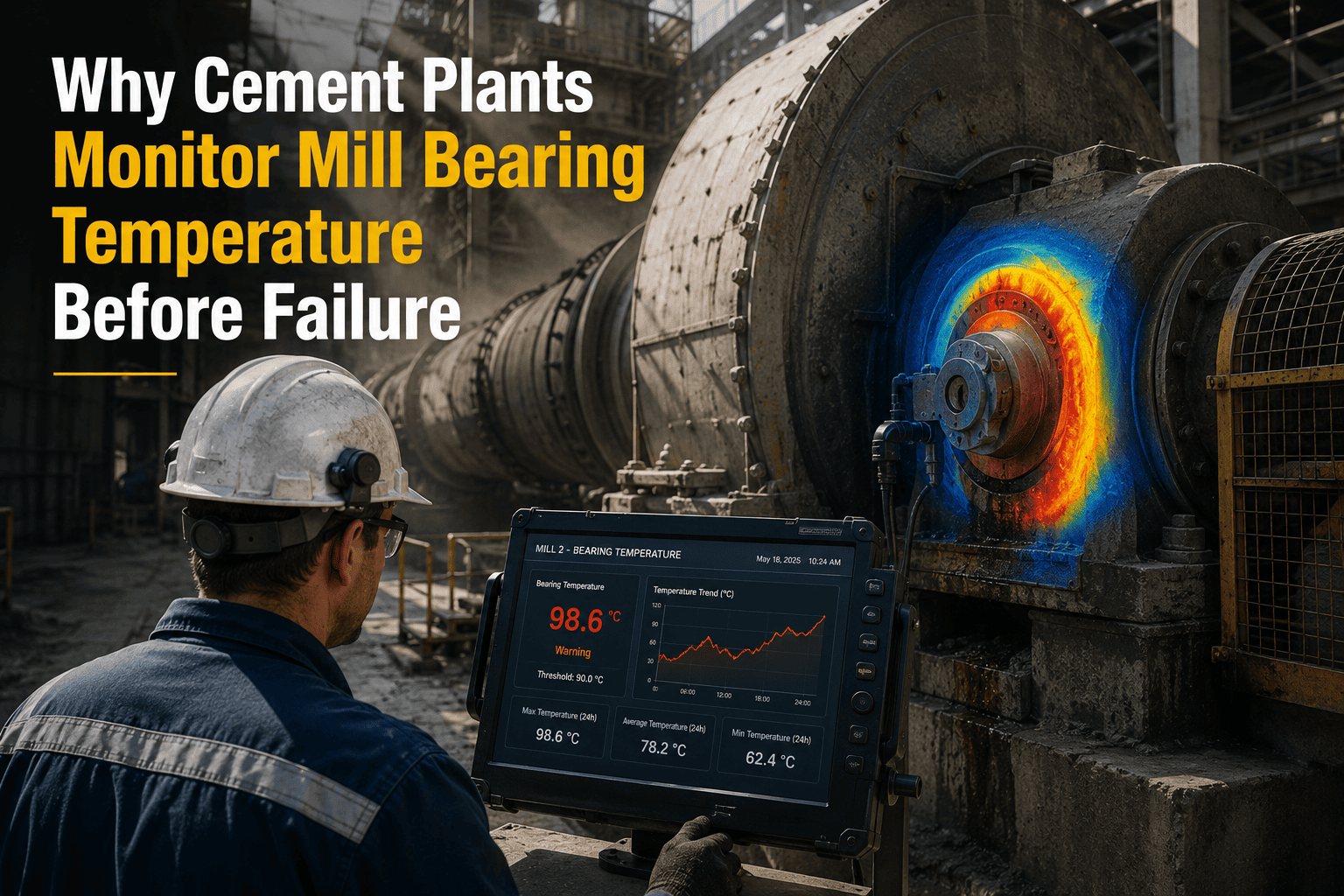
Triaxial sensors on each support roller bearing housing detect misalignment (axial vibration spike), spalling (bearing defect frequencies), and thermal runaway early. ISO 10816-3 Class IV thresholds apply — Zone C alert at 7.1 mm/s RMS velocity.
02
Kiln Shell Deformation Monitoring
Laser or non-contact displacement sensors on tyre-to-shell gap measure ovality at each tyre station. Shell deformation beyond 0.3% of kiln diameter accelerates refractory wear exponentially and signals imminent brick failure.
03
Ball Mill Girth Gear and Pinion
Sensors on the pinion bearing housings capture gear mesh frequency (GMF) and its harmonics. GMF sidebands indicate backlash development. A 3 dB increase in 2× GMF sideband amplitude typically precedes pinion tooth fatigue failure by 3–6 weeks.
04
Mill Drive Gearbox
High-frequency envelope analysis on gearbox output shaft bearings detects early-stage pitting. Oil debris particle count integrated with vibration data creates a dual-confirmation protocol that eliminates false positives and missed detections.
05
Vertical Roller Mill Rollers
VRM roller bearing sensors monitor radial and axial vibration under 1,500 kN hydraulic load. Grinding bed instability appears as broadband vibration increase at 0–50 Hz — distinguishable from bearing defect signatures at calculated BPFO/BPFI frequencies.
06
Separator and Fan Monitoring
Dynamic separators operating at 40–120 RPM require low-frequency capable sensors. ID/FD fans — typically at 600–1,500 RPM — are monitored for blade erosion (1× and harmonic amplitude trends), bearing defects, and impeller balance loss due to clinker buildup.
07
FFT Spectrum Analysis
Fast Fourier Transform converts time-domain vibration signals into frequency spectra. Bearing fault frequencies (BPFO, BPFI, BSF, FTF) are calculated from bearing geometry data and compared against spectrum peaks to confirm and classify defect type before work order creation.
08
ISO 10816-3 Alert Thresholds
Zone A: new machine reference. Zone B: acceptable long-term operation. Zone C: conditional operation — plan maintenance. Zone D: shutdown required. Thresholds differ by machine class: large ground-mounted motors apply Class III; kilns and mills are evaluated under Class IV.
Most cement plants detect kiln support roller bearing failure after the temperature alarm fires — that is Zone D. Structured vibration monitoring catches the same fault at Zone B, 4 to 6 weeks earlier.
Why Cement Plant Reliability Programs Fail
Route-Based Rounds Miss Developing Faults
Monthly vibration rounds on kiln support rollers create a 4-week detection blind spot. A bearing defect that reaches Zone C within 10 days of the last reading fails before the next scheduled measurement.
No CMMS Integration — Data Never Becomes Work Orders
Vibration data collected on handheld analyzers stays in analyst spreadsheets. Without CMMS integration, Zone C alerts take 48–72 hours to reach the maintenance planner — and 30% are never actioned before a breakdown occurs.
Girth Gear Damage Discovered Too Late
Girth gear inspection windows rely on production stops or scheduled shutdowns. Backlash development and early tooth fatigue cracking occurs between windows — missed until audible noise confirms advanced damage requiring full gear replacement.
No Asset Condition History for CapEx Planning
Without trended vibration data, CapEx requests for kiln tyre replacement, mill shell relining, or gearbox overhaul rely on age-based assumptions. Boards reject or delay approvals without condition-based evidence — forcing reactive emergency spend at 4.8× planned cost.
Skills Gap in Spectrum Interpretation
ISO 18436-2 Level II vibration analysts are scarce. Plants with trained analysts lose them to contractors or retirement — and the accumulated knowledge of fault frequency baselines leaves with them unless captured in a CMMS asset history.
Siloed Data Across Multi-Site Portfolios
Multi-kiln and multi-site cement groups operate with plant-level reliability data that never aggregates to portfolio view. Directors cannot benchmark OEE, MTBF, or maintenance spend per tonne of clinker across sites without manual consolidation.
Each of these failures compounds the next — poor detection leads to emergency stops, emergency stops produce cost spikes that trigger deferred maintenance, and deferred maintenance accelerates asset degradation. Teams that close the loop with continuous monitoring and CMMS-integrated work orders break the cycle — start a free trial to see how Oxmaint structures this workflow for cement plant assets, or book a demo with your rotary equipment list ready.
How Oxmaint Supports Cement Plant Reliability Programs
Asset Hierarchy: Kiln Line to Component Level
Map your cement plant as Portfolio > Plant > Kiln Line > Equipment > Component. Each support roller station, mill bearing, and gearbox gets its own asset record with condition score, maintenance history, and vibration alert thresholds — no flat asset lists.
Sensor Alert to Work Order in Minutes
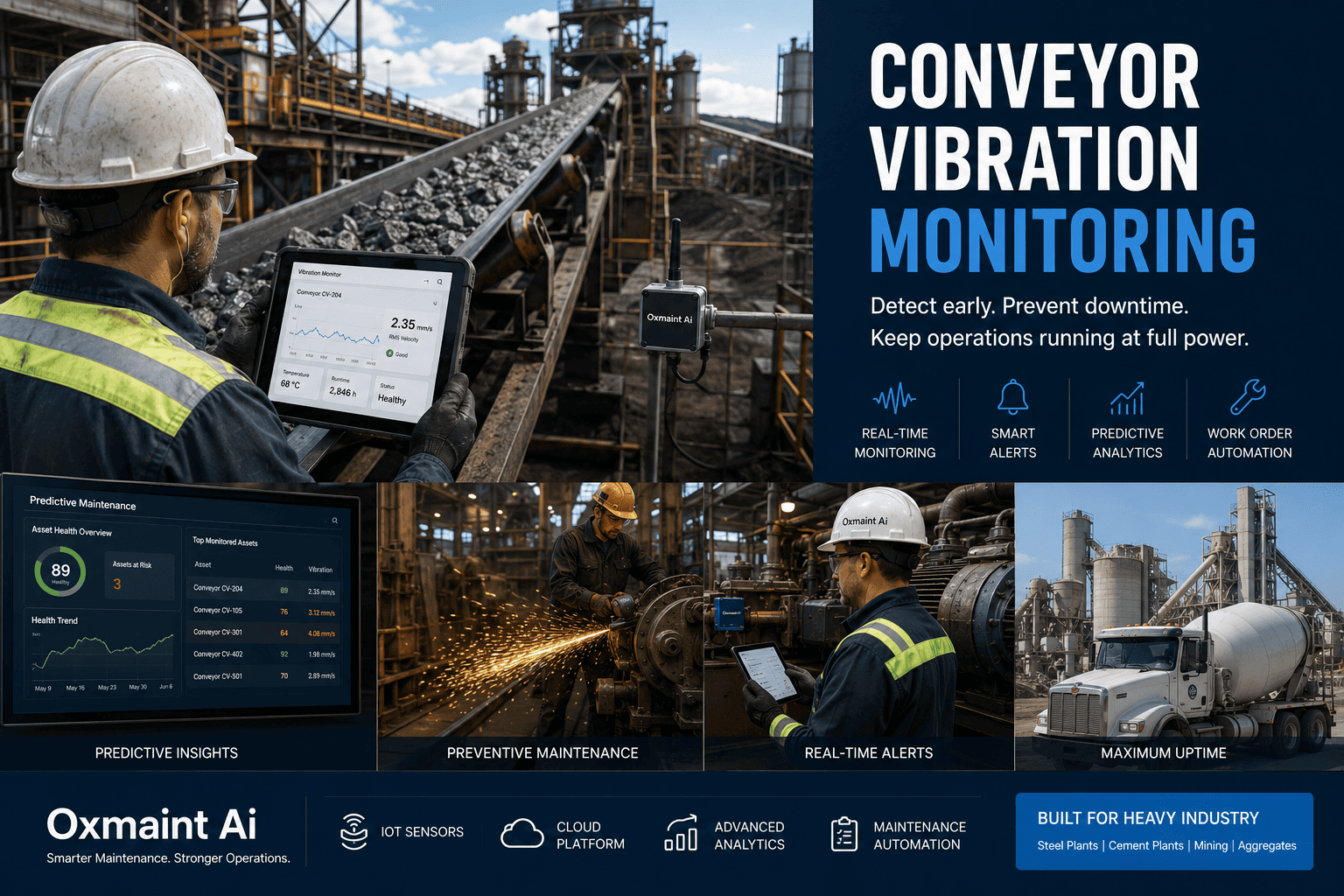
When wireless sensor data crosses ISO 10816-3 Zone C thresholds, Oxmaint auto-generates a condition-based work order with asset ID, alert value, sensor ID, and recommended action — routed to the planner before the shift ends.
PM Schedule Linked to Condition Score
Preventive maintenance intervals for kiln tyre lubrication, support roller alignment checks, and girth gear backlash measurement are scheduled against both calendar and condition triggers — reducing unnecessary PMs while ensuring high-risk assets are never deferred.
Vibration Trend History per Asset
Every alert, work order, and resolved fault is timestamped against the asset record. Reliability engineers see RMS velocity trends over 12 months, correlate spikes with operational changes, and build documented failure history that supports RCFA and CapEx justification.
5–10 Year CapEx Forecasting for Rotary Equipment
Condition scores and degradation trend data feed directly into Oxmaint rolling CapEx models. Kiln tyre replacement, mill shell relining, and gearbox overhaul budgets are projected with condition-based evidence — not age-based guesses — giving boards the data they need to approve proactively.
Multi-Site Portfolio Reliability Dashboard
Compare kiln availability, MTBF per line, maintenance cost per tonne of clinker, and overdue PM rates across all cement plants in your portfolio from a single operations dashboard — with drill-down to any individual asset on any site.
Reactive vs. Condition-Based Maintenance: Cement Plant Comparison
Maintenance Dimension
Reactive / Time-Based
Condition-Based (PdM + CMMS)
Kiln Support Roller Detection
Temperature alarm or audible noise — Zone D already reached
Vibration spectrum alert at Zone B/C — 4–6 weeks before failure
Girth Gear Condition
Visual inspection at scheduled shutdown — backlash measured manually
Continuous GMF sideband monitoring — backlash development detected during production
Work Order Trigger
Breakdown report or fixed calendar interval regardless of condition
Auto-generated CMMS work order when ISO 10816-3 threshold is crossed
Average Repair Cost
Emergency stop: €180K–€420K including refractory and production loss
Planned intervention: €15K–€60K — bearing replacement during scheduled window
CapEx Planning
Age-based estimates — boards reject or delay without evidence
Condition-trended projections — 5–10yr CapEx model backed by sensor data
Multi-Site Benchmarking
Manual consolidation from plant-level spreadsheets
Portfolio dashboard — OEE, MTBF, cost per tonne across all sites
A cement plant that shifts from time-based to condition-based maintenance on kiln and mill assets typically recovers the sensor and CMMS investment within the first prevented emergency stop.
ROI of Structured Vibration Monitoring
45%
reduction in unplanned downtime
Cement plants with continuous kiln and mill monitoring vs. route-based programs (Deloitte Industrial, 2024)
7×
cost ratio — reactive vs. planned repair
Emergency kiln stop including refractory vs. planned bearing swap during scheduled window
30%
reduction in maintenance cost per tonne
Average reduction achieved by cement groups implementing portfolio-level CMMS with condition-based triggers
18 mo
typical PdM program payback period
Wireless sensor deployment plus CMMS integration — single prevented kiln emergency stop often covers full investment
The ROI case for cement plant vibration monitoring is not theoretical — it is calculated from the difference between what an emergency kiln stop costs versus what a planned bearing replacement costs, multiplied by detection frequency. Teams that structure this into their CMMS see measurable results within the first 90 days — start a free trial and configure your first kiln asset with ISO 10816-3 alert thresholds, or book a demo and see your expected ROI modeled on your own asset data.
Frequently Asked Questions
Which ISO standard governs vibration limits for cement kilns and ball mills?
ISO 10816-3 applies to industrial machines with power above 15 kW and rated speeds between 120 and 15,000 RPM — covering kiln support roller drives, ball mill drives, VRM drives, and associated fans and compressors. Machine classes III and IV are most relevant for large cement plant equipment. Zone A represents factory acceptance; Zone B is acceptable for long-term operation; Zone C requires investigation and planned maintenance; Zone D requires immediate shutdown. Velocity thresholds vary by machine class — Class IV (large ground-mounted machines) applies 11.2 mm/s RMS as the Zone C/D boundary.
How do wireless vibration sensors integrate with a CMMS like Oxmaint?
Modern wireless vibration sensors transmit data via LoRaWAN, Wi-Fi, or Bluetooth mesh to a local gateway, which forwards readings to the CMMS via REST API or MQTT broker. In Oxmaint, each sensor is mapped to an asset record. When a reading crosses a configured ISO 10816-3 threshold, the system auto-generates a condition-based work order with asset ID, measurement value, alert level, and recommended action — routed to the maintenance planner's queue immediately. No manual data transfer, no analyst interpretation required for initial triage.
What is the best sensor placement for kiln support roller monitoring?
Triaxial accelerometers should be mounted on the bearing housing of each support roller, as close to the load zone as installation permits — typically on the top of the housing for radial measurement, and on the thrust face for axial load monitoring. Avoid mounting on baseplate, guard, or non-load-path surfaces. For kilns with 3 tyre stations, a minimum of 6 sensor positions (2 per station) provides full coverage. Magnet-mount sensors are acceptable for initial surveys; epoxy or stud-mount installations are preferred for continuous online monitoring in high-vibration environments.
How does Oxmaint support CapEx planning based on vibration condition data?
Oxmaint assigns condition scores to each monitored asset based on vibration trend data, maintenance history, and age. As scores degrade over time, the system feeds projected replacement or overhaul timelines into a rolling 5–10 year CapEx model. For cement plants, this means kiln tyre replacement, mill shell relining, girth gear overhaul, and gearbox replacement events are budgeted based on measured degradation — not age assumptions. The CapEx output is formatted for board-level reporting, giving operations directors the documented evidence needed to secure capital approvals before assets reach emergency condition.
Cement Plant Reliability
Stop Losing Millions to Undetected Kiln and Mill Failures
Turn every support roller, girth gear, and VRM roller into a tracked, condition-scored asset — with ISO 10816-3 alerts that generate work orders before failures reach Zone D.
Real-time asset condition visibility across every kiln line
Condition-based work orders generated automatically from sensor alerts
5–10 year CapEx forecasting backed by measured degradation data
Used by operations teams managing 10,000+ assets · Live in days, not months · No heavy implementation required