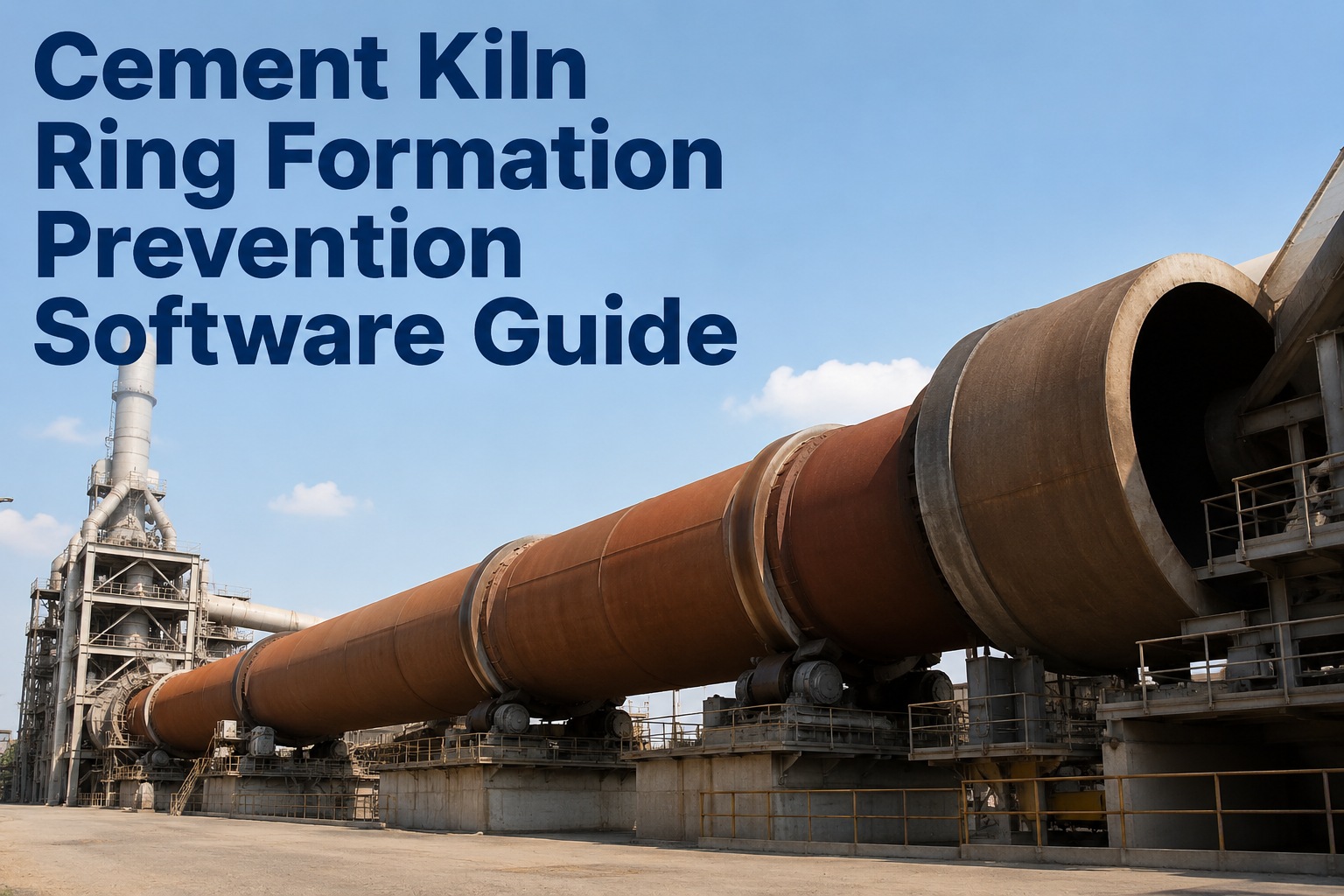
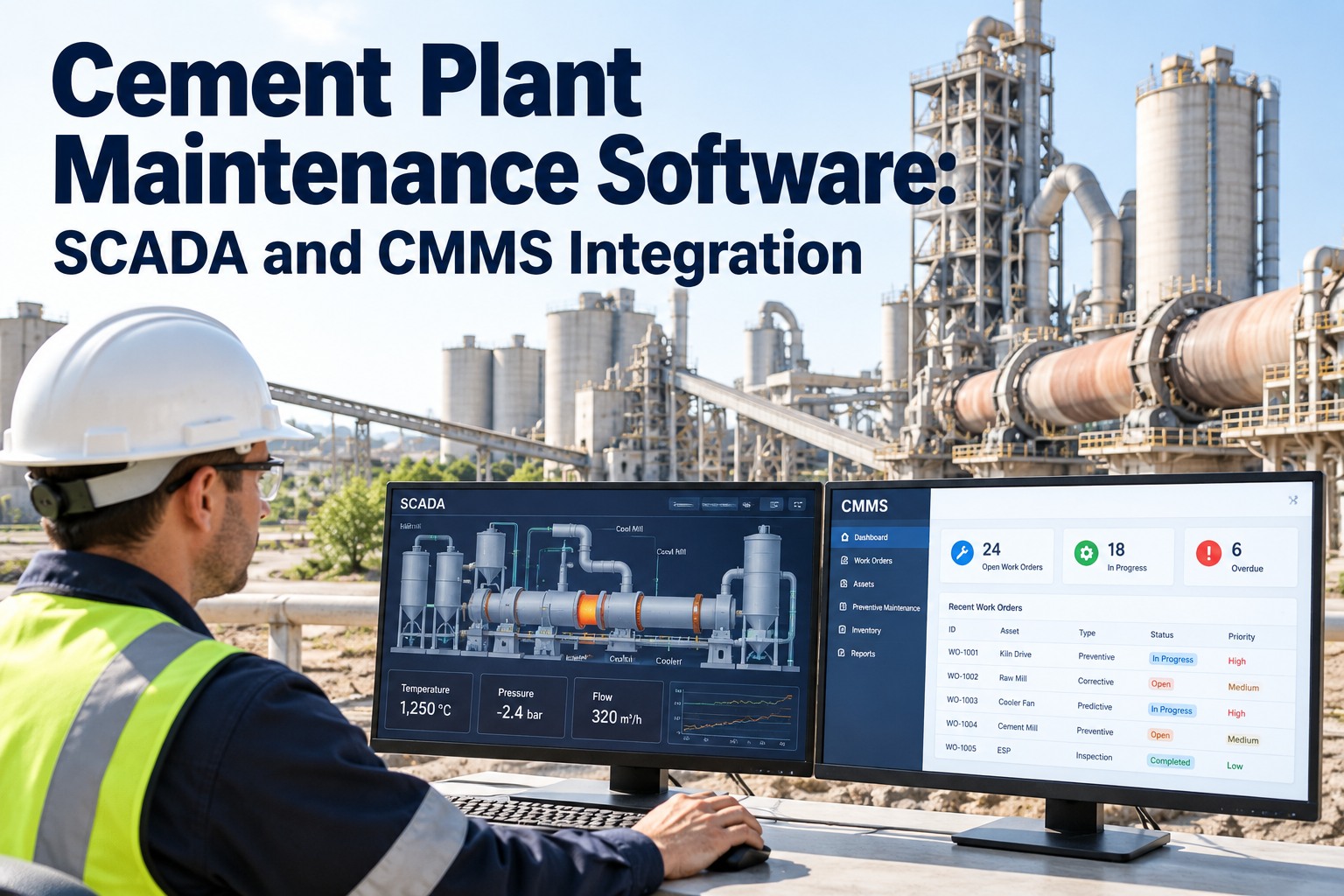
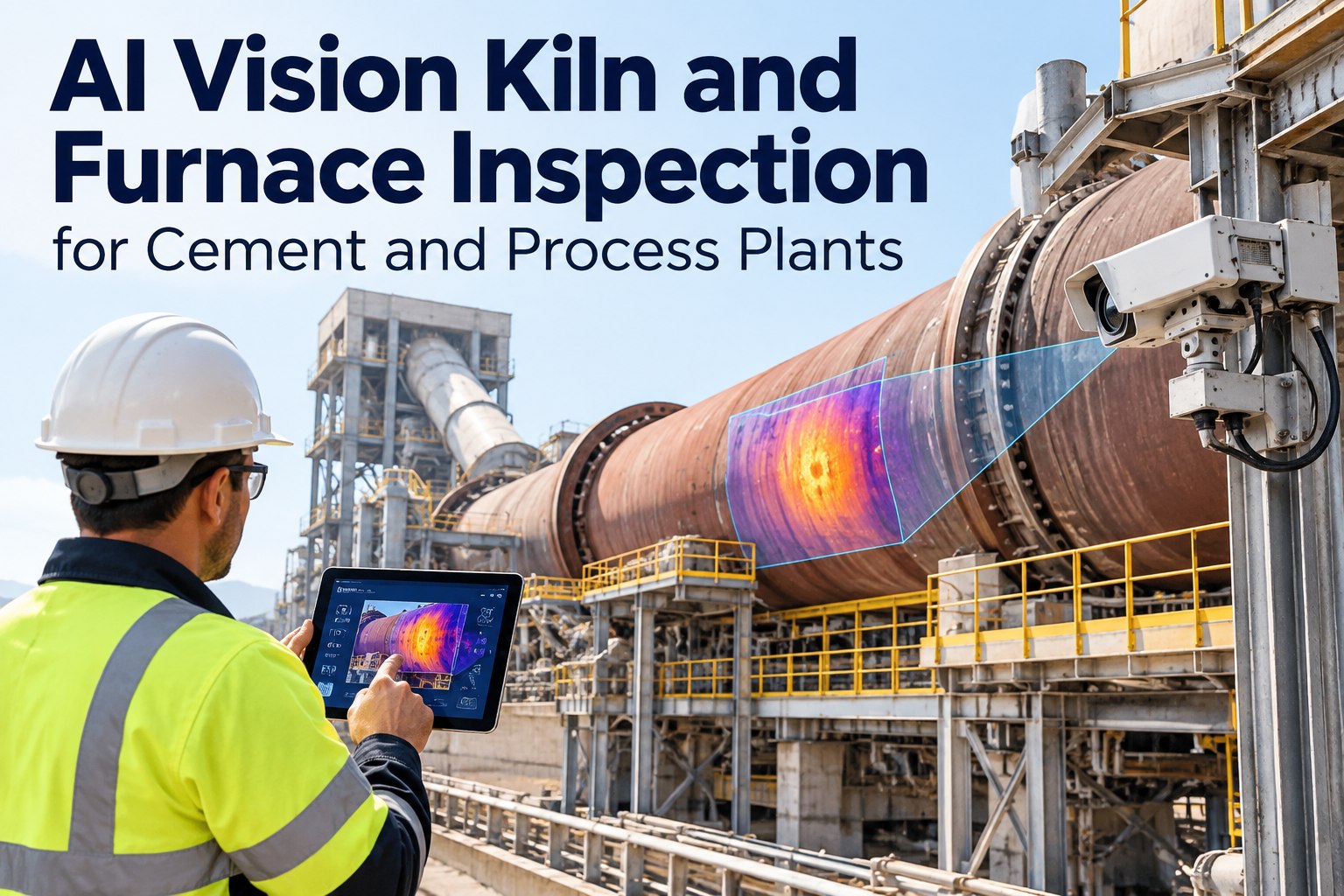
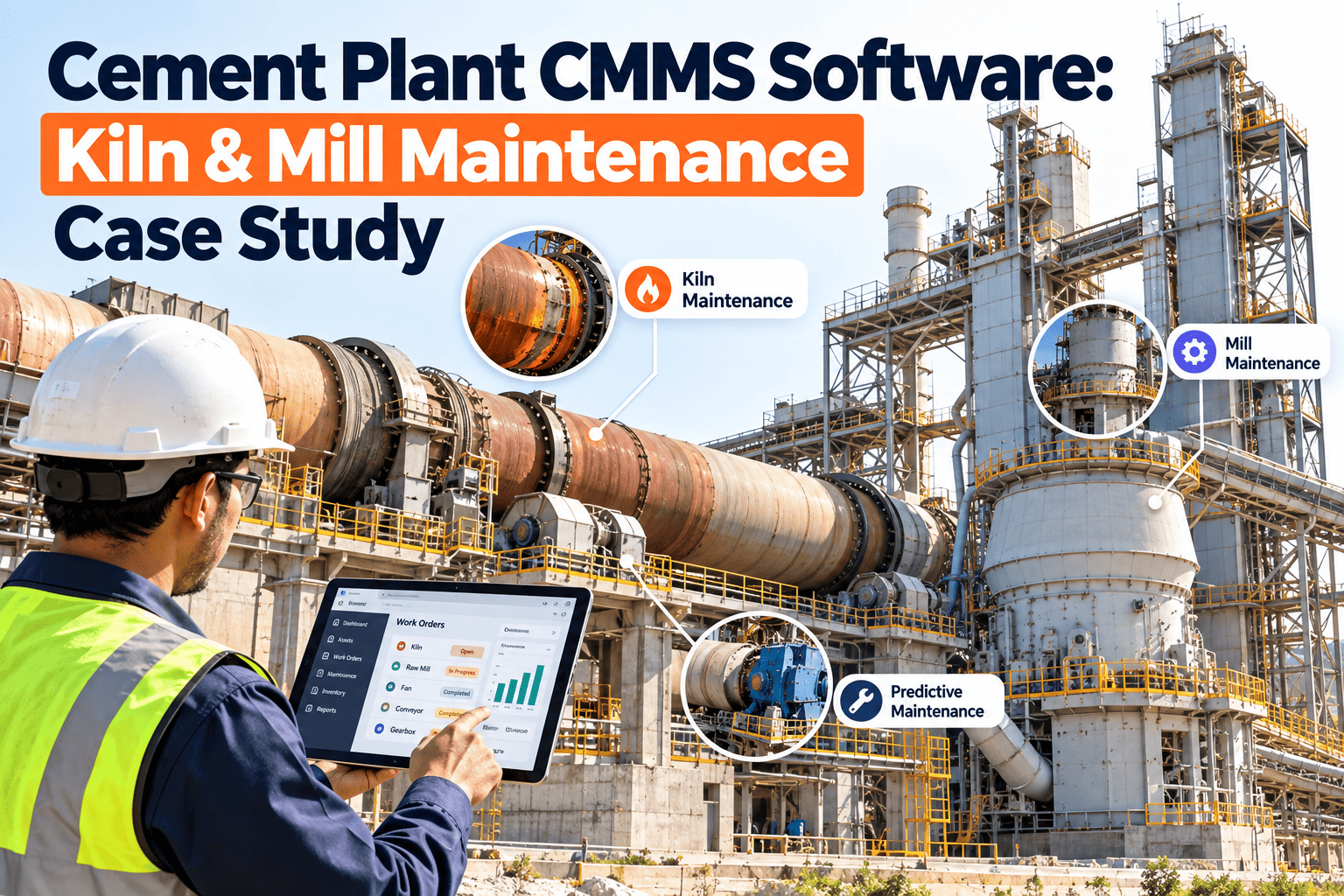
Cement kiln rings form when volatile species — sulfur, alkalis, and chlorides — cycle between the burning zone and the preheater, condense on cooler surfaces, and build into dense, refractory-bonded deposits that eventually block gas flow and force an unplanned kiln stop. Modern alternative-fuel-heavy operations have made this worse: SRF, tire-derived fuel, and biomass all push chloride and alkali inputs upward, and every point outside the S/(Na+K) molar ratio sweet-spot of ~1.0 tips the chemistry toward ring formation. A single ring event can cost 3-7 days of production and $500K-$2M in lost margin plus refractory damage — and it's rarely one variable that causes it. It's the drift of AF feed composition, the alkali cycle enrichment, and the kiln-drive torque signature climbing over 48-72 hours before anyone connects the dots. This guide covers ring formation the way a modern AF-heavy plant actually has to manage it — the three ring chemistries, the volatile cycle, the leading indicators — and how OxMaint CMMS ties AF feed data, torque trends, and inspection records into one early-warning stream. Start free or book a demo to see kiln ring prevention workflows live.
Cement · Pyro Process · Ring Prevention · CMMS 2026
Cement Kiln Ring Formation Prevention Software Guide
Prevent cement kiln ring formation with CMMS. Track AF feed drift, alkali cycles, and torque trends — the ring formation risk discipline that AF-heavy kilns manage daily to keep production stable and refractory lives long.
3 Ring Types
Sulfate-spurrite, alkali salt, and chloride-bonded rings
S/(Na+K) ≈ 1.0
Ideal molar ratio — outside 0.83-1.2 = elevated ring risk
3-7 Days
Typical unplanned kiln stop when a ring blocks flow
0.02% Cl
Recommended kiln feed chloride ceiling to control ring risk
The Volatile Cycle — Why Rings Form Where They Do
Ring formation isn't random. It's the physical outcome of the volatile cycle: sulfur, chloride, and alkali species vaporize in the burning zone, travel up with the flue gas, condense on cooler surfaces in the preheater and upper kiln, and return with the meal to be vaporized again. The cycle enriches on every pass — the input side keeps adding volatiles, and the internal circulation builds concentration until deposits form. The map below shows where the three ring types actually sit in the kiln system. Sign up free and OxMaint's cement plant library ships with volatile-cycle balance templates for preheater kilns — your first ring-risk dashboard runs off your existing raw meal, fuel, and hot meal analysis data.
CEMENT KILN VOLATILE CYCLE · RING FORMATION ZONES
PREHEATER
300-900°C
Meal duct coating, cyclone buildup
Volatile condensation on cooler surfaces
↑ Volatiles rise ↑
↓ Meal descends ↓
KILN INLET
900-1200°C
Sulfate-spurrite rings
C₂S·CaSO₄ stable in this temp window
MIDDLE ZONE
1200-1350°C
Alkali salt rings
Low-melting alkali compounds condense
BURNING ZONE
1350-1450°C
Sinter zone coating, 5-7m rings
Liquid phase excess, chloride flux
The volatile cycle enriches on every pass. Input control (raw meal + AF composition) + internal balance (S/alkali ratio) + bypass usage (for chloride) are the three levers that break the cycle.
The Three Ring Chemistries — How to Tell Them Apart
Every ring has a chemistry, and the chemistry tells you what shifted in the input stream. A sulfate-spurrite ring means SO₃ has climbed out of balance. An alkali salt ring means Na₂O+K₂O rose without matching sulfur. A chloride ring means bypass isn't holding chloride input in check. Diagnosing the ring is the first step to preventing the next one. Below is the three-chemistry map. Book a 30-minute walkthrough and an OxMaint cement specialist will map your specific AF fuel mix, raw meal composition, and current bypass strategy against these three ring risks before you open a trial workspace.
TYPE 1
C₂S · CaSO₄
Sulfate-Spurrite Ring
LocationKiln inlet + lower cyclone stages
Stable Temp900-1200°C
Root CauseExcess sulfur over what combines with alkalis
Key SignalHot meal SO₃ climbing, S/alkali > 1.2
TYPE 2
Na₂SO₄ · K₂SO₄
Alkali Salt Ring
LocationMiddle kiln zone, transition band
Stable Temp1000-1300°C (low-melting)
Root CauseInsufficient sulfur to bind alkalis
Key SignalS/alkali < 0.83, high Na+K in raw meal
TYPE 3
NaCl · KCl
Chloride-Bonded Ring
LocationBurning zone, 5-7m from outlet
Stable TempLowers melting point of sulfates
Root CauseCl input > bypass removal capacity
Key SignalCl > 0.3-0.4 kg/t clinker, AF-heavy operation
The 4 Leading Indicators That Show Up Before Flow Blocks
Rings don't appear on day one. The chemistry drifts for 48-72 hours before the coating hardens enough to disturb kiln operation, and by the time operators feel the kiln behaving differently, the deposit is already anchored to the refractory. The four leading indicators below light up before anyone gets a phone call about lost production. Sign up free to configure ring-risk alerts on all four leading indicators in your first workspace — no additional sensor investment, just your existing lab and DCS data flowing into OxMaint's trend engine.
01
Kiln Drive Torque Trending Upward
Coating adds mass to the rotating kiln. Drive torque climbs steadily over 48-72 hours before ring becomes visible. The earliest mechanical signal — trends beat single-point readings.
02
Hot Meal SO₃ / Chloride Climbing
Enriched volatile cycle shows up in the hot meal analysis before it shows up in the kiln behaviour. Daily lab data trended against 30-day baseline flags the shift.
03
AF Feed Composition Drift
New AF shipment lands with higher Cl or S than baseline. Fuel analysis logged against source doc gives operators the "what changed" question at handover.
04
Preheater Draft / Pressure Instability
Growing coating restricts gas path. ID fan working harder, kiln inlet pressure fluctuating. DCS-side signal that pairs with the lab-side chemistry drift.
A Ring You Catch at 48 Hours Is a Blowout. A Ring You Miss Is a 5-Day Stop.
Every AF-heavy kiln has already lost the ability to run on manual attention and paper shift logs. Ring risk needs AF feed data, hot meal analysis, kiln torque trends, and preheater draft on the same dashboard — every shift, every day. OxMaint ties all four streams together with trend-based alerts long before flow blockage.
The 5 Prevention Levers — What Actually Stops Ring Formation
Prevention isn't one action. It's five simultaneous levers, coordinated across process, quality, procurement, and maintenance. Below is the prevention framework the best AF-heavy operations run against. Book a scoping call and an OxMaint cement engineer will map your specific ring history against these five levers — you'll leave with a prioritized action list before you sign up for a trial.
L1
Volatile Balance Discipline
Calculate S/(Na₂O+K₂O) molar ratio daily from raw meal + fuel inputs. Hold target ≈1.0. Alerts when trending toward 0.83 or 1.2 boundaries.
L2
AF Incoming Analysis
Every AF shipment analyzed for Cl, S, alkali, moisture before feed. Reject or blend if outside spec. Log every incoming source against fuel supplier record.
L3
Chloride Bypass Sizing
Bypass capacity matched to Cl input. Threshold typically 0.3-0.4 kg Cl/t clinker — above that, install/expand bypass. Kiln feed Cl target <0.02%.
L4
Preheater Cleaning Cadence
Air cannons and high-pressure water lance schedules. PM cadence tied to actual coating growth rate, not calendar. Blaster inspections logged in CMMS.
L5
Trend-Based Early Alerts
Torque, hot meal, AF composition, and draft trended against 30-day baseline. Multi-signal correlation catches ring formation 48-72 hours before flow disturbance.
Paper Shift-Log Kiln Management vs. OxMaint Ring Risk Loop
Most kilns still manage ring risk through operator experience + a paper shift log + a weekly lab report that lands too late to matter. Here's what changes when the data streams flow into OxMaint. Start free — no credit card, unlimited users, and OxMaint's cement library ships with pre-built templates for volatile balance calculation, AF fuel logging, torque trending, and preheater PM cadence, so day-one setup takes a shift, not a project.
Kilns that put ring risk on the same dashboard as maintenance don't just prevent stops — they extend refractory campaigns and lower cost per tonne. Start your free forever workspace to build your first ring-risk dashboard this week, or book a demo to see a working ring-prevention loop from a live customer cement plant before you sign up.
"
We pushed AF substitution above 40% two years ago and started losing 4-6 kiln days per year to rings — every one of them expensive, every one of them a surprise on shift handover. Moving the volatile balance calculation, AF fuel analysis, hot meal SO₃/Cl trending, and kiln drive torque onto one OxMaint dashboard changed how the crews saw the process. The last ring event we caught at 52 hours from the torque climb, before the preheater draft even started shifting — cleaning cannons ran the coating off in one shift, no unplanned stop. Refractory campaign length is up almost 15% on the same AF mix.
Production Manager · Preheater/Precalciner Kiln · 3,500 tpd · Southeast Asia
Frequently Asked Questions
Why do alternative fuels increase ring formation risk?
Alternative fuels — SRF, TDF, biomass, waste plastics — typically carry higher chloride, sulfur, and alkali loads than conventional coal or petcoke. These volatiles enter the kiln system, cycle between the burning zone and the preheater, and enrich concentration on every pass. Above certain input thresholds, condensation on cooler surfaces builds into rings and coating that eventually block flow. Higher AF substitution demands tighter volatile balance discipline.
What's the ideal S/(Na₂O+K₂O) molar ratio?
Roughly 1.0 is the target. The commonly cited windows are: above 1.2 favors sulfate-spurrite rings (excess sulfur); below 0.83 favors low-melting alkali salt rings (excess alkali). The exact optimal depends on your specific raw mix and fuel chemistry, but 0.83-1.2 is the operational band most plants target.
Sign up free to auto-calc this ratio daily from your existing lab data.
When does a plant actually need a chloride bypass?
The commonly cited threshold is 0.3-0.4 kg Cl per tonne of clinker as total chloride input. Above that, bypass installation becomes recommended to remove enriched chlorides from the volatile cycle. Kiln feed chloride below 0.02% is the ideal target — above that, ring risk climbs quickly, especially in AF-heavy operations.
Can OxMaint work with our existing DCS and lab systems?
Yes. OxMaint sits alongside your existing DCS and lab systems and pulls trend data via API or CSV import — no PLC replacement, no lab-system swap, no CAPEX request. Kiln torque, hot meal analysis, AF fuel composition, and preheater draft all feed OxMaint's ring-risk dashboard while staying in their source systems as system of record.
How much notice do the leading indicators give before a ring forms?
Typically 48-72 hours from the earliest signal (usually kiln drive torque climbing or hot meal SO₃ rising) to the point where a ring starts disturbing kiln operation. That window is enough to intervene with cleaning cannons, fuel-mix adjustment, or a planned brief clean-out — before the ring becomes a 3-7 day unplanned stop.
Book a demo to see the trend-alert workflow.
Does OxMaint support the full cement plant, not just the kiln?
Yes. One workspace covers kiln, raw mill, cement mill, crushers, coolers, conveyors, and packing. Ring prevention is one high-value use case, but the same platform runs the whole plant's PM scheduling, digital LOTO, permit-to-work, inspection checklists, RCA workflows, and audit-ready reporting for OSHA 1910.147, MSHA, ISO 55000, and internal reliability programs.
Is a credit card or CAPEX approval required to start?
No. OxMaint's free forever plan requires no credit card, no CAPEX request, and no consulting engagement — you can
sign up in under 2 minutes and have your first cement plant assets and ring-risk indicators configured the same shift. Cement plant asset templates ship pre-built.
Catch Every Ring at 48 Hours, Not 5 Days Too Late.
OxMaint ties AF feed data, hot meal chemistry, kiln torque trends, and preheater draft into one ring-risk dashboard — so operators get 48-72 hour notice, not a shift handover surprise. Start free — no credit card, unlimited users, forever. Or book a demo for a plant-specific ring-prevention walkthrough.