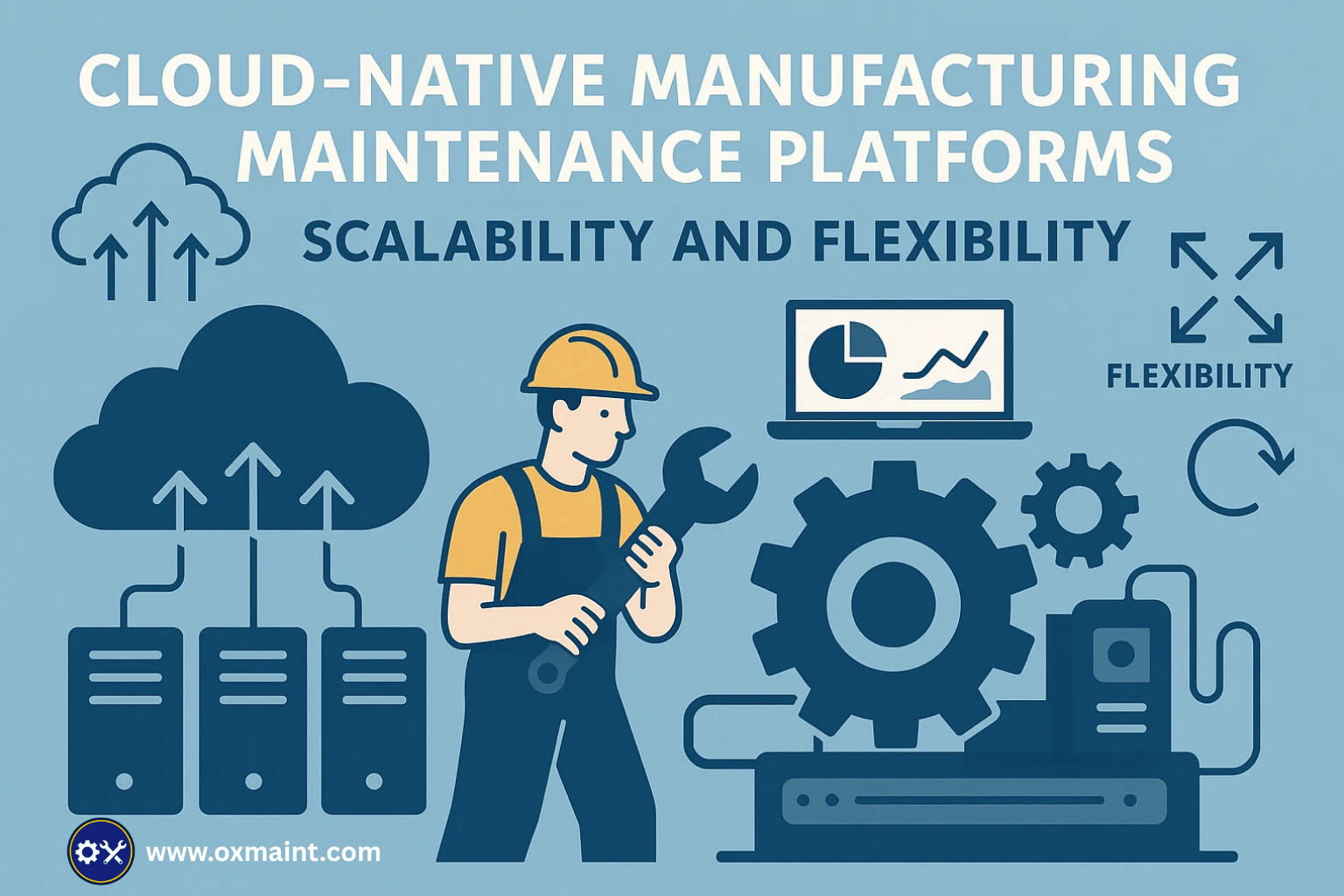
The manufacturing landscape is experiencing a digital transformation that's reshaping how companies approach equipment maintenance and operational efficiency. At the forefront of this revolution are cloud-native manufacturing maintenance platforms that promise unprecedented scalability and flexibility. As traditional on-premise systems struggle to meet the demands of modern manufacturing environments, cloud-native solutions are emerging as the strategic choice for companies seeking competitive advantage through technology.
Manufacturing operations today face increasingly complex challenges: global supply chain disruptions, skilled labor shortages, rising energy costs, and the imperative to maximize equipment uptime. These pressures demand maintenance solutions that can adapt quickly, scale efficiently, and integrate seamlessly with existing operational infrastructure. Cloud-native platforms address these needs by leveraging the inherent advantages of cloud computing architecture specifically designed for manufacturing environments.
Understanding Cloud-Native Architecture in Manufacturing Maintenance
Cloud-native manufacturing maintenance platforms represent a fundamental shift from traditional software deployment models. Unlike legacy systems that require extensive on-site hardware and IT infrastructure, cloud-native solutions are built from the ground up to leverage cloud computing capabilities. This architectural approach enables manufacturing companies to access sophisticated maintenance management tools without the capital expenditure and ongoing maintenance costs associated with traditional systems.
The cloud-native approach incorporates microservices architecture, containerization, and API-first design principles that enable rapid deployment, seamless updates, and integration with other manufacturing systems. This foundation supports real-time data processing, advanced analytics, and machine learning capabilities that drive predictive maintenance strategies. Manufacturing professionals gain access to enterprise-grade functionality that would traditionally require significant IT investment and expertise.
Key Benefits: Reduced IT overhead, faster implementation timelines, automatic software updates, and access to cutting-edge maintenance technologies without internal development requirements.
Unlimited Scalability for Growing Manufacturing Operations
One of the most compelling advantages of cloud-native maintenance platforms is their ability to scale seamlessly with manufacturing operations. Traditional on-premise systems often require significant planning and capital investment to accommodate growth, whether that's adding new production lines, expanding to additional facilities, or integrating acquired companies. Cloud-native platforms eliminate these constraints by providing elastic scalability that adjusts automatically to operational demands.
This scalability extends beyond simple user capacity. Cloud-native platforms can handle increasing volumes of sensor data from IoT devices, support additional equipment types and manufacturers, and accommodate more complex maintenance workflows without performance degradation. Manufacturing companies can expand their maintenance operations across multiple sites while maintaining centralized visibility and control.
Scalability Dimensions:
- User capacity: Support for unlimited maintenance technicians, supervisors, and managers
- Data volume: Processing capabilities for millions of sensor readings and maintenance records
- Geographic distribution: Multi-site operations with centralized management
- Integration complexity: Seamless connection with ERP, MES, and other manufacturing systems
The economic implications of this scalability are significant. Manufacturing companies can start with basic functionality and expand capabilities as needs evolve, paying only for resources actually consumed. This approach aligns technology investment with business growth and eliminates the risk of over-provisioning infrastructure that may remain underutilized.
Operational Flexibility Through Modern Platform Design
Flexibility in manufacturing maintenance encompasses the ability to adapt quickly to changing operational requirements, accommodate diverse equipment types, and support various maintenance strategies within a single platform. Cloud-native solutions excel in this area by providing configurable workflows, customizable dashboards, and flexible data models that can accommodate the unique requirements of different manufacturing environments.
Modern manufacturing operations often involve equipment from multiple vendors, legacy machinery alongside cutting-edge automation, and maintenance practices that vary by production line or facility. Cloud-native platforms support this diversity through flexible configuration options that don't require custom programming or expensive consulting services. Maintenance managers can adapt the system to match their operational procedures rather than forcing process changes to accommodate software limitations.
The flexibility extends to integration capabilities as well. Cloud-native platforms typically offer robust APIs and pre-built connectors that enable seamless data exchange with existing manufacturing systems. This integration flexibility ensures that maintenance data contributes to broader operational intelligence while supporting established business processes.
Flexibility Advantages: Rapid configuration changes, support for diverse equipment types, customizable reporting, mobile accessibility, and seamless integration with existing manufacturing infrastructure.
Implementation Strategy and Change Management
Successful implementation of cloud-native maintenance platforms requires strategic planning that addresses both technical and organizational considerations. Manufacturing companies must evaluate their current maintenance practices, identify improvement opportunities, and develop implementation roadmaps that minimize operational disruption while maximizing value realization.
The cloud-native advantage becomes apparent during implementation phases. Traditional system deployments often require months of hardware procurement, software installation, and configuration before any value is realized. Cloud-native platforms can be operational within days, enabling rapid proof-of-concept development and iterative improvement based on real-world usage feedback.
Change management represents a critical success factor for cloud-native platform adoption. Manufacturing organizations must invest in training programs that help maintenance technicians and supervisors leverage new capabilities effectively. The mobile-first design of modern cloud-native platforms often simplifies this transition by providing intuitive interfaces that align with contemporary user expectations.
Return on Investment and Business Impact
The financial benefits of cloud-native manufacturing maintenance platforms extend well beyond reduced IT infrastructure costs. These platforms enable operational improvements that directly impact manufacturing profitability through increased equipment uptime, optimized maintenance resource allocation, and improved regulatory compliance management.
Predictive maintenance capabilities powered by cloud-based analytics help manufacturing companies transition from reactive maintenance strategies to proactive approaches that prevent costly equipment failures. The resulting improvements in Overall Equipment Effectiveness (OEE) often justify platform investments within the first year of implementation.
Cloud-native platforms also support compliance requirements through automated documentation, audit trails, and regulatory reporting capabilities. Manufacturing companies in regulated industries can reduce compliance costs while improving documentation accuracy and accessibility during regulatory inspections.
Measurable ROI Components:
- Reduced unplanned downtime through predictive maintenance
- Optimized maintenance inventory management
- Improved technician productivity through mobile access
- Enhanced compliance management and reduced audit costs
- Lower total cost of ownership compared to on-premise solutions
Conclusion: The Strategic Imperative for Cloud-Native Maintenance
Cloud-native manufacturing maintenance platforms represent more than a technology upgrade—they constitute a strategic transformation that positions manufacturing companies for sustainable competitive advantage. The combination of unlimited scalability and operational flexibility enables organizations to respond rapidly to market changes, support business growth, and optimize maintenance operations continuously.
Manufacturing leaders who embrace cloud-native maintenance platforms today position their organizations to leverage emerging technologies like artificial intelligence, machine learning, and advanced analytics that will define the future of manufacturing operations. The scalability and flexibility inherent in cloud-native architecture ensure that these investments remain valuable as technology capabilities continue to evolve.
The decision to adopt cloud-native maintenance platforms should be viewed as an investment in operational resilience and future readiness. Manufacturing companies that make this transition now will be better positioned to navigate the challenges and opportunities that define modern manufacturing environments.
Frequently Asked Questions
What are the main differences between cloud-native and traditional on-premise maintenance platforms?
Cloud-native platforms are built specifically for cloud environments using modern architecture principles like microservices and containerization. This enables automatic scaling, rapid deployment, and seamless updates without IT infrastructure investment. Traditional on-premise systems require significant hardware investment, longer implementation times, and ongoing IT maintenance overhead.
How quickly can a manufacturing company implement a cloud-native maintenance platform?
Cloud-native platforms can be operational within days rather than months. Basic functionality is typically available immediately after signup, with full customization and integration completed within 2-4 weeks depending on complexity. This rapid deployment enables faster value realization compared to traditional system implementations.
What security measures protect manufacturing data in cloud-native maintenance platforms?
Enterprise-grade cloud-native platforms implement multiple security layers including data encryption at rest and in transit, role-based access controls, regular security audits, and compliance with industry standards like SOC 2 and ISO 27001. Many cloud providers offer security capabilities that exceed what most manufacturing companies can implement independently.
Can cloud-native maintenance platforms integrate with existing manufacturing systems like ERP and MES?
Yes, modern cloud-native platforms are designed with integration as a core capability. They typically offer pre-built connectors for popular manufacturing systems and robust APIs that enable custom integrations. This ensures seamless data flow between maintenance operations and broader manufacturing processes.
What happens to our maintenance data if we decide to change platforms in the future?
Reputable cloud-native platform providers ensure data portability through standard export formats and APIs. Most platforms support comprehensive data exports that include historical maintenance records, asset information, and configuration settings. This data ownership approach ensures that companies maintain control over their maintenance information regardless of platform decisions.