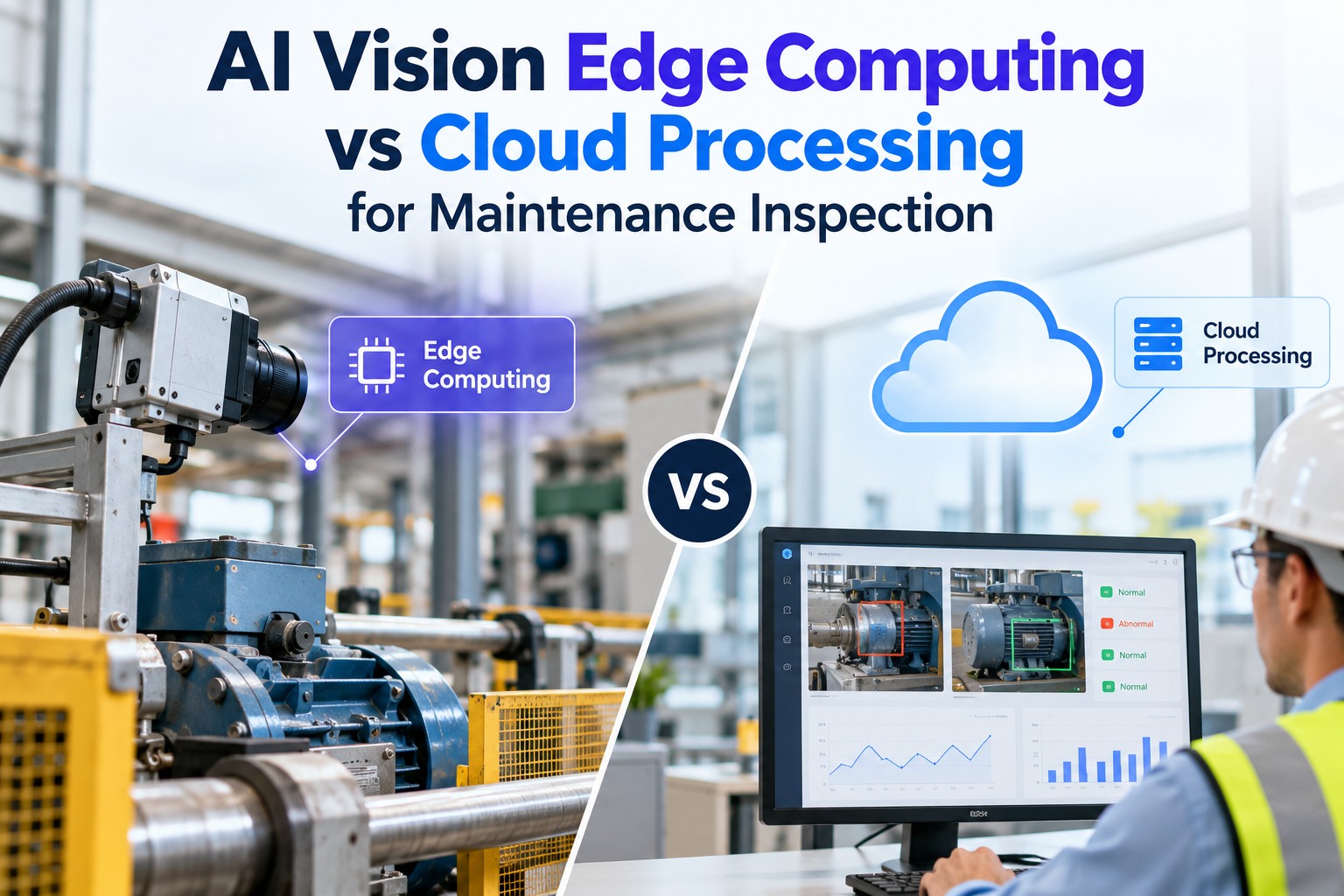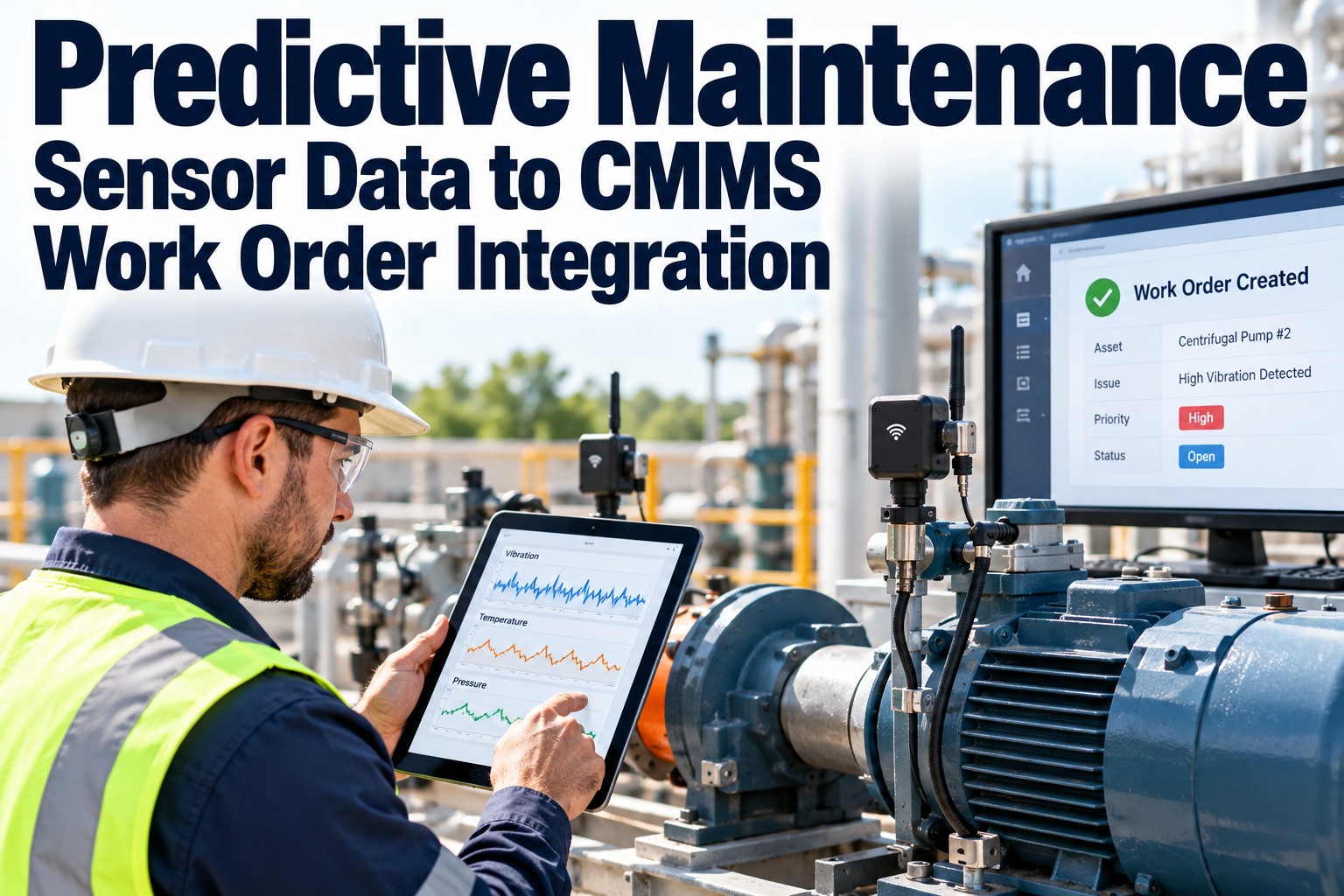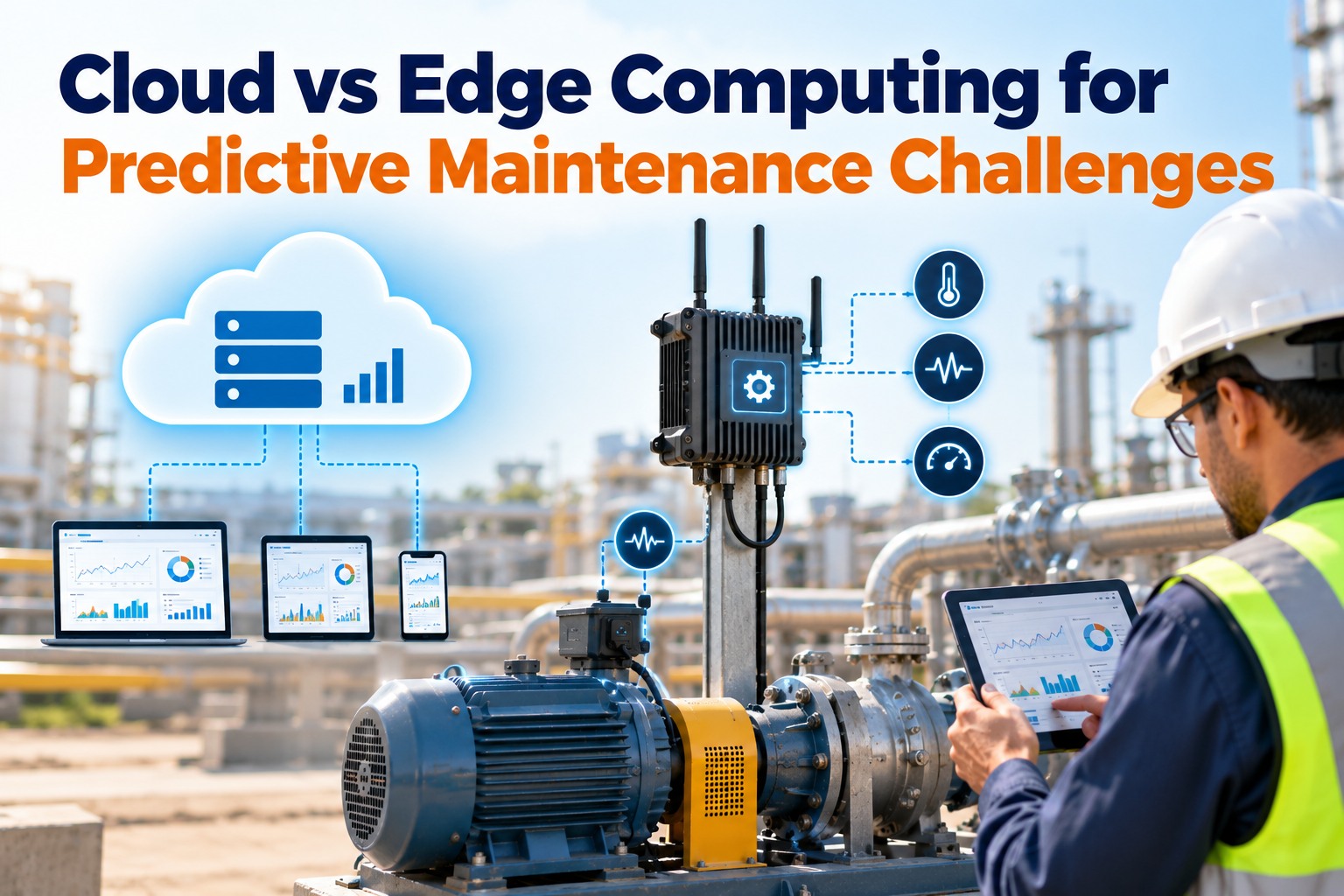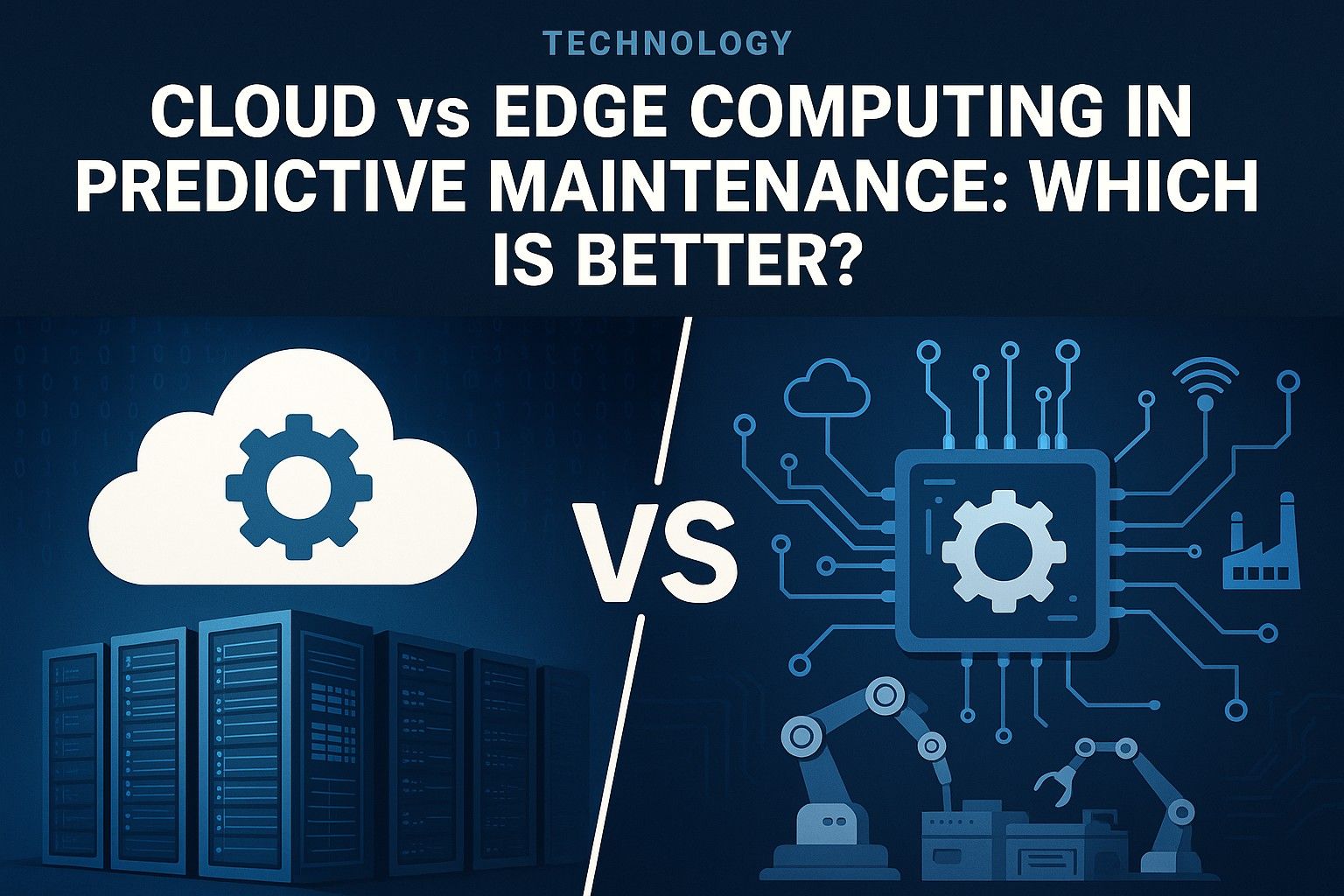
Cloud vs edge predictive maintenance isn't just a design debate anymore — it's an architecture decision about how fast a signal becomes a planner-ready draft in Maximo or SAP. The winning 2026 pattern can start from either edge or cloud telemetry and still close the loop, without adding another maintenance system. This guide walks the tradeoffs using OXMAINT AI, the AI-powered closure layer that overlays Maximo and SAP.
Cloud vs Edge Predictive Maintenance: Architecture That Still Closes the Work-Order Loop.
OXMAINT AI sits between detection and execution — it takes a signal from edge or cloud, adds context and confidence, and drafts a planner-ready work order straight into Maximo or SAP. No parallel dashboard, no second system of record.
The Tradeoff Isn't Which Side Has Better AI
Most teams want the same outcome: a machine issue detected quickly, interpreted with context, prioritized correctly, and turned into a draft work order in Maximo or SAP. A dashboard alert alone isn't enough — the architecture has to support both analytics and execution, without forcing OT, reliability and planning teams into a new CMMS. Book a demo to see the end-to-end flow.
Edge vs Cloud — Two Strengths, Two Failure Modes
Edge and cloud solve different halves of the problem, and neither one alone closes the loop to a work order. Sign up free and connect your first edge or cloud signal.
- Lower latency for anomaly detection
- Offline or weak-network resilience
- Local filtering of high-volume sensor data
- Faster response for critical rotating equipment
- Better fit for OT environments with strict connectivity rules
- Fleet-wide correlation across plants
- Centralized model training and retraining
- Easier governance across sites
- Better historical analytics
- Simpler standardization for enterprise teams
The 2026 Pattern: Hybrid Edge/Cloud With a Closure Layer
For most teams the real answer isn't either/or — it's hybrid, with a layer that turns the finding into maintenance language. Book a demo to see the hybrid pattern live.
Detect Anywhere. Close the Loop Everywhere.
Oxmaint AI turns edge or cloud signals into planner-ready drafts — routed into the Maximo or SAP workflow your team already trusts.
Choosing Where Detection, Context and Dispatch Should Live
A simple decision framework for the architecture question. Sign up free and map your own architecture.
Detect → Diagnose → Prioritize → Dispatch
The practical operating model for cloud vs edge predictive maintenance in 2026. Book a demo to see this model applied to your asset fleet.
| Step | What Happens | Where | Outcome |
|---|---|---|---|
| DETECT | Sensor, gateway, rule or model spots a deviation from normal behavior | Edge or Cloud | Trustworthy signal |
| DIAGNOSE | System adds context — operating state, recent maintenance, pattern history, criticality | Oxmaint AI | Noise vs precursor |
| PRIORITIZE | Issue translated into urgency based on risk, downtime exposure, safety, repair lead time | Oxmaint AI | Ranked finding |
| DISPATCH | Result becomes a planner-ready draft, not just another insight | Oxmaint AI | Suggested WO |
| REVIEW | Planner reviews, adjusts and schedules the job | Maximo / SAP | Human decision |
| CLOSE | Work order tracked to completion inside the existing system of record | Maximo / SAP | Closed loop |
Signal → Confidence → Suggested WO: The Closure Model
What OXMAINT AI Gives a Predictive Maintenance Team
Built to overlay Maximo and SAP — not compete with them. Start free and load your first asset fleet into OXMAINT AI.
We had detection everywhere — edge sensors, a cloud model, dashboards nobody checked twice a week. What we didn't have was closure. Once signals started landing as drafts inside SAP instead of alerts in a separate app, planners actually used the output. The architecture debate stopped mattering as much as the workflow did.
Frequently Asked Questions
Edge. Cloud. Hybrid. One Closure Layer.
Whatever your architecture, move the last mile onto OXMAINT AI — signal, confidence and suggested work order, dispatched straight into the Maximo or SAP you already run.