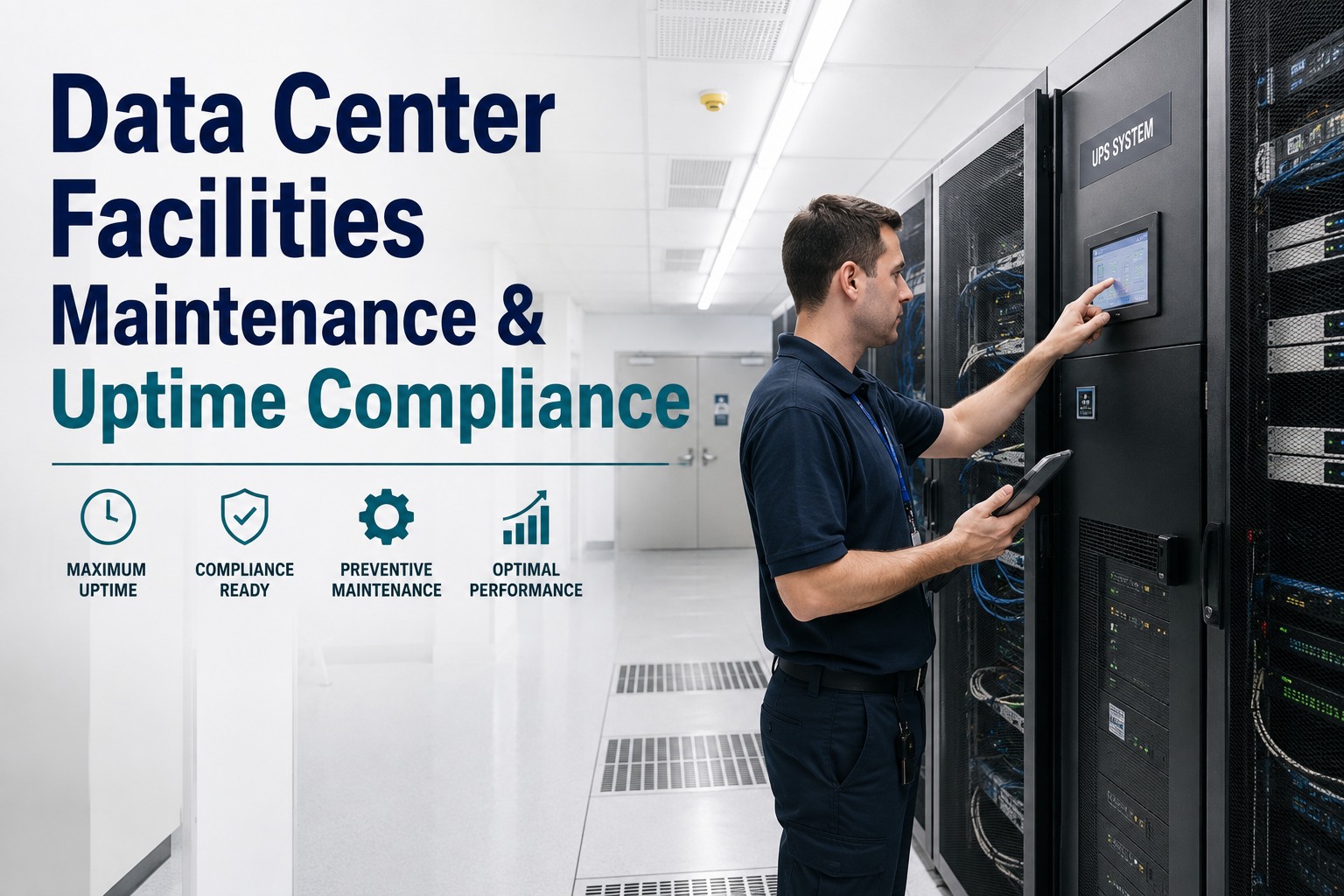
Data center cooling maintenance is the discipline that separates a facility running at 99.999% uptime from one suffering costly thermal events, premature hardware degradation, and load-shedding emergencies. Every CRAC unit, CRAH unit, chilled water loop, and containment system in a server room operates under higher density and tighter tolerances than standard commercial HVAC, meaning data center HVAC maintenance requires rigorous PM cadence, redundancy tracking, and critical spares readiness. OxMaint is an AI-powered CMMS and EAM platform built specifically for maintenance and reliability teams who cannot afford unplanned cooling downtime — giving facility managers automated preventive maintenance scheduling, real-time asset health tracking, and predictive analytics that catch failures before they impact the load. Ready to replace reactive spreadsheets with a Tier III/IV-grade cooling maintenance program? Start Free Trial and see the difference on day one.
Data Center Cooling Reliability
Is one missed PM schedule the gap between five-nines and a thermal shutdown?
A single CRAH failure at peak load can cascade across the data hall in under 8 minutes. OxMaint's CMMS-driven data center cooling maintenance program automates PM cadence, tracks critical spares, and predicts failures — so your cooling systems stay online at Tier III/IV standards.
The Cost of Cooling Failure
Why data center cooling maintenance is mission-critical, not optional
Industry studies place the average cost of a data center outage between $5,000 and $9,000 per minute — and thermal events rank among the top three root causes of unplanned downtime in colocation and enterprise facilities.
Real-world scenario
A 2 MW colocation facility running 14 CRAH units on a spreadsheet-based PM schedule missed a quarterly coil cleaning on two units. Fouled coils reduced heat-rejection capacity by 18%, forcing a backup chiller to run continuously for three weeks — adding $11,400 in unplanned energy OpEx before a routine thermography scan caught the deviation. With OxMaint's automated PM cadence and meter-based triggers, that coil cleaning would have been scheduled, assigned, and verified before the efficiency loss ever registered on the BMS.
CRAC & CRAH Maintenance
Precision cooling maintenance checklist for CRAC and CRAH units
Precision cooling units operate 24/7/365 under variable load. Use this tiered checklist to structure PM cadence — daily, monthly, and quarterly tasks that keep data center thermal management within ASHRAE TC 9.9 guidelines.
- Verify return-air and supply-air temps against setpoints on BMS dashboard
- Inspect CRAC unit display panel for active alarms, fault codes, or status changes
- Check humidity readings and confirm steam/humidifier canister levels
- Walk the data hall for hot spots, unusual noise, or vibration from fans and compressors
- Clean or replace CRAH fan filters — log differential pressure before and after
- Inspect condensate drain pans, clear blockages, and verify trap priming
- Lubricate fan motors and bearings per OEM hour-rating; log amperage draw
- Calibrate temperature and humidity sensors against a certified reference
- Chemically clean chilled-water and DX coils; log pre/post approach temperatures
- Perform IR thermography on electrical connections, contactors, and VFDs
- Test redundant CRAC failover — simulate primary unit loss and verify staging
- Review cooling-tower water chemistry (if applicable) and descale strainers
Chilled Water & Containment
How to maintain chilled water data center cooling systems
Chilled water loops, primary/secondary pumps, and N+1 chiller redundancy form the thermal backbone of modern hyperscale and enterprise facilities — and their maintenance rhythm is fundamentally different from unitary CRAC upkeep.
Pump seals, strainers & differential pressure
Inspect primary and secondary chilled-water pumps for seal leakage, bearing temperature, and vibration. Clean Y-strainers and basket filters — a 2 psi rise across a strainer signals fouling that can reduce flow by 15% and starve downstream CRAH coils.
Chiller performance logging & approach analysis
Log compressor amperage, refrigerant pressures, condenser and evaporator approach temperatures. A rising approach gap of 2°F or more indicates tube fouling — schedule tube-brushing or chemical cleaning before efficiency drops below the OEM performance curve.
Water chemistry, glycol concentration & expansion tanks
Test inhibited glycol concentration (typically 25–30% for freeze protection), corrosion inhibitor levels, and pH. Inspect bladder-style expansion tanks for pre-charge loss — an undercharged tank causes pressure swings that stress pipe joints and valve packs over time.
Containment integrity, dampers & failover testing
Pressure-test hot/cold aisle containment for bypass leakage, verify damper actuators respond to BMS commands, and run a full N+1 failover drill — taking one chiller or pump offline to confirm automatic staging engages within design parameters.
| System | Critical PM Tasks | Cadence | Key Metric to Track |
|---|---|---|---|
| CRAC (DX) | Filter replacement, coil cleaning, refrigerant charge check | Monthly / Quarterly | Supply-air temp delta, compressor amps |
| CRAH (Chilled Water) | Coil cleaning, valve actuator test, flow balancing | Quarterly | Approach temp, GPM differential |
| Chiller Plant | Approach analysis, tube cleaning, refrigerant log | Quarterly / Annual | kW/ton, approach gap (°F) |
| Cooling Tower | Water treatment, drift eliminator inspection, descale | Monthly / Annual | Conductivity, Legionella compliance |
| Containment | Seal inspection, damper cycling, bypass leak survey | Semi-Annual | ΔP across aisle, bypass % |
CMMS-Driven Reliability
How OxMaint powers data center cooling reliability
Spreadsheets and clipboard-based PM logs cannot keep pace with the density, redundancy logic, and compliance demands of a modern server room cooling environment. OxMaint converts your cooling maintenance program into an automated, auditable, AI-enhanced system of record.
Automated PM scheduling for CRAC & CRAH units
Trigger work orders by calendar interval, runtime hours, or meter readings — so a CRAH unit hitting 2,000 fan-hours automatically generates a filter-change and bearing-lube task without manual tracking. Cut missed PMs by 90% and eliminate the spreadsheet chase.
Critical spare-parts inventory for N+1 readiness
Track fan motors, VFDs, contactors, humidifier canisters, and valve actuators with min/max reorder points and vendor lead times. OxMaint flags low-stock critical spares before a failure occurs — so your redundant unit can be repaired in hours, not days.
Predictive analytics for thermal failures
OxMaint ingests sensor data — approach temperatures, motor amperage, vibration, differential pressure — and applies AI models to detect trend deviations weeks before failure. Predict and prevent 30–50% of unplanned cooling downtime before the BMS ever alarms.
Tier III/IV audit trail & compliance reporting
Every work order, meter reading, part consumption, and technician sign-off is timestamped and searchable. Generate Uptime Institute, SOC 2, and ISO 50001-ready compliance reports in one click — no more scrambling to reconstruct paper records before an audit.
Maintenance ROI Formula
Annual Savings = (Unplanned Cooling Downtime Hours Avoided × $/min Cost) + (Energy Efficiency Gains × $/kWh) + (Extended Asset Life × Depreciation Avoided) − Annual CMMS Cost
A typical 2 MW facility running OxMaint recovers full platform cost within the first prevented CRAH failure — often within 60–90 days of deployment.
See OxMaint on your cooling assets — book a 30-minute demo
Watch how a Tier III/IV-grade CMMS automates CRAC maintenance, tracks critical spares, and predicts thermal failures before they threaten your uptime SLA.
Frequently Asked Questions
Data center cooling maintenance: what teams ask most
How often should CRAC and CRAH units be serviced?
CRAC and CRAH units require monthly visual and sensor checks, quarterly mechanical PMs (filter changes, coil inspection, bearing lubrication), and annual deep maintenance including chemical coil cleaning, thermography, and failover testing. High-density facilities above 30 kW/rack may need to compress these intervals — OxMaint's meter-based triggers automatically schedule PMs based on actual runtime rather than calendar guessing. Book a Demo to see automated cadence in action.
What is the difference between CRAC and CRAH maintenance?
CRAC (Computer Room Air Conditioning) units use DX refrigerant compressors, so maintenance includes refrigerant charge verification, compressor amperage, and condenser coil cleaning. CRAH (Computer Room Air Handling) units use chilled water, so maintenance focuses on valve actuators, water flow balancing, coil approach temperature, and pump coordination. Both require filter changes, fan-bearing lubrication, and sensor calibration on the same cadence.
How does a CMMS improve data center cooling uptime?
A CMMS eliminates missed PMs by auto-generating work orders on schedule, tracks critical spare inventory so repairs happen in hours not days, and creates a searchable audit trail for compliance. Facilities using a CMMS for cooling maintenance typically cut unplanned downtime 30–50% by catching degradation trends — rising approach temps, increasing motor amperage, drifting humidity — weeks before a hard failure occurs.
What ASHRAE guidelines govern data center cooling maintenance?
ASHRAE TC 9.9 defines recommended server inlet temperature ranges (typically 18–27°C / 64–81°F) and humidity envelopes that cooling systems must maintain. Maintenance programs should log supply and return temperatures against these setpoints, verify containment prevents bypass leakage, and document that redundant cooling capacity (N+1 or 2N) can sustain the load during a single-unit failure — all reportable within OxMaint's compliance module.
How long does it take to implement OxMaint for a data center cooling program?
Most data center facility teams are live on OxMaint within 2–4 weeks. The platform imports existing asset registers, PM schedules, and spare-parts lists via CSV, then auto-generates work orders based on your preferred cadence. Full critical-spares tracking and predictive analytics activate once sensor data flows from your BMS or IoT gateways — Start Free Trial today to begin the migration from spreadsheets.
Stop relying on spreadsheets to protect five-nines uptime
Deploy OxMaint's AI-powered CMMS and give your CRAC, CRAH, and chilled water systems the maintenance discipline your SLA demands — automated PMs, critical spares tracking, predictive failure alerts, and full audit readiness in one platform.
Free 14-day trial · No credit card