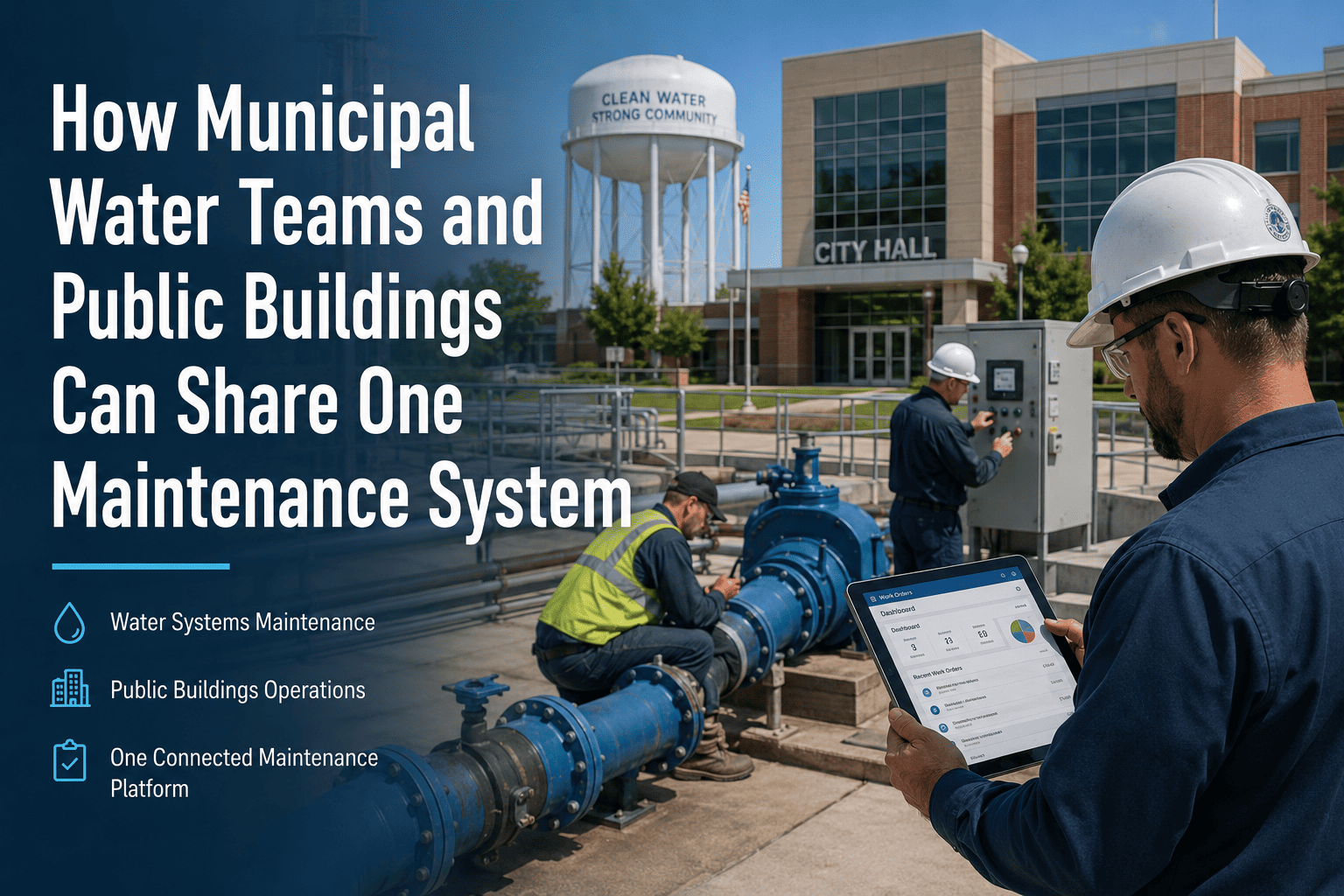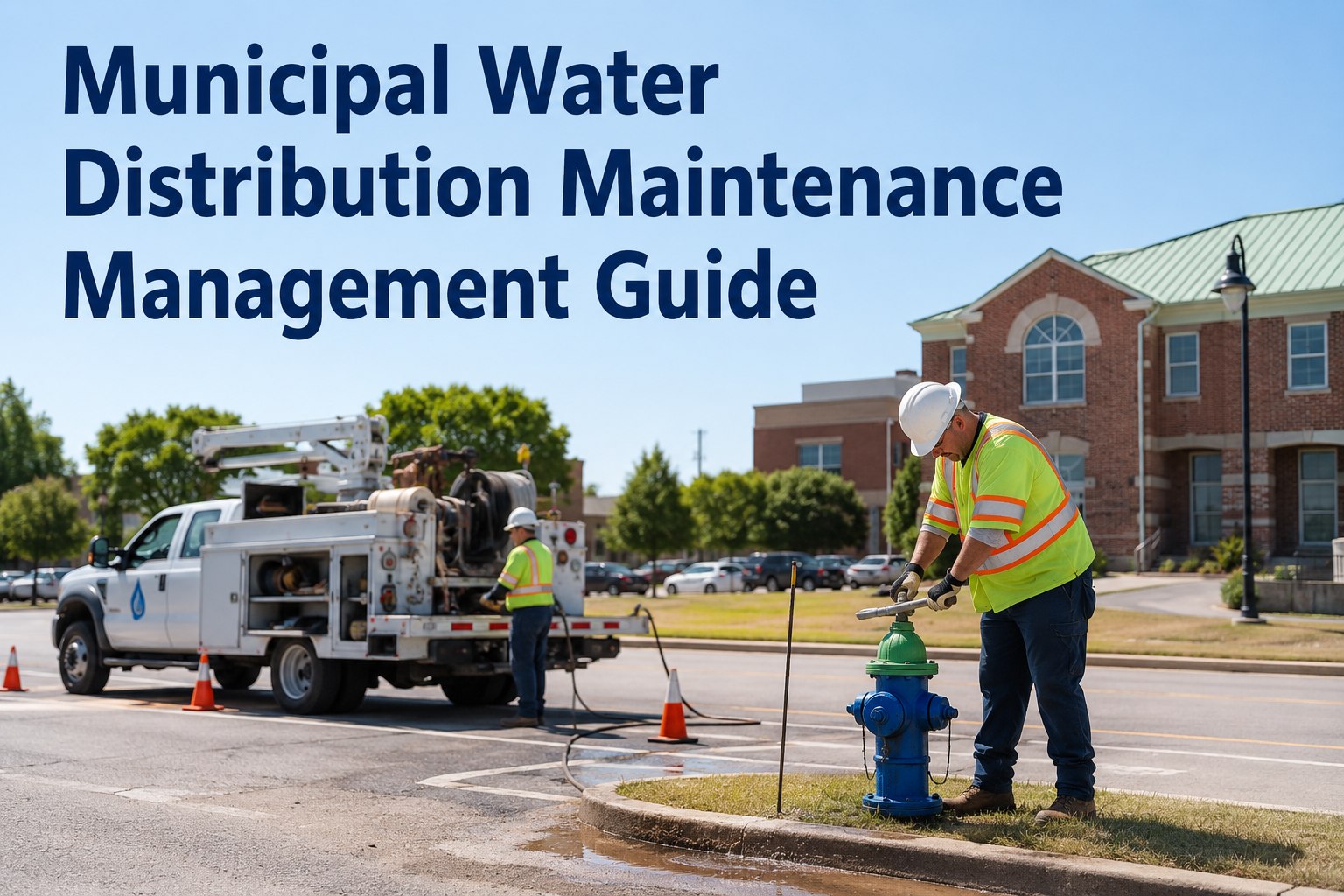
Somewhere under your streets, a distribution valve that should be turned once a year has not moved in a decade. When the next water main breaks at 2 AM, a crew will find it seized — and a two-hour repair becomes an eight-hour outage for thousands of residents, because the isolation zone just tripled in size. This is the quiet reality of municipal water distribution: the network is invisible, the failures are sudden, and the records are usually on paper or in nobody's head. Roughly a quarter of the treated water a typical utility produces never reaches a paying customer, and most systems have 20 to 40 percent more valves than their records show. A CMMS turns that invisible, undocumented network into a managed, mapped, and maintained asset base. Start a free Oxmaint trial and import your GIS to see every valve, hydrant, and main on one map, or book a demo to see distribution maintenance and EPA reporting in one platform.
Government · Public Works · Water Distribution
Municipal Water Distribution Maintenance Management
Valve exercising, hydrant inspection, leak detection, and water main condition — how municipalities manage the underground network they cannot see, and produce the EPA and AWWA documentation regulators require, from one CMMS.
-
15–25%
of treated water lost to distribution leaks before the source is found
-
20–40%
more valves in the ground than most utility records actually show
-
70%
of water system failures traced to deferred valve, hydrant, and pipe maintenance
-
49%
of water facilities still run maintenance on spreadsheets or paper
The Invisible Inventory
You Cannot Maintain What You Have Not Mapped
Every distribution program starts with the same problem: nobody has a complete, accurate count of what is actually buried. A data-driven inventory almost always finds more assets than the records show — and out-of-service equipment nobody flagged. These four asset classes are the network, and each has its own maintenance rhythm.
-
Distribution Valves
Records off by 20–40%
Exercise annually; critical transmission-main valves every 6 months per AWWA M44. Document valve ID, GPS, turns-to-close, and any binding. A valve that will not fully close is a liability during a break.
-
Fire Hydrants
5–15% out of service
Annual flow testing, lubrication, and O-ring inspection; quarterly accessibility checks. Any hydrant failing minimum flow is flagged and the fire department notified of reduced capacity.
-
Water Mains
Material records off 10–30%
Condition assessment via acoustic leak detection, CCTV, and wall-thickness testing. Prioritize cast-iron mains over 75 years old and segments with a repeat-break history for replacement capital.
-
Service Meters
Under-registration hidden
Test accuracy, replace aging units, and track under-registration — the apparent losses that quietly inflate non-revenue water alongside the physical leaks.
Follow the Water
Where a Quarter of Your Treated Water Goes
Non-revenue water is the gap between what a utility produces and what it bills. It splits into three streams — and each one is a maintenance program in disguise. Reading it as a flow makes the target obvious.
- Water Produced 100% Every gallon treated and pumped into the distribution network
- Physical Losses Leaks and main breaks — the largest stream, addressed by leak detection and main renewal Apparent Losses Meter under-registration and theft — fixed by meter testing and replacement Unbilled Authorized Firefighting and flushing — legitimate use that still needs logging for the water balance
- Water Billed ~75% The revenue that funds the whole system — every point recovered is money and treated water saved
Cutting non-revenue water is the highest-ROI work a utility can do, and it lives entirely in distribution maintenance: find the leaks faster, exercise the valves that isolate them, and test the meters that under-count. Book a demo to see SCADA pressure and acoustic alerts auto-generate leak work orders by zone.
One Seized Valve
How a Skipped Task Becomes a Municipal Emergency
The cost of deferring distribution maintenance is not linear — it compounds at the worst possible moment. Here is the chain that turns a five-minute annual task into a headline, and where a CMMS breaks it.
- 1 The valve is never exercised On paper or spreadsheet, no alert fires. A valve that should turn yearly sits for 5–10 years and corrodes shut.
- 2 A main breaks nearby Water surfaces at 2 AM. The crew goes to isolate the break using the nearest valves — the standard 2-hour repair plan.
- 3 The isolation valve will not close Crews move outward to the next working valves. The isolation zone triples; thousands more customers lose service.
- ✓ The CMMS prevents it at step 1 Auto-scheduled exercising catches the seized valve years earlier. Turns-to-close data flags degradation before the emergency.
The Maintenance Calendar
What Regulators Expect to See Documented
Distribution maintenance is governed by AWWA standards, NFPA hydrant requirements, and EPA Safe Drinking Water Act reporting. These are the intervals a sanitary survey or audit will check — every one an auto-generated, timestamped work order.
| Task | Interval | Standard |
|---|---|---|
| Distribution valve exercising | Annual (critical: 6 months) | AWWA M44 |
| Hydrant flow testing | Annual | NFPA 291 |
| Hydrant lubrication & O-ring | Annual + quarterly access check | AWWA M17 |
| Distribution system flushing | Annual (unidirectional) | AWWA / state |
| Leak detection survey | Annual acoustic survey | AWWA water audit |
| Water main condition assessment | Risk-prioritized by age & breaks | AWWA |
| Meter accuracy testing | By meter class & size | AWWA M6 |
| Sanitary survey documentation | Per state drinking water program | EPA SDWA |
Maintenance Funds the Renewal
The Documentation That Fixes Pipes Also Wins the Grant to Replace Them
The same digital records that keep valves exercised and hydrants flowing are what unlock the capital side of the network. Condition scores, break histories, and maintenance documentation are exactly what state revolving-fund loans, WIFIA financing, and EPA infrastructure grants require. A CMMS does not just run today's maintenance — it builds the evidence base that funds tomorrow's main replacement.
Oxmaint for Water Utilities
How Oxmaint Runs a Distribution Maintenance Program
-
GIS Asset Registry
Every Asset on the Map, GPS-Located
Import GIS to register every valve, hydrant, main, and meter with coordinates, material, size, and condition. Tap any asset on the map to view history or raise a work order — and surface the assets your old records missed.
-
Auto-Scheduled Programs
Valve, Hydrant & Flushing Cycles
Configure exercising rotations, hydrant inspection routes, and flushing schedules by pressure zone. The system generates and dispatches work orders so no valve goes another decade without a turn.
-
SCADA & Acoustic
Pressure Anomalies Become Work Orders
SCADA pressure data and acoustic sensor alerts feed straight in. A pressure anomaly auto-generates an inspection work order for the affected zone — no manual interpretation, no delayed dispatch.
-
Mobile & Offline
Field Crews Work the Whole Network
Turn-by-turn navigation to each valve, digital checklists, and offline capability for the field. A crew logging 47 turns instead of 22 instantly flags that valve for follow-up condition scoring.
-
Compliance Records
Audit-Ready for Every Regulator
EPA Safe Drinking Water Act, AWWA M44/M17, and NFPA hydrant records built into every inspection — timestamped and retrievable in minutes for a sanitary survey or audit.
-
CapEx Forecasting
Condition Data Drives Replacement Capital
Rolling 5–10 year forecasts based on actual condition scores and break history — so mains are replaced on evidence, and grant and loan applications carry the documentation funders demand.
Frequently Asked
Water Distribution CMMS Questions
How often should distribution valves be exercised?
AWWA M44 recommends exercising all distribution valves at least annually, with critical isolation valves on transmission mains every six months. Each event should document the valve ID, GIS location, number of turns to fully close, and any hard spots or binding. A valve that cannot fully close is a critical deficiency until repaired, because it extends the isolation zone during a main break. Sign up for Oxmaint to auto-schedule valve exercising across your whole network by zone.
What is non-revenue water and why does it matter?
Non-revenue water is the difference between water produced and water billed. It includes physical losses (leaks and main breaks), apparent losses (meter under-registration and theft), and unbilled authorized use (firefighting, flushing). A typical utility loses 15–25% of treated water this way — every point recovered is both saved water and recovered revenue, which is why leak detection and meter testing carry the highest maintenance ROI.
How does a CMMS help with EPA and sanitary survey compliance?
It builds audit-ready documentation into every inspection and work order — valve exercising logs, hydrant flow tests, flushing records, and leak surveys, all timestamped and tied to a GPS-located asset. When a state sanitary survey or EPA audit arrives, the records are retrievable in minutes instead of compiled from paper over weeks. Book a demo to see sanitary survey and AWWA documentation generated automatically.
How long does it take to deploy a distribution CMMS?
A cloud-native platform can have a distribution system live in around three weeks with no IT project and no service interruption — import GIS data, configure the asset hierarchy by pressure zone, and set up valve exercising and hydrant schedules. That is a fraction of the time and cost of a traditional enterprise deployment. Sign up for Oxmaint to import your GIS and stand up a distribution program in weeks.
Map · Maintain · Document
The Valve You Never Turned Is the One That Fails During the Break
Every unexercised valve, unlogged hydrant, and untracked leak is a municipal emergency waiting for the worst possible night. Oxmaint gives public works teams one platform to map the entire underground network, auto-schedule every valve, hydrant, and flushing cycle, turn SCADA alerts into work orders, and produce EPA and AWWA documentation on demand.