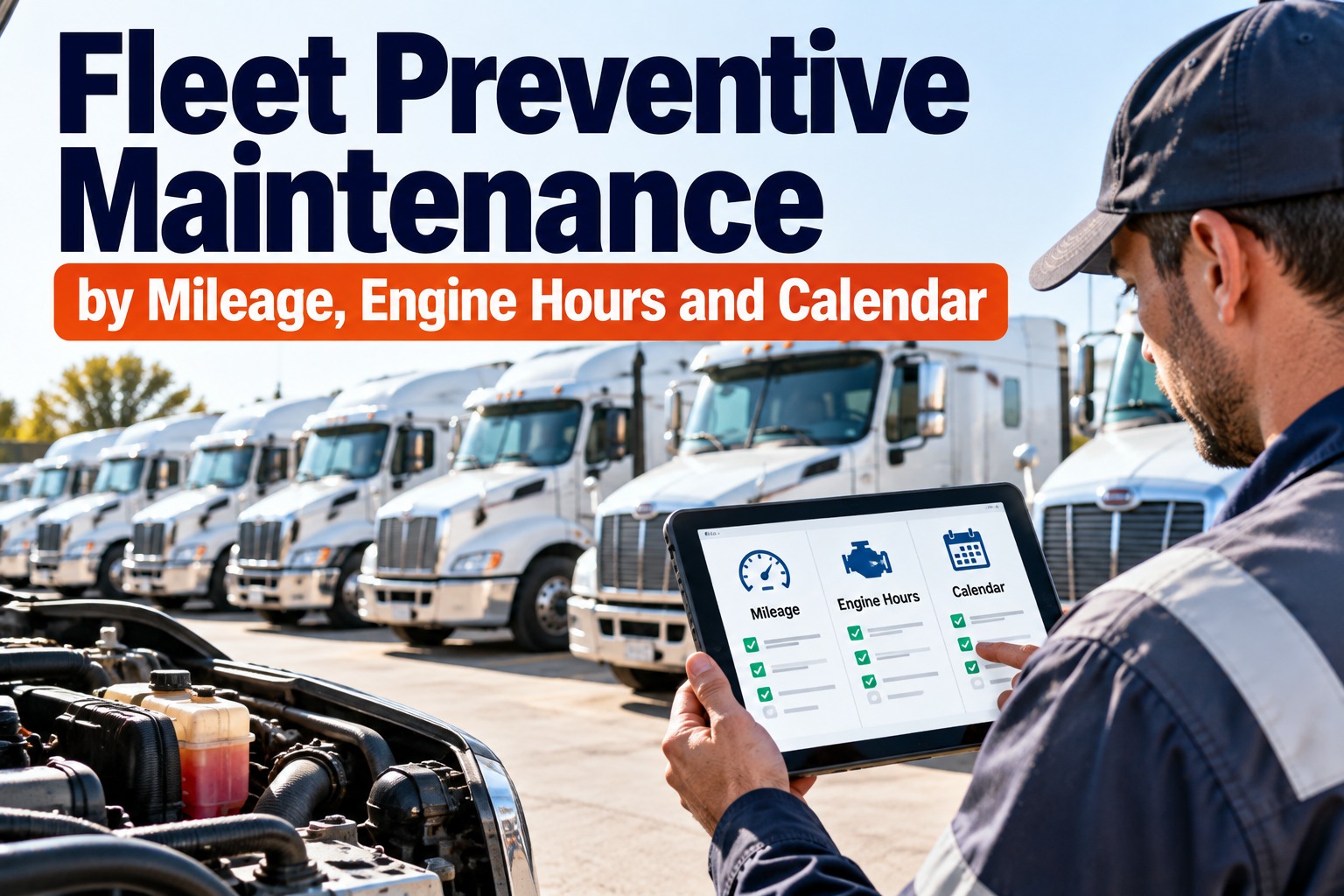
Two trucks can show the same odometer reading and be in completely different shape. One spent the year on the highway. The other idled at job sites, ran a power take-off, or sat in the yard for months. A schedule based on miles alone treats them the same, so one gets serviced too late and another too early. Good fleet preventive maintenance uses three clocks at once: mileage, engine hours and calendar time, and services the vehicle when the first one runs out. This guide shows how to choose triggers, layer service levels and keep inspections on time. OxMaint AI CMMS keeps every vehicle's schedule, inspection and work order in one place.
Fleet Preventive Maintenance by Mileage, Engine Hours and Calendar
A mileage-only schedule quietly under-services idle-heavy and low-use vehicles until something breaks.
OxMaint AI CMMS connects vehicle inspections, defects, work orders and preventive or predictive maintenance in one platform, so each vehicle is serviced by what it has actually done.
The result: better asset visibility, with every vehicle's service history and status in one record.
Which Clock Runs Out First?
Same oil change, three vehicles. The bars show how far each clock has run (illustrative). The vehicle is due when the first bar fills. Start free and track all three per vehicle.
Choosing the Right Trigger
| Trigger | Works best for | Weak spot |
|---|---|---|
| Mileage | Vehicles that spend most of their time driving | Misses wear from idling and PTO use |
| Engine hours | Idle-heavy, vocational and equipment-type work | Needs reliable hour readings |
| Calendar | Low-use vehicles, aging fluids and safety items | Ignores how hard the vehicle worked |
Idling matters because engine wear and oil aging continue while the odometer stands still. Base intervals on your OEM's recommendations and your own duty cycle. Book a demo to model yours.
The Odometer Says Fine. The Engine Disagrees.
When service is tied to a single meter, some vehicles are always behind. OxMaint AI lets you schedule preventive maintenance by time or usage and keeps each vehicle's history, so due work is visible before it becomes a breakdown.
Layer Your Services: A, B and C
Many fleets use tiered services so every visit has a clear scope. Names and contents vary, so match them to your OEM guidance. Start free and build your tiers.
The Regulatory Clock Runs in Parallel
Requirements depend on your vehicles and jurisdiction. Confirm current rules, such as 49 CFR Part 396 in the US, with your compliance team.
Set Up in Five Steps
How OxMaint AI Supports Fleet PM
Automated schedules by time or usage, so due services surface on their own.
Digital checklists with photos; failed items create corrective work.
Assigned, tracked and recorded with labor and parts history.
One record per vehicle with history, health score and QR lookup.
AI reviews usage, sensor and history data and raises proactive work orders.
Reports on overdue services and repeat repairs, with traceable records.
Frequently Asked Questions
Service Every Vehicle When It Needs It.
Load your fleet, set triggers by how each vehicle works, and track every inspection and repair in one record.