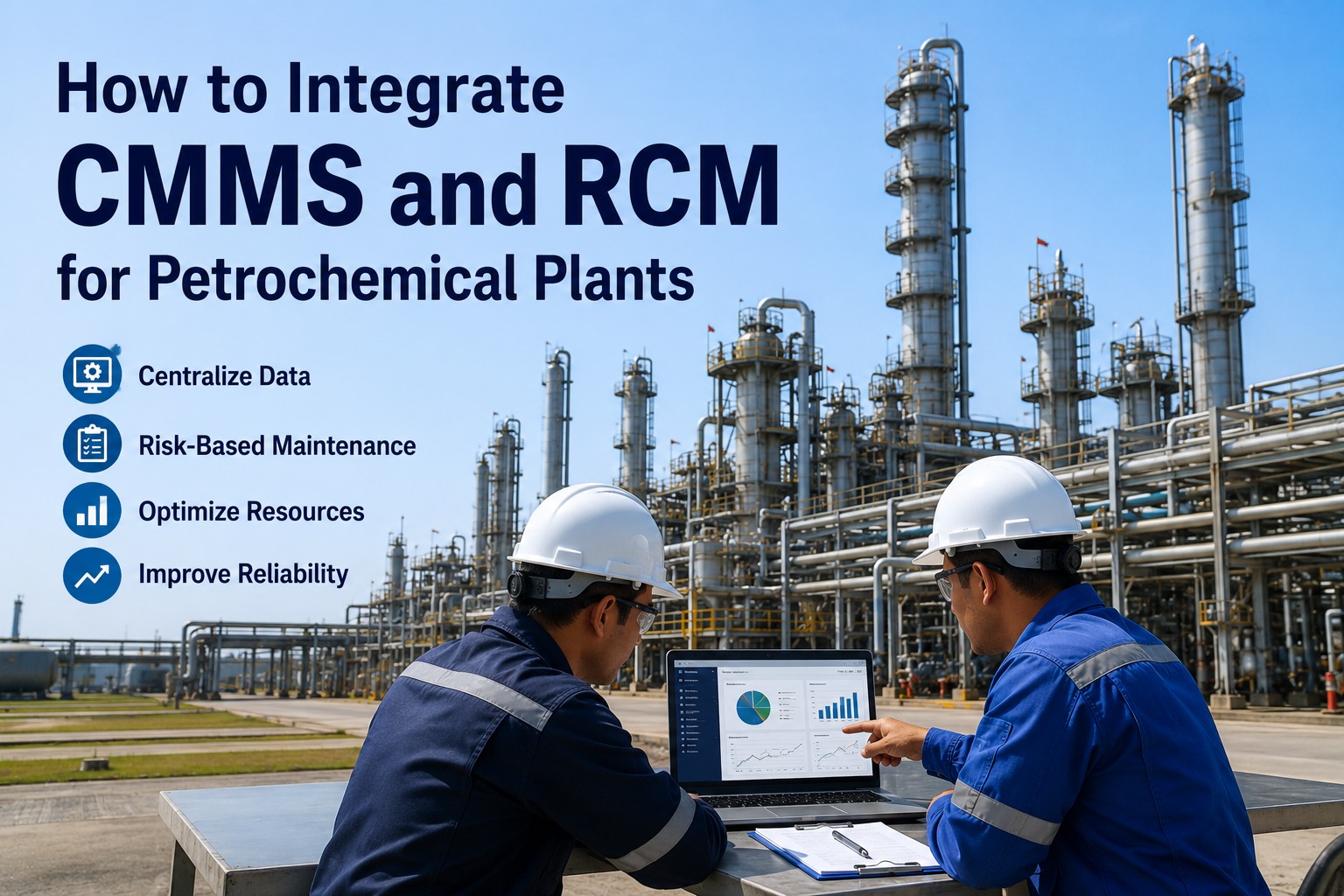
Integrating CMMS and RCM for petrochemical plants is the fastest way to transition from reactive firefighting to predictive reliability, connecting every identified failure mode directly to an automated work order. Top-tier petrochemical maintenance programs use this integration to eliminate unplanned downtime, enforce safety compliance, and maximize asset availability across high-pressure, continuous operations. By linking Reliability-Centered Maintenance logic to a centralized digital maintenance system, teams can automate triggers, track critical KPIs in real-time, and ensure that every preventive task is backed by data. See how OxMaint streamlines this integration when you Start Free Trial today.
CMMS x RCM Integration Guide
Is Your CMMS Actually Executing Your RCM Strategy?
Most petrochemical plants document failure modes in bulky RCM spreadsheets, but never link them to automated maintenance triggers. OxMaint bridges that gap—turning every failure analysis into an immediate, trackable work order.
Achieved by plants that successfully map RCM failure modes directly into CMMS-driven preventive and predictive maintenance schedules.
The Integration Gap
Why Petrochemical CMMS Integration Often Fails
In complex petrochemical operations, keeping your Reliability-Centered Maintenance (RCM) analysis disconnected from your Computerized Maintenance Management System (CMMS) is a multi-million dollar blind spot.
Siloed Failure Data
When FMEA (Failure Mode and Effects Analysis) lives in offline spreadsheets, technicians lose access to critical failure patterns in the field. Decisions are made without historical context, repeating costly mistakes.
Missed Condition Triggers
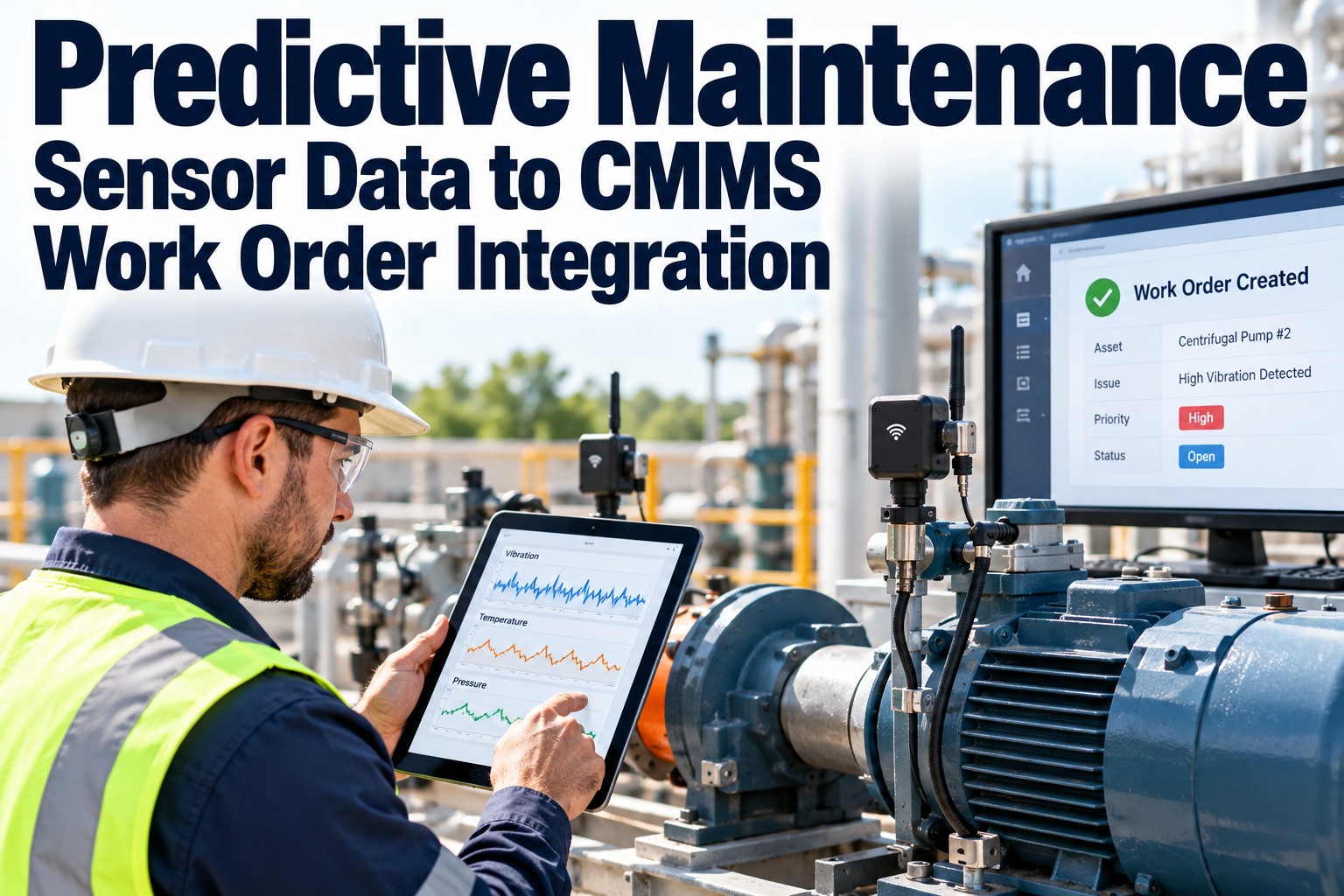
RCM dictates specific condition-based interventions, but if the CMMS cannot automate work orders from IoT or sensor data, operators miss the 48-hour window to prevent catastrophic equipment failure.
Compliance & Audit Risks
Petrochemical reliability requires strict OSHA and API 770 compliance. A disconnected system makes tracing preventive maintenance back to specific RCM logic nearly impossible during regulatory audits.
Step-by-Step Implementation
How to Set Up Petrochemical CMMS for RCM
A successful petrochemical CMMS deployment requires mapping your plant's asset hierarchy directly to its RCM strategy. Here is the proven 4-phase timeline to achieve digital maintenance integration.
Asset Hierarchy & Criticality Ranking
Build a mirror image of your physical plant in the CMMS. Tag every pump, heat exchanger, and compressor with criticality scores based on safety, environmental impact, and production loss.
Link Failure Modes to Asset Records
Import your RCM/FMEA data directly into each asset's profile. Map specific failure modes (e.g., seal degradation, bearing wear) so technicians see exactly what to inspect during routine PMs.
Automate Work Order Triggers
Convert RCM strategies into automated workflows. Set condition-based triggers that generate petrochemical work order automation the moment a vibration sensor or temperature reading crosses a threshold.
KPI Tracking & Continuous Improvement
Establish dashboards for MTBF, MTTR, and OEE. Use petrochemical CMMS KPI tracking to validate if your RCM strategies are actually reducing downtime, and adjust maintenance frequencies based on real data.
Real-World Scenario
The ROI of Petrochemical Automated Maintenance
Consider a mid-sized petrochemical plant running 1,200 critical assets. By shifting from reactive maintenance to an integrated CMMS/RCM model, the financial impact is measurable within the first quarter.
Maintenance ROI Calculation
Downtime Avoided + Reduced Spares Inventory + Labor Efficiency = Annual ROI
Preventing 3 major pump failures per quarter by catching bearing degradation early via automated condition triggers.
Linking RCM criticality to spare-parts inventory, automatically reducing overstock on non-critical assets.
Technicians spend 25% less time searching for manuals and history, as RCM logic is pushed directly to mobile devices.
"A 180-asset petrochemical unit spending $42K annually on reactive labor can save over $180,000 in the first year by integrating RCM strategies directly into a mobile-first CMMS."
OxMaint Solution
How OxMaint Powers Petrochemical Reliability
OxMaint is built specifically for high-stakes petrochemical maintenance teams. We eliminate the disconnect between your RCM analysis and daily execution with an AI-powered, mobile-first platform.
Automated RCM Work Orders
Map every FMEA failure mode to an automated task. OxMaint generates, assigns, and tracks work orders the second a condition threshold is breached.
Outcome: Cut unplanned downtime by 30–50% in the first quarter.
Mobile-First Inspection
Push RCM-driven checklists directly to technician tablets in the field. Capture digital signatures, photos, and sensor readings without paper.
Outcome: Eliminate paper work orders and achieve 100% audit readiness.
AI-Driven Predictive Analytics
Go beyond preventive maintenance. OxMaint AI analyzes vibration, temperature, and pressure data to predict failures before the RCM schedule even triggers.
Outcome: Predict failures 14–30 days before they happen.
Real-Time KPI Dashboards
Track MTBF, MTTR, and asset availability in real-time. Instantly prove to plant management that RCM strategies are driving reliability gains.
Outcome: Justify maintenance budgets with hard data in seconds.
See It On Your Assets
Ready to Connect Your RCM Strategy to the Field?
Stop leaving failure mode analysis in a spreadsheet. Book a 30-minute demo to see how OxMaint automates petrochemical work orders and tracks critical reliability KPIs.
Frequently Asked Questions
Petrochemical CMMS & RCM Integration FAQs
What is CMMS and RCM integration for petrochemical plants?
Integrating CMMS and RCM means connecting your Reliability-Centered Maintenance analysis (which identifies how and why assets fail) directly into your Computerized Maintenance Management System (which executes the work). In petrochemical plants, this ensures every identified failure mode triggers an automated, condition-based work order. You can Start Free Trial on OxMaint to see this live.
How long does it take to deploy a petrochemical CMMS?
Unlike legacy systems that take six months to implement, OxMaint deploys in weeks. By using a pre-configured asset hierarchy tailored to petrochemical operations, maintenance teams can be trained in hours and begin executing RCM-driven work orders within the first month.
Which KPIs should petrochemical maintenance software track?
A robust petrochemical CMMS must track Mean Time Between Failures (MTBF), Mean Time To Repair (MTTR), Overall Equipment Effectiveness (OEE), and Planned Maintenance Percentage (PMP). These KPIs validate whether your RCM strategies are actually reducing downtime and improving plant reliability.
How does petrochemical work order automation reduce downtime?
Automated work orders eliminate the delay between detecting an issue and dispatching a technician. When IoT sensors detect a threshold breach—like high vibration on a centrifugal pump—the CMMS instantly generates a work order with the relevant RCM checklist, preventing catastrophic failure. Book a Book a Demo to see automated triggers in action.
Can OxMaint integrate with existing plant sensors and IoT?
Yes. OxMaint is built for petrochemical digital maintenance and easily connects with existing SCADA, PLC, and IoT condition-monitoring systems. This allows real-time data to flow directly into the CMMS, enabling predictive maintenance triggers based on actual asset health rather than arbitrary calendar dates.
Transform Your Maintenance Strategy
Deploy OxMaint in Weeks, Not Months
Join the petrochemical operations of every size that run their reliability programs on OxMaint. Measure downtime reduction in your first quarter.
Free 14-day trial · No credit card




.png)

