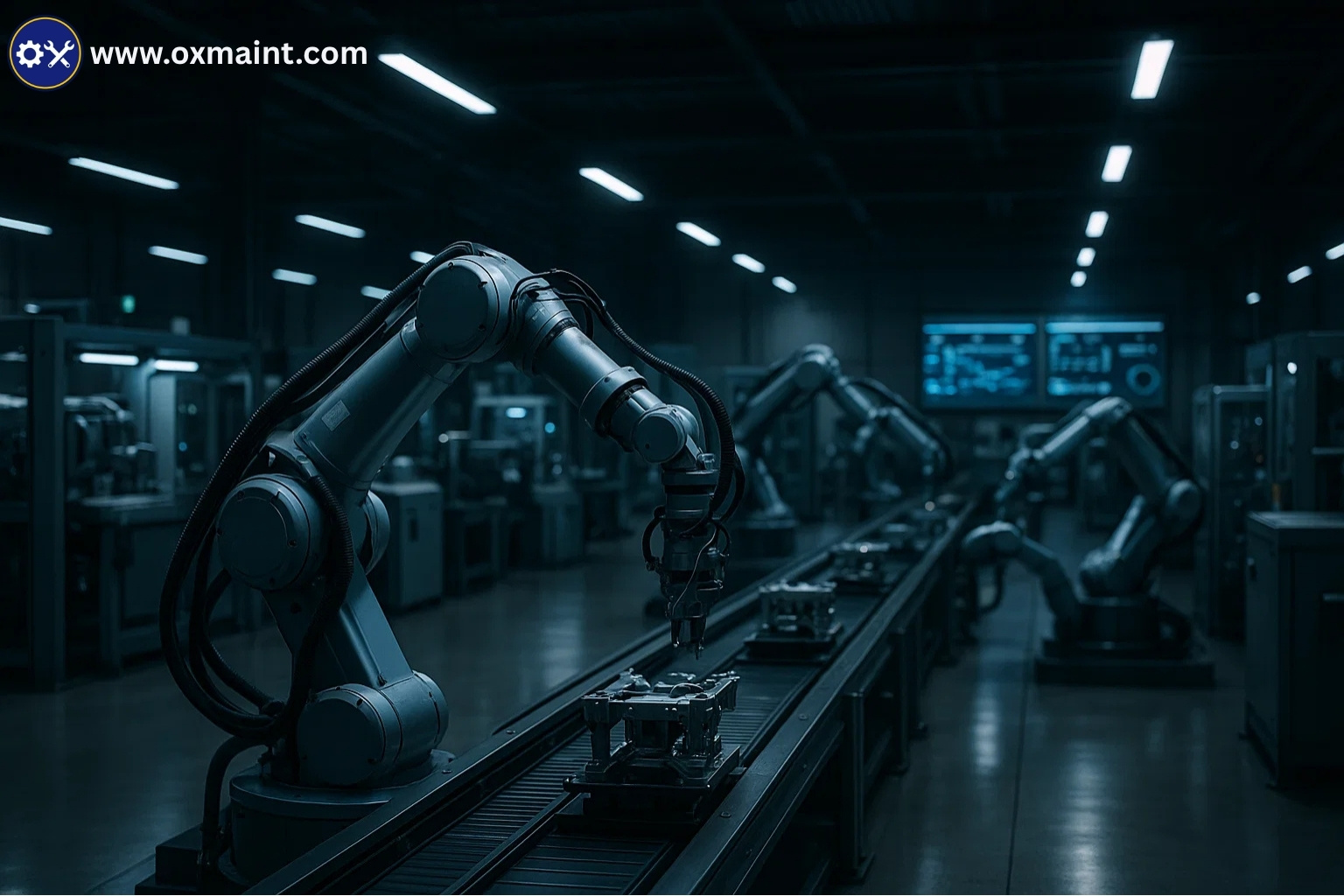
Your production director stands in the eerily quiet factory at 2 AM, watching robots seamlessly assemble products while the facility operates in complete darkness. "We've reduced labor costs by 85% and increased output by 240%," she reports via video call, "but the journey to lights-out manufacturing nearly broke us." As you review the transformation metrics—$3.2 million invested, 18-month implementation, countless technical hurdles—you wonder if your facility could achieve similar autonomous production success.
This scenario represents manufacturing's ultimate automation frontier as facilities worldwide pursue lights-out operations promising dramatic cost reductions and productivity gains. Yet for every success story, dozens of manufacturers struggle with implementation complexities, technology integration challenges, and workforce transitions that derail their automation ambitions.
Facilities achieving true lights-out manufacturing report 70-90% labor cost reductions, 50-75% quality improvements, and 24/7 production capabilities that transform competitive positioning. The key lies in understanding technical requirements, implementation methodologies, and organizational changes necessary for successful autonomous operations.
Transform your manufacturing operations with proven lights-out automation strategies and expert guidance.
Ready to revolutionize your manufacturing capabilities? Our proven automation framework has helped over 200 manufacturers achieve successful lights-out transformations, reducing labor costs by up to 90% while boosting productivity. Don't let your competitors gain the advantage—start your automation journey today with industry-leading experts who understand your challenges.
Start Your TransformationSchedule Expert Consultation
Understanding Lights-Out Manufacturing: Beyond Simple Automation
Lights-out manufacturing represents the pinnacle of industrial automation where production facilities operate autonomously without human intervention, often in complete darkness to save energy. This revolutionary approach extends far beyond installing robots—it requires fundamental reimagining of production processes, quality systems, and operational philosophies.
True lights-out operations demand seamless integration of multiple technologies including robotics, artificial intelligence, IoT sensors and advanced control systems. Unlike traditional automation focusing on specific tasks, lights-out manufacturing creates self-managing production ecosystems capable of autonomous decision-making and problem resolution.
Intelligent Robotics
Advanced robots with AI vision and adaptive programming handling complex assembly, inspection, and material handling without human oversight.
Predictive Maintenance
Self-diagnosing equipment using vibration analysis, thermal imaging, and performance data to schedule maintenance before failures occur.
Quality Automation
Machine vision systems detecting defects at micron levels, automatically adjusting processes to maintain specifications without intervention.
Material Flow Systems
Automated guided vehicles (AGVs) and conveyor networks orchestrating material movement based on real-time production demands.
Digital Twin Control
Virtual production models enabling simulation, optimization, and remote monitoring of entire manufacturing processes.
Cybersecurity Infrastructure
Robust security systems protecting autonomous operations from cyber threats that could halt production or compromise quality.
Implementation complexity varies dramatically based on product types, process requirements, and existing automation levels. Discrete manufacturing with standardized products typically achieves lights-out operations easier than high-mix, low-volume environments requiring frequent changeovers and customization.
Financial implications extend beyond initial capital investments. While equipment costs range from $5-50 million depending on facility size, hidden expenses including software development, system integration, and workforce retraining often equal hardware investments.
Essential Technologies and Infrastructure Requirements
Building lights-out manufacturing capabilities demands careful selection and integration of complementary technologies creating self-sufficient production environments. Each technology component must communicate seamlessly while maintaining reliability standards exceeding 99.9% to prevent costly autonomous operation failures.
Modern lights-out facilities leverage hierarchical control architectures where edge computing handles real-time decisions, cloud platforms manage optimization and analytics, and cybersecurity layers protect against disruptions. This technology stack complexity requires expertise spanning multiple disciplines rarely found in traditional manufacturing organizations.
| Technology Category | Key Components | Investment Range | Critical Success Factors |
|---|---|---|---|
| Robotic Systems | 6-axis robots, cobots, SCARA | $50k-500k per unit | Flexibility, reliability, programming ease |
| Vision Systems | 3D cameras, AI inspection, OCR | $25k-150k per station | Accuracy, speed, adaptability |
| Control Systems | PLCs, SCADA, MES integration | $200k-2M total | Interoperability, scalability, security |
| Material Handling | AGVs, AS/RS, conveyors | $100k-5M | Routing flexibility, error recovery |
| IoT Infrastructure | Sensors, gateways, analytics | $500-5k per asset | Coverage, reliability, data quality |
| Edge Computing | Local servers, AI processors | $50k-500k | Processing power, redundancy |
Network infrastructure requirements often surprise manufacturers accustomed to traditional IT needs. Lights-out operations demand ultra-low latency communications, redundant pathways, and bandwidth supporting thousands of simultaneous data streams from sensors, cameras, and control systems.
Power and environmental systems require equal attention. Uninterruptible power supplies, backup generators, and sophisticated HVAC controls ensure continuous operation despite external disruptions. Smart energy management reduces costs while maintaining optimal conditions for sensitive equipment.
Cybersecurity architecture demands military-grade protection given autonomous operations' vulnerability to attacks. Multi-layered defenses including air-gapped networks, intrusion detection, and rapid recovery systems protect against threats that could halt production or compromise product quality.
Implementation Roadmap: From Manual to Autonomous Production
Transitioning to lights-out manufacturing requires systematic progression through automation stages, each building capabilities and proving ROI before advancing. Attempting immediate full automation typically fails due to technical complexity, organizational resistance, and inadequate foundation systems.
Successful implementations follow proven phase-gate methodologies where each stage delivers tangible benefits while preparing for subsequent advances. This approach reduces risk, maintains production during transition, and allows course corrections based on real-world learnings.
Lights-Out Manufacturing Implementation Phases
Phase 1 assessment typically reveals 30-50% of processes suitable for automation, with selection criteria including volume, complexity, quality requirements, and ROI potential. High-volume, repetitive operations with consistent specifications offer ideal starting points.
Islands of automation in Phase 2 prove concepts while delivering immediate returns. Typical applications include welding cells, CNC machining centers, and packaging lines where $500k-2M investments return 18-24 month paybacks through labor savings and quality improvements.
System integration challenges in Phase 3 separate successful implementations from failures. Connecting disparate automation islands requires standardized communication protocols, data harmonization, and orchestration software managing complex interdependencies.
Critical Implementation Considerations
- Start with highest ROI processes typically offering 2-3 year paybacks
- Maintain manual backup capabilities during transition phases
- Invest heavily in employee training and change management
- Establish clear metrics tracking automation performance and ROI
- Partner with experienced integrators familiar with your industry
- Plan for 2x initial timeline estimates to accommodate learning curves
- Budget 30% contingency for unexpected technical challenges
- Develop internal automation expertise rather than relying solely on vendors
Workforce transformation represents the most challenging implementation aspect. Successful transitions retrain operators as robot programmers, maintenance technicians, and system monitors, addressing displacement fears while building critical capabilities.
ROI Analysis and Performance Metrics
Lights-out manufacturing investments demand rigorous financial analysis given substantial capital requirements and operational risks. Comprehensive ROI calculations must account for direct savings, productivity gains, quality improvements, and strategic benefits often overlooked in traditional automation justifications.
Direct labor savings typically drive initial business cases, with fully automated operations eliminating 70-90% of production workforce costs. However, these savings often represent only 30-40% of total value creation, with productivity and quality improvements delivering equal or greater benefits.
Labor Cost Reduction
75-90% decrease in direct labor costs, saving $2-10M annually for mid-size facilities
Productivity Increase
150-300% output improvement through 24/7 operation and optimized cycle times
Quality Enhancement
60-80% defect reduction through consistent automated processes and inspection
Inventory Reduction
40-60% decrease in WIP and finished goods through precise production control
Energy Savings
20-30% reduction through optimized equipment operation and eliminated lighting/HVAC
Space Utilization
30-50% footprint reduction through compact automated cell design
Hidden costs significantly impact ROI calculations but often escape initial analysis. System integration consuming 30-40% of project budgets, ongoing software licenses adding 15-20% annually to operational costs, and specialized maintenance requirements demand careful consideration.
Payback periods vary dramatically based on implementation scope and industry dynamics. High-volume consumer goods manufacturers typically achieve 2-3 year paybacks, while aerospace or medical device producers may require 4-6 years due to complexity and regulatory requirements.
ROI Acceleration Factors
- Multi-shift operations maximizing equipment utilization and labor savings
- High-wage geographic locations amplifying labor cost reductions
- Quality-critical products where defect costs justify precision automation
- Volatile demand patterns benefiting from flexible automated capacity
- Competitive markets rewarding rapid delivery and consistent quality
- Sustainability requirements favoring energy-efficient automated processes
Strategic benefits resist quantification but often determine long-term success. Market responsiveness through rapid changeovers, competitive advantages from consistent quality, and organizational learning creating automation expertise deliver value exceeding financial metrics.
Challenges, Solutions, and Future Outlook
Despite compelling benefits, lights-out manufacturing faces significant implementation challenges that derail 40-50% of initiatives. Understanding common pitfalls and proven solutions improves success probability while establishing realistic expectations for transformation journeys.
Technical complexity represents the primary challenge, with system integration consuming 3-4x more resources than equipment installation. Legacy equipment incompatibility, communication protocol conflicts, and software version dependencies create integration nightmares requiring specialized expertise.
Integration Complexity
Solution: Standardize on common platforms and protocols from project inception. Budget 40% for integration.
Workforce Resistance
Solution: Early engagement, comprehensive retraining programs, and job guarantees for displaced workers.
Flexibility Limitations
Solution: Modular cell designs and AI-powered programming enabling rapid reconfiguration.
Maintenance Expertise
Solution: Develop internal capabilities through vendor partnerships and certification programs.
Cybersecurity Threats
Solution: Multi-layered defense strategies with regular penetration testing and incident response plans.
ROI Uncertainty
Solution: Phased implementation with measurable milestones and continuous business case validation.
Future developments promise to address current limitations while expanding lights-out manufacturing accessibility. Artificial intelligence advances enable self-programming robots adapting to new products without manual intervention. 5G networks provide ultra-reliable, low-latency communication supporting real-time control across facilities.
Collaborative ecosystems emerge where equipment manufacturers, software developers, and system integrators offer integrated solutions reducing implementation complexity. Standardization initiatives like OPC-UA and MQTT simplify integration while ensuring interoperability between vendors.
2025-2030 Technology Trends
Self-Optimizing AI
Production systems continuously improving efficiency without human intervention
Swarm Robotics
Coordinated robot teams dynamically allocating tasks for optimal throughput
Quantum Computing
Solving complex optimization problems enabling perfect production scheduling
Biological Manufacturing
Self-assembling products using programmed biological processes
Zero-Defect Production
AI prediction preventing defects before occurrence through process adjustment
Energy Harvesting
Self-powered facilities using ambient energy for sustainable operations
Conclusion
Lights-out manufacturing represents manufacturing's evolutionary pinnacle, promising dramatic improvements in productivity, quality, and cost structure for organizations willing to navigate implementation complexities. Success requires more than technology investment—it demands fundamental transformation of processes, workforce, and organizational culture.
Understanding lights-out manufacturing extends beyond simple automation to encompass integrated systems operating autonomously with minimal human intervention. This requires careful orchestration of robotics, AI, IoT sensors, and control systems creating self-managing production environments.
Essential technologies span multiple categories from intelligent robotics to cybersecurity infrastructure, with successful implementations investing equally in software integration and hardware. The technology stack complexity demands expertise rarely found in traditional manufacturing, necessitating strategic partnerships and capability development.
ROI analysis reveals compelling returns through labor savings, productivity gains, and quality improvements, with typical paybacks of 2-5 years depending on implementation scope. However, hidden costs and strategic benefits require comprehensive evaluation beyond simple labor replacement calculations.
Challenges including integration complexity, workforce transformation, and flexibility limitations require proactive management through proven solutions. Future technology advances promise to address current constraints while making lights-out manufacturing accessible to broader market segments.
The journey to lights-out manufacturing demands vision, commitment, and substantial investment, but delivers transformational benefits for successful implementations. Organizations starting their automation journey today position themselves for competitive advantages as autonomous production becomes manufacturing's new standard.
Begin your lights-out manufacturing transformation with expert guidance and proven implementation strategies.
Ready to join the elite manufacturers achieving 90% labor cost reductions and 24/7 autonomous production? Our comprehensive automation platform has guided 200+ successful transformations, turning complex technical challenges into competitive advantages. The future of manufacturing is autonomous—secure your competitive edge before your competitors do.
Begin Your Automation JourneyGet Strategic Automation Roadmap