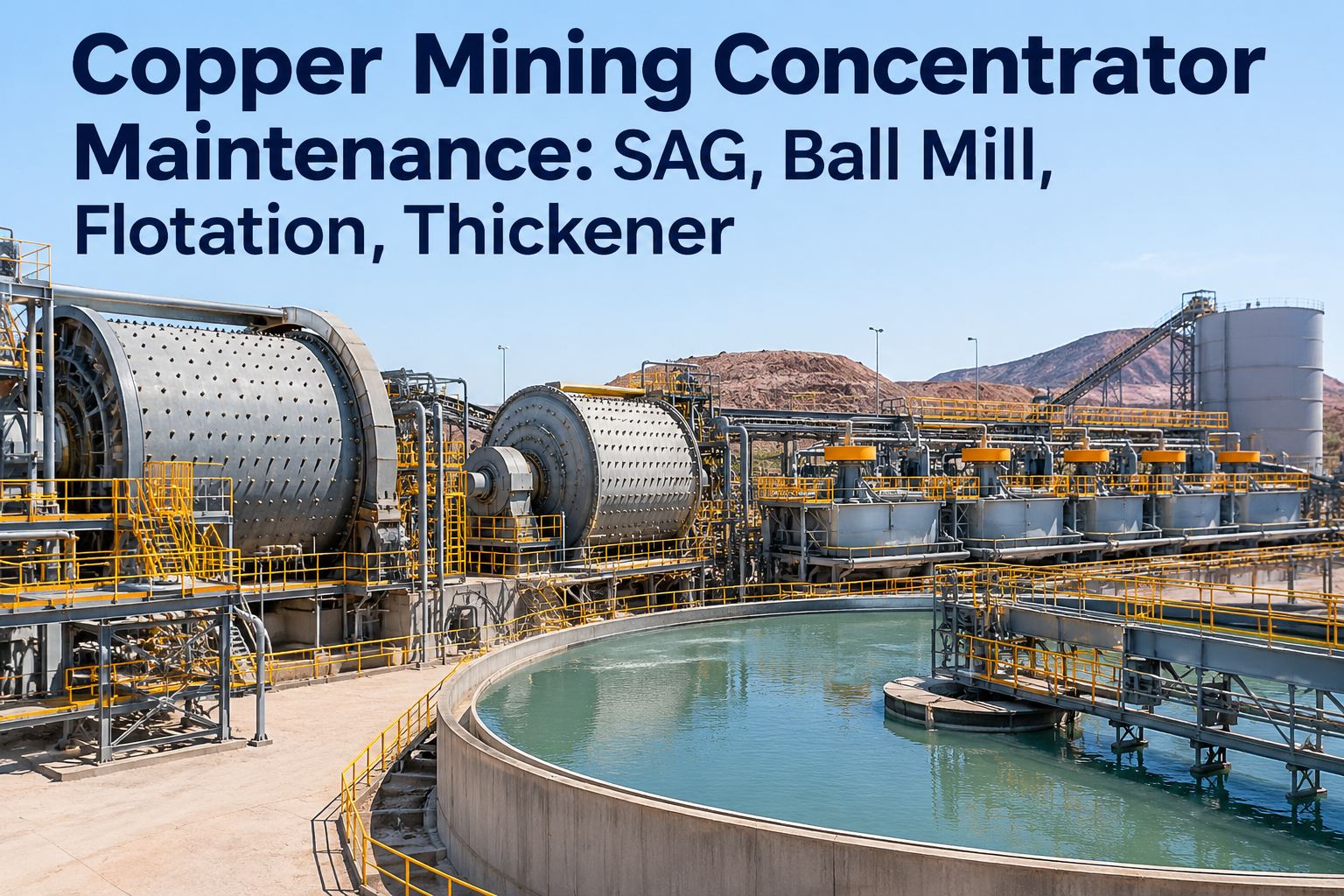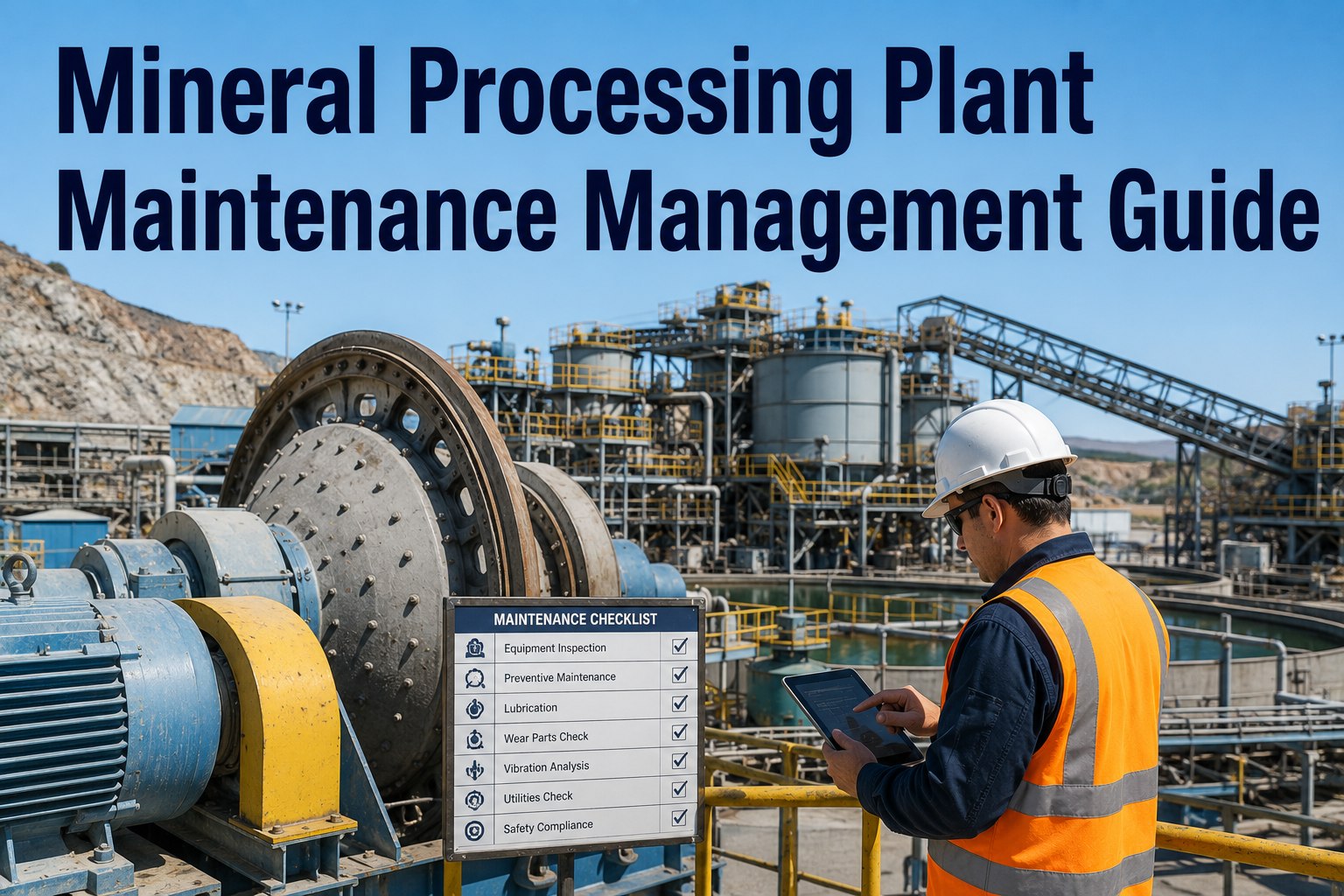
Mineral processing plant maintenance is the discipline that keeps crushers, SAG mills, flotation cells and thickeners running at design throughput — and it is where recovery rates either hold or quietly drift. Unplanned downtime in a concentrator can cost $10K–$50K per hour in lost production, which is why leading operations replace reactive, spreadsheet-based maintenance with a structured preventive maintenance program run through a CMMS. This guide covers the core mineral processing maintenance workflows — crusher PM schedules, SAG mill liner and lubrication programs, flotation cell service, thickener rake inspections — and the CMMS structure that ties them together. Whether you manage a 500-tpd pilot plant or a 100K-tpd concentrator, the principles are the same: plan the work, track the asset history, and let the data tell you where the next failure is forming. You can Start Free Trial of OxMaint and have your first crusher PM schedule live today.
Is your processing plant losing recovery to avoidable downtime?
A single unplanned SAG mill stoppage can idle an entire concentrator for 8–72 hours. The plants that hold 92%+ availability run every crusher, mill, flotation bank and thickener on a documented PM schedule — tracked in a CMMS, not a spreadsheet.
What does mineral processing plant maintenance actually cover?
A concentrator is four interdependent circuits — crushing, grinding, flotation and thickening — and a failure in any one of them starves or stops the other three. Effective processing plant maintenance treats each circuit as a reliability system with its own failure modes, PM intervals and spare-parts strategy.
Crushing Plant Maintenance
Jaw, cone and gyratory crushers wear predictably — mantles, concaves, jaw dies and liners. PM centers on liner wear measurement, CSS checks, lubrication oil analysis and vibration trending on eccentric assemblies. A cone crusher liner change planned at 85% wear costs a fraction of an unplanned failure that damages the main shaft.
SAG & Ball Mill Maintenance
Grinding consumes 50%+ of a concentrator's energy and maintenance budget. SAG mill PM covers liner and lifter inspection, trunnion bearing lubrication, gear and pinion alignment, and mill motor condition monitoring. Liner life is tracked in tonnes milled — a CMMS that logs throughput against liner installs predicts change-out dates weeks ahead.
Flotation Cell Maintenance
Flotation recovery drifts when rotor-stator gaps open, air valves stick or launders scale up. PM tasks include impeller and diffuser inspection, dart valve calibration, froth crowder checks and cell level instrument verification. A 2% recovery loss on a copper concentrator can exceed $1M per month in unrecovered metal.
Thickener & Tailings Maintenance
Thickener rake mechanisms, drive heads and underflow pumps run 24/7 under high torque. PM covers rake torque trending, drive gearbox oil analysis, underflow pump wear-part tracking and flocculant system checks. A stalled rake at high torque can require days of digging out — a failure that torque trending almost always predicts.
Crusher and SAG mill PM schedule: a practical interval table
Most crushing and grinding failures give weeks of warning — if someone is measuring. Below is a defensible starting PM schedule for a hard-rock concentrator; adjust intervals to your ore hardness, throughput and OEM guidance, then let your CMMS refine them from actual failure history.
| Asset | PM Task | Interval | Failure Prevented |
|---|---|---|---|
| Cone crusher | Liner wear measurement & CSS check | Weekly | Poor reduction, liner run-through |
| Cone crusher | Lube oil analysis & filter change | Monthly | Countershaft / eccentric bearing failure |
| Jaw crusher | Jaw die rotation / replacement | Per wear profile (500–1,500 h) | Frame damage, throughput loss |
| SAG mill | Liner & lifter wear mapping | Monthly / per shutdown | Shell exposure, unplanned reline |
| SAG mill | Trunnion bearing temp & lube check | Daily (operator round) | Bearing wipe, multi-week stoppage |
| SAG mill | Gear/pinion alignment & spray lube audit | Quarterly | Gear tooth scoring, pinion failure |
| Flotation cell | Rotor-stator gap & impeller inspection | Quarterly | Recovery loss, motor overload |
| Thickener | Rake torque trend & gearbox oil analysis | Continuous / monthly | Rake stall, drive failure |
OxMaint generates these work orders automatically on calendar, meter or throughput triggers — and every completed task builds the asset history that sharpens the next interval.
The real cost of reactive maintenance in a concentrator
Consider a 40,000-tpd copper concentrator running one SAG mill, two ball mills and a 120-cell flotation circuit. Before CMMS, maintenance was 65% reactive: an average of 140 unplanned downtime hours per year across the grinding line alone.
After moving crusher PM, SAG mill liner tracking and flotation cell service into OxMaint, unplanned grinding downtime fell 38% in year one — roughly 53 hours returned to production, worth about $1.48M — while the maintenance team spent 9 fewer hours per week on paperwork. Plants typically see 30–50% unplanned-downtime reduction within 12–18 months of disciplined CMMS use.
Mineral processing CMMS: how OxMaint keeps your plant running
OxMaint is an AI-powered CMMS + EAM built for continuous-operation plants. It maps directly onto concentrator maintenance workflows — no clipboards, no lost work orders, no guessing when the mill liners are due.
Preventive Maintenance Automation
Schedule crusher liner checks, mill lubrication routes and flotation cell inspections by calendar, run-hours or tonnes milled. Work orders fire automatically — plants cut unplanned downtime 30–50%.
Asset & Component Tracking
Track every mill, crusher, pump and cell as a hierarchical asset with full history — liner installs, bearing changes, torque readings. Know exactly what each asset has cost and when it will next need attention.
Spare-Parts Inventory
Link mantles, concaves, impellers and pump wear parts to the assets they serve. Automatic reorder points mean a planned liner change never waits on a part — and working capital isn't buried in overstock.
Downtime & Reliability Analytics
Dashboards rank your worst actors by downtime cost and MTBF, aligned with ISO 55000 asset-management principles. Reliability meetings stop debating opinions and start acting on ranked data.
How to run a SAG mill reline without blowing the schedule
A SAG mill reline is the highest-stakes routine event in concentrator maintenance — typically 60–120 hours of critical-path work, every 4–9 months. The difference between a 72-hour and a 110-hour reline is planning, not luck.
8 weeks out — scope & parts
Freeze the work list from CMMS backlog: liners, lifters, bolts, plus deferred crusher and pump jobs that share the outage. Verify every liner and consumable is on site and kitted.
2 weeks out — resources & permits
Confirm reline crew, mill relining machine, isolation permits and lifting plans. OxMaint attaches OEM procedures and past reline reports directly to the shutdown work orders.
Execution — track hourly
Log progress against the plan in the CMMS from the field. Variances surface in hours, not at the post-mortem — a slipping knock-in phase triggers escalation while there's still time to recover.
Post-reline — capture the data
Record liner weights, wear profiles and actual hours against estimate. That history drives the next reline date prediction and tightens every future shutdown plan.
See OxMaint on your crushers, mills and flotation circuit
Book a 30-minute demo and we'll map OxMaint to your plant's actual PM structure — crusher schedules, SAG mill liner tracking, downtime analytics and all.
Mineral processing maintenance FAQs
What is mineral processing plant maintenance?
Mineral processing plant maintenance is the planned upkeep of crushing, grinding, flotation and thickening equipment to sustain throughput and recovery. It combines preventive tasks (liner changes, lubrication, inspections), condition monitoring (vibration, oil analysis, torque trending) and shutdown planning — increasingly managed through a mineral processing CMMS rather than spreadsheets.
How often should a SAG mill be inspected?
Trunnion temperatures and lubrication are checked daily on operator rounds, liner wear is mapped monthly or at each shutdown, and gear/pinion alignment is audited quarterly. A full reline typically falls every 4–9 months depending on ore abrasiveness and throughput — a CMMS that logs tonnes milled against liner installs predicts the date weeks in advance.
What should a crusher PM schedule include?
A crusher PM schedule should include weekly liner wear measurement and CSS checks, monthly lubrication oil analysis and filter changes, wear-part rotation or replacement per wear profile, and vibration trending on bearings and eccentric assemblies. You can Start Free Trial of OxMaint and automate every one of these work orders on meter or calendar triggers.
How does a CMMS reduce concentrator downtime?
A processing plant CMMS reduces downtime by ensuring PMs actually happen on schedule, keeping critical spares linked to assets and in stock, and ranking worst actors by downtime cost so reliability effort goes where it pays. Plants moving from reactive to CMMS-driven maintenance typically cut unplanned downtime 30–50% within 12–18 months.
What KPIs should a mineral processing maintenance team track?
Track plant availability, MTBF and MTTR on critical assets, planned-vs-unplanned work ratio, PM compliance, reline duration against plan, and maintenance cost per tonne milled. OxMaint's analytics dashboards compute these automatically from completed work orders — Book a Demo to see them on your data.
Hold your recovery. Cut your downtime.
Put every crusher, SAG mill, flotation cell and thickener on a data-driven PM program with OxMaint — live in days, not months.
Free 14-day trial · No credit card