An oil and gas site preventive maintenance program template gives your technicians a standardized, repeatable procedure for every asset they touch — from wellhead valves and compressors to refinery pumps and pipeline segments. Without one, missed lubrication intervals and skipped calibration checks become unplanned downtime, OSHA citations, and BSEE non-compliance penalties. This guide breaks down how to conduct an oil and gas site preventive maintenance program template using a structured checklist, then shows how digital PM software like OxMaint turns that checklist into an automated, audit-ready workflow. You can start building yours today when you Start Free Trial or book a personalized walkthrough with our team.
Is your PM program actually preventing failures — or just ticking boxes?
Photocopied checklists and memory-based inspections miss 1 in 4 critical wear indicators on oil and gas sites. OxMaint digitizes every checkpoint, enforces photo proof, and logs a full audit trail against each asset — so nothing slips through.
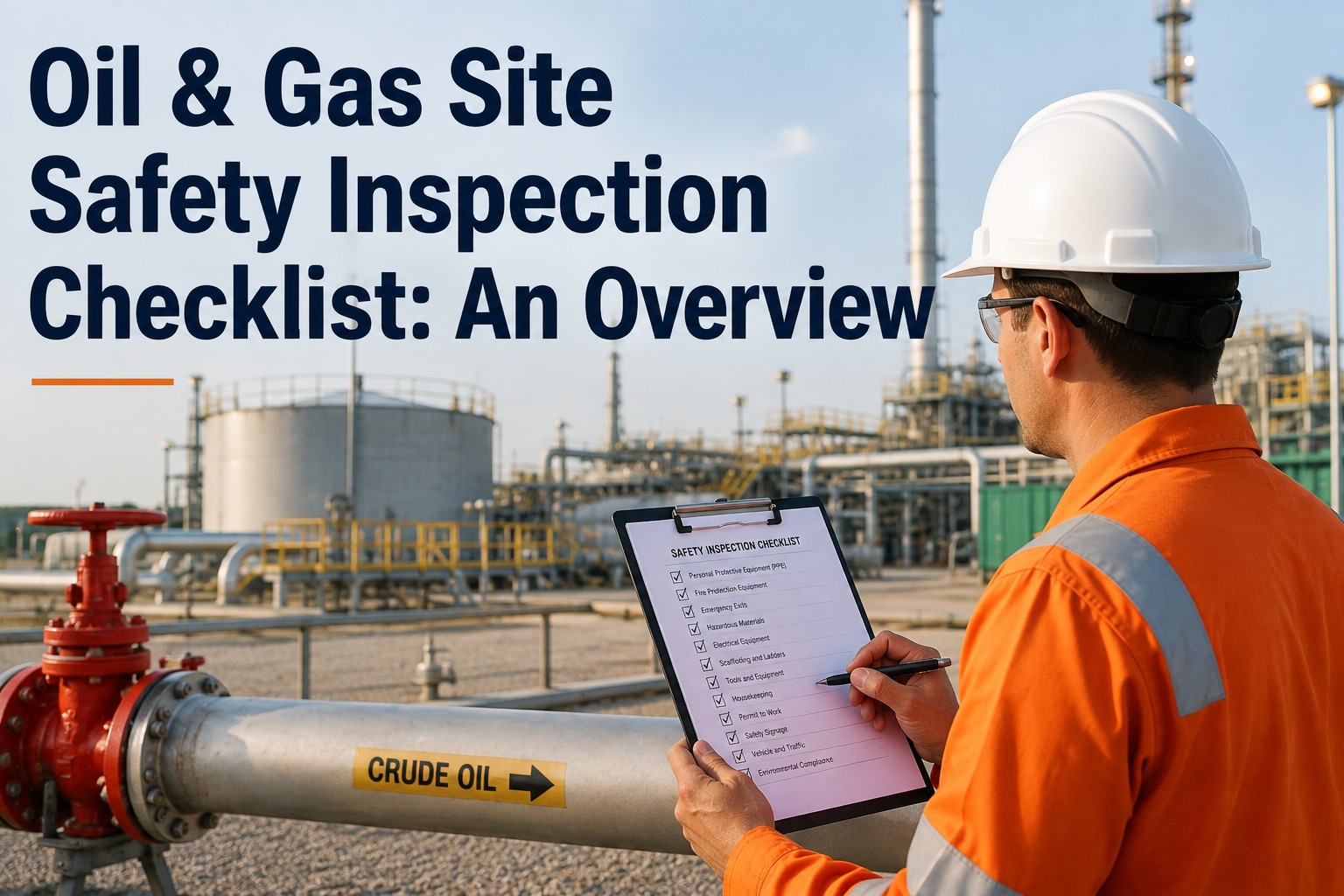
Oil & gas site preventive maintenance program template checklist
A defensible oil and gas site preventive maintenance program template covers six inspection domains. Every domain below maps to specific OSHA, BSEE, and API requirements — and to mandatory fields inside OxMaint mobile work orders.
Mechanical Integrity
- Visual inspection of flanges, gaskets, and bolt torque on wellhead assemblies
- Vibration analysis on rotating equipment (pumps, compressors, turbines) — record amplitude and frequency
- Packing and seal condition — note leakage rate (drops/min) against threshold
- Structural support and skid inspection for fatigue cracks or corrosion pitting
Electrical & Instrumentation
- Megger testing on motor windings — log insulation resistance (MOhm) at 500V/1000V
- Calibration verification of pressure transmitters and flow meters against reference standard
- Thermographic scan of MCC panels and switchgear for hot spots above 15°C ambient differential
- UPS battery load test and charger output verification
Lubrication & Fluids
- Oil sampling for ISO 4406 cleanliness code and spectrometric analysis (wear metals)
- Grease re-lubrication per OEM interval — confirm quantity and NLGI grade
- Coolant / heat-transfer fluid level, pH, and inhibitor concentration check
- Filter differential pressure reading — replace at 70% of bypass threshold
Safety & EHS Verification
- Gas detector bump test and calibration record — per OSHA 1910.146 confined space entry
- PSV / PRV inspection — confirm set pressure, discharge routing, and no blockage
- Fire suppression system pressure and cylinder weight verification
- Spill containment integrity — secondary containment volume and drain valve seal
Pipeline & Piping Integrity
- External corrosion survey — coating holiday detection and CP readings per API 570
- Wall thickness UT spot-check at high-risk TMLs (Tee, elbow, deadlegs)
- Valve operability — confirm full stroke and packing gland tightness
- Right-of-way marker and warning sign verification for buried lines
Calibration & Replacement Thresholds
- Define go / no-go threshold for every reading (e.g. wall thickness below 3.2mm = replace)
- Auto-flag assets past 90% of design cycle life for predictive review
- Verify spare part availability before opening corrective work order
- Record technician e-signature and supervisor approval before asset returns to service
OSHA, BSEE & API requirements your PM template must satisfy
An oil rig audit or downstream refinery inspection doesn't accept verbal assurance — regulators want documented evidence that each checkpoint was completed by a qualified technician on the correct interval. Here is how the major standards map to your PM program.
| Standard / Regulator | Scope | Key PM Requirement | Documentation Needed |
|---|---|---|---|
| OSHA 1910.119 | Process Safety Management (PSM) — highly hazardous chemicals | Mechanical integrity inspection & testing on covered process equipment | Inspection date, technician ID, test method, results, deficiencies |
| BSEE 30 CFR 250 | Outer Continental Shelf oil & gas operations | Safety system inspection per API RP 14C on offshore platforms | Weekly / monthly safety device test records with e-signature |
| API 570 | Piping inspection code — in-service piping systems | External, internal, and UT thickness inspections at risk-based intervals | CML data, corrosion rate calculation, remaining life, next inspection due |
| API 510 | Pressure vessel inspection code | Internal and on-stream vessel inspections every 5–10 years based on risk | Vessel data report, inspection summary, repair history, RT/UT records |
| API 653 | Aboveground storage tank inspection | External inspection every 5 yrs, internal every 10–20 yrs | Settlement, shell thickness, roof condition, cathodic protection data |
| PHMSA 49 CFR 192 / 195 | Pipeline safety — gas & hazardous liquid | Patrol, leak survey, corrosion control, and integrity management | CP survey readings, ILI tool runs, repair records, MAOP verification |
How to conduct an oil & gas site preventive maintenance program
Moving from ad-hoc calendar work to a standardized PM program takes 4–8 weeks for a typical mid-size site. Here is the proven 5-step path that reliability teams follow when implementing OxMaint.
Asset criticality ranking & PM strategy definition
Import your asset register into OxMaint, then rank each asset by consequence of failure (H/M/L) using production impact, safety risk, and environmental exposure. A 180-asset refinery unit typically identifies 40–60 assets that need time-based PM and 20–30 that are better suited to condition-based monitoring.
Build digital PM templates with mandatory checkpoints
Convert each paper checklist into an OxMaint digital work order template. Define mandatory fields, photo-capture requirements, go/no-go thresholds, and failure codes. This ensures a technician cannot close a work order without recording every required reading — closing the "skipped step" gap permanently.
Schedule auto-generated PM work orders on correct intervals
Set calendar-based (daily, weekly, monthly) and meter-based (run-hours, cycles, barrels produced) triggers in OxMaint's PM scheduler. The system auto-generates and assigns work orders — no spreadsheets, no whiteboards, no missed intervals because someone was on vacation.
Mobile execution with photo proof & e-signatures
Technicians execute PMs on the OxMaint mobile app — online or offline on remote sites. Every checkpoint, reading, photo, and e-signature is time-stamped and geo-tagged, then synced to the asset history the moment connectivity returns. This is your real-time audit trail.
Analyze PM compliance & shift to predictive
Review OxMaint analytics dashboards: PM compliance rate, mean time between failures, and cost per asset. Once you have 90 days of baseline data, OxMaint's AI engine identifies assets where condition-based monitoring can replace calendar PMs — cutting unnecessary work orders 20–35% while catching failures earlier.
The real cost of running your PM program on paper
A typical 180-asset oil and gas site spends $42,000–$65,000 per year on paper-based PM administration, lost records, re-inspections, and the downtime caused by missed checkpoints. Here is what changes when you go digital.
See OxMaint run your PM program on your assets — book a 30-minute demo
We will load your asset list, build a sample PM template, and show you the audit trail your regulators expect — all in one call.
How OxMaint turns your PM template into a measurable program
OxMaint is an AI-powered CMMS and EAM platform built for maintenance and reliability teams in oil and gas. Here is how four core capabilities map directly to your PM program gaps.
Auto-scheduled PM work orders
Calendar- and meter-based triggers generate work orders on the exact interval your OEM and compliance standards require — no manual scheduling, no missed PMs because someone forgot.
Mobile execution with enforcement
Technicians complete PMs on a mobile app — online or offline on remote rigs. Mandatory fields, photo capture, and e-signatures ensure every checkpoint is documented before the work order can close.
Full asset history & audit trail
Every reading, photo, failure code, and signature is permanently logged against the asset record. Export a compliance-ready history for OSHA, BSEE, or API audits in minutes — not days.
AI-driven predictive insights
OxMaint's AI engine analyzes vibration, oil analysis, thermography, and performance trends to flag developing failures 2–6 weeks before they cause unplanned downtime — so you can plan the repair instead of reacting to the breakdown.
Frequently asked questions about oil & gas PM programs
What should be included in an oil and gas site preventive maintenance program template?
A complete template covers six inspection domains: mechanical integrity (vibration, seals, bolts), electrical and instrumentation (megger tests, calibration), lubrication and fluids (oil sampling, grease intervals), safety and EHS verification (gas detectors, PSVs), pipeline and piping integrity (API 570 corrosion surveys, UT thickness), and calibration/replacement thresholds with go/no-go criteria. Each checkpoint should have a documented standard, a responsible role, and a required interval. OxMaint lets you digitize all six domains into a single mobile-executable template with mandatory fields and photo proof.
How often should preventive maintenance be performed on oil and gas equipment?
Frequency depends on the asset class and criticality. Safety-critical devices like gas detectors require bump tests before each shift and full calibration monthly per OSHA 1910.146. Rotating equipment typically needs vibration monitoring weekly to monthly, oil sampling quarterly, and full overhaul on run-hour intervals. Pressure vessels and storage tanks follow API 510/653 intervals (external every 5 years, internal every 10–20). OxMaint's PM scheduler supports both calendar and meter-based triggers so each asset gets the right interval automatically.
How does OxMaint ensure PM compliance for OSHA and BSEE audits?
OxMaint logs every work order with a time-stamp, geo-tag, technician e-signature, and supervisor approval, creating a permanent audit trail against the asset record. If a PM is overdue, the system auto-escalates to the assigned supervisor. You can export a full compliance report for any asset, date range, or standard in minutes. To see this on your own asset data, Book a Demo and we will walk you through it live.
Can OxMaint work offline on remote oil rigs and pipeline sites?
Yes. The OxMaint mobile app fully supports offline execution — technicians can open, complete, and sign PM work orders with photo capture on sites with no connectivity. All data syncs automatically to the central asset history the moment the device reconnects, so nothing is lost and your audit trail remains intact regardless of location.
How long does it take to switch from paper checklists to OxMaint digital PM?
Most oil and gas sites go live in 4–8 weeks. Week 1–2 is asset import and criticality ranking, week 2–3 is building digital PM templates, week 3–4 is scheduling configuration, and week 4–6 is mobile rollout. OxMaint handles data migration from spreadsheets or legacy CMMS at no extra cost. You can start building today — create your account at Start Free Trial and our onboarding team will guide you through every step.
Stop ticking boxes. Start preventing failures.
Turn your oil and gas site preventive maintenance program into a standardized, measurable, audit-ready system. Book a demo and see OxMaint on your assets in 30 minutes.
Free 14-day trial · No credit card