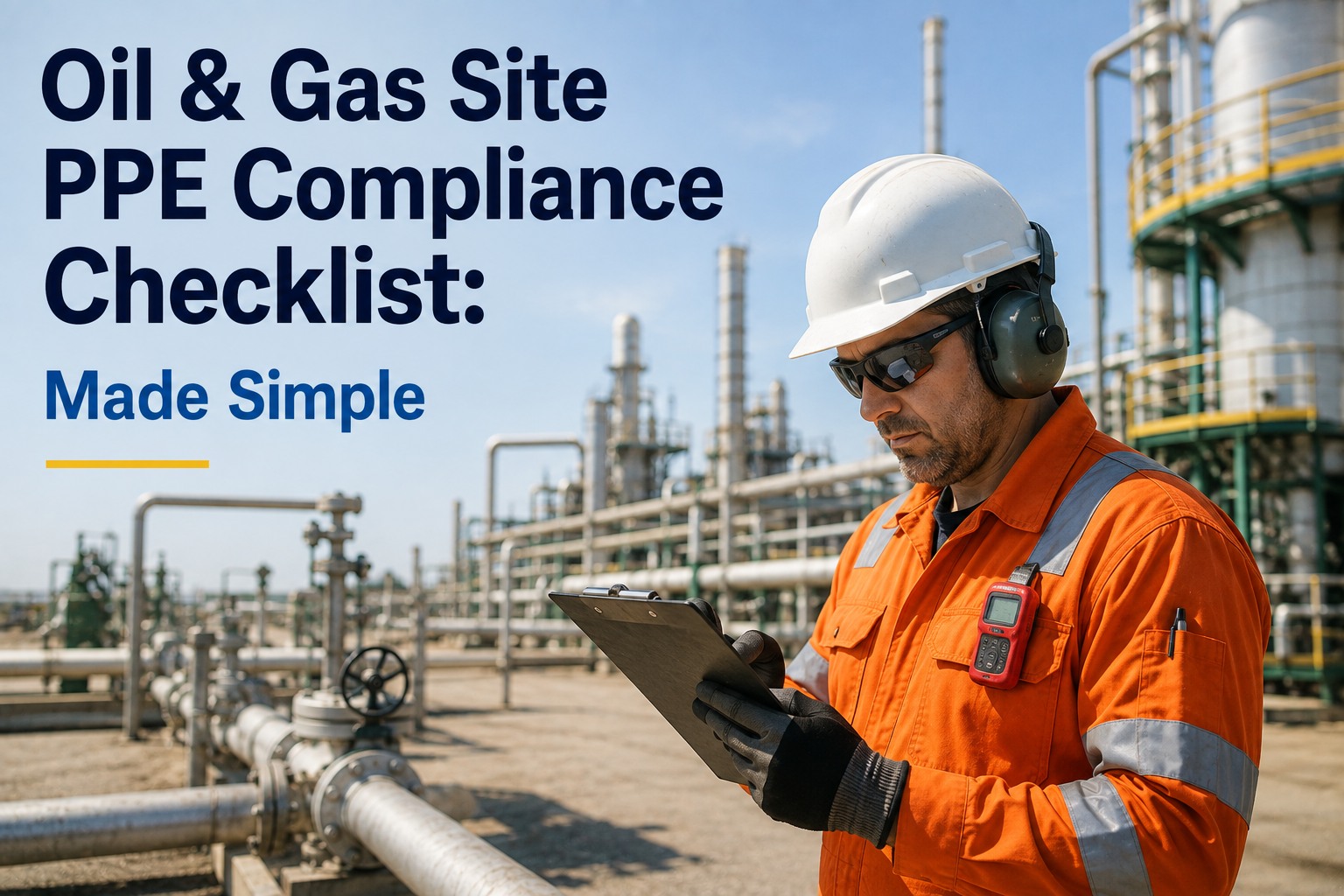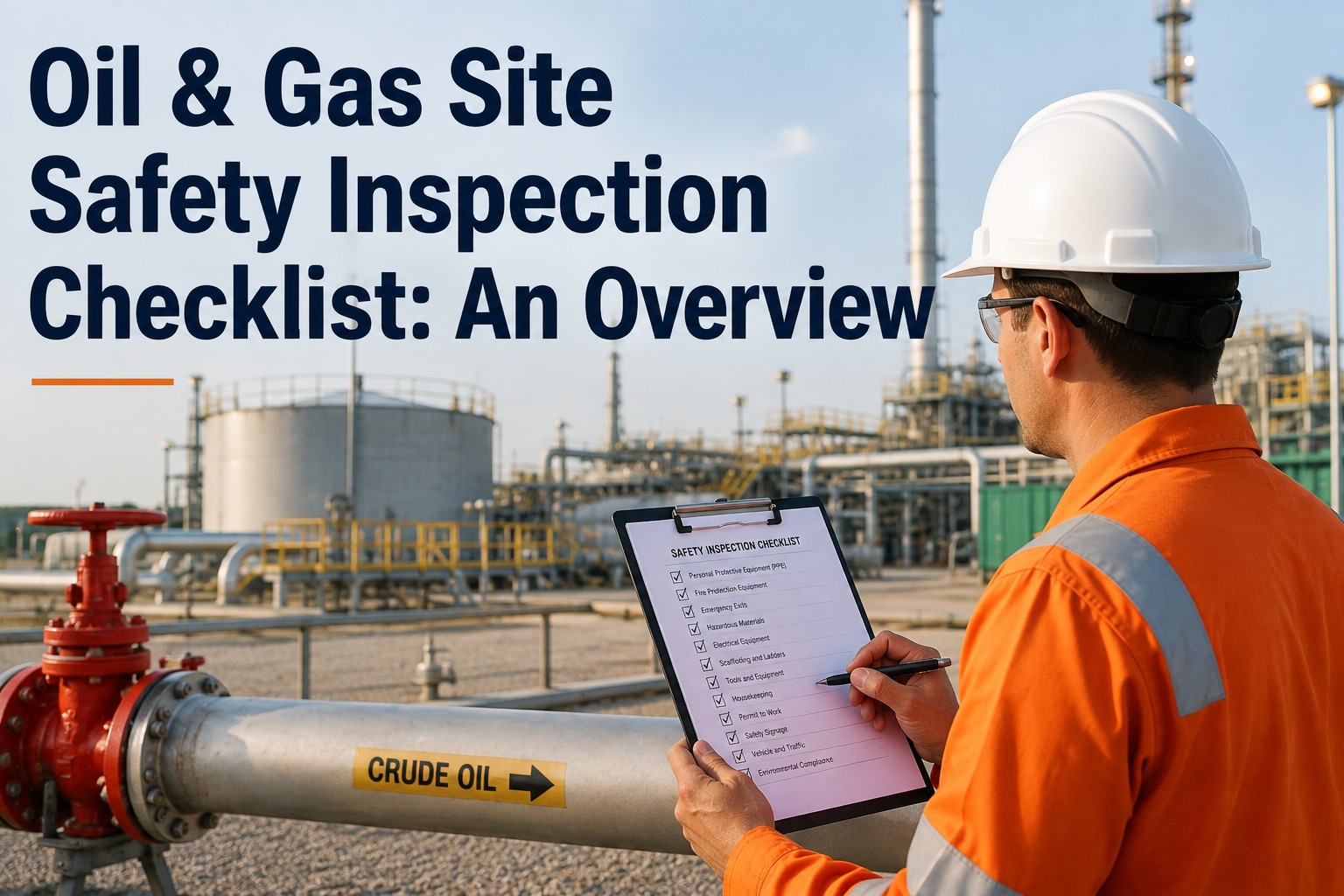
An oil & gas site safety inspection checklist is the single document that decides whether your facility passes an OSHA or BSEE audit — or ends up with citations, shutdowns, and fines that can exceed $161,323 per willful violation. This guide gives US maintenance and EHS teams a complete, standards-aligned oil & gas site safety inspection checklist covering upstream rigs, midstream pipelines, and downstream refineries, with pass/fail criteria, documentation points, and the corrective-action workflow auditors expect. We map every item to OSHA 29 CFR 1910/1926, API 510/570 pressure equipment standards, and BSEE SEMS requirements so nothing falls through the cracks. Better still, you can digitize the entire checklist in OxMaint — with mandatory safety checks on high-risk work orders, photo evidence, e-signatures, and an audit trail that builds itself. Start Free Trial and run your first digital inspection today.
The Oil & Gas Site Safety Inspection Checklist That Holds Up Under Audit
Every required check, pass/fail criterion, and documentation point — built for upstream, midstream, and downstream teams who can't afford a missed item.
- LOTO, confined space & hot work permit verification
- Pressure vessel & piping integrity per API 510/570
- H2S monitoring, gas detection & emergency shutdown tests
- Photo evidence, e-signatures & audit-ready records
Why Oil & Gas Safety Inspections Fail — and What It Costs
OSHA's Process Safety Management standard (29 CFR 1910.119) exists because a single missed inspection item in oil & gas can be catastrophic. The numbers make the case for a rigorous, documented oil & gas site safety inspection checklist better than any warning:
A 40-person downstream terminal we worked with was running paper checklists in binders. When BSEE requested 90 days of compressor-station inspection records, the team spent 3 weeks reconstructing files — and still got cited for 11 missing entries. After switching to OxMaint's digital checklists, their next audit prep took under 2 hours.
Oil & Gas Site Safety Inspection Checklist: 6 Core Categories
A defensible oil & gas site safety inspection checklist covers six categories. Each item below includes the pass/fail criterion an auditor applies — use this as your oil & gas site safety inspection SOP or adapt it into a printable oil & gas site safety inspection checklist PDF inside OxMaint.
Work Permits & Isolation
- LOTO applied & verified — zero-energy state confirmed by test before work starts
- Hot work permit signed — fire watch posted, 35-ft combustible clearance verified
- Confined space entry permit — atmospheric test <10% LEL, O2 19.5–23.5%, attendant assigned
- Line break / blind list current — blinds tagged and logged against P&IDs
Pressure Equipment Integrity (API 510/570)
- Vessel inspection current — API 510 external ≤5 yrs, internal per corrosion rate
- Piping thickness readings logged — API 570 TMLs within retirement limits
- PRVs tested & tagged — set pressure matches nameplate, test date in interval
- Flange/bolt condition — no visible corrosion, leaks, or gasket blowout signs
Gas Detection & Fire Protection
- Fixed gas detectors calibrated — H2S & LEL sensors within calibration due date
- Personal monitors bump-tested — per shift for H2S zones
- Fire extinguishers & deluge — monthly checks current, access unobstructed
- ESD system function-tested — emergency shutdown valves stroke on demand
Rotating Equipment & Electrical
- Guards in place — pump/compressor coupling guards secured
- Vibration & lube readings logged — within alarm limits, trends reviewed
- Class I Div 1/2 electrical integrity — explosion-proof enclosures sealed, no open conduits
- Grounding & bonding — transfer points and tank grounding straps intact
PPE, Rigging & Fall Protection
- FR clothing worn — NFPA 2112-compliant in hydrocarbon zones
- Harnesses & lanyards inspected — 100% tie-off above 6 ft, anchors rated 5,000 lb
- Slings & rigging tagged — current color-code quarter, no cuts or kinks
- Respiratory protection fit-tested — within 12 months for H2S/vapor tasks
Housekeeping & Environmental
- Walkways & egress clear — no slip/trip hazards, exits unblocked
- Spill kits stocked — absorbents, drain covers, PPE complete
- Secondary containment intact — berms hold 110% of largest tank volume
- Waste segregated & labeled — hazmat accumulation dates within limits
How Often Should You Run an Oil Rig Audit or Refinery Inspection?
Frequency is where most programs drift. This table gives the defensible baseline for downstream refinery inspection, pipeline integrity checks, and oil rig audit schedules — aligned to OSHA, API, and BSEE SEMS expectations:
| Inspection Type | Standard | Minimum Frequency | Required Evidence |
|---|---|---|---|
| Daily operator safety walkdown | OSHA 1910 / SEMS | Every shift | Checklist + photo of findings |
| LOTO & permit verification | OSHA 1910.147 | Per job + annual audit | Signed permit, periodic inspection record |
| Pressure vessel external | API 510 | ≤5 years or ½ remaining life | Inspector report, thickness data |
| Piping circuit (TML) readings | API 570 | Per corrosion rate (often 1–5 yrs) | CML history, retirement calc |
| Gas detector calibration | Manufacturer / SEMS | 90–180 days | Calibration certificate |
| ESD / SIS proof test | IEC 61511 | Per SIL (typically annual) | Function test record |
| Full site EHS audit | BSEE SEMS / internal | Annual (offshore: SEMS audit ≤3 yrs) | Audit report + corrective action log |
Turn This Checklist Into a Self-Documenting Compliance System
Paper checklists fail audits because they rely on memory and binders. OxMaint's CMMS/EAM platform embeds this oil & gas site safety inspection checklist directly into your maintenance workflow — so every check is completed, evidenced, and retrievable in seconds:
Mandatory Safety Gates on Work Orders
High-risk work orders (hot work, confined space, line break) can't close until the linked safety checklist is 100% complete. Result: zero skipped LOTO verifications and a defensible record for every job.
Digital LOTO & Permit Workflows
Issue, sign, and archive permits on any device with e-signatures and timestamps. Cut permit administration time by 60% and satisfy OSHA 1910.147 periodic-inspection requirements automatically.
Photo Evidence Linked to Assets
Every inspection photo attaches to the specific vessel, piping circuit, or compressor in your asset registry. When BSEE or OSHA asks for the history of T-204, you pull it in under 30 seconds — not 3 weeks.
Corrective-Action Tracking & Analytics
Failed items auto-generate corrective work orders with owners and due dates. Dashboards show overdue findings by site — teams typically close corrective actions 40% faster and walk into audits with zero open items.
See This Checklist Running on Your Assets
Book a 30-minute demo and we'll configure your oil & gas site safety inspection checklist live — permits, photo evidence, and audit trail included.
What Changes When You Digitize Your Oil & Gas Site Safety Inspection Template
Teams switching from paper binders and spreadsheets to OxMaint see measurable differences within the first quarter:
Paper / Spreadsheet Process
- 3+ weeks to assemble audit evidence
- 11% of checklist entries missing or illegible
- Failed items tracked in email — 30% never closed
- No proof a check happened until someone finds the binder
- Permit sign-offs delayed waiting for paper routing
With OxMaint Digital Checklists
- Audit evidence exported in under 2 hours
- 100% completion enforced — forms can't submit blank
- Every finding auto-creates a tracked corrective work order
- Timestamped photos + e-signatures on every inspection
- Permits approved on mobile in minutes, not shifts
"We run 14 compressor stations across two states. OxMaint turned our safety inspections from a paper chase into a dashboard. Our last SEMS audit had zero findings on inspection records — a first for us."
Oil & Gas Site Safety Inspection Checklist: Common Questions
What should an oil & gas site safety inspection checklist include?
At minimum: permit and LOTO verification, pressure equipment integrity (API 510/570), gas detection and fire protection, rotating equipment and electrical safety, PPE and fall protection, and housekeeping/environmental controls. Each item needs a clear pass/fail criterion, a documentation point, and a corrective-action path — exactly what the six categories above provide.
How often should oil & gas safety inspections be performed?
Operator walkdowns happen every shift; permit verification per job; API 510 vessel externals at least every 5 years; API 570 piping thickness readings per corrosion rate (typically 1–5 years); gas detector calibration every 90–180 days; and a full site EHS audit annually. High-risk offshore facilities also face BSEE SEMS audits at least every 3 years.
Can I use a printable oil & gas site safety inspection checklist PDF?
Yes, but paper creates audit risk — entries get lost, illegible, or backfilled. A better approach: run the checklist digitally in OxMaint, where completion is enforced and every entry is timestamped, then export a PDF whenever an auditor or inspector needs a hard copy.
What documentation do OSHA and BSEE auditors expect from inspections?
Auditors expect dated, signed records showing what was inspected, the result, who performed it, and how deficiencies were corrected — retained for the equipment's life (API 510/570) or at least 3 years (SEMS). Photo evidence and e-signatures dramatically strengthen your position versus handwritten checkmarks.
How does CMMS software improve oil & gas safety inspections?
A CMMS like OxMaint embeds the checklist into work orders so safety steps can't be skipped, auto-schedules recurring inspections by standard and interval, links evidence to each asset, and converts failed items into tracked corrective actions. Teams typically cut audit prep from weeks to hours and close findings 40% faster — book a demo to see it on your own checklist.
Make Your Next Audit the Easiest One Yet
Digitize your oil & gas site safety inspection checklist in OxMaint — mandatory checks, photo evidence, e-signatures, and an audit trail that builds itself every shift.