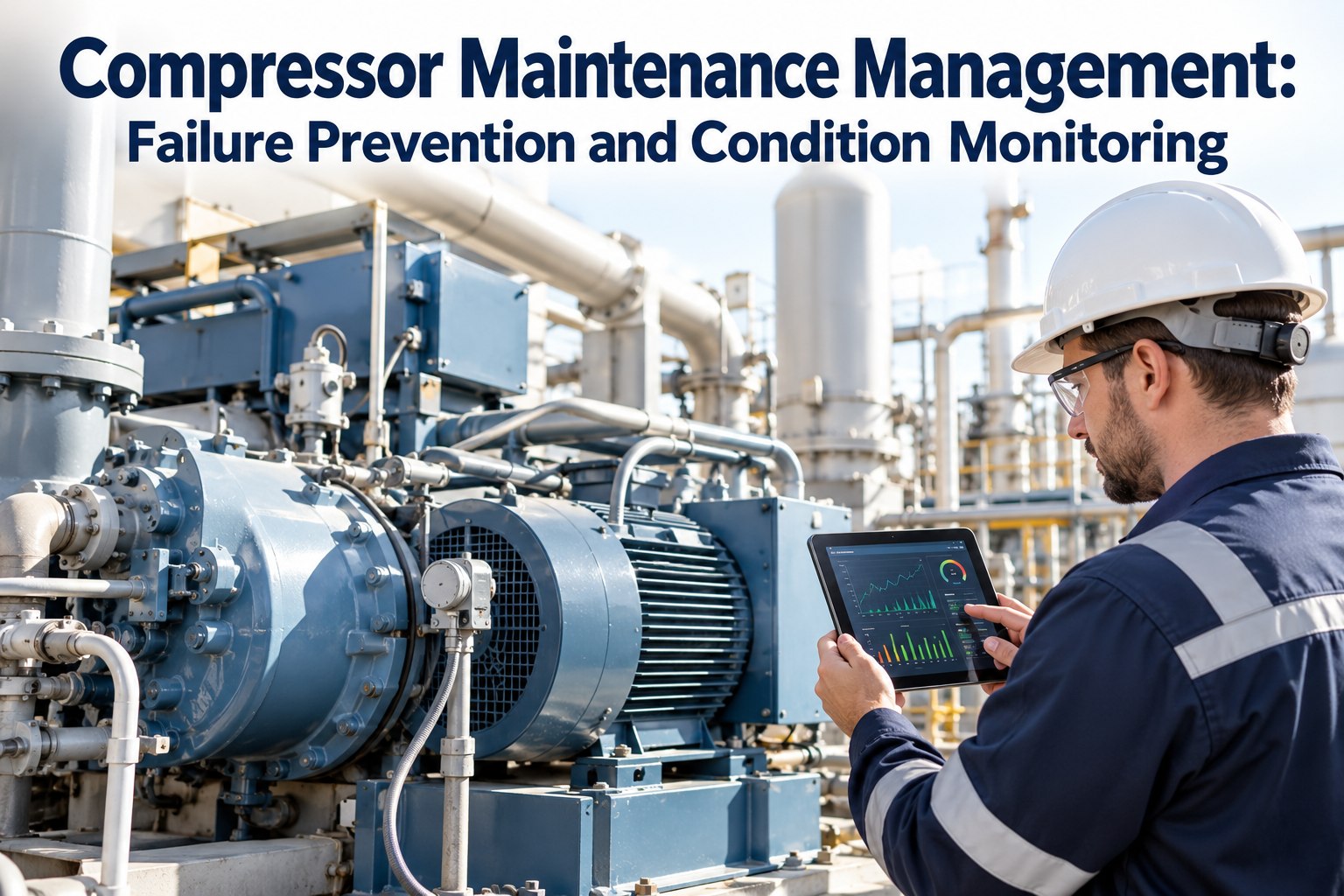
Reliability-centered maintenance in petrochemical facilities is the systematic process of identifying critical asset failure modes and matching each one to the right maintenance strategy—preventive, predictive, or run-to-failure—to maximize uptime, safety, and profitability. In an industry where a single unplanned compressor shutdown can cost upwards of $1M per day and regulatory scrutiny is relentless, petrochemical maintenance teams cannot afford a reactive posture. This guide breaks down how to build a petrochemical reliability program from the ground up, covering failure prevention, maintenance optimization, and RCM implementation. Ready to move from firefighting to controlled reliability? Start Free Trial and put these frameworks into daily practice with OxMaint.
Is reactive maintenance draining millions from your petrochemical plant?
Petrochemical reliability-centered maintenance shifts your operation from costly firefighting to data-driven prevention. Identify critical failure modes, optimize your maintenance strategy, and eliminate unplanned downtime before it starts.
The true cost of reactive petrochemical maintenance
Petrochemical plants operate at the intersection of extreme production pressure, asset complexity, and strict regulatory demand. Teams that win use a systematic approach rather than hoping assets hold together between breakdowns.
Consider a mid-sized ethylene plant with 180 critical rotating assets spending roughly $42K per year on emergency labor and expedited parts per unit. By implementing an RCM pilot project on their top 15% of failure-prone pumps and heat exchangers, the reliability team reduced emergency work orders by 40% in six months—saving an estimated $1.8M annually in lost production and repair costs. Petrochemical maintenance optimization pays for itself when executed with disciplined data tracking.
How to implement an RCM pilot project in petrochemical plants
A successful RCM implementation in petrochemical facilities follows a structured timeline. Jumping straight to enterprise-wide rollout usually fails. Use this 6-month timeline to prove value on a focused asset boundary before scaling.
Asset Selection & Criticality Ranking
Identify the top 10-20% of assets causing 80% of downtime. Rank by safety risk, environmental impact, and production loss. OxMaint's asset hierarchy tracks criticality scores automatically.
Failure Modes & Effects Analysis (FMEA)
Document how each critical asset fails and the operational consequence of that failure. Map failure modes to detection methods to build your petrochemical failure prevention baseline.
Strategy Selection
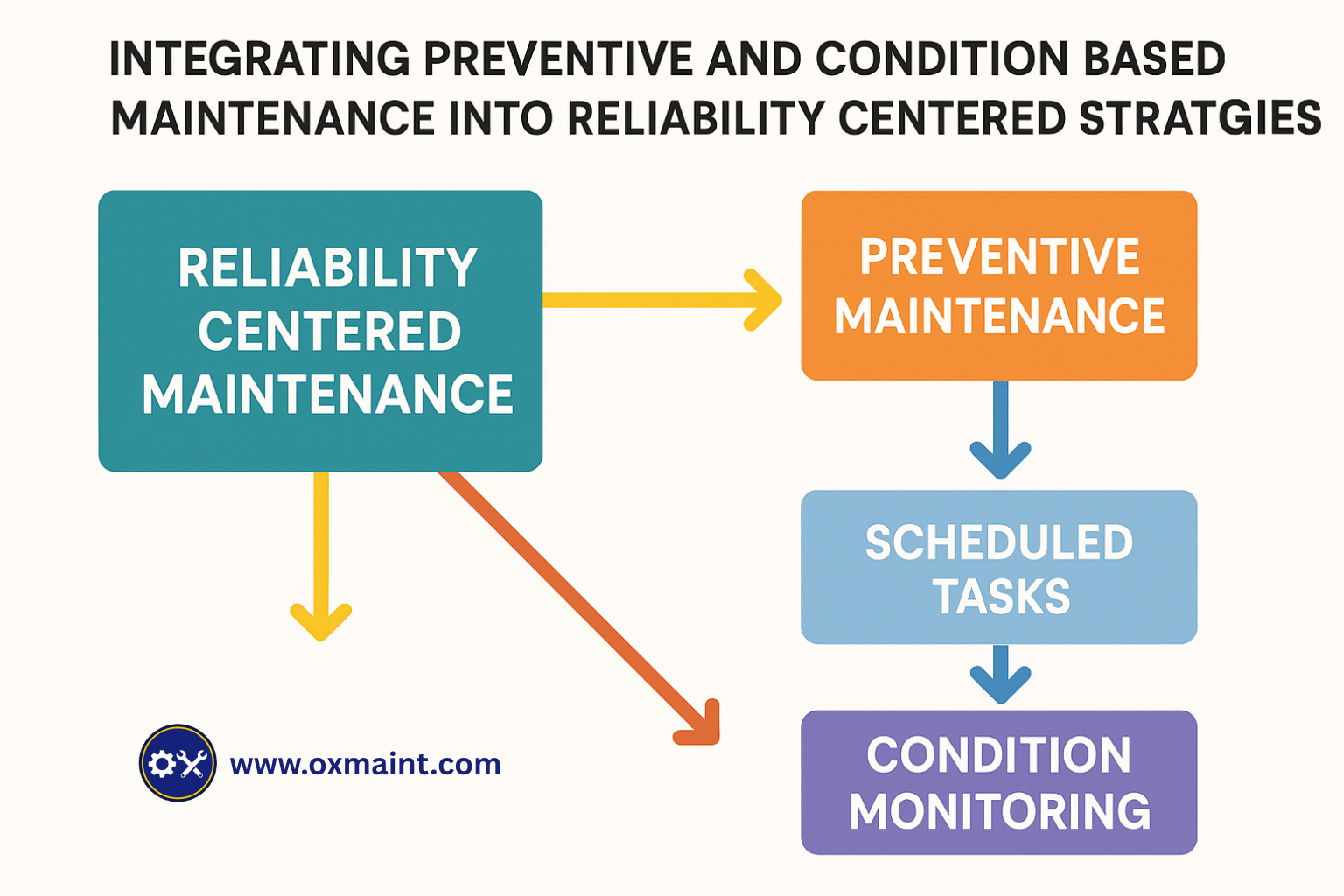
Assign the right maintenance task to each failure mode: time-based PMs, condition-based monitoring, or run-to-failure. Stop over-maintaining low-criticality assets.
Workflow & PM Automation
Convert strategies into automated work order triggers. OxMaint automates PM generation based on runtime hours, calendar dates, or condition thresholds—eliminating manual scheduling.
Mobile Execution & Data Capture
Deploy mobile work order apps to technicians. Capture actual asset health data, vibration readings, and repair notes at the point of execution for accurate reliability analytics.
Measure, Refine, & Scale
Review OEE, MTBF, and MTTR improvements. Prove the ROI of your petrochemical reliability program, then expand the RCM boundary to the next tier of assets.
Choosing the right petrochemical maintenance strategy
Not every asset needs a predictive maintenance sensor, and not every asset should be run to failure. RCM in petrochemical plants is about matching the strategy to the specific failure mode and consequence.
| Maintenance Strategy | Best Application in Petrochemical | Typical Cost Impact | Downtime Reduction Potential |
|---|---|---|---|
| Reactive (Run-to-Failure) | Non-critical, redundant, or low-cost assets where failure does not affect safety or production. | Low baseline cost, high spike risk | 0% (accepted failure) |
| Preventive (Time-Based) | Assets with age-related failure patterns (e.g., filter replacements, scheduled overhauls). | Medium cost, predictable spend | 15-20% |
| Predictive (Condition-Based) | Highly critical rotating equipment (pumps, compressors) where vibration/oil analysis detects early wear. | Higher setup cost, lowest long-term cost | 30-50% |
| RCM-Driven (Optimized Mix) | Cross-functional program applying the most effective strategy to each specific failure mode. | Optimized spend, highest ROI | 40-60% |
How OxMaint powers your petrochemical reliability program
Executing RCM without modern CMMS software is impossible at scale. OxMaint is an AI-powered CMMS and EAM platform built to translate your reliability frameworks into daily maintenance execution.
AI-Powered Predictive Maintenance
OxMaint analyzes work order history and sensor data to predict asset failures before they happen. Shift from time-based PMs to condition-based interventions and cut unplanned downtime by 30-50%.
Automated PM Scheduling
Eliminate manual spreadsheets. Automatically generate preventive maintenance work orders based on runtime, calendar cycles, or meter readings to ensure your petrochemical maintenance best practices are actually executed.
Mobile Technician App
Equip field technicians with mobile work orders, digital checklists, and asset history. Capture real-time data from the plant floor, eliminate paper, and ensure compliance with OSHA and EPA audits.
Spare Parts Inventory Optimization
Link bill of materials (BOM) directly to asset records. Track spare parts inventory in real-time, set min/max reorder points, and reduce critical parts stockouts by 45% without overstocking.
Petrochemical downtime reduction: calculating the payback
Building a business case for RCM in petrochemical plants requires quantifying the cost of unreliability. Use this framework to calculate your potential savings and payback period.
Annual Downtime Cost = (Unplanned Downtime Hours per Year) × (Production Loss per Hour) + (Emergency Repair Premium)
| RCM Implementation Metric | Before OxMaint (Reactive) | After OxMaint (RCM-Driven) | Annual Savings |
|---|---|---|---|
| Unplanned Downtime Hours | 450 hours | 180 hours | 270 hours recovered |
| Production Loss per Hour | $8,500 | $8,500 | $2.29M recovered |
| Emergency Labor Premium | $120K | $35K | $85K saved |
| Total Annual Impact | $3.95M | $1.57M | $2.37M Saved |
See OxMaint on your assets—book a 30-min demo
Discover how leading petrochemical plants use OxMaint to automate PMs, predict failures, and slash unplanned downtime. Get a personalized walkthrough tailored to your facility's critical equipment.
Petrochemical reliability-centered maintenance FAQs
What is reliability-centered maintenance in petrochemical plants?
RCM in petrochemical plants is a structured methodology that identifies the most probable and consequential failure modes for critical assets, then applies the most effective maintenance strategy—preventive, predictive, or run-to-failure—to mitigate risk. The goal is to maximize asset availability and safety while optimizing maintenance spend. You can map these strategies directly into automated workflows when you Start Free Trial with OxMaint.
How does RCM differ from standard preventive maintenance in petrochemical facilities?
While standard preventive maintenance (PM) relies on fixed time or usage intervals regardless of actual asset condition, RCM evaluates the specific failure mechanisms and operational consequences of each asset to determine if PM, predictive maintenance, or a design change is the best response. RCM prevents over-maintenance of low-criticality assets and focuses resources where failure consequences are highest.
How long does it take to implement an RCM pilot project in a petrochemical plant?
A focused RCM pilot project typically takes 3 to 6 months. This includes selecting the asset boundary, performing FMEA, defining strategies, and configuring software workflows. Teams using OxMaint can accelerate this timeline because automated PM scheduling and mobile data capture are available out-of-the-box, proving ROI faster.
What are the biggest benefits of RCM in petrochemical operations?
The primary RCM benefits for petrochemical operations include a 30-50% reduction in unplanned downtime, improved safety and environmental compliance, optimized spare parts inventory, and a 15-25% reduction in overall maintenance costs. By shifting from reactive to proactive maintenance, plants recover millions in lost production annually.
Why use a CMMS for petrochemical maintenance optimization?
A CMMS like OxMaint is essential for petrochemical maintenance optimization because it automates work order generation, tracks asset history, and provides analytics on MTBF and MTTR. Without software, RCM frameworks remain theoretical documents; a CMMS turns them into daily, executable maintenance tasks. To see how it works on your specific asset hierarchy, Book a Demo today.
Stop firefighting. Start optimizing your petrochemical reliability.
Join the maintenance teams using OxMaint to predict failures, automate work orders, and keep production running. Set up your asset hierarchy and launch your RCM program in days, not months.
Free 14-day trial · No credit card