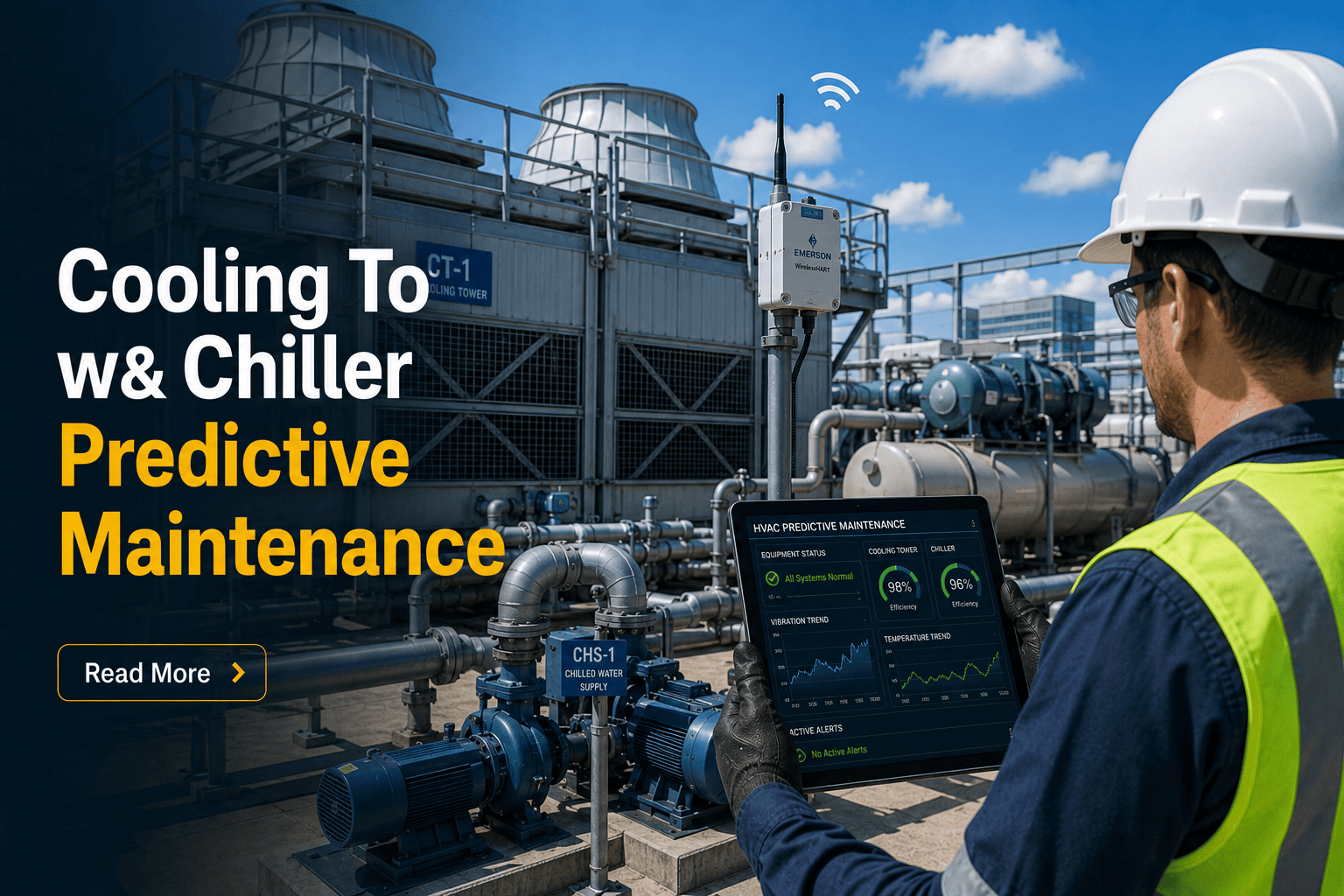
Predictive maintenance for building systems uses AI and IoT sensors to monitor the real-time condition of chillers, AHUs, elevators, and pumps—triggering work orders only when failure signatures appear. Facilities teams adopting this approach typically cut unplanned downtime by 30–50% and reduce energy waste by 10–20% compared to rigid calendar-based preventive maintenance. OxMaint integrates building IoT data, fault detection algorithms, and condition-based PM triggers into a single AI-powered CMMS, turning smart building PdM from a concept into operational discipline. Explore how modern building AI maintenance works, or Start Free Trial to connect your assets today.
AI & IoT FACILITY MAINTENANCE
Stop reacting to building failures. Start predicting them.
Smart building PdM leverages continuous condition monitoring and AI analytics to detect bearing vibrations, refrigerant leaks, and motor anomalies weeks before they escalate into catastrophic failures and tenant complaints.
PREDICTIVE MAINTENANCE BUILDING SYSTEMS
What is predictive maintenance for building systems?
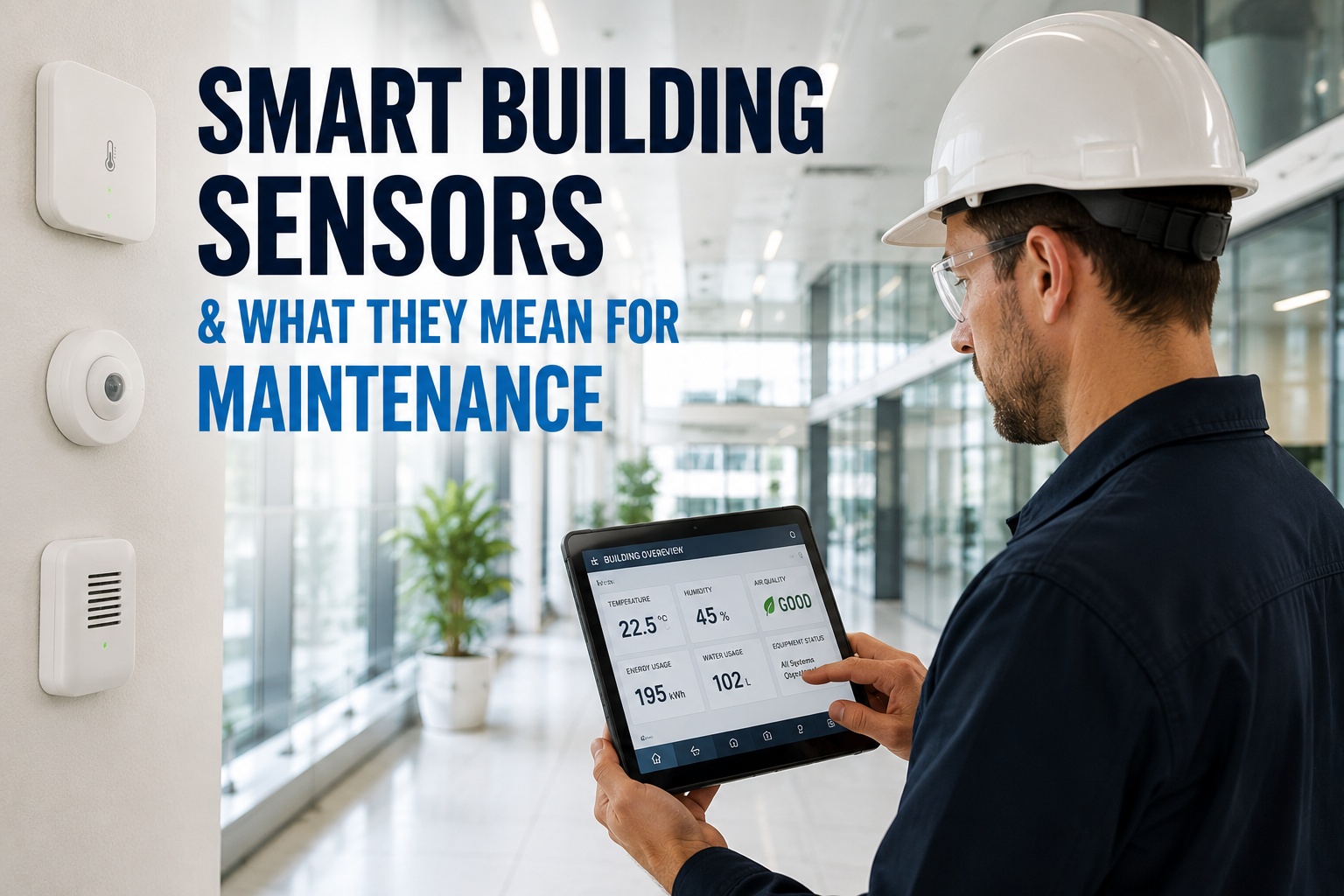
Predictive facility management shifts the maintenance paradigm from "fail-then-fix" or "time-based routines" to condition-based intervention. By installing IoT building sensors on critical equipment—such as chillers, air handling units (AHUs), and cooling towers—facilities teams continuously collect data on vibration, temperature, pressure, and amperage. AI building maintenance algorithms then analyze this data streams against historical baselines to identify early-stage degradation.
Condition-Based Triggers
Instead of servicing an AHU every 90 days regardless of need, a building predictive CMMS generates a work order only when sensor data indicates operating parameters have drifted out of acceptable tolerance.
Fault Detection Diagnostics
AI algorithms process real-time building automation system (BAS) data to catch simultaneous deviations—like a chiller running high head pressure alongside abnormal condenser approach—flagging latent faults instantly.
Automated Work Order Generation
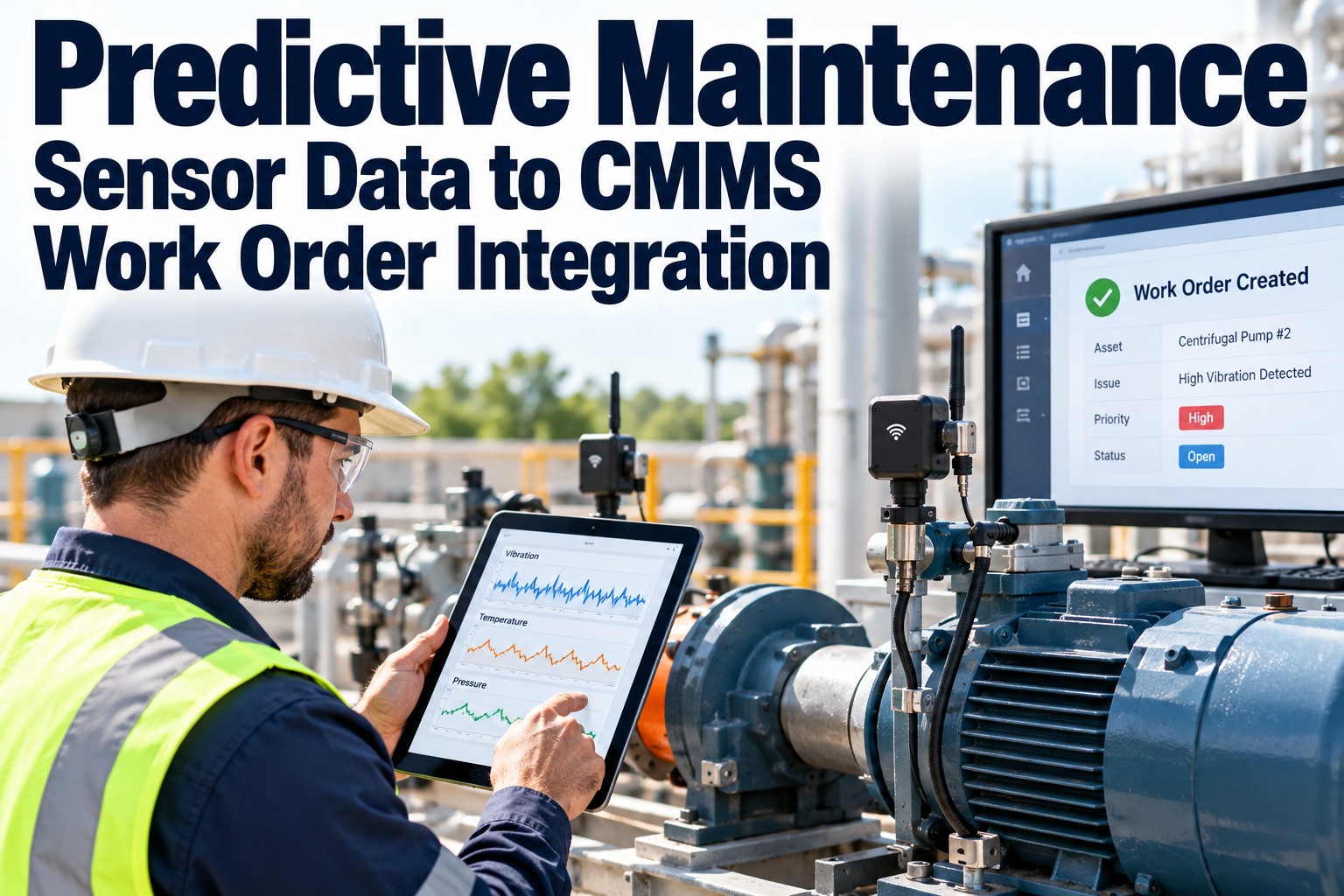
When an anomaly threshold is breached, the CMMS automatically creates, prioritizes, and assigns a corrective work order with the exact diagnostic data attached for the technician.
SMART BUILDING PdM APPLICATIONS
Chiller, AHU, elevator & pump PdM use cases
Different building systems fail in different ways. A successful building condition monitoring strategy requires specific sensor deployments and AI models tailored to the failure modes of each asset class. Here is how IoT CMMS building integration applies to the most critical facility equipment.
Chiller predictive maintenance
Vibration sensors on compressor bearings, refrigerant leak detectors, and flow meters monitor condenser approach temperature. Catching a 1°C approach deviation early can prevent a $25,000 compressor burnout and save 15% in energy consumption.
AHU predictive maintenance
Differential pressure sensors across filters, motor current sensors on fans, and temperature probes in coils detect fouling, belt slippage, and valve failure. Condition-based filter changes can extend filter life by 20% while maintaining indoor air quality.
Elevator predictive maintenance
Door cycle counters, rope tension monitors, and motor vibration analytics predict door mechanism failures and cab misalignments—reducing tenant entrapment incidents and satisfying strict vertical transportation compliance audits.
Pump & boiler predictive maintenance
Ultrasonic flow and cavitation sensors on secondary water pumps, alongside flue-gas analyzers on boilers, identify seal degradation and combustion inefficiencies before they trigger hot water outages or safety shutdowns.
ROI & COST BREAKDOWN
What is the ROI of smart building predictive maintenance?
The financial case for smart building AI maintenance is driven by avoided downtime, reduced labor overhead, and energy optimization. Consider a commercial facility operating a 180-asset portfolio (HVAC, plumbing, and vertical transport) currently spending $42,000 annually on reactive repairs and premium overtime labor.
| Cost & Savings Metric | Reactive / Time-Based | Predictive (AI + IoT) | Annual Impact |
|---|---|---|---|
| Unplanned Downtime (HVAC failure) | $28,000 | $8,400 | Save $19,600 |
| Overtime & Emergency Labor | $14,500 | $4,200 | Save $10,300 |
| Energy Waste (inefficient equipment) | $18,000 | $14,400 | Save $3,600 |
| Spare Parts Inventory Holding | $9,200 | $5,800 | Save $3,400 |
| Total Annual Cost | $69,700 | $32,800 | Net Savings: $36,900 |
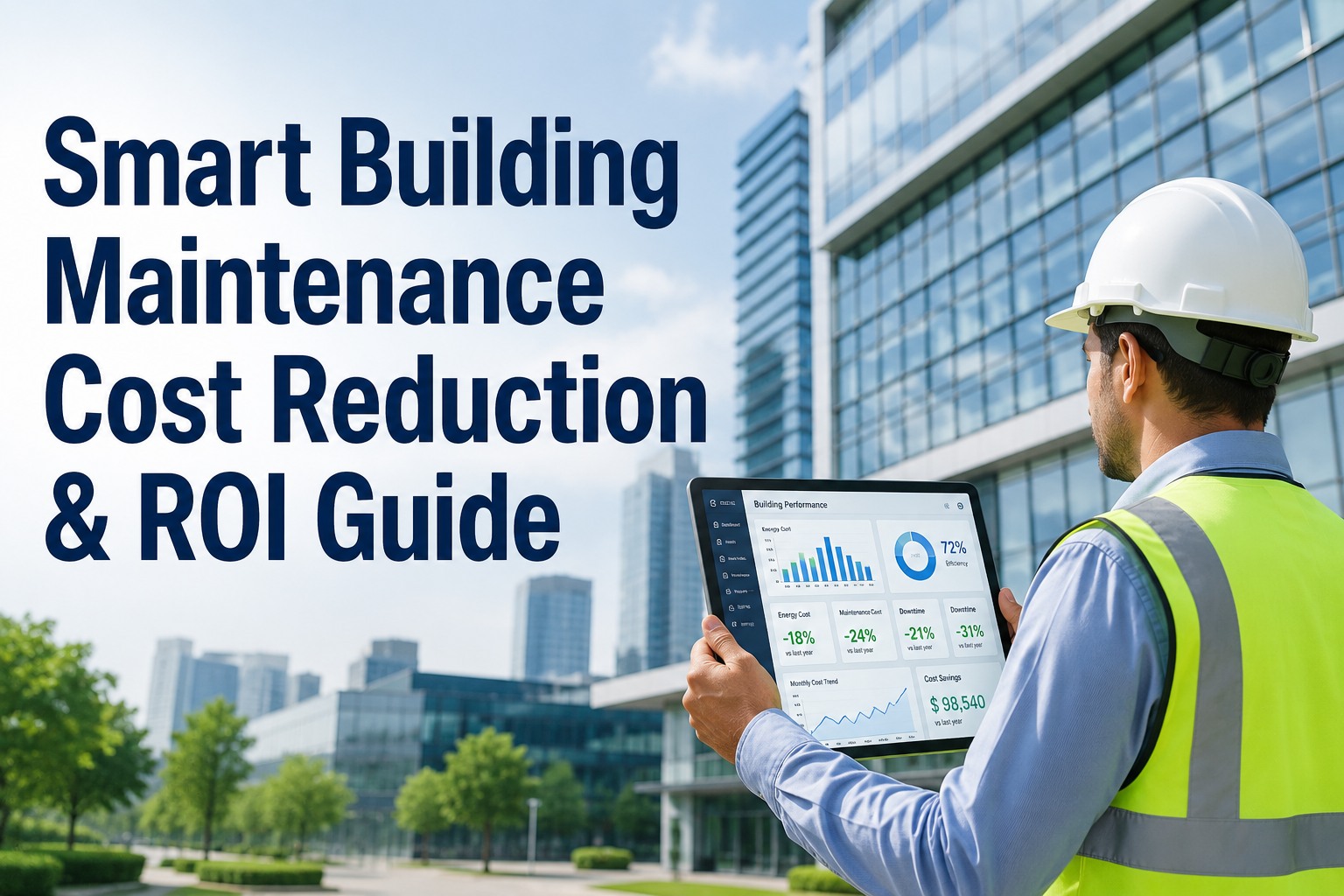
With an initial PdM sensor and software investment of roughly $15,000, this facility achieves a 146% ROI in Year 1 and a payback period of under 5 months. An IoT CMMS building platform makes this measurable and repeatable across your portfolio.
HOW OXMAINT HELPS
OxMaint: Your building predictive CMMS platform
OxMaint bridges the gap between raw IoT building sensors and actionable maintenance execution. Our AI-powered CMMS and EAM platform ingests condition data, predicts failures, and automatically manages the work order lifecycle—from detection to parts allocation to completion.
Seamless IoT & BAS Integration
Connect existing BACnet, Modbus, and API-driven sensors directly into OxMaint. We map asset telemetry to your equipment hierarchy without requiring a rip-and-replace of your current building automation system.
Outcome: 100% visibility into asset health
Condition-Based Work Orders
Eliminate redundant calendar-based PMs. OxMaint automatically generates prioritized work orders when AI fault thresholds are breached, attaching diagnostic context for technicians.
Outcome: Cut unnecessary PM labor by 25%
Predictive Spare Parts Inventory
When the AI flags an impending chiller bearing failure, OxMaint automatically checks stock levels for the required part and flags reorder points—ensuring parts are on hand before the technician is dispatched.
Outcome: Eliminate 90% of emergency part freight
Maintenance Analytics & Audits
Prove ROI to building owners with dashboards tracking MTBF, MTTR, asset availability, and energy savings. Export compliance logs for ISO 55000 and internal facility audits in one click.
Outcome: Audit-ready in minutes, not days
See OxMaint on your assets — book a 30-min demo
Discover how an AI-powered CMMS transforms your facility's reactive maintenance into a predictable, data-driven operation.
FREQUENTLY ASKED QUESTIONS
Predictive maintenance for building systems FAQ
How does IoT enable predictive maintenance in buildings?
IoT sensors continuously monitor physical parameters like vibration, temperature, and pressure on building equipment such as chillers and AHUs. This real-time data is sent to a CMMS where AI algorithms analyze it for anomalies, alerting maintenance teams to potential failures long before they occur. You can connect your sensors by creating an account at Start Free Trial.
What is the difference between preventive and predictive facility maintenance?
Preventive maintenance is schedule-based, meaning tasks are performed on a fixed calendar interval (e.g., monthly) regardless of actual equipment condition. Predictive maintenance is condition-based, utilizing real-time sensor data to trigger maintenance only when a machine shows signs of degradation, thereby optimizing labor and parts usage.
How much does building predictive maintenance cost?
Costs vary based on portfolio size, but a typical setup includes IoT sensor hardware (often $50–$300 per asset), integration labor, and CMMS software licensing. Most commercial facilities see a return on investment within 3 to 6 months due to reduced emergency labor, energy savings, and avoided equipment replacements.
Can a CMMS integrate with existing Building Automation Systems (BAS)?
Yes, modern platforms like OxMaint use open APIs and standard protocols like BACnet to pull data directly from your existing Building Automation System. This allows you to leverage your current infrastructure without ripping out installed sensors, turning your BAS into an active predictive maintenance tool. Schedule a walkthrough at Book a Demo.
Which building systems benefit most from PdM?
High-energy, critical-uptime assets benefit the most. This includes centrifugal chillers, large Air Handling Units (AHUs), commercial elevators and escalators, primary boiler systems, and large horsepower water pumps. These assets have the highest downtime costs and pose the greatest risk to tenant comfort and safety.
Ready to modernize your facility maintenance?
Join the maintenance teams using OxMaint to predict failures, automate work orders, and cut operational costs by up to 30%.
Free 14-day trial · No credit card required