Predictive maintenance for conveyor systems shifts your reliability strategy from calendar-based intervals to condition-based triggers — you repair belts, rollers and gearboxes when sensor data warns you, not after a catastrophic shutdown. Facilities that deploy vibration analysis, thermal imaging, oil analysis and IoT condition monitoring on critical conveyor assets routinely cut unplanned downtime by 30–50% and extend component life by 20–40%. This guide walks through sensor selection, P-F interval mapping, alert thresholds and CMMS integration so your team can build a program that pays for itself on the first avoided breakdown. Ready to turn conveyor signals into scheduled repairs? Start Free Trial and connect your sensors today.
Conveyor Reliability Playbook
What if your conveyor told you it was about to fail — 14 days before it did?
Predictive maintenance for conveyor systems converts vibration, temperature and oil readings into early-warning work orders — so your team fixes the right asset at the right time, every time.
Average lead time between the first PdM alert and functional failure on a critical conveyor gearbox — enough time to schedule parts, labor and a planned downtime window.
The Cost of Waiting
Why conveyor systems failure prediction beats preventive schedules
A single hour of unscheduled conveyor downtime on a high-throughput line can cost $8,000–$25,000 in lost production, yet most plants still rely on fixed-interval PMs that replace healthy parts too early and miss developing faults too late.
Worked Example
A 180-asset distribution center spending $42K/yr on reactive conveyor repairs deployed vibration sensors on 12 critical gearboxes and motor drives. In month one, a bearing-fault signature on Line 4 triggered an auto-generated work order in OxMaint. Technicians replaced the $380 bearing during a scheduled 2-hour window — avoiding an estimated $18,500 in lost throughput and expedited parts. The program paid for itself on the first avoided shutdown.
Technology Selection
Conveyor systems sensor selection: which PdM technology fits each asset?
No single sensor covers every failure mode. The most reliable conveyor systems PdM strategy layers four complementary technologies — each mapped to the specific components most likely to degrade.
Vibration Analysis
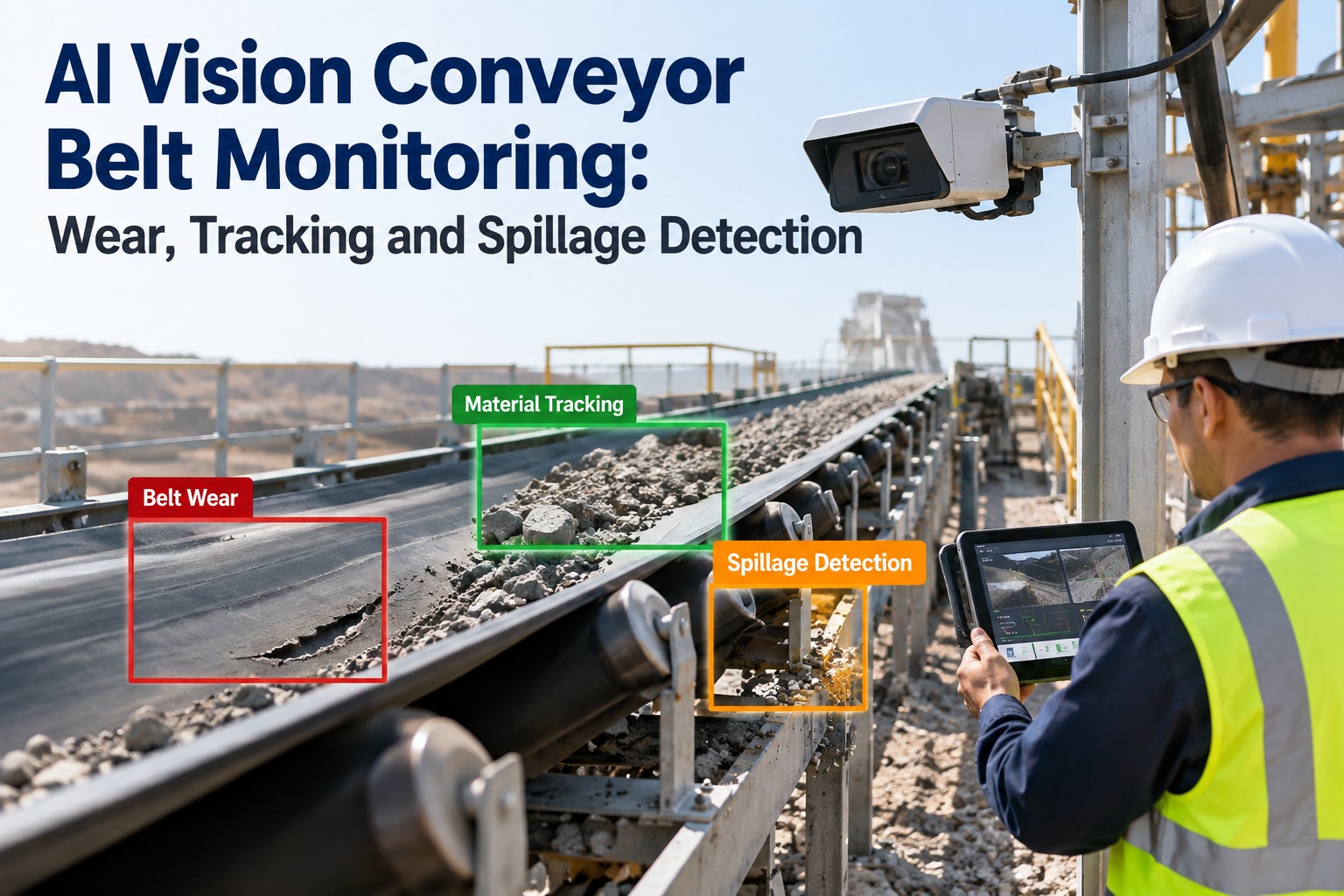
Best for: Roller bearings, gearbox shafts, motor drives, pulley assemblies
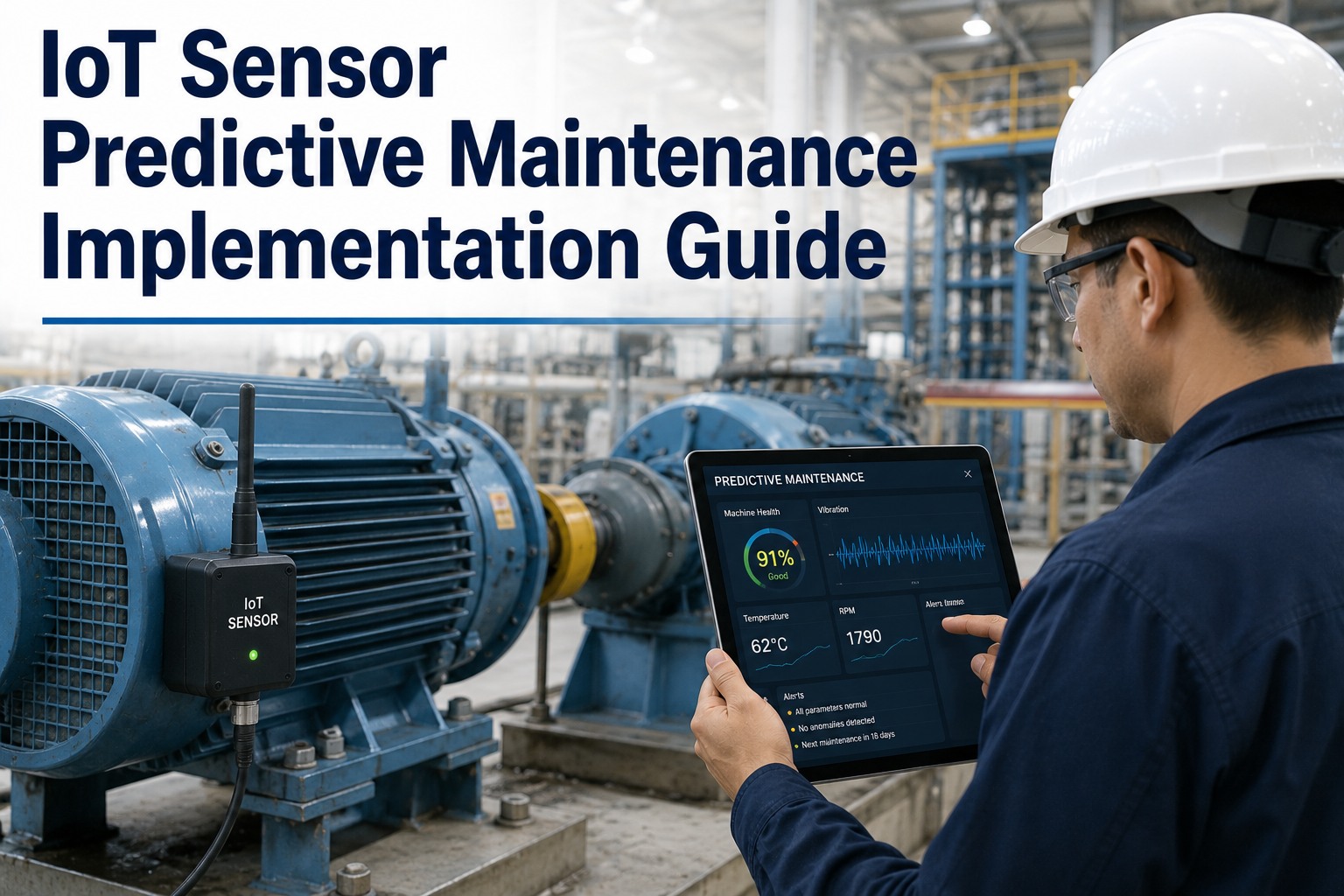
Accelerometers detect misalignment, imbalance, looseness and early-stage bearing defects through frequency-domain signatures. Mount tri-axial sensors on bearing housings for continuous monitoring; route portable data collectors for lower-criticality assets.
Infrared Thermography
Best for: Motor control centers, drive panels, conveyor junction boxes
Thermal cameras and continuous IR sensors identify hot spots from loose connections, overloaded circuits and phase imbalance — faults invisible to vibration. Scan electrical panels quarterly and monitor critical drives 24/7 with fixed IR sensors.
Oil & Lubricant Analysis
Best for: Gearboxes, hydraulic systems, sealed bearing assemblies
Spectrochemical and ferrographic analysis catch wear-metal particles, contamination and viscosity breakdown before they destroy internal components. Sample gearboxes every 500–1,000 operating hours or when vibration trends shift.
Ultrasonic Monitoring
Best for: Pneumatic actuators, compressed-air lines, slow-speed bearings
Ultrasonic sensors detect friction and turbulence at the earliest stage — before heat or vibration escalates. Ideal for identifying air leaks on pneumatic diverters and lubrication starvation in slow-speed conveyor rollers that vibrate below 1 Hz.
Failure Timing
How to calculate conveyor systems P-F interval for every critical asset
The P-F interval is the time between when a defect becomes detectable (P) and when functional failure occurs (F). It is the single most important number in your PdM program — it determines your inspection frequency, sensor sampling rate and work-order lead time.
P-F Interval Formula
P-F Interval = F (Functional Failure Date) − P (Potential Failure Detection Date)
If a gearbox bearing shows a measurable vibration signature 21 days before it seizes, your P-F interval is 21 days. Your inspection or monitoring interval must be shorter than half the P-F interval to guarantee detection — in this case, every 10 days or continuous.
| Conveyor Component | Detectable Failure Mode | PdM Technology | Typical P-F Interval | Recommended Sampling |
|---|---|---|---|---|
| Gearbox bearings | Outer-race spalling | Vibration (accelerometer) | 14–30 days | Continuous / daily |
| Drive motor winding | Phase imbalance / overheating | IR thermography | 7–21 days | Continuous / weekly |
| Gearbox lubricant | Wear-metal contamination | Oil analysis | 30–90 days | Monthly |
| Conveyor belt splice | Tension loss / delamination | IoT tension sensor | 10–20 days | Continuous |
| Idler roller bearing | Lubrication starvation | Ultrasonic acoustic | 21–45 days | Weekly route |
Implementation Roadmap
Conveyor systems PdM setup guide: a 5-month rollout timeline
A phased rollout prevents sensor fatigue and proves ROI before you scale. Here is the timeline that works for mid-to-large conveyor operations running 200+ assets across multiple lines.
Month 1
Criticality Assessment & Asset Selection
Rank conveyor assets by production impact, failure frequency and repair cost. Select the top 10–15% for pilot PdM deployment — typically main drive gearboxes, high-speed belt sections and critical transfer points. Document existing failure modes in OxMaint's asset registry.
Month 2
Sensor Installation & Baseline Capture
Mount sensors at the optimal measurement points identified during criticality assessment. Run 14–21 days of baseline data collection under normal load to establish each asset's healthy-state signature before setting alert thresholds.
Month 3
Threshold Configuration & CMMS Integration
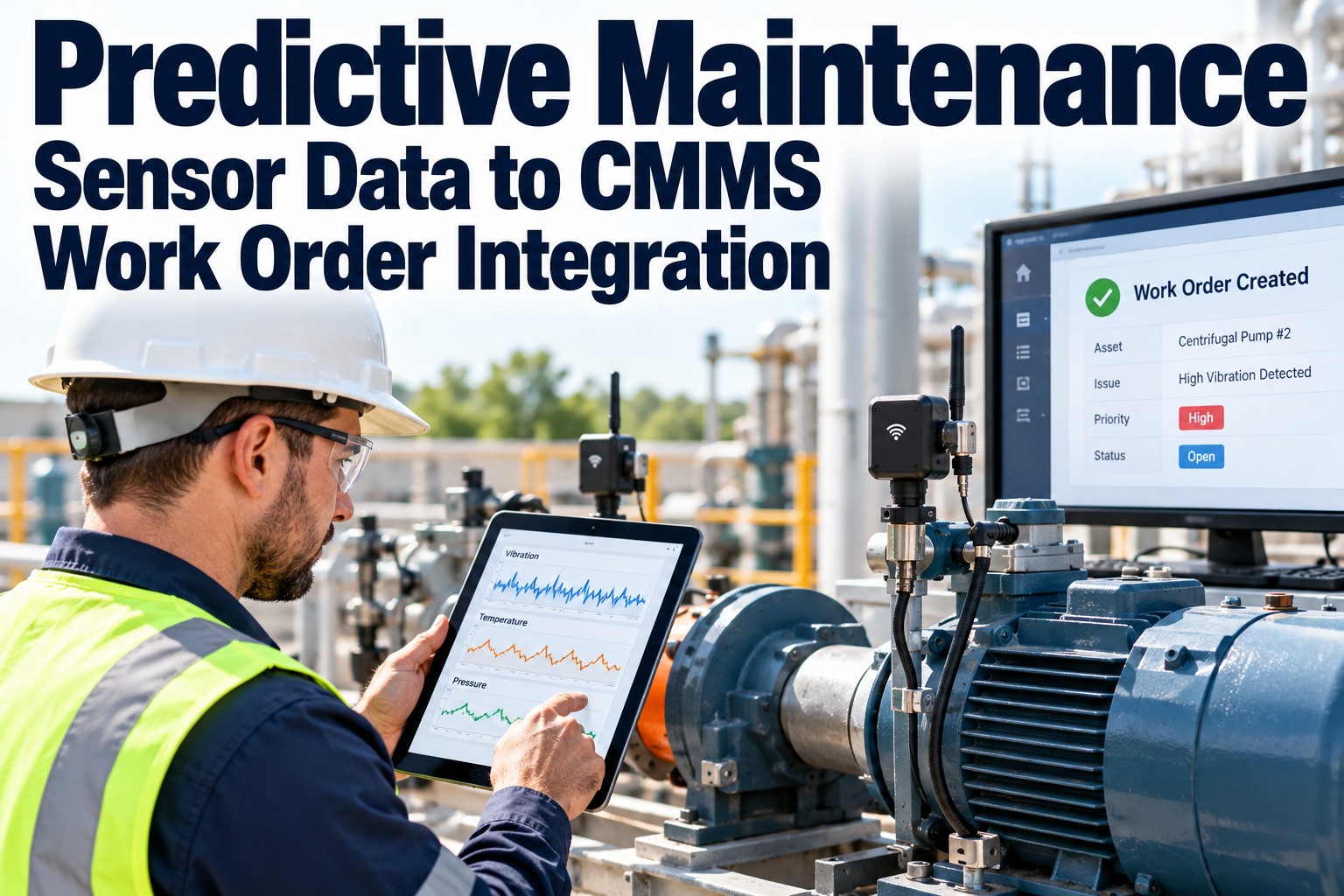
Define low, medium and high alert thresholds based on ISO 10816 vibration severity charts, OEM specs and your baseline data. Connect sensor streams to OxMaint so crossing a high threshold auto-creates a work order with the failure mode, recommended repair and parts list attached.
Month 4
Pilot Validation & First Avoided Failure
Run the pilot for 30 days under live conditions. Validate that alerts are triggering correctly, false-positive rates are below 10%, and technicians are completing condition-based work orders through OxMaint's mobile app before failures escalate.
Month 5
Scale to Full Conveyor Fleet
Extend sensor coverage to the next 25% of critical assets. Publish a PdM dashboard in OxMaint showing avoided downtime, cost savings and MTBF improvement for stakeholders. Begin predictive analytics on accumulated historical data.
See OxMaint turn your conveyor sensor data into scheduled repairs
Book a 30-minute demo and watch a live vibration alert auto-generate a work order, assign a technician and pull the right spare part from inventory — before the failure ever reaches the floor.
OxMaint Integration
How OxMaint connects predictive signals to maintenance action
Sensors don't prevent failures — work orders do. OxMaint bridges the gap between a PdM alert and a completed repair by automating the four steps that usually fail in manual processes: detection, triage, scheduling and execution.
Automated Condition-Based Work Orders
When a sensor reading crosses your configured threshold, OxMaint instantly generates a work order pre-loaded with the asset ID, failure mode description, recommended repair procedure and required spare parts — no manual data entry, no missed alerts.
Outcome: 85% reduction in time from alert to scheduled repair
Predictive Analytics Dashboard
OxMaint's AI engine analyzes vibration, temperature and oil trending data across your conveyor fleet to predict remaining useful life (RUL) for each monitored component and rank assets by risk score so planners focus on what matters most.
Outcome: 30–50% cut in unplanned conveyor downtime
Spare-Parts Auto-Reservation
Each condition-based work order automatically checks spare-parts inventory for the required bearing, belt or gearbox component. If stock is below the safety minimum, OxMaint flags it for reorder and links the PO to the predicted failure date.
Outcome: Parts ready 100% of the time for planned conveyor repairs
Mobile Execution & Audit Trail
Technicians receive PdM work orders on their mobile app with the sensor chart, OEM manual and repair checklist attached. Completed work — including photos, readings and labor hours — is stored permanently for ISO 55000 and audit compliance.
Outcome: Eliminate paper work orders and pass audits without scrambling
Real Results
Conveyor systems PdM cost savings: what teams actually achieve
The numbers below are drawn from aggregate OxMaint customer data across manufacturing, distribution and mining operations that deployed PdM on conveyor assets within the first 12 months.
"We caught a gearbox bearing failure on our main line 9 days before it would have seized. The OxMaint work order had the part number, the repair procedure and the technician assigned before we even walked to the floor. That single event saved us $31K in lost production."
"Switching from spreadsheet PMs to OxMaint's condition-based triggers cut our conveyor unplanned downtime 42% in the first year. The auto-generated work orders mean nothing falls through the cracks anymore."
FAQ
Common questions about predictive maintenance for conveyor systems
What is the best predictive maintenance approach for conveyor systems?
The best approach layers vibration analysis on rotating components, infrared thermography on electrical panels and drive motors, oil analysis on gearboxes, and ultrasonic monitoring on slow-speed rollers and pneumatic lines. This combination covers over 70% of detectable conveyor failure modes and feeds all data into a CMMS like OxMaint that auto-generates work orders when thresholds are crossed. You can Book a Demo to see the full sensor-to-work-order flow on a live conveyor asset.
How do I set alert thresholds for conveyor PdM sensors?
Start by collecting 14–21 days of baseline data under normal operating load. Set your low-alert threshold at 2× the baseline RMS vibration velocity, the medium alert at ISO 10816 Zone C entry, and the high alert (auto-work-order trigger) at Zone D entry or 3× baseline. Adjust downward if false positives exceed 10% after the first 30 days of live monitoring.
How much does a conveyor PdM program cost and what is the ROI?
A typical pilot on 10–15 critical conveyor assets costs $12K–$25K for sensors, gateway hardware and CMMS software. With an average avoided downtime value of $15K–$30K per single caught failure, most programs achieve payback within 6–11 months. OxMaint customers report an average of $87K in first-year savings per 100 monitored conveyor assets.
Which conveyor components should I monitor first with PdM sensors?
Prioritize assets by criticality score — production impact × failure frequency × repair cost. In most conveyor systems, the top-priority components are main drive gearboxes, motor bearings, high-speed belt sections and critical transfer-point idlers. These assets account for 60–80% of unplanned downtime events and offer the fastest PdM payback.
How does OxMaint integrate PdM sensor data with maintenance workflows?
OxMaint ingests real-time sensor data via API or MQTT, evaluates readings against your configured thresholds, and automatically creates a condition-based work order when a high alert triggers — complete with asset ID, failure mode, repair procedure and required spare parts. Technicians receive the work order on their mobile app, and completed repairs feed back into the analytics dashboard for continuous threshold refinement. Start Free Trial to connect your first sensor in minutes.
Stop fixing conveyors after they break — start predicting failures before they happen
Deploy OxMaint's AI-powered CMMS and turn every vibration, temperature and oil reading into an automatic work order. Your first avoided conveyor shutdown could pay for the entire program.
Free 14-day trial · No credit card