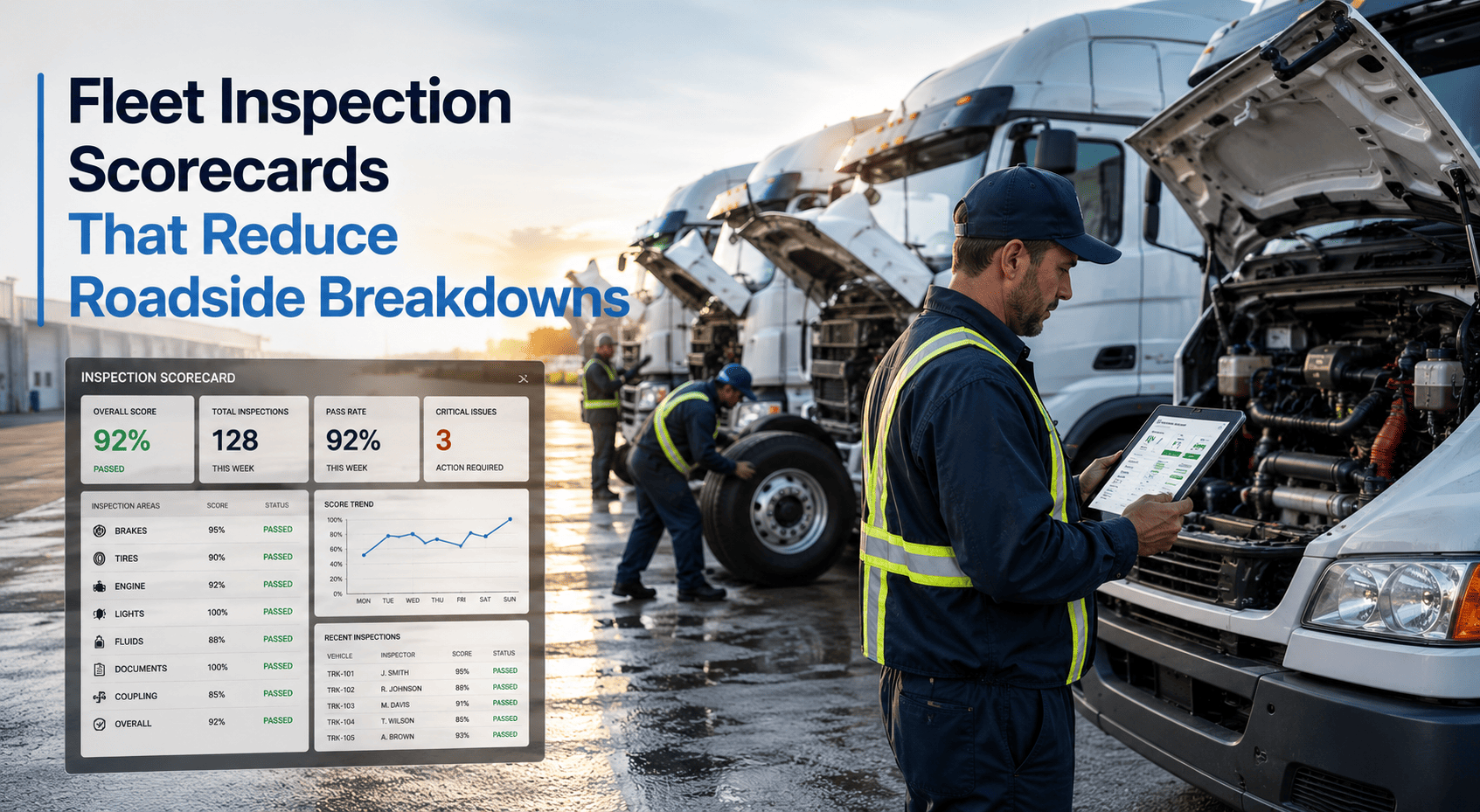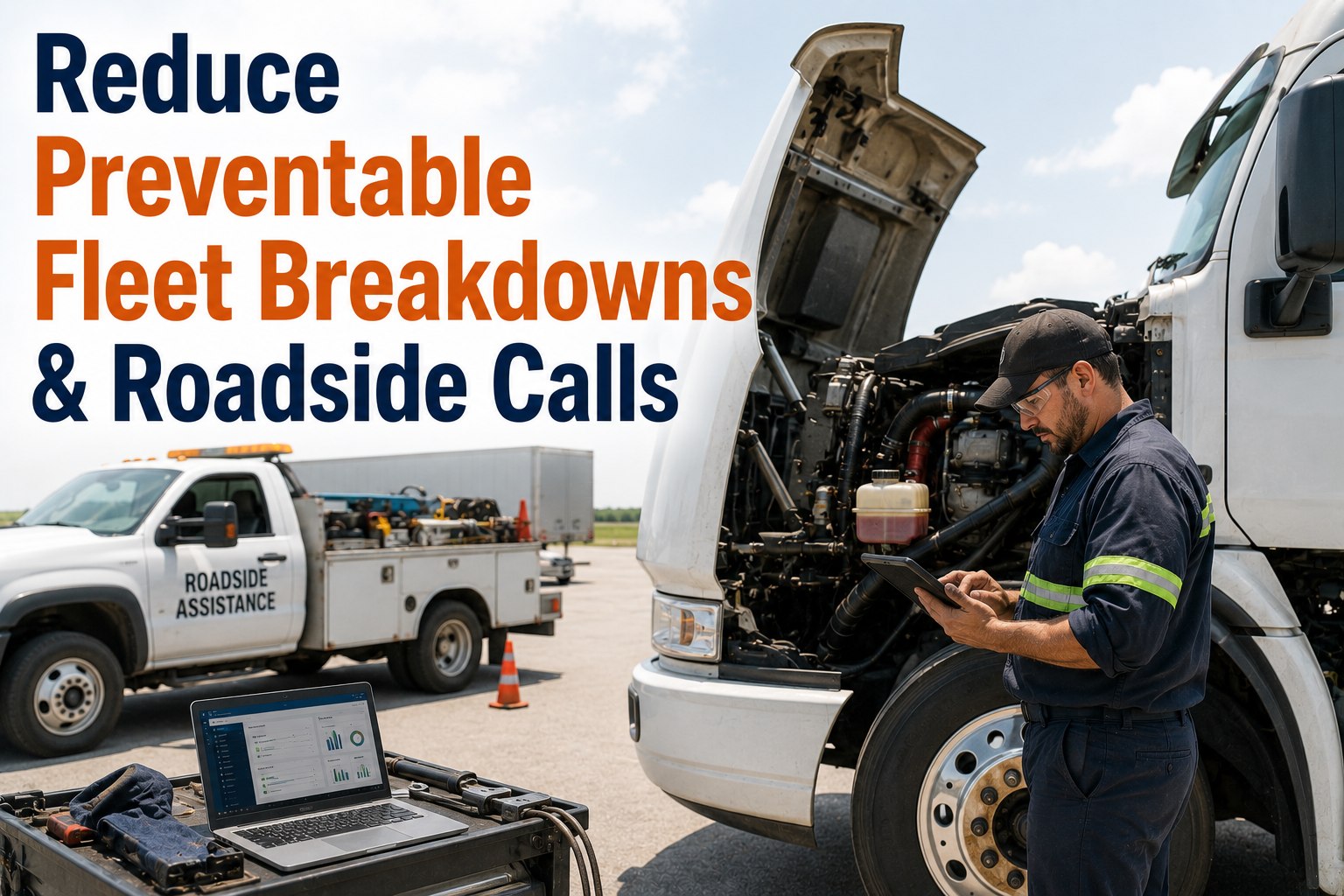
Most fleet breakdowns aren't random — they trace back to skipped preventive maintenance, missed DVIR defects, and aging assets run past their safe service window. Preventable fleet failures cost 3–5x more than planned repairs once you factor in towing, lost revenue, driver downtime, and emergency parts markup, which is why a data-driven approach to fleet breakdown reduction is the single highest-ROI lever a maintenance manager can pull. OxMaint's AI-powered CMMS targets this exact problem with DVIR-driven defect capture, automated PM compliance tracking, and condition-based triggers that consistently cut roadside events by 40–60%. See how it works when you Start Free Trial, or read on for the cost model and prevention playbook.
Fleet Reliability · Roadside Call Prevention
Every preventable roadside call is a margin-killing event you can eliminate
Fleet breakdown reduction starts with catching defects before they become roadside failures. OxMaint turns DVIRs, PM schedules, and telematics data into a closed-loop reliability program that cuts unplanned repairs and keeps trucks earning.
3–5x
Higher cost per unplanned repair vs. planned PM
40–60%
Reduction in roadside events with a CMMS-driven PM program
$1,200+
Average all-in cost of a single heavy-duty tow and roadside call
The True Cost of Inaction
What does a fleet roadside breakdown really cost?
When a truck goes down on the shoulder, the repair invoice is only the beginning. A single roadside breakdown cost typically stacks five separate line items — and most are invisible on a spreadsheet.
| Cost Component | Typical Range | Why It Spikes |
|---|---|---|
| Tow & recovery | $500 – $2,500 | After-hours dispatch, remote locations, heavy-duty wrecker fees |
| Emergency road service | $200 – $800 | Mobile mechanic premiums, diagnostic surcharges |
| Lost revenue (downtime) | $400 – $900/day | Truck not earning; load reassignment or broker failure fees |
| Driver detention & wages | $150 – $400 | Driver stuck roadside, potential Hours-of-Service violation |
| Emergency parts markup | 20 – 40% over list | Same-day freight, dealer surcharges on filters, belts, sensors |
Worked Example
A 120-truck fleet experiencing 8 unplanned breakdowns per month
8 breakdowns × $1,400 avg. all-in cost = $11,200 / month → $134,400 / year in preventable spend
Cutting those events by 50% with a CMMS-driven PM program returns $67,200 directly to the bottom line — before counting improved CSA scores and driver retention.
Root Cause Analysis
Why most fleet failures are preventable
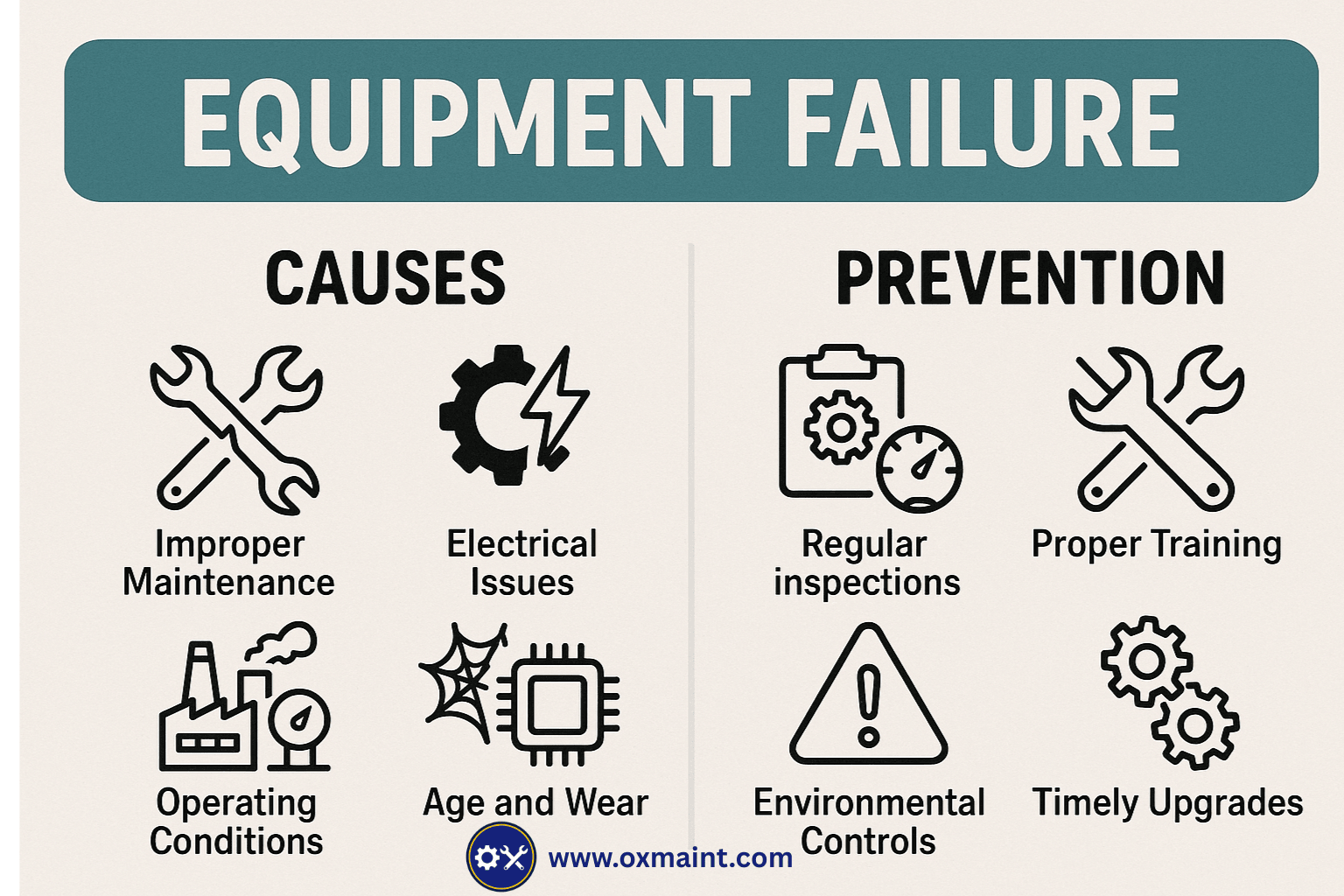
Industry reliability data shows that 70–80% of roadside failures originate in four gap areas. Truck breakdown prevention isn't about luck — it's about closing these gaps with structured process and visibility.
01
Missed or late PM compliance
When PM intervals slip past 10–15% of their due window, failure probability climbs sharply. Without automated PM compliance tracking, trucks fall through the cracks — especially across multiple shops.
02
DVIR defects with no closed loop
Drivers flag defects on paper DVIRs, but 30–40% of reported issues never make it into a work order. If a defect isn't triaged and repaired within 24 hours, it becomes the next roadside call.
03
No condition-based triggers
Time-based PM alone misses degradation between intervals. Without oil analysis, mileage thresholds, or telematics fault-code triggers, early warning signs go unnoticed until catastrophic failure.
04
Reactive inventory & parts stockouts
When the right filter or belt isn't in stock, a 2-hour planned repair becomes a 2-day downtime event. Spare-parts misalignment is a leading driver of unplanned fleet repairs.
How OxMaint Helps
How OxMaint cuts preventable fleet breakdowns by 40–60%
OxMaint's AI-powered CMMS gives fleet maintenance teams the four capabilities that directly attack the root causes of roadside failures — each with a measurable reliability outcome.
DVIR-driven defect capture
Driver-reported defects flow directly into OxMaint work orders — no paper, no data entry lag. Every defect is triaged, assigned, and tracked to closure with automatic SLA timers.
Outcome: 95%+ defect closure within 24 hours
Automated PM compliance tracking
Mileage-based, engine-hour-based, and calendar-based PM schedules auto-generate work orders before intervals lapse. Dashboards flag any truck trending past 90% of its PM window in real time.
Outcome: 98%+ on-time PM completion
Condition-based maintenance triggers
OxMaint ingests telematics fault codes, oil analysis results, and sensor data to trigger maintenance before failure. Predictive algorithms flag assets trending toward critical thresholds.
Outcome: 30–50% fewer unplanned repairs
Spare-parts inventory alignment
Auto-reorder points tied to PM schedules ensure the right filters, belts, and wear parts are in stock before the truck enters the bay. No more emergency parts runs or delayed repairs.
Outcome: 60% reduction in parts-related downtime
Implementation Playbook
Fleet breakdown prevention: a 90-day rollout timeline
Switching from reactive repairs to a CMMS-driven reliability program doesn't require a multi-quarter IT project. Here's how fleet teams typically deploy OxMaint to achieve measurable breakdown reduction in 90 days.
Centralize assets & migrate PM schedules
Import your full asset register, current PM intervals, and spare-parts list into OxMaint. Map each truck's service intervals by mileage, engine hours, or calendar. Baseline your current breakdown rate and roadside call volume.
Deploy digital DVIRs & defect workflows
Replace paper DVIRs with OxMaint's mobile defect capture. Every reported issue auto-creates a triaged work order with SLA timers. Shop managers get real-time visibility into open defects by severity, asset, and age.
Activate condition-based triggers
Connect telematics fault-code feeds and oil analysis results. Configure predictive thresholds so OxMaint auto-generates inspection work orders when an asset trends toward a failure indicator — before the roadside event.
Measure, optimize & scale
Review PM compliance rate, mean time-to-repair, defect closure rate, and roadside event count against your baseline. Most fleets see a 25–35% breakdown reduction by day 90, trending toward 40–60% by month six.
Reliability Metrics That Matter
KPIs to track for fleet uptime and breakdown reduction
You can't improve what you don't measure. These are the five KPIs OxMaint dashboards surface by default — each one directly tied to fleet reliability and roadside call prevention.
98%+
PM Compliance Rate
Percentage of PMs completed within the due window. Below 90% = breakdown risk rising.
< 24h
Defect Closure Time
Average time from DVIR defect report to work-order closure. The faster, the fewer roadside calls.
MTBF
Mean Time Between Failures
Track per asset and fleet-wide. Rising MTBF = your prevention program is working.
95%+
Fleet Uptime
Percentage of vehicles available and roadworthy. Industry leaders target 95–97%.
"Within 90 days of deploying OxMaint, our roadside calls dropped by nearly half. The DVIR-to-work-order automation alone closed the biggest gap we had — defects were getting reported, but nobody was fixing them in time."
— Fleet Maintenance Director, 180-vehicle regional carrier
Stop paying 3–5x more for repairs you can prevent
See OxMaint on your fleet — book a 30-minute demo and we'll map your breakdown-reduction opportunity live.
Frequently Asked Questions
Fleet breakdown reduction: what teams ask most
How much can a CMMS reduce fleet breakdowns?
A properly implemented CMMS like OxMaint typically reduces preventable roadside events by 40–60% within the first six months. The biggest gains come from automated PM compliance tracking and closed-loop DVIR defect management — the two gaps responsible for most unplanned fleet repairs. You can see this impact directly when you Start Free Trial and baseline your current breakdown rate.
What is the average roadside breakdown cost for a commercial truck?
The all-in cost of a single heavy-duty roadside breakdown ranges from $1,000 to $2,500 when you include towing, mobile repair service, lost revenue, driver detention, and emergency parts markup. For a fleet experiencing 8–10 breakdowns per month, that's $100K–$300K in annual preventable spend.
How does preventive maintenance reduce fleet downtime?
Preventive maintenance catches wear-related failures — belts, hoses, filters, brakes, sensors — during planned shop visits instead of on the shoulder. When PM is automated and compliance-tracked in a CMMS, trucks are serviced before components fail, converting unplanned downtime into scheduled, lower-cost maintenance windows.
How long does it take to deploy OxMaint for fleet maintenance?
Most fleet teams are live on OxMaint within 15–30 days. Asset register import, PM schedule migration, and digital DVIR setup typically happen in the first two weeks. Condition-based triggers and telematics integration follow in weeks three through six. Measurable breakdown reduction usually appears by day 90. Book a Demo to see a deployment plan tailored to your fleet size.
Can OxMaint integrate with our existing telematics and fleet management systems?
Yes. OxMaint ingests telematics fault codes, odometer readings, and engine-hour data from major fleet management platforms to trigger condition-based maintenance automatically. This means your PM schedules stay current without manual data entry, and predictive alerts fire when an asset trends toward a failure threshold.
Your next roadside call is preventable — start preventing it today
Join the fleet teams using OxMaint to cut breakdowns 40–60%, hit 98% PM compliance, and put six figures back into their operating budget every year.
Free 14-day trial · No credit card